





Vintage Character Jug
These vintage character jug examples bring characterful British pottery tradition directly to your cabinet.
Vintage Character Jug
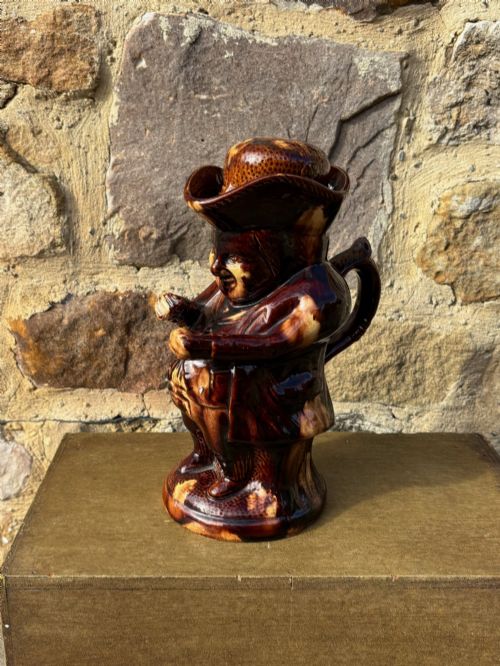
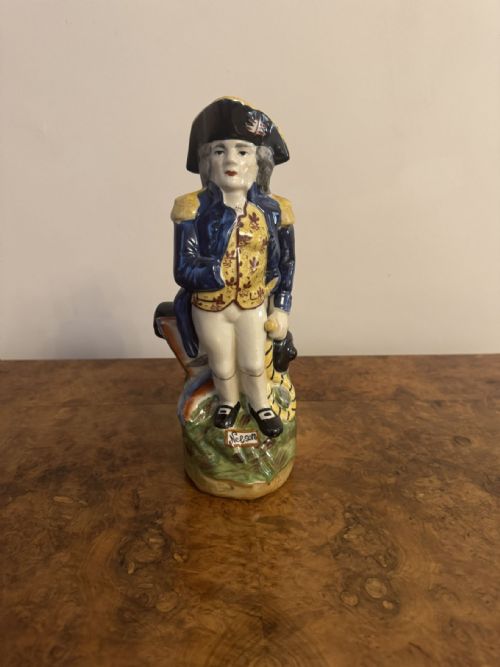
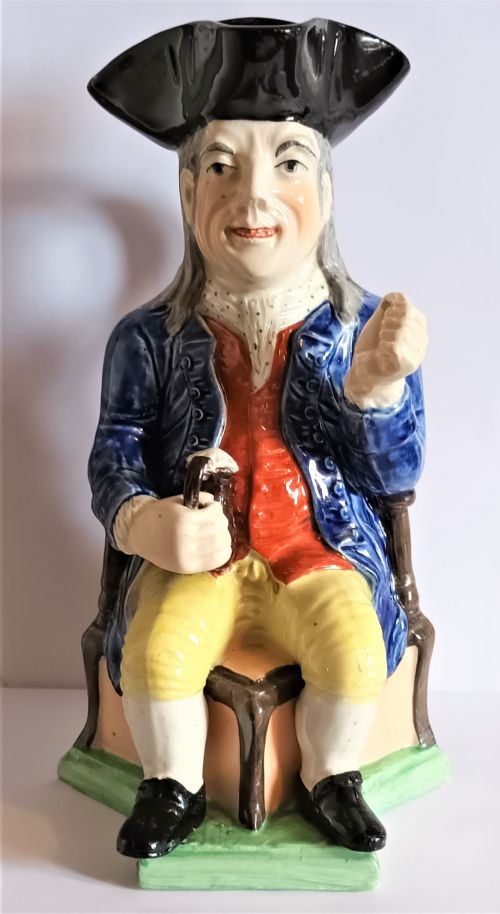
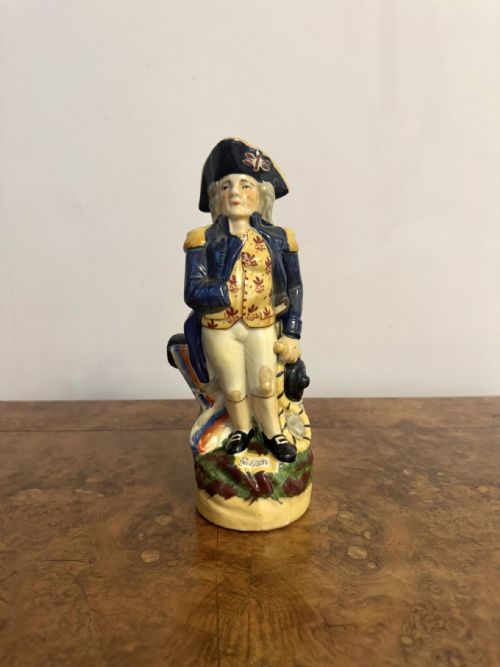
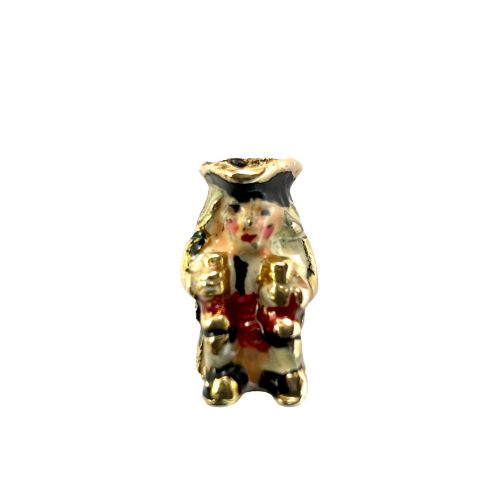
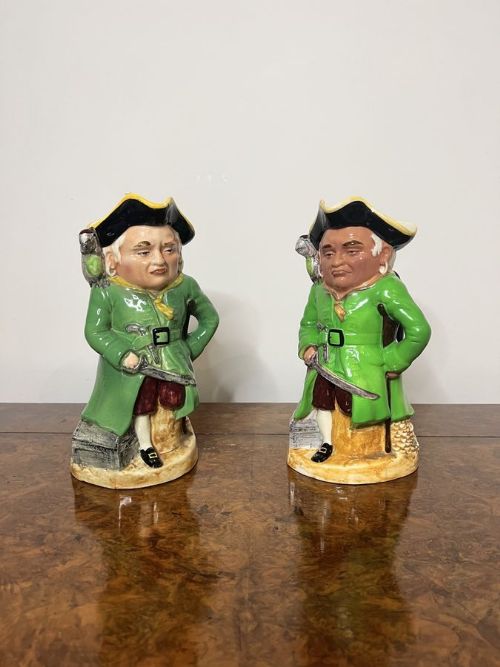
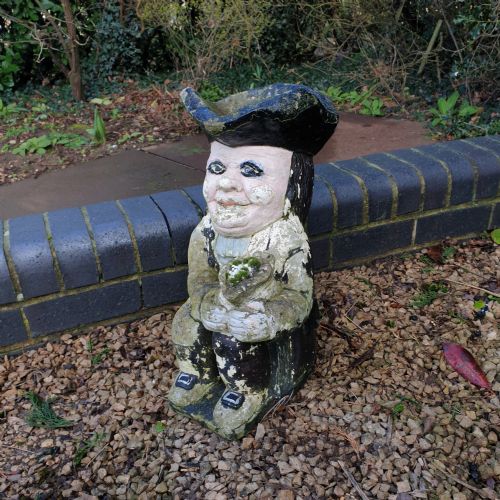
A vintage character jug represents seated figures or portrait busts modelled as drinking vessels, often depicting notable historical figures or traditional caricatures. The selection ranges from Victorian Staffordshire figures such as Lord Nelson and Mr Snuff to twentieth-century garden ornaments and smaller charms.
Staffordshire pottery dominates the early material, alongside Dutch Delftware interpretations and mid-century variations. Buyers encounter everything from large nineteenth-century earthenware table vessels down to tiny gold and enamel charms.
The common thread across these objects is the human form rendered in three dimensions, functioning historically as pouring vessels, decorative ornaments or personal jewellery.
Materials and methods
Victorian and Georgian examples rely heavily on Staffordshire potting traditions, where earthenware bodies receive lead or coloured glazes. Twentieth-century iterations incorporate precious metals such as nine-carat gold alongside enamel work for miniature charms.
Vintage Character Jug Retail Price Guide 2026
Typical asking prices for vintage character jug among the pieces listed under this phrase on Sellingantiques today, from the lower quarter to the upper quarter. They describe what is for sale here now, not the wider market.
Lord Nelson appears more than once, keeping a watchful ceramic eye over the collection alongside miniature gold charms.
Markers of quality
Quality rests upon the crispness of the modelling and the precision of the hand-painted glaze, which separates finely sculpted portraiture from simpler mass-produced wares. Early Staffordshire pieces show careful attention to facial expression and period costume detail.
The depth and brilliance of the ceramic glaze and enamel work dictate visual success, with superior examples retaining vibrant colour without excessive pooling or fading. Miniature charms depend on clean definition within the tiny metal and enamel stampings.
The Vintage Character Jug Glossary
- Toby Jug
- A pottery jug depicting a seated, heavy-drinking figure, usually wearing eighteenth-century attire and a tricorn hat. These vessels form the direct ancestor to later character jugs.
- Staffordshire Pottery
- Earthenware produced in the Staffordshire Potteries district of England. The region produced the vast majority of nineteenth-century figure jugs.
- Earthenware
- Porous pottery fired at lower temperatures, requiring a vitreous glaze to hold liquids. It serves as the primary body material for traditional jugs.
- Delftware
- Tin-glazed earthenware originating from the Netherlands or English imitators, recognisable by a white opaque surface painted in blue or polychrome.
Vintage Character Jug: Frequently Asked Questions
What is a character jug?
A character jug is a ceramic vessel shaped as the head or full figure of a specific person, historical personality, or stock character. They typically feature expressive facial details and period costume.
Unlike standard drinking vessels, these pieces prioritise sculptural form over utility, though many retain a functional pouring spout and handle.
How old are these jugs?
The pieces span from the Georgian era through the Victorian period and into the mid-twentieth century. Earlier examples date back to the late eighteenth and early nineteenth centuries.
Twentieth-century variations include smaller novelty items, charms, and garden ornaments produced up to the nineteen-fifties.
Who do these jugs depict?
Common subjects include military figures such as Lord Nelson and Lord Kitchener, alongside traditional archetypes like the Squire or Mr Snuff. Makers also portrayed anonymous historical drinkers and local characters.
The choice of subject often reflects the popular sentiment or notable historical events of the manufacturing period.
Where were they made?
The majority originate from English potteries, particularly the Staffordshire region renowned for figure ceramics. Some continental European pieces, including Dutch Delftware interpretations, also appear.
Production methods shifted from localized hand-finishing in nineteenth-century workshops to broader manufacturing processes by the mid-twentieth century.