



Vintage Chaise Longue
A vintage chaise longue offers an invitation to recline in style, combining deep upholstery and timber frames across eras from Regency to Art Deco.
Vintage Chaise Longue
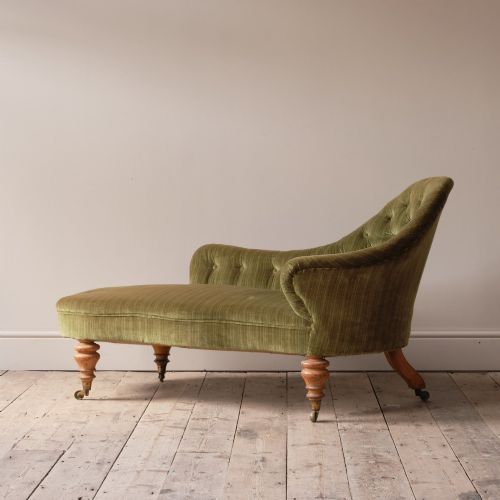
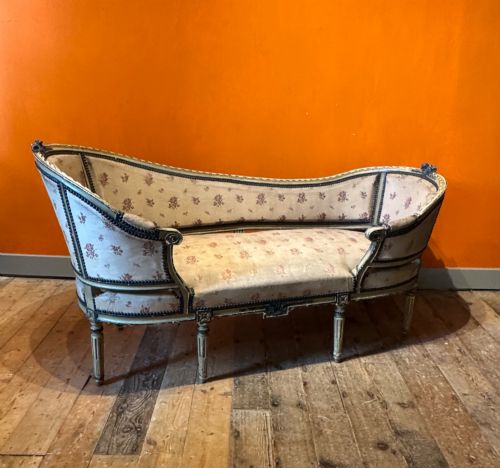
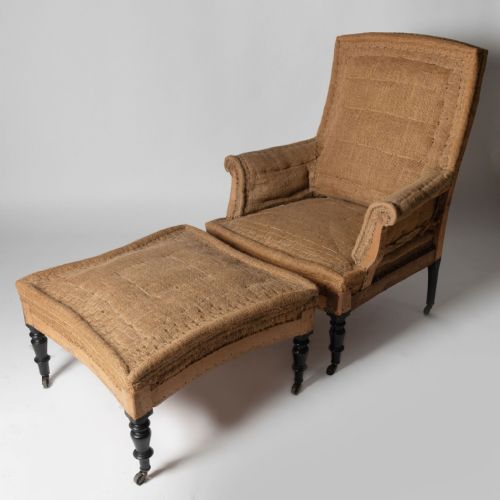
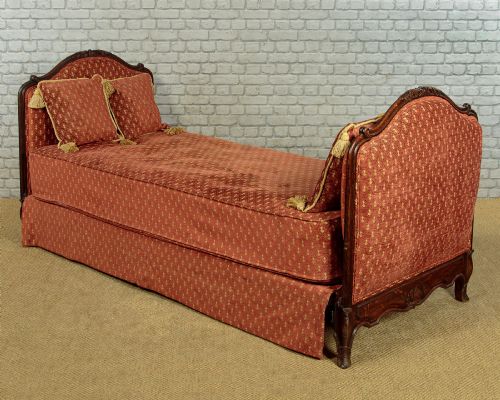
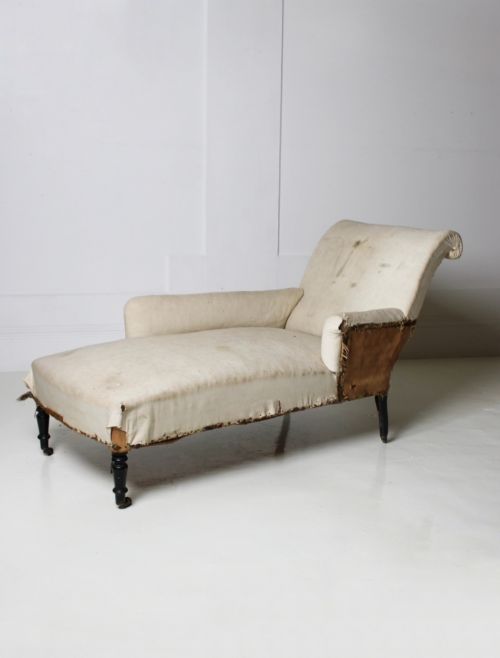
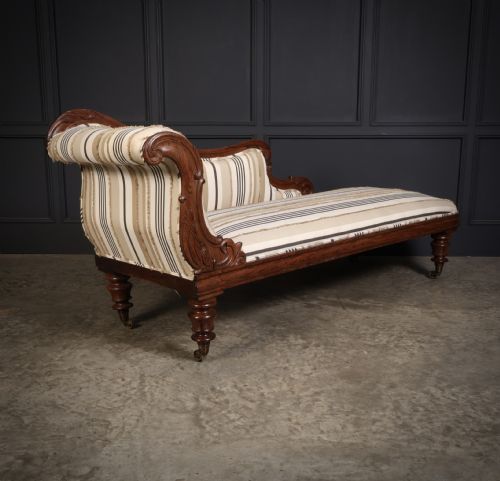
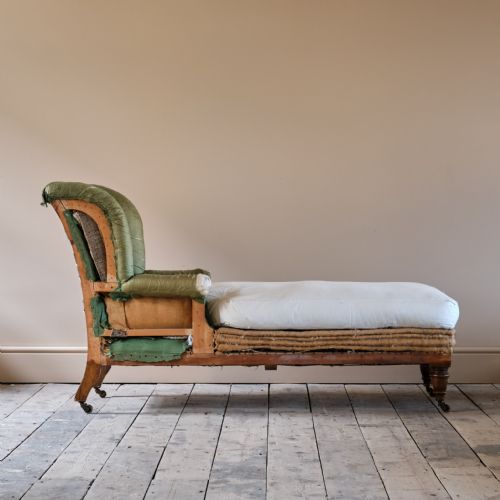
A vintage chaise longue brings together daybeds, long stools, and reclining seats designed for horizontal relaxation within domestic interiors. These pieces span centuries of design, with nineteenth-century examples sitting alongside early twentieth-century creations.
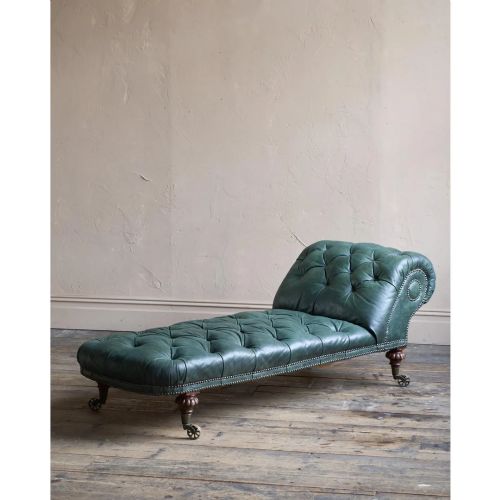
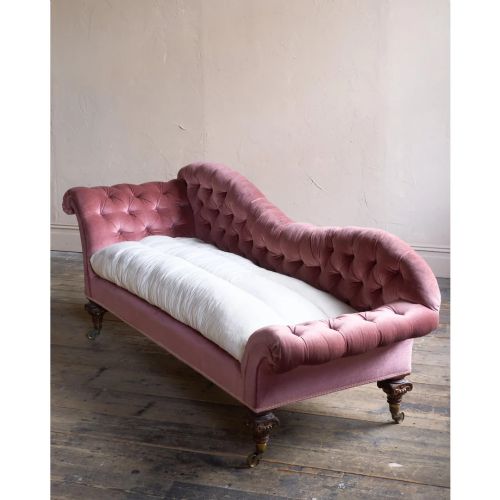
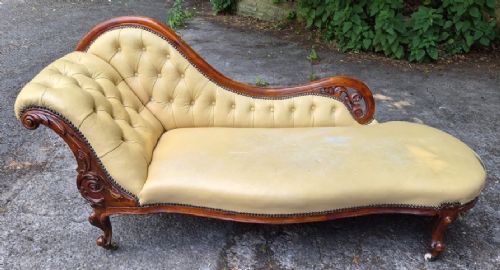
Victorian and Regency iterations dominate the selection, often taking the form of carved mahogany frames, scroll-end settees, or buttoned velvet daybeds. Buyers will also encounter French provincial daybeds, colonial campaign styles, and Edwardian oak frames.
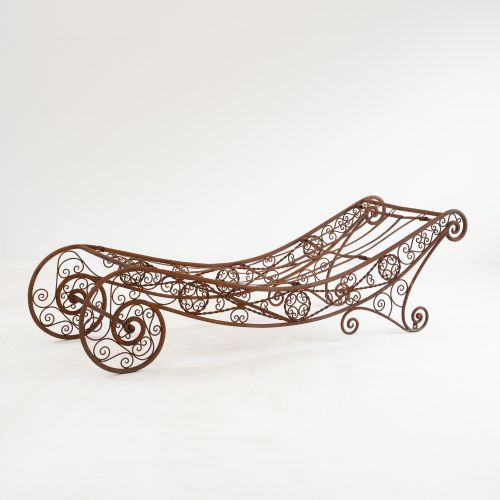
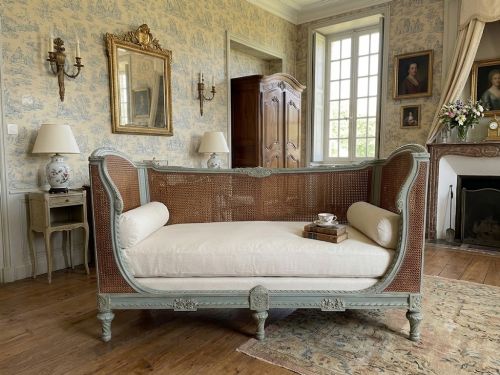
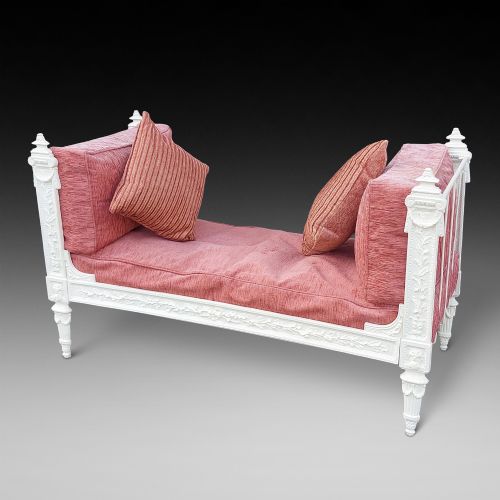
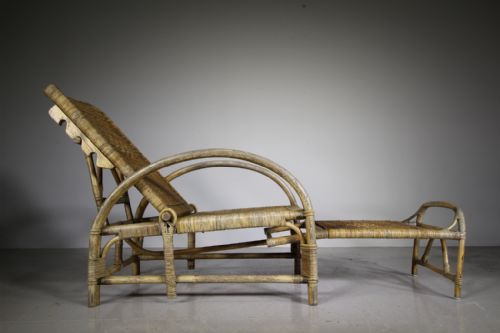
The selection includes garden daybeds in cast iron and wicker, alongside indoor seating ranging from Chesterfield styles to Louis XVI painted cane models.
Materials and construction methods
Timber frames form the backbone of these pieces, utilising mahogany, rosewood, oak, and ebonised wood shaped through turning, carving, and scrollwork. Metal variants appear in cast iron and wrought iron, particularly among garden daybeds and campaign pieces.
Upholstery relies on traditional textiles including velvet, leather, and various woven fabrics, often secured with buttoning. Caning and rattan provide lightweight support panels on French and English frames alike.
Vintage Chaise Longue Retail Price Guide 2026
Typical asking prices for vintage chaise longue among the pieces listed under this phrase on Sellingantiques today, from the lower quarter to the upper quarter. They describe what is for sale here now, not the wider market.
Listings feature items spanning the nineteenth and twentieth centuries, utilising mahogany, velvet, brass, cane, and wrought iron.
Distinctions in craftsmanship and design
The division between standard examples and exceptional pieces rests on the harmony of the timber frame and the sophistication of the upholstery. Finer pieces display deeply carved mahogany or rosewood structures with integrated scroll ends and robust joinery.
Makers known for quality upholstery and cabinet work bring an elevated standard of execution to the frame and stuffing. The integration of secondary materials like brass castors, cane panels, or gilt decoration further elevates the standing of individual pieces.
Angraves of Leicester·Howard & Sons·Jas Shoolbred·William Birch·Hampton & Sons
The Vintage Chaise Longue Glossary
- Chaise longue
- A long chair intended for reclining, combining the backrest of a sofa with the seat of a chair or daybed.
- Daybed
- A couch that can be used for lounging, reclining, or sleeping, often featuring a single raised end or back.
- Cané
- Woven rattan, cane, or split-reed material used to form light, breathable panels for seats and backs.
- Scroll end
- A sweeping, curved wooden terminal on a sofa or daybed frame, typical of Regency and Victorian designs.
- Buttoned
- An upholstery technique where deep buttons are pulled through the padding to secure the fabric and create a diamond pattern.
Vintage Chaise Longue: Frequently Asked Questions
What is a vintage chaise longue used for?
These pieces serve as lounging seats designed for semi-recumbent resting in living rooms, bedrooms, and studies. They provide an extended seat for stretching out while maintaining an upright backrest.
Historically, they offered a comfortable daytime retreat without requiring the user to retire to a bed. Today, they function as sculptural seating and reading spots within traditional and modern interiors.
How do I identify a Regency daybed?
Regency pieces often display classical mahogany frames, sabre legs, and characteristic scroll ends inspired by ancient Greek and Roman furniture. The woodwork is typically clean-lined with understated classical restraint.
Makers working in this manner often employed rich mahogany or rosewood, sometimes incorporating brass mounts or inlay. The silhouettes remain architectural and balanced.
Where should I place a daybed?
Daybeds work effectively against a living room wall, beside a large window, or floating at the foot of a large bedroom. Their asymmetric shape allows them to anchor an empty corner.
Because many examples feature finished backs or interesting side profiles, they can sit away from walls to divide a larger space. Placement should account for the length of the frame and the direction of the scroll or backrest.
Are garden daybeds weather resistant?
Garden daybeds constructed from cast iron, wrought iron, or treated wicker were built to withstand outdoor environments. Over time, metal surfaces develop patinas through exposure to the elements.
Upholstered components on antique garden pieces generally require protection from damp conditions. Wicker and cane elements benefit from sheltered placement on verandas or under garden structures.