




Vintage Ceramic Pedestal Stands
These vintage ceramic pedestal stands and associated vessels range from bold Majolica jardinieres to delicate porcelain comports.
Vintage Ceramic Pedestal Stands
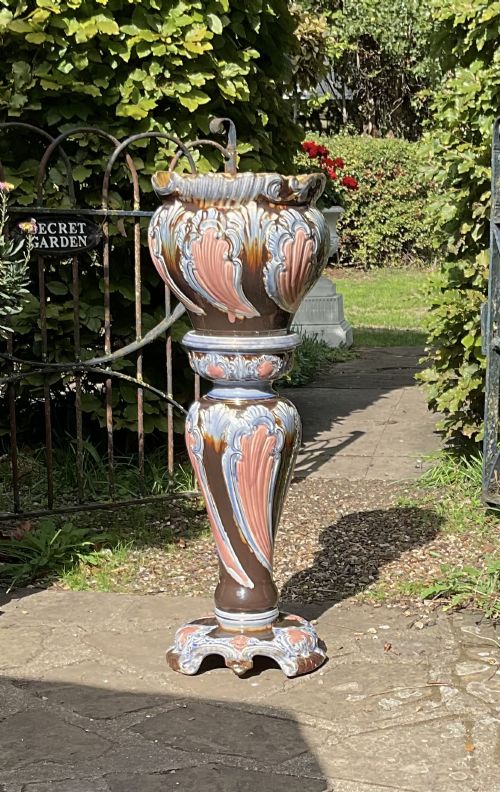
Vintage ceramic pedestal stands and related jardiniere pieces encompass large planters, footed comports, and centrepieces designed to elevate plants and display fruit. When searching for vintage ceramic pedestal stands, buyers encounter substantial glazed earthenware and ironstone vessels often resting on figural or decorated bases.
The selection on this page draws heavily from nineteenth-century and early twentieth-century traditions, including Victorian, Arts and Crafts, and Art Deco styles. Forms vary from naturalistic pottery planters with lions head decoration to elaborate Italian Majolica jardinieres.
Makers span diverse origins, from English potteries like Mason's and Royal Worcester to continental European works such as Schierholz Plaue and Julius Dressler. Buyers frequently find robust earthenware bodies finished with colourful glazes suited to both interior display and conservatory use.
Materials and construction
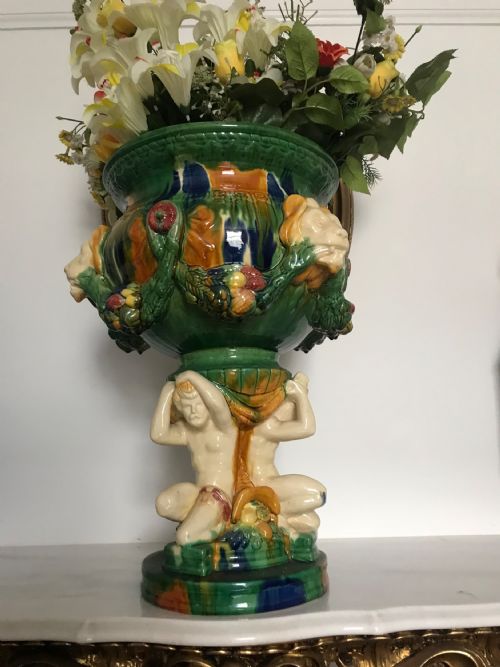
Potters relied primarily on earthenware, ironstone, and porcelain, shaping the clay by hand or mould before applying dense lead or tin glazes. Majolica pieces utilised rich coloured glazes over moulded reliefs to create high-relief textures like applied roses, putti, and naturalistic foliage.
Some decorative examples incorporated applied details such as gold leaf accents or structural elements combining ceramic bowls with wooden or figural stands. Firing techniques across the Victorian and Edwardian periods ensured durable, vitreous finishes capable of holding heavy soil and water for prolonged periods.
Vintage Ceramic Pedestal Stands Retail Price Guide 2026
Typical asking prices for vintage ceramic pedestal stands among the pieces listed under this phrase on Sellingantiques today, from the lower quarter to the upper quarter. They describe what is for sale here now, not the wider market.
Listings feature earthenware, glazed ceramic, ironstone, and porcelain across Victorian, Arts and Crafts, and Art Deco styles.
Assessing quality and craftsmanship
Quality in these pieces is dictated by the crispness of the moulding, the depth and richness of the glaze palette, and the complexity of figural modeling. Superior examples demonstrate finely hand-painted details, intricate applied ornamentation, and substantial body weight without structural clumsiness.
The hand of the maker plays a decisive role, where signed pieces from established potteries or known modellers exhibit superior artistic ambition in their floral and animalistic motifs. Glaze application also separates standard production wares from masterworks, with smooth, even coverage and vibrant colour separation marking the upper tier of the craft.
Schierholz Plaue·Julius Dressler·Royal Worcester
The Vintage Ceramic Pedestal Stands Glossary
- Majolica
- A type of earthenware glazed with opaque tin enamel and decorated with brightly coloured metal oxides. It became exceptionally popular during the nineteenth century for ornate plant stands and jardinieres.
- Comport
- A decorative footed bowl or dish used historically for serving fruit or sweets at the table. These ceramic pieces often mirror the pedestal form of larger planters.
- Jardiniere
- A large ornamental pot or stand designed to hold a live plant or floral arrangement. They frequently feature heavy relief decoration or figural bases.
- Ironstone
- A heavy, durable type of earthenware patented in the nineteenth century to rival true porcelain. It provides a robust body for large kitchen and decorative tablewares.
- Putti
- Depictions of plump, winged infant figures, frequently appearing as sculptural supports or decorative motifs in continental European ceramics.
Vintage Ceramic Pedestal Stands: Frequently Asked Questions
How were ceramic plant stands used?
Victorian and Edwardian households utilised these sturdy vessels to elevate potted palms and ferns within parlours and conservatories. The raised design protected indoor flooring from moisture while displaying botanical specimens at eye level.
Smaller comports served as decorative centrepieces on dining tables for fruit and confectionary displays. Their versatile forms allowed them to function both as practical containers and sculptural focal points within a room.
Can I use these planters outdoors?
Most antique earthenware and Majolica pieces are porous and sensitive to frost damage, meaning they are best kept in sheltered indoor environments. Exposing historic glazes and bodies to freezing winter temperatures can cause the ceramic material to crack or craze.
For modern indoor plant displays, using a plastic liner inside the antique vessel protects the historic interior from moisture and soil erosion. This preserves the structural integrity of the piece while allowing safe everyday use.
How do I date a ceramic pedestal?
Dating relies on stylistic clues, manufacturer marks stamped or painted on the base, and the specific clay composition. Victorian pieces often feature naturalistic motifs and heavy glazes, whereas Art Deco examples display geometric simplification and distinct moulding.
Examining the footring and underside reveals manufacturing methods characteristic of particular eras, such as nineteenth-century ironstone stamps or early twentieth-century continental signatures. Comparing these details against known production periods establishes the age of the piece.
What is the difference between ironstone and porcelain?
Ironstone is an opaque, heavy earthenware developed for maximum durability and strength, making it ideal for large domestic vessels. Porcelain is vitrified, translucent, and fired at higher temperatures to produce a delicate, vitreous body.
While ironstone resists chipping through heavy daily use, porcelain focuses on refined elegance and intricate painted details. Both materials support pedestal and comport forms but offer distinctly different weights and visual textures.