

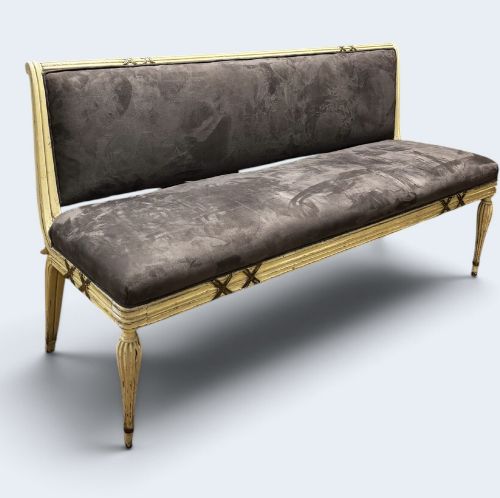
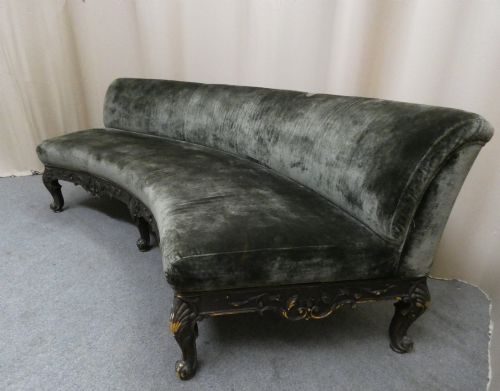
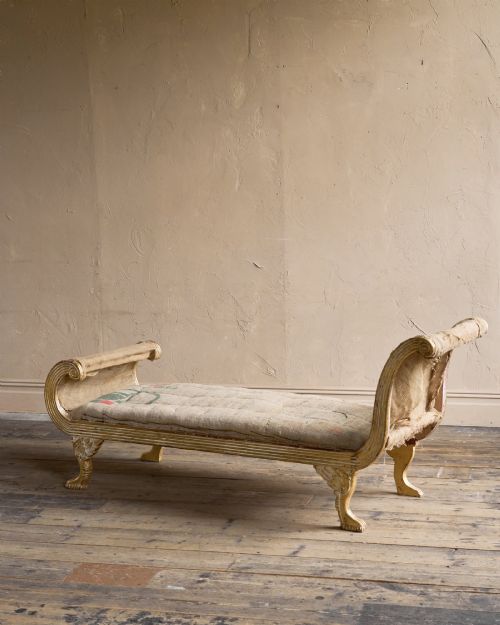
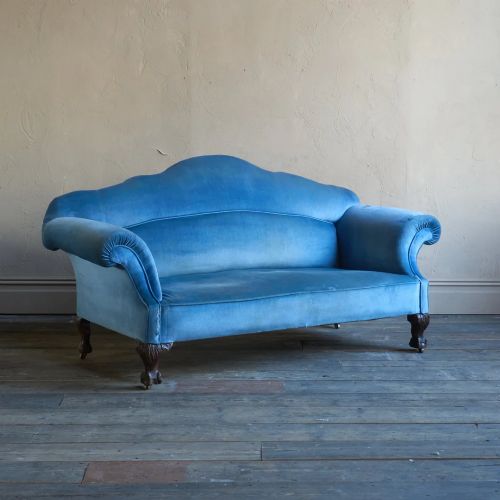
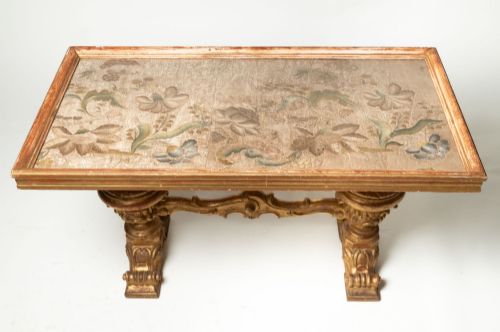

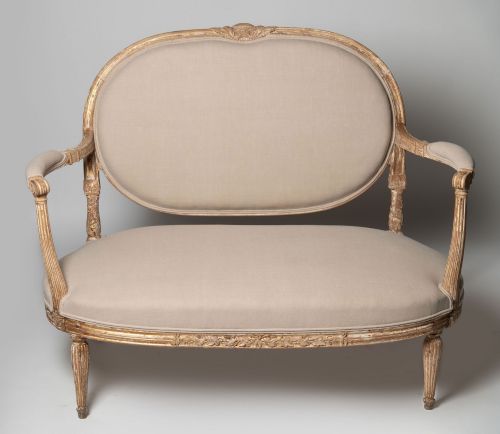
Vintage Carved Wood Sofa
These vintage carved wood sofa examples combine solid timber frames with period upholstery, offering both firm seating support and distinct historic character for a room.
Vintage Carved Wood Sofa
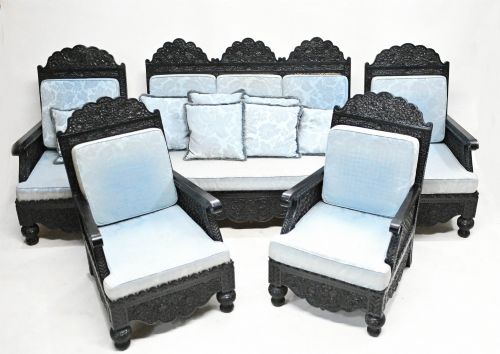
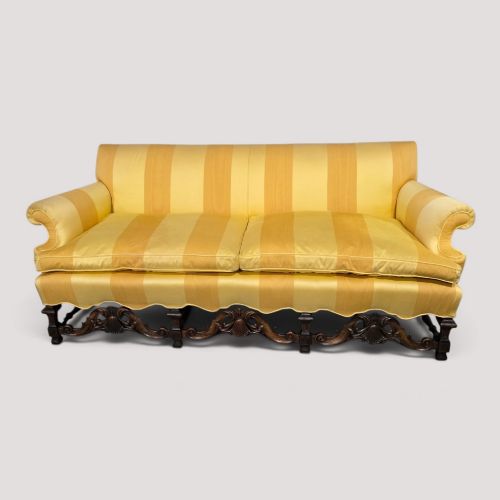
A vintage carved wood sofa brings together substantial timber framing and traditional seating forms from the nineteenth century onward. Buyers exploring this category encounter pieces originating from French provincial workshops, Edwardian parlours, and Anglo-Indian trading centres.
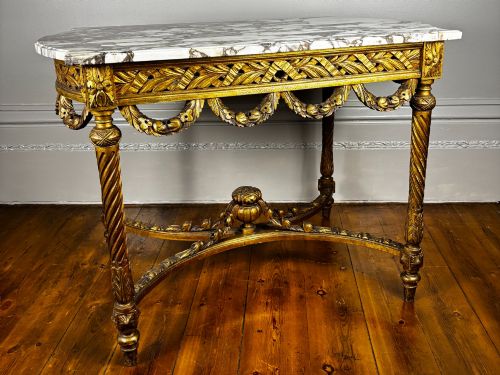
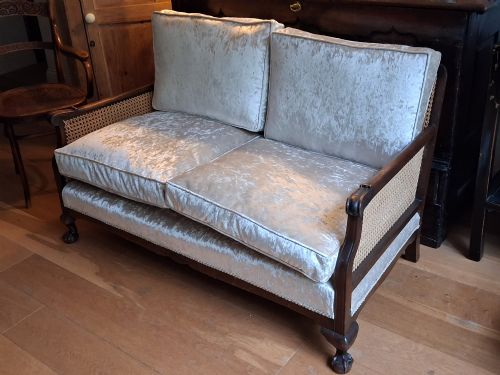
The selection ranges from French Louis XV style settees with cane work to robust oak-framed seating and carved walnut frames featuring ball and claw legs. These pieces serve as functional seating and focal points in domestic interiors.
How they were made
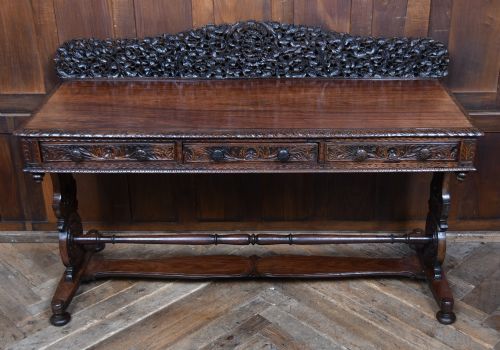
Cabinet makers utilised dense hardwoods such as mahogany, walnut, padouk, and oak to construct load-bearing frames. These timbers were carved by hand with decorative motifs, floral details, or structural mouldings before assembly.
Surfaces received finishes including giltwood, paint, or polished clear wax to highlight the grain of the wood. Caning, velvet trim, leather, and fabric upholstery were integrated into the frames using traditional webbing and stuffing techniques.
Vintage Carved Wood Sofa Retail Price Guide 2026
Typical asking prices for vintage carved wood sofa among the pieces listed under this phrase on Sellingantiques today, from the lower quarter to the upper quarter. They describe what is for sale here now, not the wider market.
Several pieces arrive with feather cushions, ensuring that eighteenth-century seating comfort survives alongside the carved woodwork.
What varies in quality
The definition of the hand-carved woodwork dictates the distinction between standard production and superior craftsmanship. Crisp execution of motifs and tight joinery at the frame corners demonstrate the skill of the original maker.
The integration of secondary materials such as cane work panels or gilt finishes affects the overall presentation. Intact original upholstery details or well-maintained timber patination elevate the standing of a piece.
The Vintage Carved Wood Sofa Glossary
- Bergère
- An enclosed upholstered armchair or sofa with wooden framing and cane or upholstered sides. This French seating form often includes loose seat cushions.
- Canapé
- A traditional French term for a decorative sofa or settee designed for multiple occupants. These pieces frequently exhibit carved wooden frames and exposed legs.
- Giltwood
- Timber treated with a thin layer of gold leaf or metallic paint over a prepared gesso ground. This treatment appears on decorative nineteenth-century frames.
- Padouk
- A heavy tropical hardwood valued for its reddish hue and durable qualities. Makers in colonial workshops utilised this timber for carved furniture suites.
Vintage Carved Wood Sofa: Frequently Asked Questions
How do I clean a carved wood frame?
Dust the carved wooden elements regularly with a soft, dry cloth to prevent dirt accumulation in the recesses. Avoid harsh chemical cleaners that strip the historic finish.
Apply a microcrystalline wax sparingly to nourish exposed wood surfaces when the timber appears dry. Buff gently with a clean cloth to restore a natural lustre.
What rooms suit these sofas?
These seating options anchor formal living spaces, studies, and large reception rooms where period furniture sets the decorative tone. Their detailed frames work well against neutral walls.
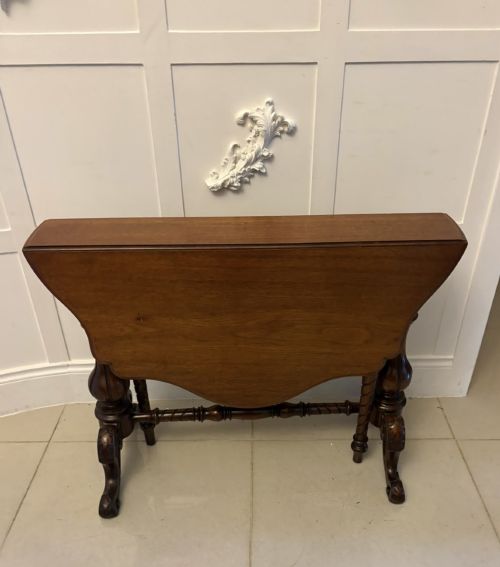
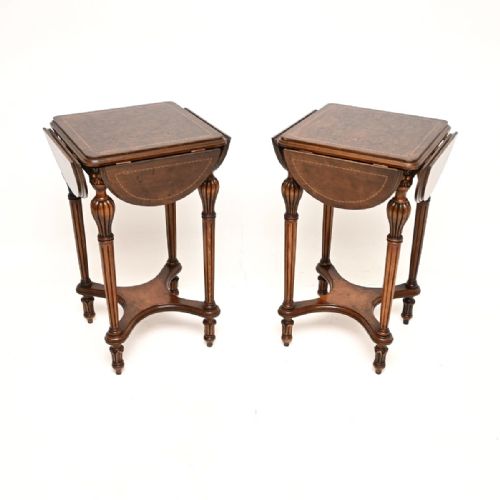
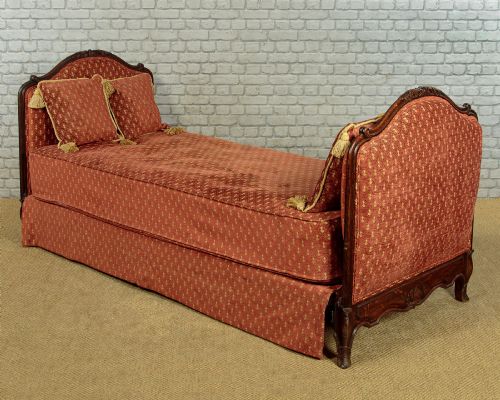
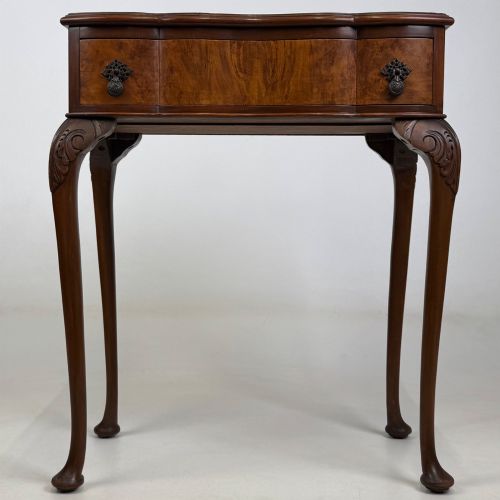
In bedrooms or dressing areas, smaller settees and daybeds provide functional seating without overwhelming the floor plan. Pair them with complementary side tables from the same era.
Can I reupholster a vintage sofa?
Professional reupholstery preserves the underlying wooden frame while updating the fabric to suit modern interiors. Traditional methods use horsehair, springs, and webbing to maintain the correct profile.
Consult a restorer who understands period upholstery techniques to protect the value of the piece. Retaining the original webbing structure safeguards the historic integrity of the frame.
How do I identify French styles?
French revival pieces display characteristic design elements such as cabriole legs, carved floral crests, and painted or gilded surfaces. Louis XV and Louis XVI styles dictate the curvature and symmetry of the woodwork.
Examine the construction joints and timber types beneath the upholstery where accessible. Provincial pieces often combine local woods with simplified versions of court designs.