
Vintage Carved Ottoman
These vintage carved ottoman pieces and related stools range from mid-Victorian walnut frames to intricately inlaid Middle Eastern designs.
Vintage Carved Ottoman
When you search for a vintage carved ottoman, you find low upholstered seats, footstools, and occasional trunks that date from the nineteenth century into the early twentieth century. The selections span revivalist European designs alongside Anglo-Indian, Moorish, and Middle Eastern workshops.
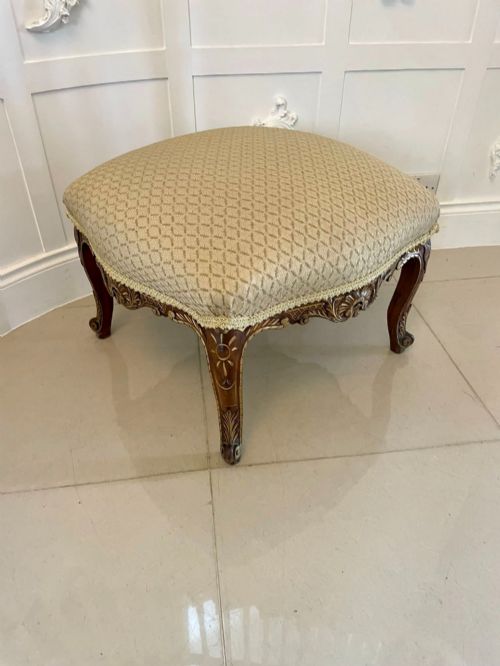
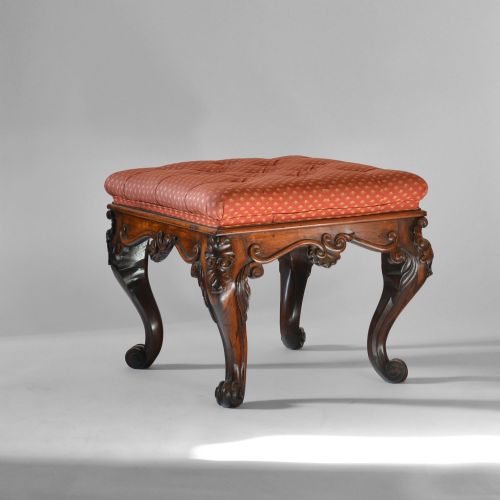
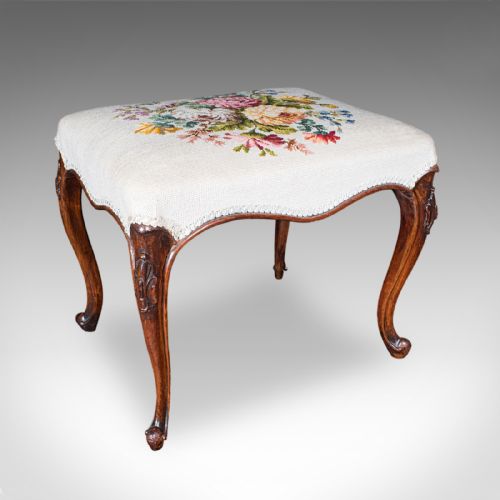
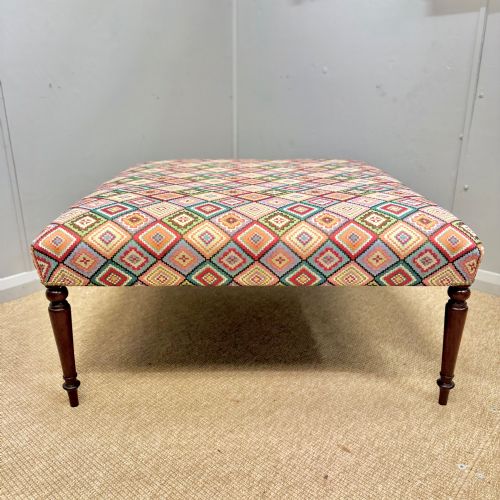
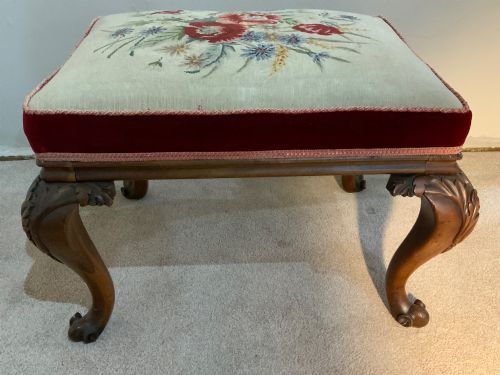
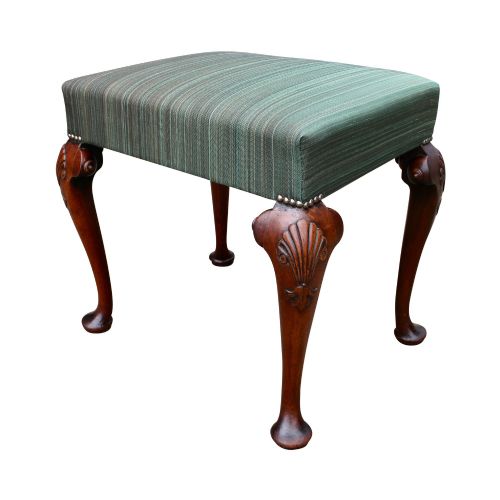
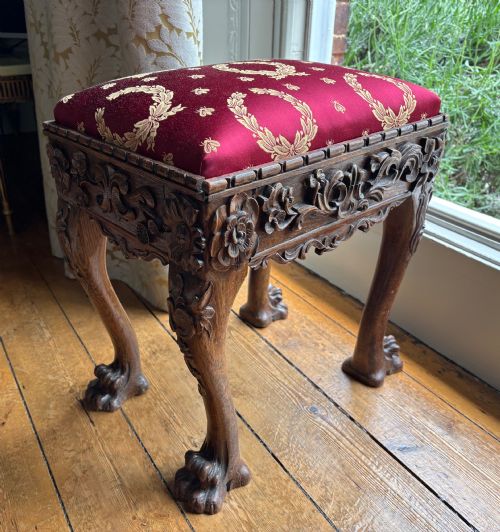
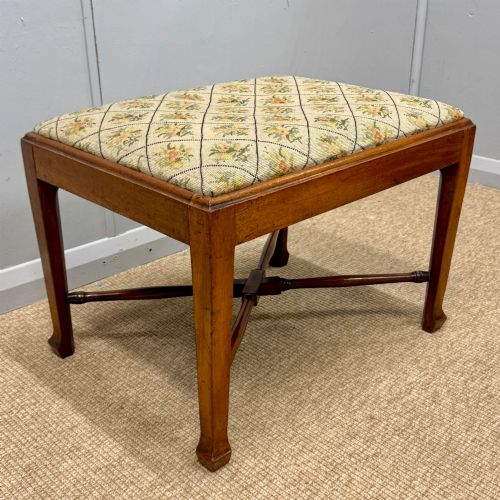
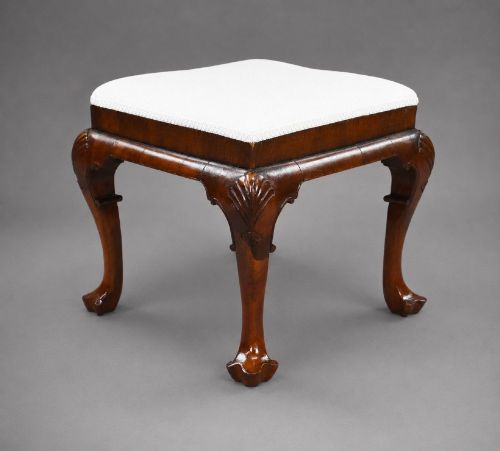
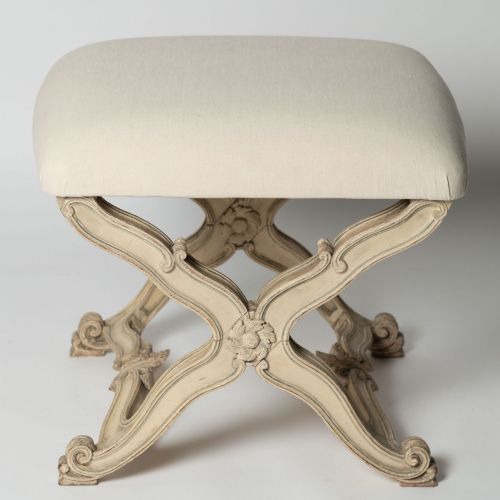
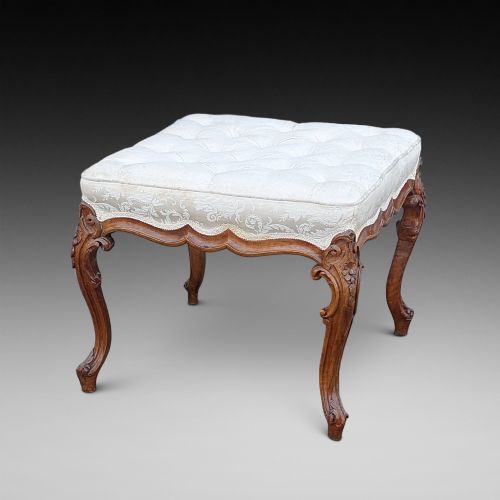
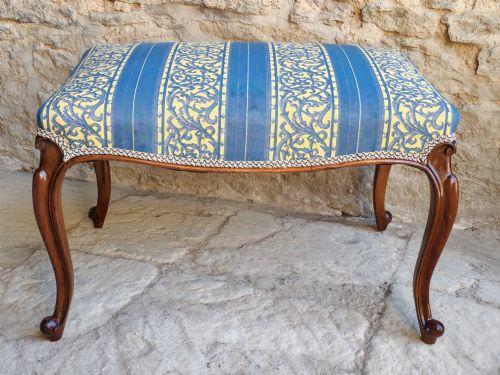
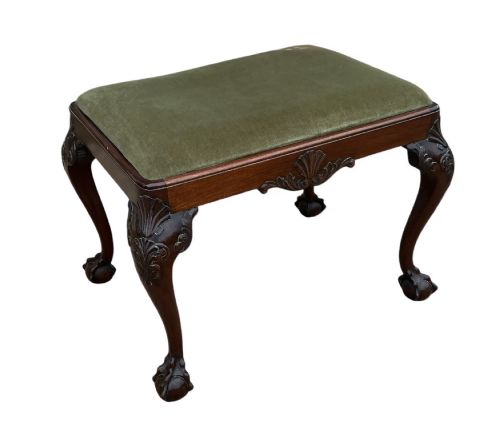
The most common formats on this page are sturdy wooden stools featuring carved cabriole legs, upholstered needlepoint tops, or buttoned leather surfaces suitable for domestic use as low seats or coffee tables.
Origins stretch across English, French, and Scottish cabinet-making traditions, alongside imported hardwood and inlaid items from Damascus and Kashmir.
Materials and construction
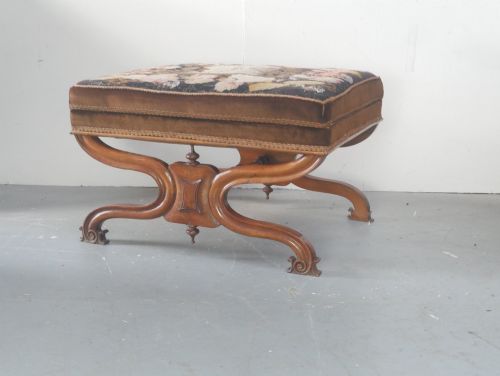
Makers relied heavily on dense hardwoods like walnut, mahogany, and rosewood, carving structural frames with cabriole legs, scroll feet, or cross stretchers to bear weight. Giltwood and painted finishes appear frequently on continental European seating.
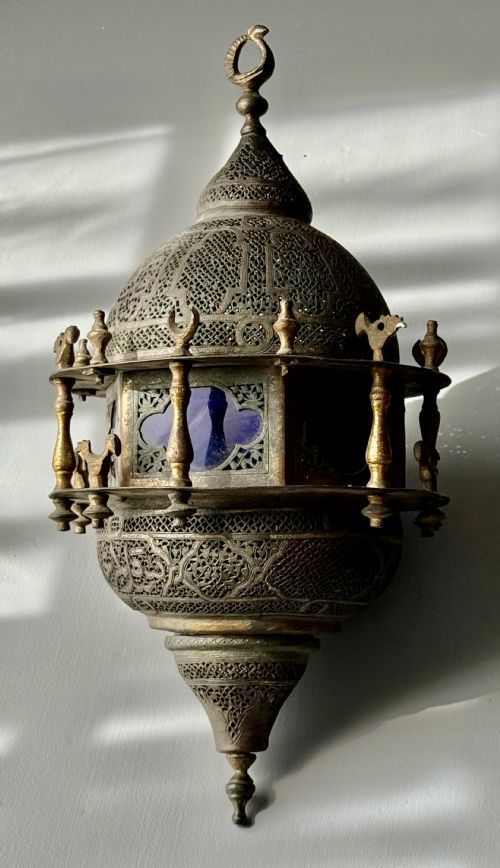
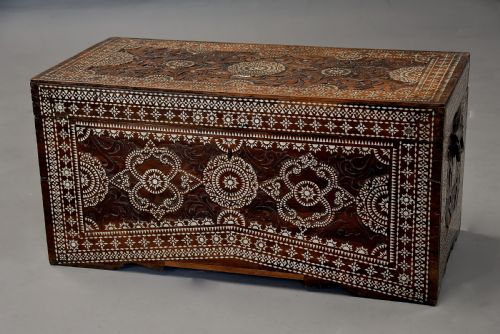
Decorative surfaces often incorporate detailed hand-carving, pierced brass work, or intricate mother-of-pearl inlay embedded into hardwood panels. Upholstery utilises traditional stuffing materials paired with contemporary or period textiles, needlepoint, tapestry, and hand-dyed leather.
Listings feature woods such as walnut, mahogany, rosewood, and hardwood, alongside decorative additions like mother-of-pearl and brass.
Assessing quality
Quality rests primarily on the depth and crispness of the timber carving and the integrity of the underlying wooden frame. Pieces retaining their original joinery without excessive replacement parts stand apart from heavily restored examples.
The sophistication of secondary materials also dictates standard, with genuine mother-of-pearl inlay and hand-stitched needlework or tapestry elevating the piece above plain upholstered variants.
Liberty and Co
The Vintage Carved Ottoman Glossary
- Cabriole leg
- A furniture leg that curves outward at the knee and tapers inward to an ankle or foot, imitating an animal shape. This form appears frequently on mid-nineteenth-century walnut stools.
- Needlepoint
- Embroidery stitched on a canvas mesh grid to form dense geometric or floral patterns. It serves as the primary upholstery medium for many period footstools.
Vintage Carved Ottoman: Frequently Asked Questions
What is a vintage carved ottoman?
A vintage carved ottoman or low stool is a solid wood seating piece, often upholstered in leather, tapestry, or needlepoint. These items were produced across the nineteenth and early twentieth centuries in various revivalist and regional styles.
They serve primarily as footrests, low seats, or improvised coffee tables in traditional and eclectic living spaces.
How do I date a carved wooden stool?
Dating relies on identifying the prevailing stylistic cues, such as Victorian cabriole legs, Georgian proportions, or Moorish inlay techniques. Timber choice also offers clues, with solid walnut and mahogany dominating mid-nineteenth-century British output.
Examine the construction joints and underside for hand-tool marks which separate older handmade frames from later reproductions.
Can I use these stools as coffee tables?
Larger upholstered stools, particularly those with sturdy wooden frames and flat buttoned leather or textile tops, adapt readily to service as low coffee tables. Their solid construction easily supports books and decorative trays.
Ensure the height and surface area match your existing seating arrangement before adopting a footstool for daily table use.
What maintenance do antique upholstered stools need?
Routine care involves gentle dusting of exposed carved woodwork using a dry cloth and occasional conditioning for older leather surfaces. Upholstered textile tops benefit from light vacuuming with a soft brush attachment.
Avoid placing wooden frames in direct sunlight or near heat sources to prevent the timber from splitting or warping over time.