

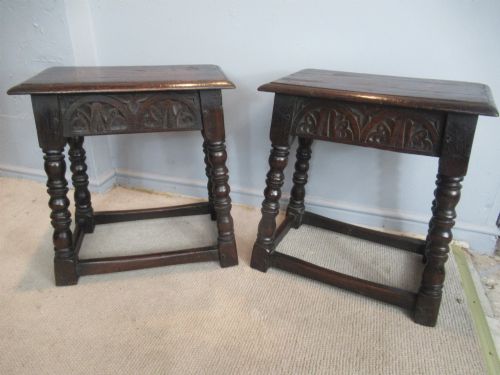
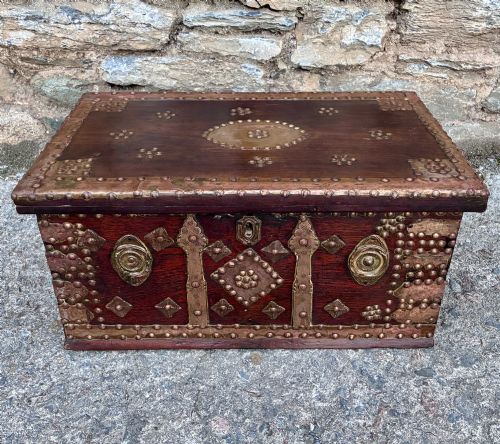
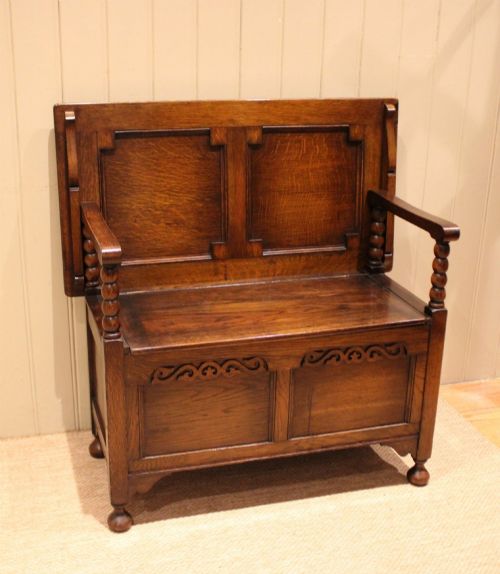

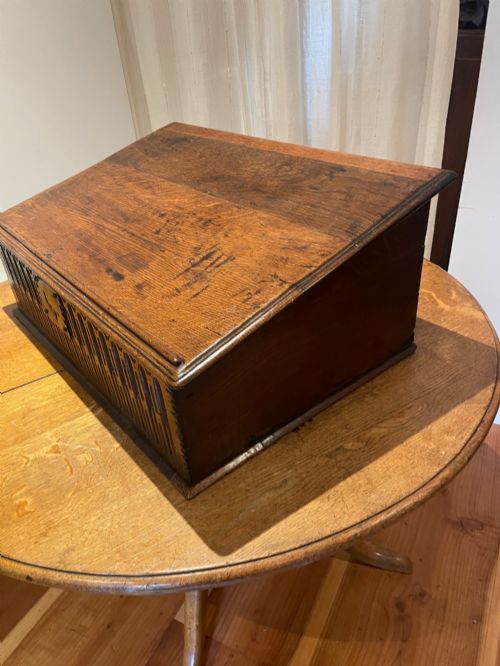


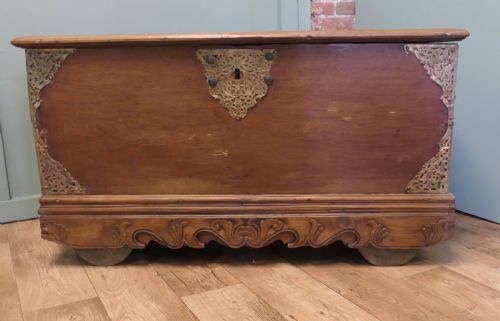
Vintage Carved Coffer
A vintage carved coffer brings solid construction and deep relief work into a room, offering practical storage with historic character.
Vintage Carved Coffer
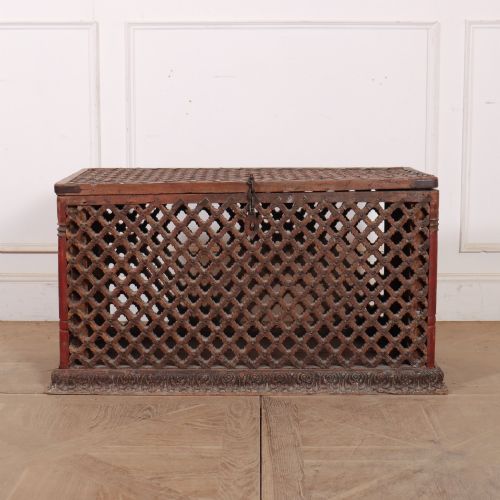
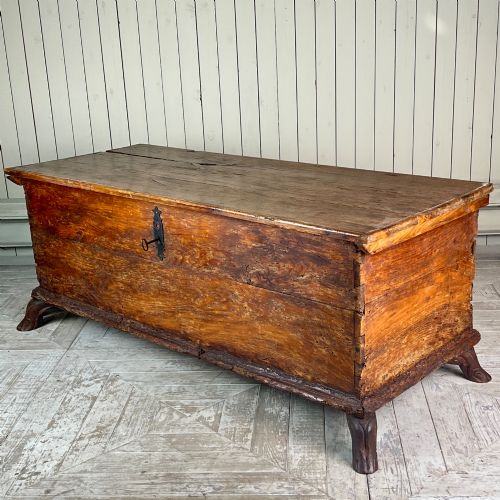
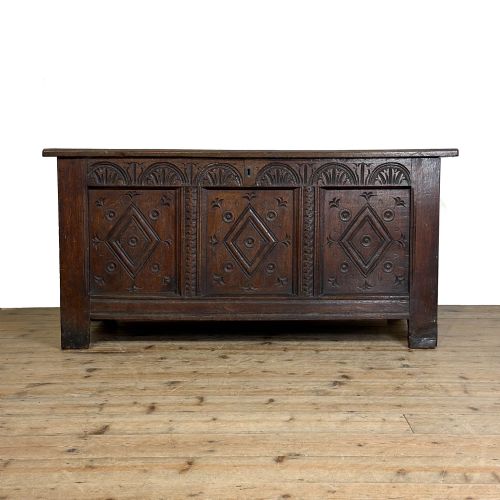
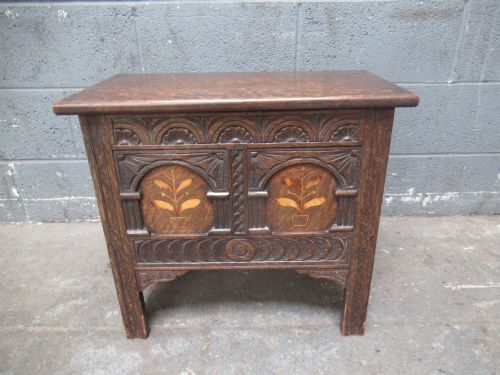
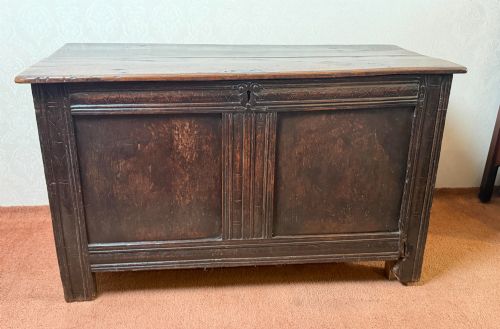
A vintage carved coffer is a heavy wooden storage chest or box, built with a hinged lid and panelled sides that often display intricate surface carving. When searching for a vintage carved coffer, buyers encounter forms ranging from small seventeenth-century oak Bible boxes to large twentieth-century blanket chests and Indian dowry trunks.
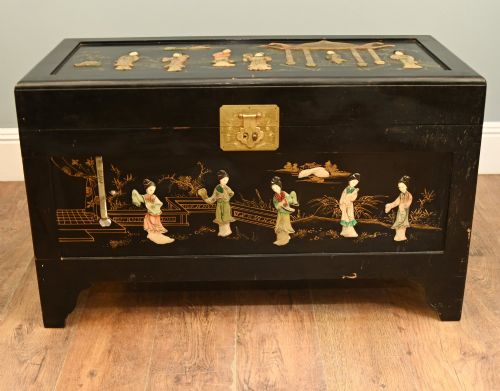
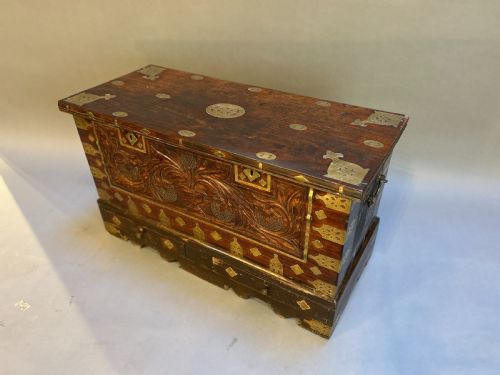
The pieces appearing in this selection draw on diverse regional traditions, including English Jacobean revival styles, Anglo-Indian colonial pieces, and Chinese camphorwood trunks. Oak remains the predominant timber, though workshops also utilised teak, camphor wood, elm, walnut, and general hardwoods.
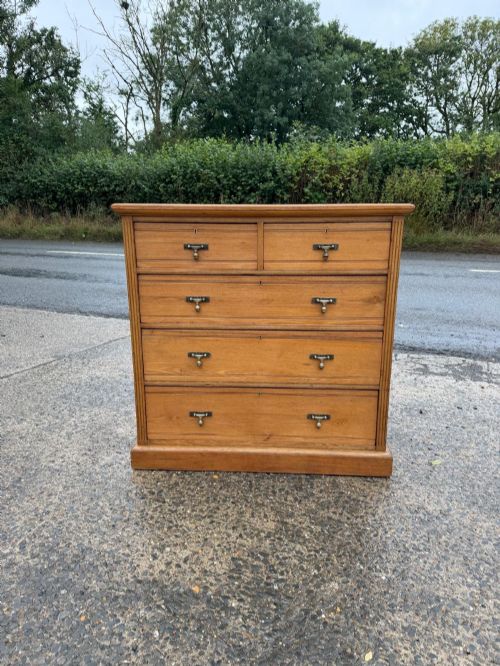
Beyond standard blanket chests, the category includes related forms such as monks benches, mule chests with lower drawers, and hall seats with lift-up lids. These items served traditional domestic roles for storing textiles, documents, and valuables, and they continue to function as heavy storage furniture in modern homes.
Materials and construction methods
Carpenters built these coffers primarily using solid timbers like oak, teak, and camphor wood, joined with traditional framing techniques such as mortise and tenon joints. Panels were rebated into grooves within the structural framework, allowing the wood to expand and contract naturally with changes in humidity.
Surface ornament relied on hand chisels to cut linenfold patterns, geometric strapwork, figural medallions, and foliage directly into the solid timber. Metalwork played a structural and decorative role, with blacksmiths forging iron hinges, straps, and corner braces, while brass studs and decorative mounts frequently adorned colonial and Middle Eastern chests.
Vintage Carved Coffer Retail Price Guide 2026
Typical asking prices for vintage carved coffer among the pieces listed under this phrase on Sellingantiques today, from the lower quarter to the upper quarter. They describe what is for sale here now, not the wider market.
The listings span from seventeenth-century oak Bible boxes to twentieth-century Arts and Crafts and revival pieces, incorporating oak, teak, camphor wood, and iron hardware.
Factors of distinction
The standard of a carved coffer rests upon the crispness of the hand chiselling and the integrity of the original timber frame. Pieces retaining their primary hinges, locks, and inner candle boxes hold greater documentary interest than those altered or rebuilt during later periods.
Proportion and wood selection also define the grade, with dense quarter-sawn oak figuring and well-balanced proportions commanding attention. Surface patination achieved through decades of handling and wax polishing separates pieces with continuous history from those stripped or excessively refinished.
The Vintage Carved Coffer Glossary
- Coffer
- A heavy wooden chest with a lid, used historically for storing valuables, linen, or documents. These pieces often feature panelled construction and raised feet.
- Linenfold
- A style of wood carving that imitates folded linen cloth, frequently seen on sixteenth and seventeenth-century panels as well as later revival furniture.
- Bible box
- A small, portable desk or storage box with a sloping or flat lift top, designed originally to hold sacred texts and family records.
- Mule chest
- A storage chest fitted with one or more drawers beneath the main internal compartment, bridging the design gap between the traditional coffer and the chest of drawers.
- Camphor wood
- An aromatic hardwood native to Asia, utilised for trunks and chests because its natural scent repels insects and protects stored textiles.
Vintage Carved Coffer: Frequently Asked Questions
What is a vintage carved coffer used for?
These chests serve primarily as functional storage for blankets, bed linen, and bulky household items while functioning as furniture pieces like coffee tables or window seats.
Their sturdy flat lids and deep interior spaces allow them to integrate easily into living spaces and hallways.
How do I date an oak coffer?
Dating relies on examining the construction marks, joint types, and tool marks visible on the inner panels and underside of the board. Hand-riven timber, blacksmith-made iron hinges, and pegged mortise joints typically indicate earlier periods, whereas twentieth-century revival pieces show machine sawing and standardised fixings.
Stylistic motifs also provide clues, as seventeenth-century panels display simple geometric strapwork while later revival pieces often copy those exact patterns with different tool characteristics.
Are these chests made of solid wood?
The vast majority of these coffers employ solid timbers such as oak, teak, elm, and camphor wood throughout their primary frames and panels. Cabinetmakers selected heavy hardwoods to ensure structural rigidity and to provide a stable medium for deep chisel carving.
Secondary woods might appear on internal drawer linings or baseboards in later composite pieces, but the external structure relies on solid boards.
How do I care for antique wood furniture?
Maintenance requires keeping the timber away from direct heat sources and sudden temperature fluctuations that cause wood to split or warp. Applying natural beeswax periodically nourishes the grain and preserves the surface sheen without building up synthetic residues.
Avoid using modern silicone polishes, which penetrate open pores and alter the historic patination of the wood.