



Vintage Carved Barometer
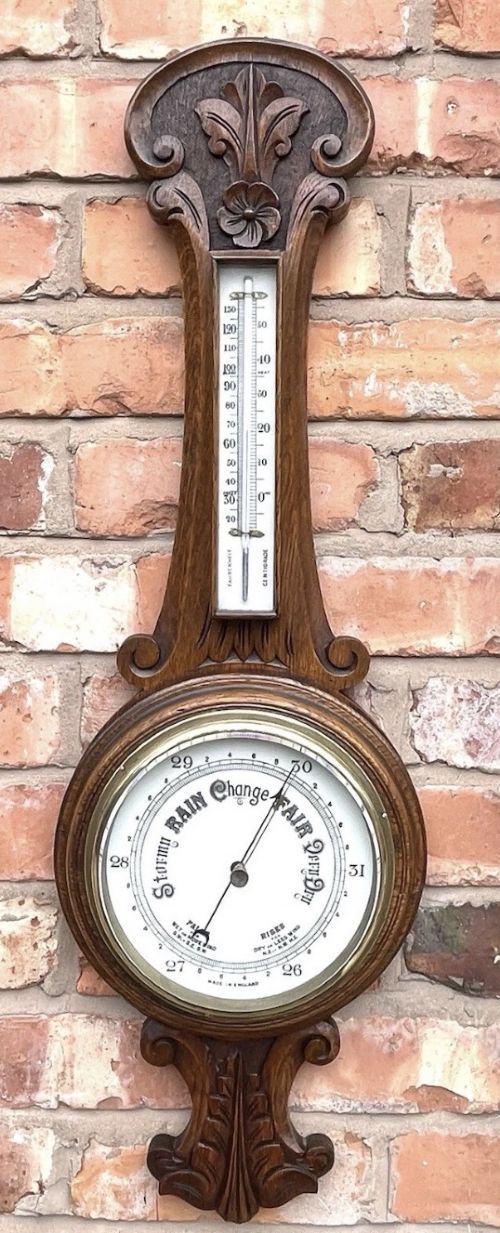
A vintage carved barometer measures atmospheric pressure while bringing rich timberwork and nineteenth-century craftsmanship directly onto the wall.
Vintage Carved Barometer
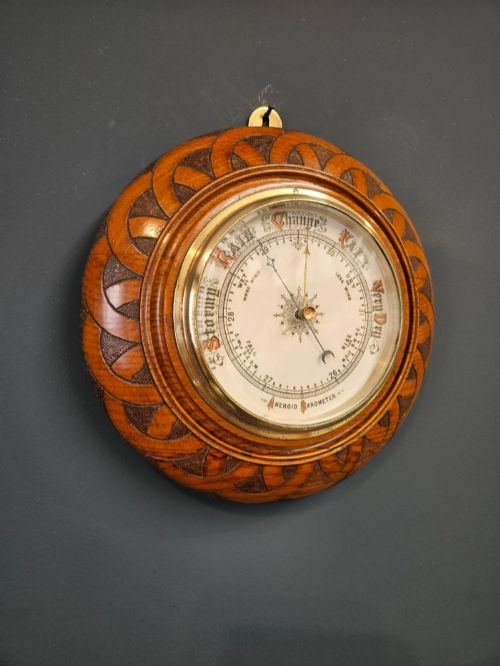
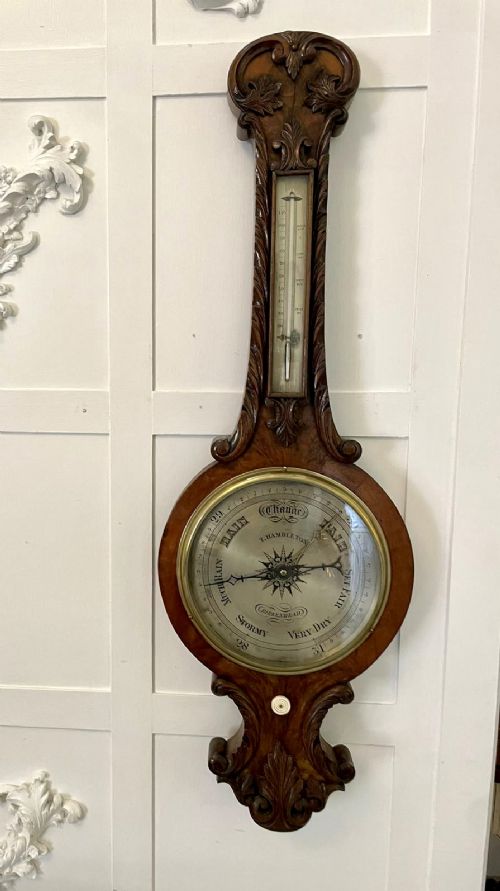
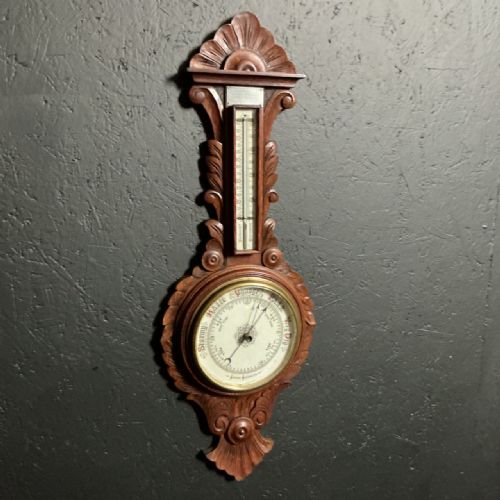
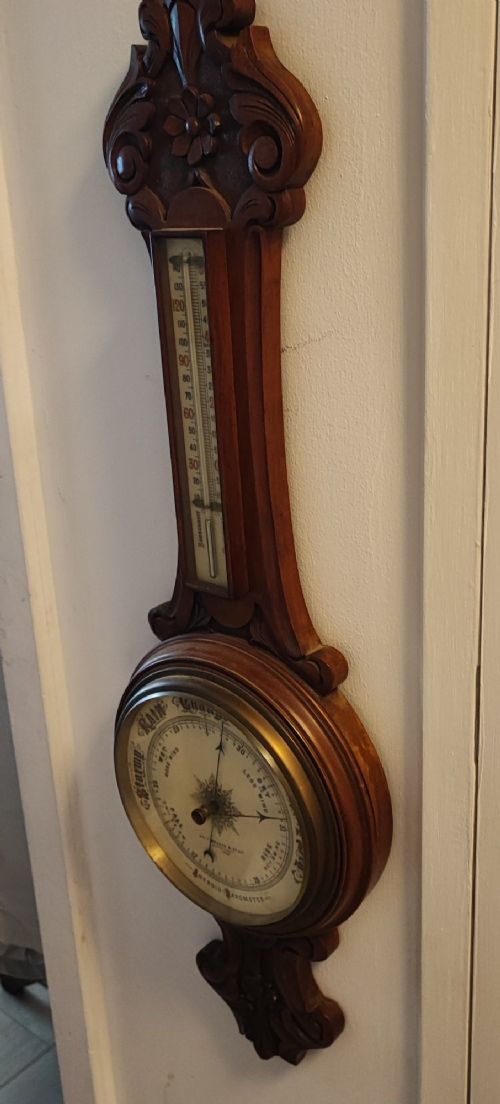
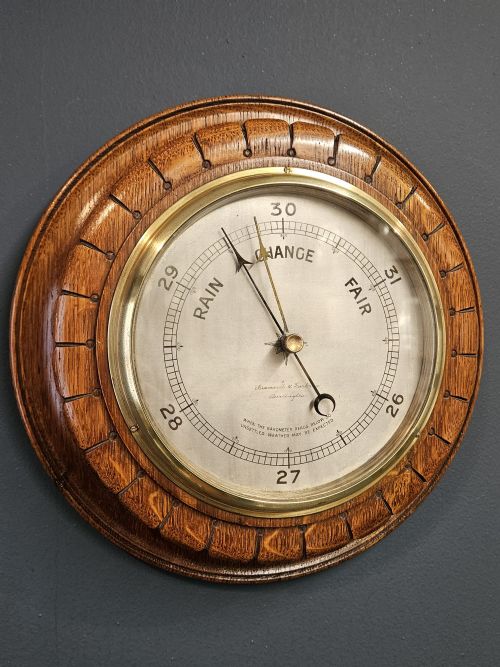
A vintage carved barometer is a functional weather-measuring instrument housed in an ornate wooden case, frequently taking the form of a banjo barometer or wall-hung instrument. These pieces primarily emerge from the Victorian and Edwardian eras, spanning the nineteenth and early twentieth centuries.
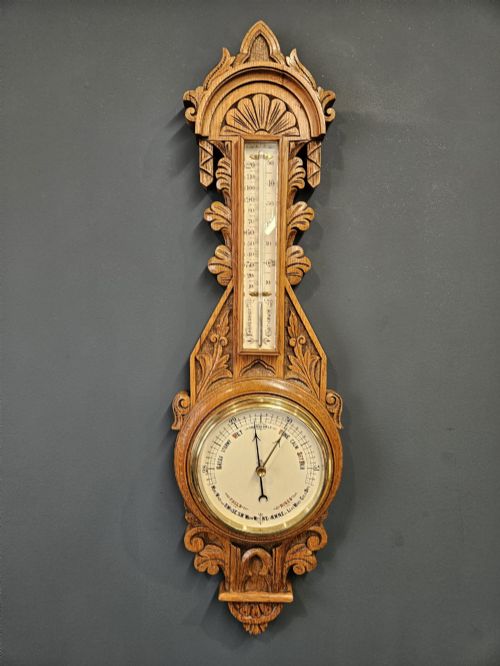
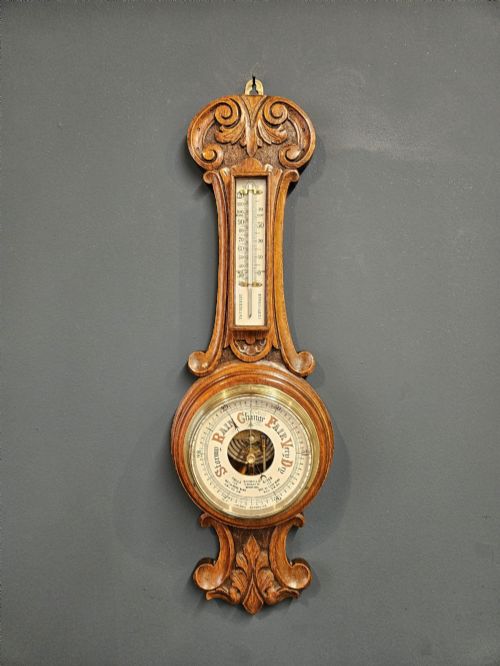
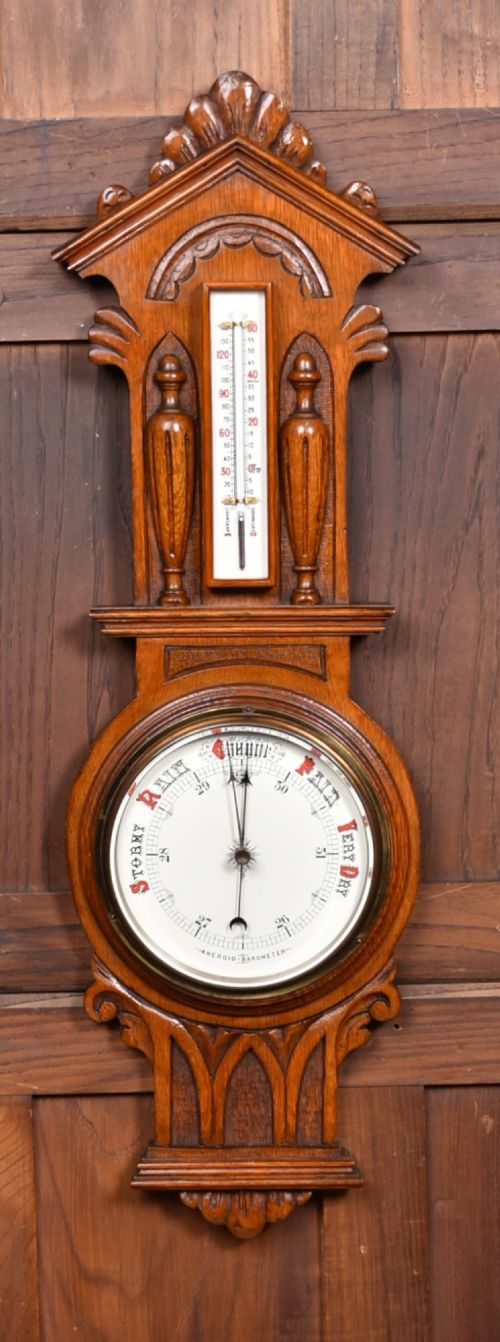
The version most commonly met on this page is the carved oak or walnut aneroid barometer, often incorporating a thermometer alongside the main dial. Such instruments reflect a period when domestic weather tracking combined scientific utility with heavy interior decoration.
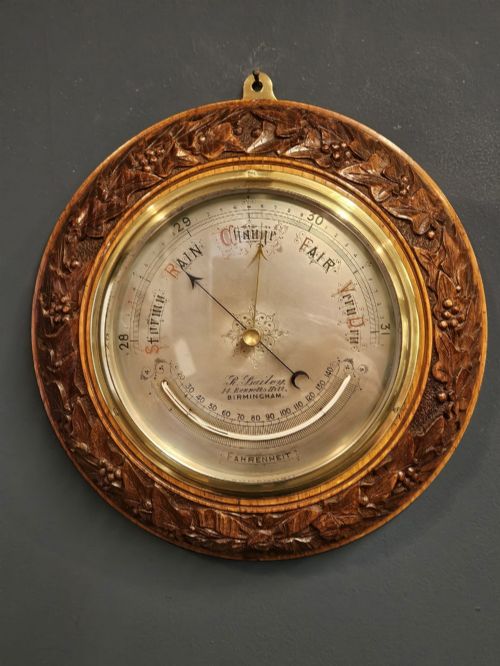
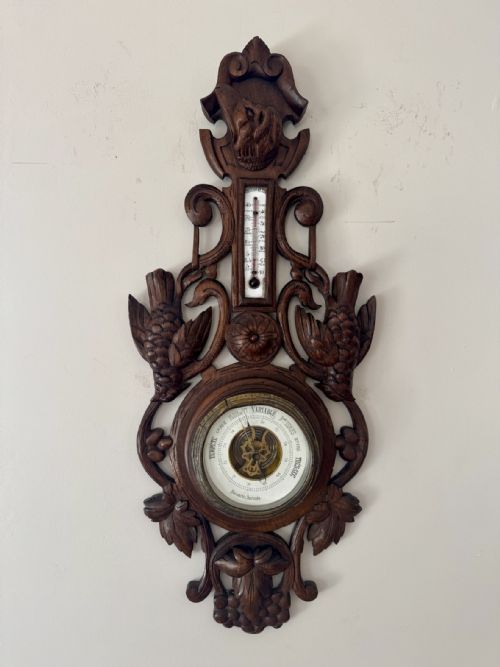
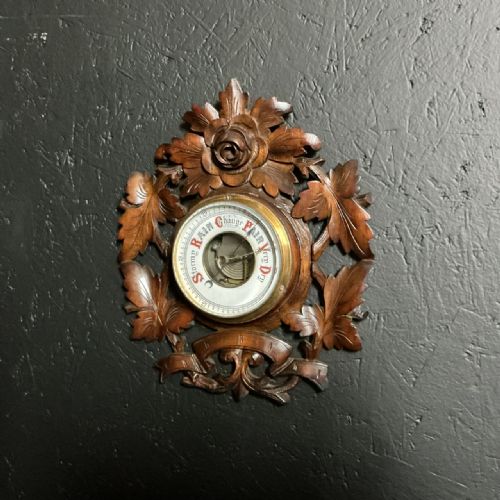
Examples range from compact household dials to large skeletonised aneroid models and distinctive Black Forest frames carved with naturalistic foliage. Regional British makers and continental workshops both contributed significantly to the surviving inventory.
Materials and construction
Timber selection dictated the character of each vintage carved barometer, with solid oak, burr walnut and mahogany providing dense foundations for deep relief carving and turned mouldings. Craftsmen utilised these woods to build sturdy wall cases that protected the delicate internal mechanisms.
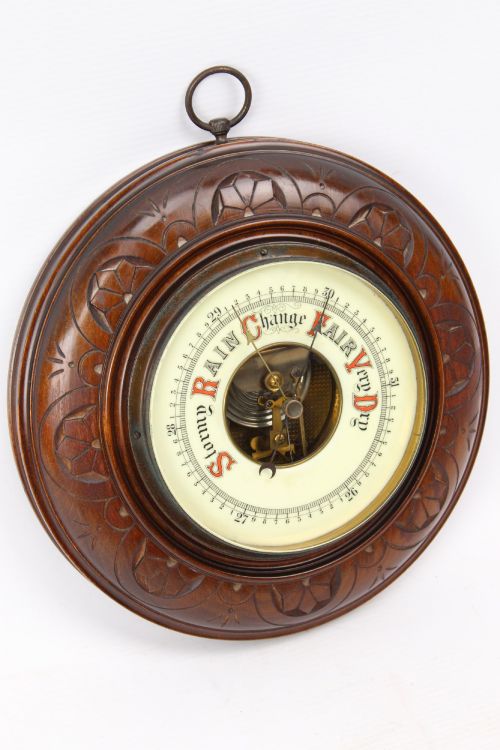
The mechanical heart relied upon either mercury-filled tubes in traditional stick barometers or sealed metal aneroid capsules that expanded and contracted with atmospheric shifts. Dials fashioned from porcelain, ceramic or silvered brass display engraved numerals and maker signatures beneath protective glass faces.
Vintage Carved Barometer Retail Price Guide 2026
Typical asking prices for vintage carved barometer among the pieces listed under this phrase on Sellingantiques today, from the lower quarter to the upper quarter. They describe what is for sale here now, not the wider market.
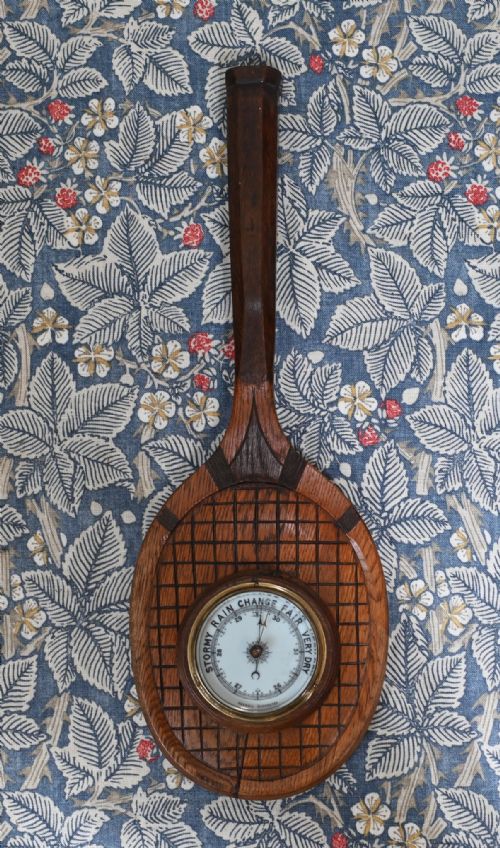
A tennis racquet club barometer proves that nineteenth-century players checked the air pressure before stepping onto the grass court.
Factors of quality
Depth and precision of the wood carving separate standard production items from masterworks, particularly in Black Forest or geometric Victorian designs where undercut foliage and crisp mouldings demonstrate superior hand skill. The integration of auxiliary instruments like thermometers or combined clock movements elevates the ambition of the piece.
The legibility and material quality of the dial face, whether engraved silvered brass or painted ceramic, influence the overall visual success of the barometer. Furthermore, the presence of recorded maker signatures from established opticians and instrument houses provides tangible proof of workshop pedigree.
Hyde & Sons Sleaford·Bramwell & Harbron of Darlington·Negretti & Zambra·W Watson & Sons
The Vintage Carved Barometer Glossary
- Aneroid barometer
- A barometer that measures air pressure using a flexible metal box called an aneroid capsule, without liquids. This mechanical design allowed instruments to be built into compact wall cases and banjo shapes.
- Banjo barometer
- A household weather glass housed in a shaped wooden case resembling a banjo, typically featuring a large round dial at the top and a thermometer stem below. It remains one of the most recognisable Victorian wall formats.
- Stick barometer
- A tall, vertical instrument containing a mercury-filled glass tube that directly measures atmospheric pressure changes against a visible scale. These pieces represent a more traditional scientific approach to domestic weather recording.
- Skeletonised barometer
- An instrument design that leaves the internal brass levers, springs and workings partially exposed behind glass for visual effect. This style highlights the intricate mechanical engineering behind the weather dial.
- Black Forest style
- A distinctive decorative carving tradition originating from Central Europe, characterised by deeply carved naturalistic motifs such as leaves, animals and woodland elements. These frames are frequently executed in walnut or oak.
Vintage Carved Barometer: Frequently Asked Questions
How do I read a vintage barometer?
The main dial displays pressure readings in inches or millibars, with indicator needles pointing towards terms like stormy, rain, change, fair and very dry. Tapping the glass gently before reading helps settle the needle to show the true pressure trend.
Changes in the pointer over subsequent hours indicate whether weather conditions are improving or deteriorating. Many instruments also feature a manually set brass pointer that you align over the current reading to track daily movement.
Where should I hang a wall barometer?
Hang your barometer on an interior wall away from direct sunlight, radiators and draughty doorways to ensure the internal mechanism responds solely to natural barometric pressure. Secure wall fixings are essential because hardwood cases in oak and walnut carry substantial weight.
Positioning the dial at eye level makes daily reading straightforward while showcasing the detailed wood carving and dial engraving. Avoid damp rooms like unheated kitchens or bathrooms, which can damage the timber case and metal components.
Are these barometers still accurate?
Many surviving aneroid barometers can be calibrated to show current local pressure accurately by adjusting the small screw located on the rear mechanism. Traditional mercury stick barometers also function reliably when the glass tube remains intact and uncompromised.
Because wood and internal metals respond to age and transport, minor discrepancies can occur without professional recalibration. Collectors generally appreciate these pieces for their historical engineering and decorative presence alongside their weather-predicting utility.
How do I distinguish Victorian from Edwardian pieces?
Victorian barometers generally feature heavier, darker timber cases with dense geometric carving, ornate mouldings or dramatic Black Forest foliage. The dial faces often display elaborate scrollwork and traditional typography associated with nineteenth-century manufacturing.
Edwardian examples tend towards lighter oak tones, simpler circular silhouettes and cleaner lines reflecting changing domestic tastes around the turn of the century. Examining the construction methods and any recorded maker marks helps confirm the specific era of production.