

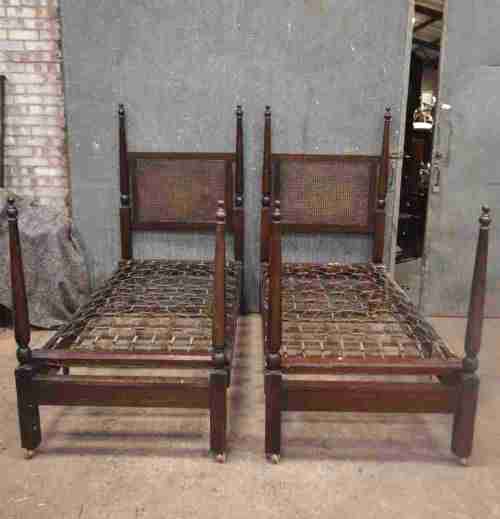
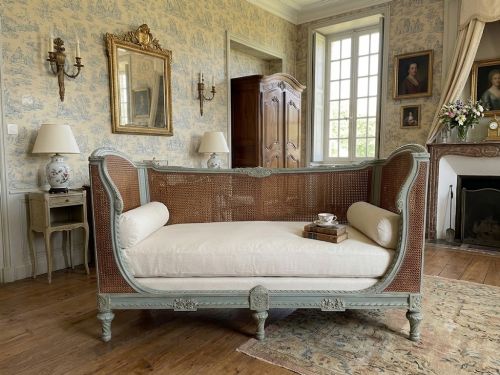
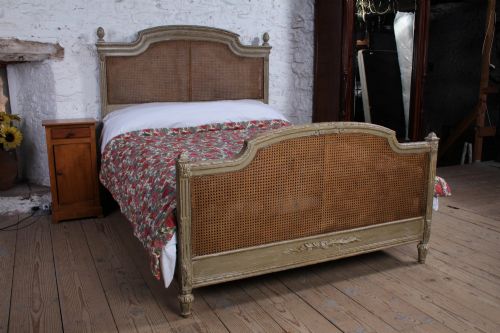


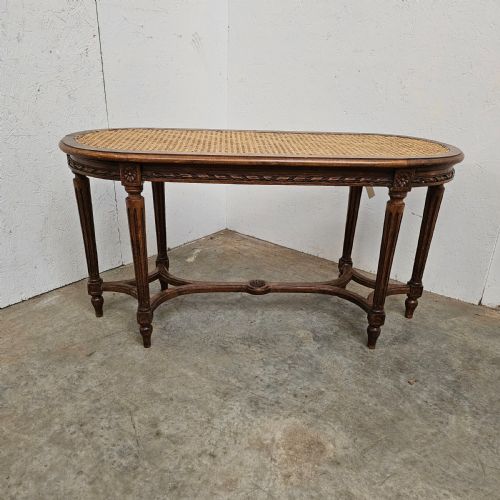


Vintage Caned Bed
A vintage caned bed brings lightness and texture to a bedroom through woven panels set within substantial wooden frames.
Vintage Caned Bed
A vintage caned bed combines open woven panels with sturdy timber structures, offering a lighter visual presence than solid wood furniture. These pieces span single, double, king, and super king sizes, alongside daybeds, cradles, and benches featuring the same characteristic woven detail.
The selections on this page draw from several periods including the Victorian era, the nineteenth century, and early twentieth-century decades such as 1900, 1910, and 1920. French stylistic influences, particularly Louis XVI style and French chateau designs, appear frequently alongside Colonial Revival, Art Deco, and Anglo-Indian examples.
Beyond standard bed frames, the category encompasses related forms like rocking cribs, window seats, and banquettes that utilise the same materials. Buyers encounter single beds sold in pairs, matching suites complete with bedside tables, and folding campaign formats designed for adaptability.
Materials and construction methods
Frames are constructed from hardwoods and softwoods such as oak, mahogany, beech, and painted or gilded wood, occasionally accented with brass fittings. Wood carvers shaped structural elements into fluted columns, curved headboards, and decorative crests before finishing the surfaces with paint, polish, or gilt.
Panels utilise cane and rattan, woven through perforations in the wooden frame or held within channels to create porous, flexible surfaces. Artisans threaded natural fibres by hand in repeating geometric patterns, securing tension across headboards, footboards, and side rails.
Vintage Caned Bed Retail Price Guide 2026
Typical asking prices for vintage caned bed among the pieces listed under this phrase on Sellingantiques today, from the lower quarter to the upper quarter. They describe what is for sale here now, not the wider market.
Listings feature four distinct timber types: oak, mahogany, beech, and painted wood.
Distinguishing quality in construction
Quality rests on the integrity of the timber frame and the tightness of the woven cane panels. Deep hand-carving in woods like mahogany and beech indicates finer workshop execution than simple machine milling.
The condition and uniformity of the rattan weaving dictate the standard of the piece. Closely woven cane without loose strands demonstrates superior craftsmanship that holds up to daily use.
Heals and son
The Vintage Caned Bed Glossary
- Cane
- Material woven from stripped rattan plants to create breathable, patterned panels for headboards and footboards. It provides structural support while maintaining a lightweight appearance.
- Bergere
- An enclosed armchair or bed frame featuring upholstered or caned sides and a wooden frame. This French seating form translates easily into single bed designs.
- Campaign bed
- Portable furniture designed for travel, often featuring folding timber X-frames and metal joints. Mahogany and rattan examples from the nineteenth century typify this utilitarian luxury.
- Louis XVI style
- Neoclassical design movement characterised by straight vertical lines, symmetry, and classical motifs like fluting and ribbons. Frames in this style often feature painted finishes and carved details.
- Corbeille
- A French term for bed frames with curved, basket-like headboards and footboards that wrap around the mattress. This silhouette softens the bedroom layout.
Vintage Caned Bed: Frequently Asked Questions
How do I clean a cane panel?
Dust the woven surface gently using a soft brush attachment on a vacuum cleaner.
Occasionally wipe the rattan with a damp cloth and allow it to dry completely to maintain flexibility.
Will a vintage frame fit modern mattresses?
Many older frames accommodate standard sizing, though dimensions can vary slightly from contemporary manufacturing standards.
Checking exact internal measurements before purchasing ensures your mattress drops securely into place.
Are these frames easy to assemble?
Most antique wooden beds utilise traditional bolt-and-tenon joints connecting the headboard, footboard, and side rails.
Having an extra pair of hands helps steady the components during setup.
How do I date a painted finish?
Examine the underlying preparation layers and the wear patterns around high-touch areas like the crest and posts.
Original paint shows natural craquelure and softening that differs from modern chemical distressing.