

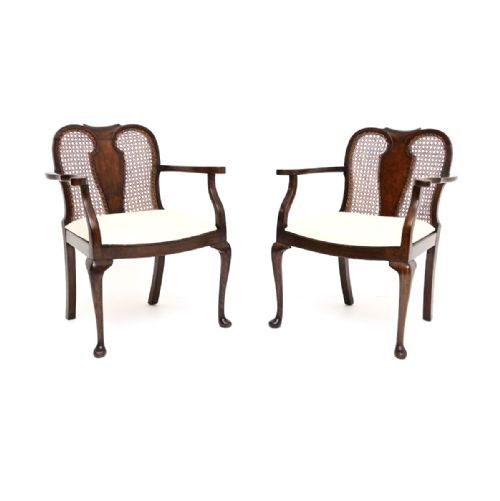
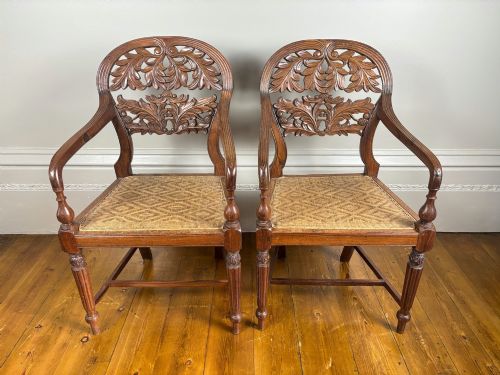
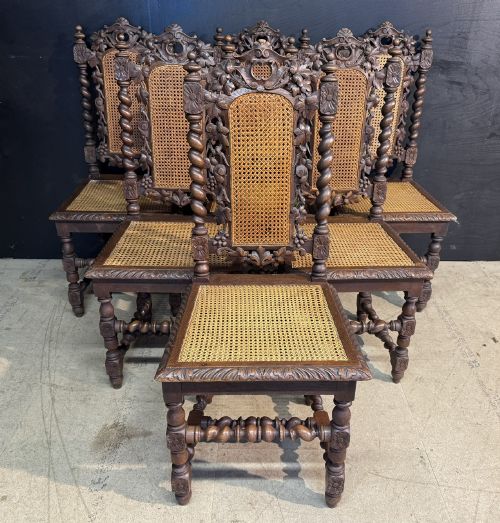
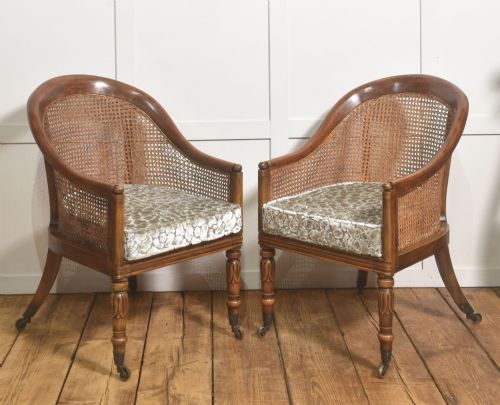



Vintage Cane Back Seat
A vintage cane back seat brings natural texture and historic woodwork to a room, offering supportive woven panels framed in mahogany, oak or walnut.
Vintage Cane Back Seat
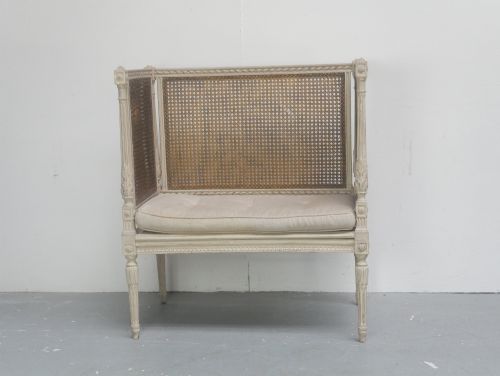
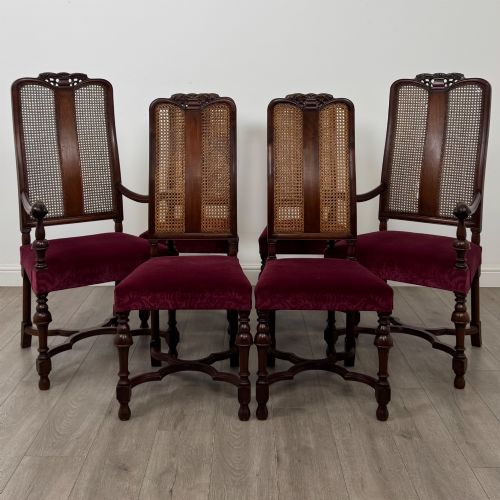
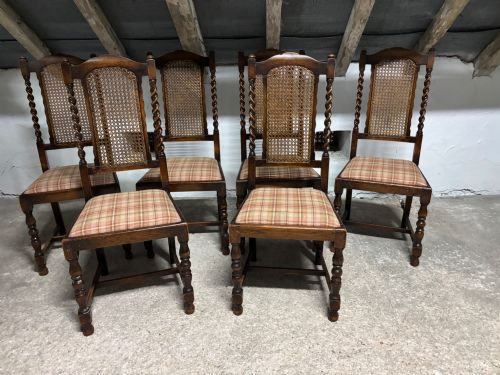
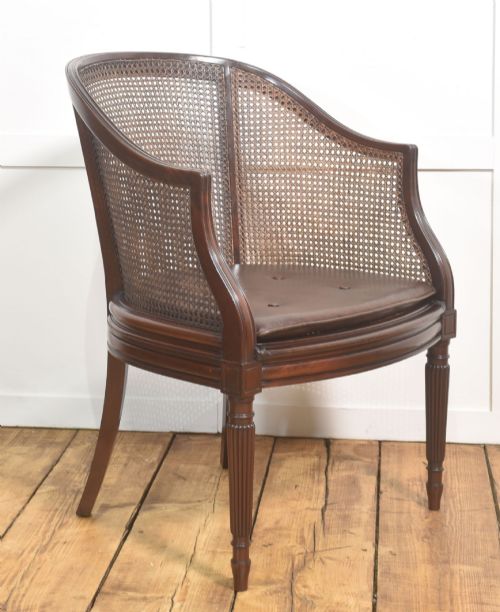
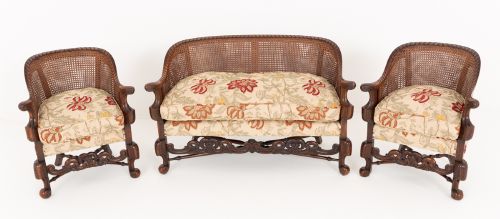
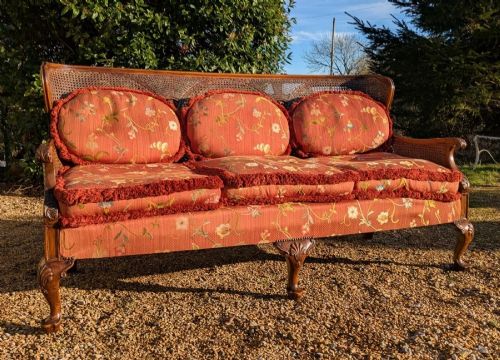
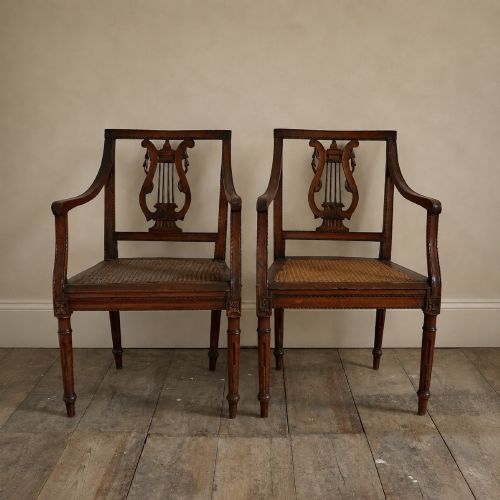
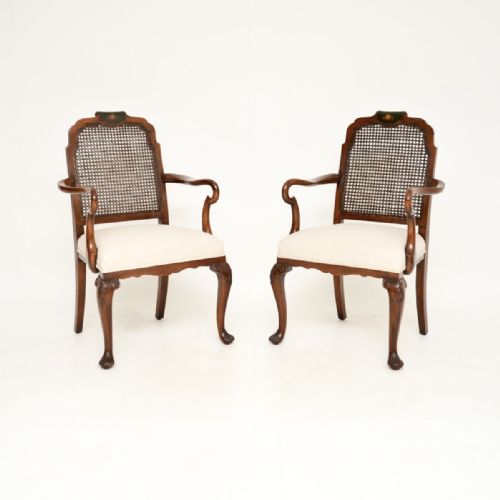
A vintage cane back seat encompasses diverse forms ranging from dining chairs and armchairs to rocking chairs, bedroom chairs, and sofas. The selection spans periods from the Regency era through the Victorian period, Edwardian years, and into the 1920s and 1930s.
Armchairs and bergère suites frequently appear alongside sets of dining chairs and occasional seating. Pieces draw on historical revivals including Jacobean, Carolean, William and Mary, and Regency styles, as well as Anglo-Indian Colonial and French designs.
Buyers encounter single chairs, pairs, and full dining sets constructed from various timbers. The woven cane provides both structural flexibility and decorative lightness within each form.
Materials and construction
Frames employ solid hardwoods such as mahogany, oak, walnut, beech, satinwood, and rosewood, sometimes complemented by brass fittings, leather, or fabric cushions. Artisans shaped these timbers using turning, carving, and ebonising techniques appropriate to the period.
The characteristic cane work involves hand-weaving natural plant material through pre-drilled holes along the frame channels. This method creates a resilient, breathable mesh that supports the sitter while maintaining visual transparency.
Vintage Cane Back Seat Retail Price Guide 2026
Typical asking prices for vintage cane back seat among the pieces listed under this phrase on Sellingantiques today, from the lower quarter to the upper quarter. They describe what is for sale here now, not the wider market.
The inventory includes specialised forms such as folding campaign chairs, reclining plantation chairs, and children's bergère seats.
Judging execution
The distinction between tiers rests upon the crispness of the timber carving and the precision of the frame joinery. Superior examples demonstrate tight, uniform cane weaving that remains taut within the frame channels.
Finer pieces utilise high-grade timbers with sophisticated finish details such as gilding, lacquering, or finely turned barley twist and lyre supports. The integration of structural elements reflects the skill of the workshop behind the construction.
Waring and Gillow·Gillows·Thonet·Dryad of Leicester
The Vintage Cane Back Seat Glossary
- Bergère
- An enclosed upholstered armchair with wooden framing and cane panels on the back and sides. These seats frequently feature loose feather or down cushions.
- Canework
- The craft of weaving peeled rattan or cane strips into decorative mesh patterns. It provides a lightweight yet durable surface for furniture backs and seats.
- Barley twist
- A woodworking technique turning timber into a spiral rope pattern. This detail appears frequently on the legs and stretchers of 17th-century revival seating.
- Ebonising
- The process of treating timber to resemble ebony wood. Makers achieved this dark finish through staining and polishing fruitwood or mahogany.
- Tub armchair
- A seating form featuring a continuous curved back and arms wrapping around the user. The enclosed shape often incorporates cane panels.
Vintage Cane Back Seat: Frequently Asked Questions
How do I clean cane furniture?
Dust the woven panels regularly using a soft brush attachment and wipe the timber frame with a damp cloth.
Avoid soaking the cane, as excessive moisture causes the natural material to become brittle and snap over time.
Can damaged cane be repaired?
Skilled restorers can re-weave broken sections by hand using matching cane strands threaded through the original frame holes.
Professional re-caning restores both the structural tension and the visual continuity of the historic piece.
Are these seats comfortable?
The woven cane yields slightly to the body, offering a flexible and supportive surface for sitting.
Many armchairs and sofas include fitted feather or fabric cushions to provide additional padding.
Where should I place a cane seat?
Position these pieces away from direct heat sources and intense sunlight to prevent the natural cane from drying out.
They function well in living rooms, bedrooms, and hallways where their open weave adds textural contrast.