

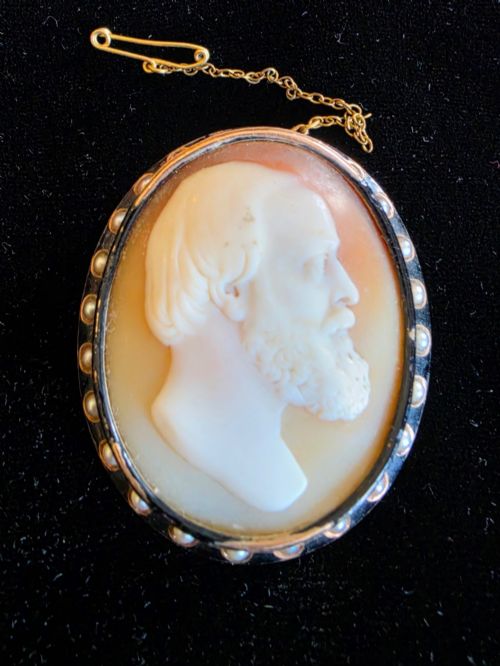
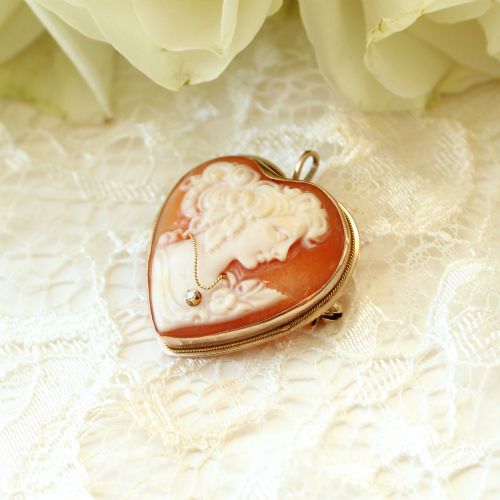
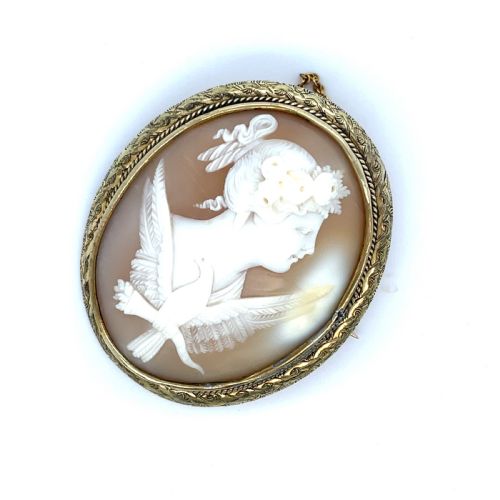
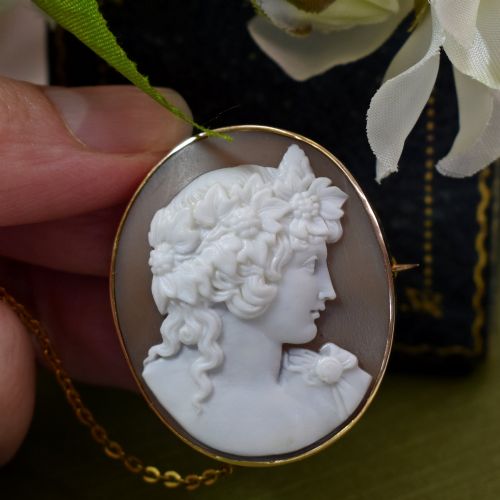


Vintage Cameo Brooch Pin
These vintage cameo brooch pin examples combine carved shell and precious metals, offering wearable classical portraiture for the discerning collector.
Vintage Cameo Brooch Pin
When you search for a vintage cameo brooch pin, you are looking at carved relief ornaments designed to be worn on garments, predominantly originating from the Victorian and Edwardian eras. The pieces on this page span the nineteenth century and the early nineteen hundreds, reflecting classical motifs and Grand Tour influences.
The most common versions you will meet here feature shell carvings set in metals ranging from pinchbeck and silver to nine carat and fifteen carat yellow gold. These ornaments combine portraiture or mythological figures with functional pin mechanisms suited for period attire.
How they were made
Metalwork techniques included bezel settings, twisted wire borders, and hinged pin stems soldered to the reverse. Certain pieces incorporated integrated loops, allowing the brooch to convert into a pendant.
Vintage Cameo Brooch Pin Retail Price Guide 2026
Typical asking prices for vintage cameo brooch pin among the pieces listed under this phrase on Sellingantiques today, from the lower quarter to the upper quarter. They describe what is for sale here now, not the wider market.
Materials documented across the inventory include shell, silver, pinchbeck, and fifteen carat gold.
What varies in quality
Mount quality similarly distinguishes the range, where heavy gauge fifteen carat gold frames and complex bezels indicate higher workshop standards than lightweight silver or base metal settings.
R.Pernice·Wedgwood
The Vintage Cameo Brooch Pin Glossary
- Cameo
- A method of carving an object such as a engraved gem, item of jewellery, or vessel. In these listings, it refers specifically to shell relief carvings depicting classical figures.
- Pinchbeck
- An alloy of copper and zinc developed to imitate gold. It provides a warm yellow metallic appearance without the expense of precious metal.
- Jasperware
- A type of stoneware developed by Josiah Wedgwood characterised by its matte finish and white relief figures against a coloured ground. It appears in nineteenth-century examples on this page.
- Grand Tour
- A traditional trip of Europe undertaken by upper-class European young men of sufficient means. Travellers frequently acquired carved shell cameos as souvenirs in Italy.
Vintage Cameo Brooch Pin: Frequently Asked Questions
How do I date a cameo?
Dating relies heavily on the style of the metal mount, the clasp mechanism, and the subject matter depicted. Victorian examples often feature tubular hinges and C-clasps.
Later Edwardian and twentieth-century pieces introduce safety catches and different pin assemblies alongside distinct carving proportions.
Can I wear a cameo daily?
Shell cameos require gentle treatment due to the organic nature of the material. Avoid exposing them to moisture, perfumes, and harsh chemicals.
Securing the brooch firmly to sturdy fabrics prevents accidental drops and preserves the antique metal pin and hinge.
What materials are cameos carved from?
The listings show pieces primarily carved from natural shell, utilising the varied colour strata of the material. Other examples incorporate ceramic compositions such as jasperware.
Frames are fabricated from silver, pinchbeck, and yellow gold ranging from nine to fifteen carats.
What is a Grand Tour cameo?
Grand Tour cameos are Italian souvenirs collected by travellers visiting Rome and Florence during the nineteenth century. They typically depict classical mythological scenes or ancient sculptures.
These Italian-carved plaques were frequently exported and mounted into British gold or silver frames upon arrival.