

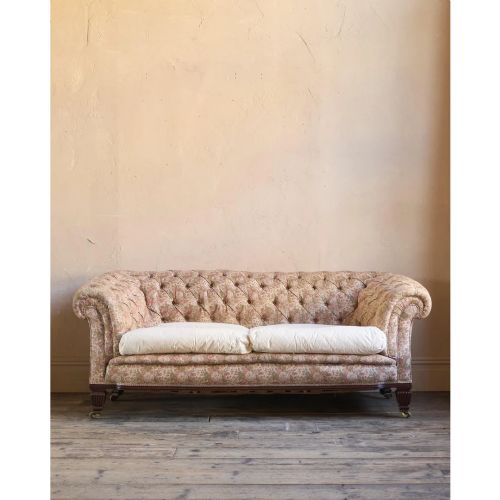
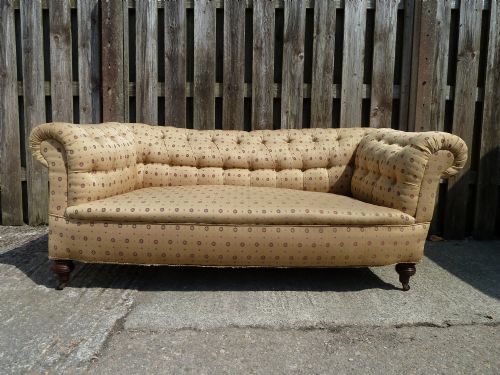
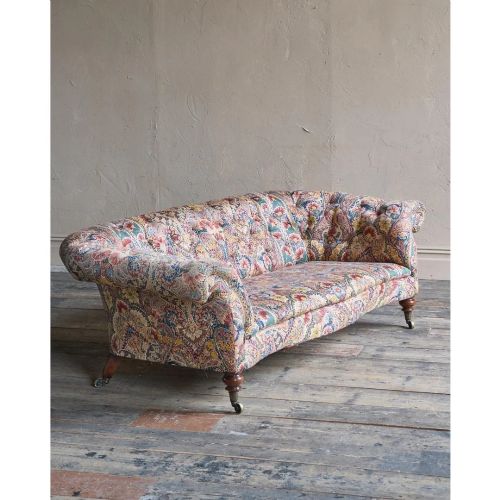
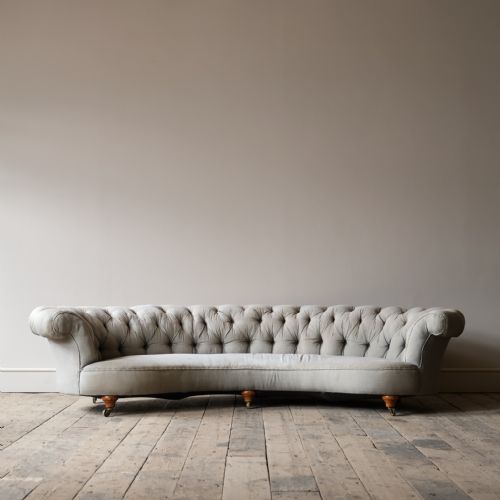
Vintage Buttoned Sofa
A vintage buttoned sofa brings deep comfort and formal presence to a room, anchored by traditional tufting and rich upholstery.
Vintage Buttoned Sofa
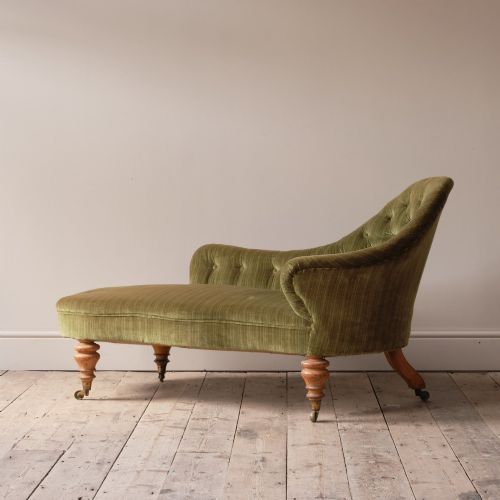
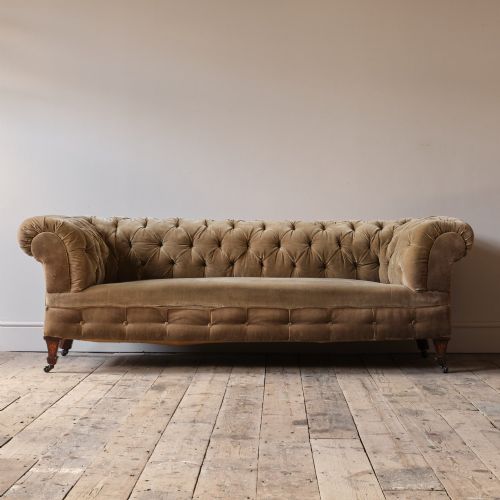
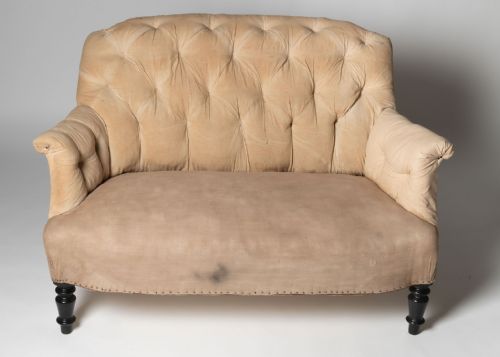
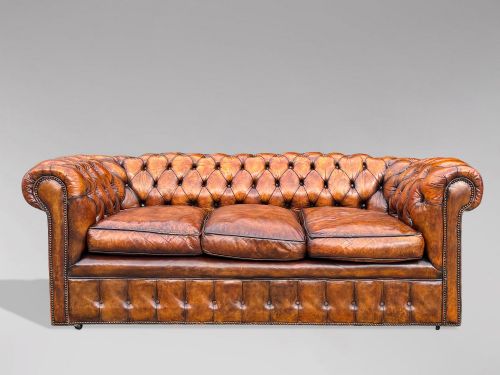
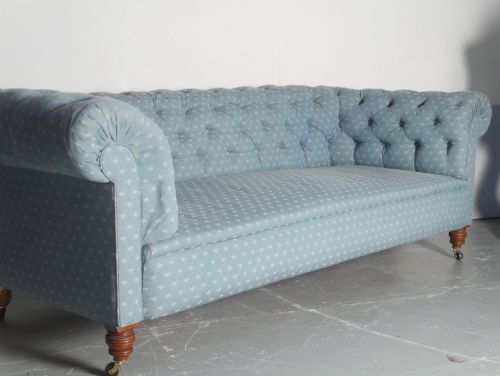
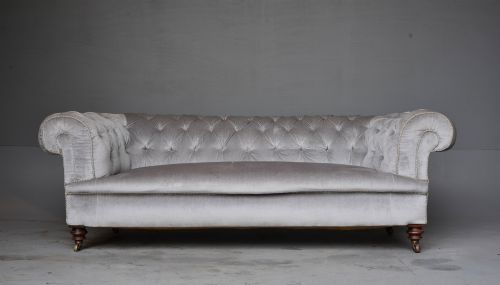
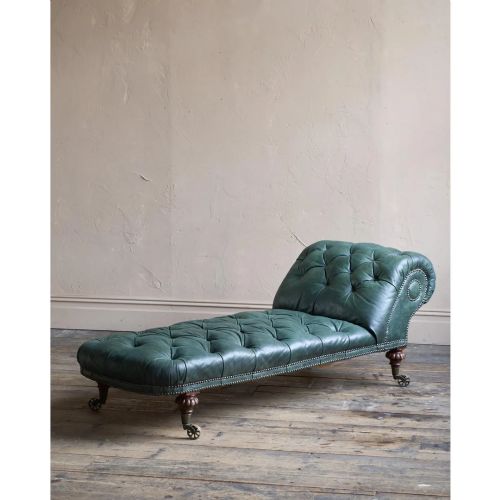
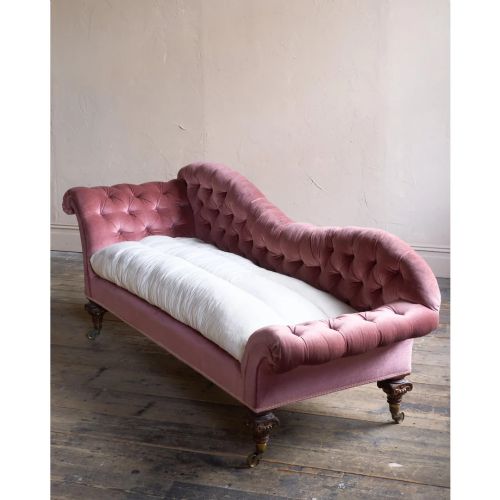
A vintage buttoned sofa encompasses low-slung club seats, deep three-seater Chesterfields, and elegant chaise longues originating across the nineteenth and early twentieth centuries. These pieces appear in styles ranging from Victorian and Edwardian to Napoleon III and Regency, drawing on traditional English and French workshop traditions.
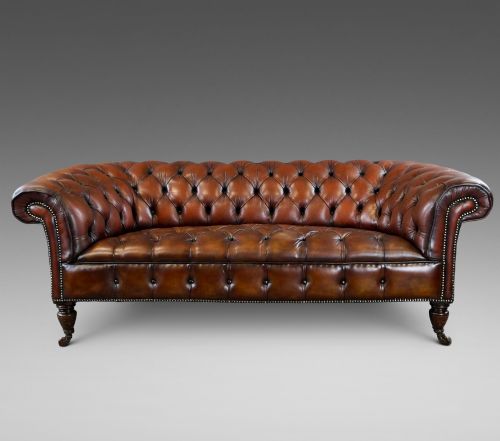
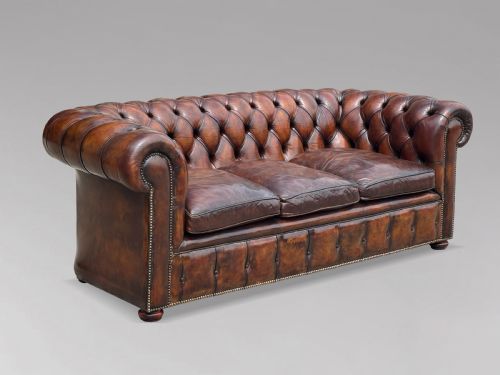
The most frequent form on this page is the leather Chesterfield, alongside upholstered daybeds, salon suites, and carved wood settees. Buyers encounter frames built for grand drawing rooms and country houses, often featuring distinctive scroll arms and sprung seats.
Origins span British and continental European makers, with nineteenth-century examples dominating the selection alongside early twentieth-century interpretations. Pieces arrive in various states of preservation, from raw un-restored hides to hand-dyed finishes.
How They Were Made
Frames rely on sturdy timbers including mahogany, walnut, rosewood, and general hardwood, providing a rigid internal skeleton for the heavy upholstery. Joinery often conceals internal coil springing designed to support deep seating over decades of daily use.
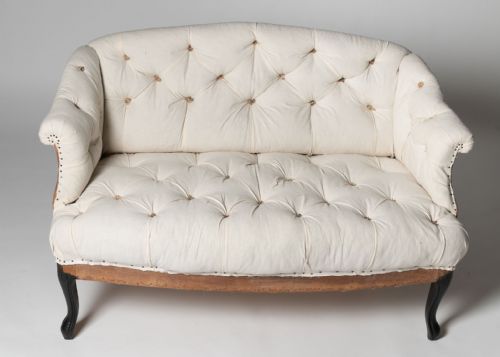
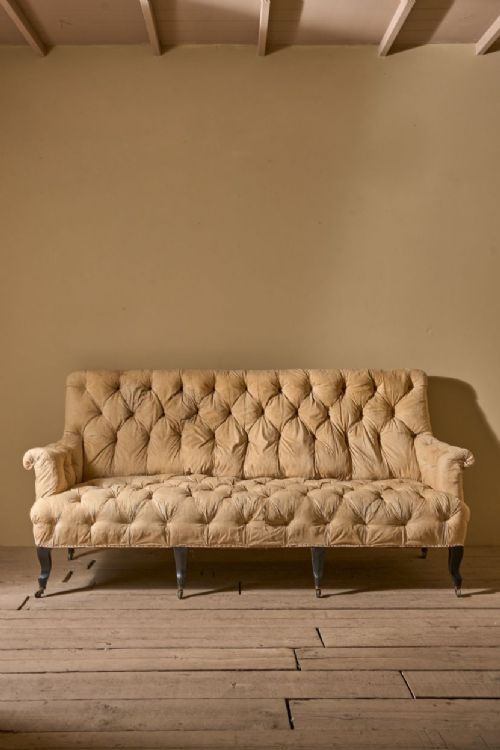
Upholstery relies on traditional stuffings such as horsehair, paired with surfaces in leather, velvet, and woven fabric. Deep buttoning secures the padding through the frame, creating the characteristic tufted pattern across backs and seats.
Vintage Buttoned Sofa Retail Price Guide 2026
Typical asking prices for vintage buttoned sofa among the pieces listed under this phrase on Sellingantiques today, from the lower quarter to the upper quarter. They describe what is for sale here now, not the wider market.
Some nineteenth-century conversation sofas allowed two people to sit facing opposite directions while maintaining a polite distance.
What Varies in Quality
The integrity of the internal web and coil springing dictates how a sofa holds its shape and comfort under weight. Superior examples retain original stuffing materials and sturdy timber frames that resist movement.
The treatment of the surface materials creates a clear distinction between standard production and fine workshop execution. Hand-dyed leathers and carefully carved mahogany or walnut frames demonstrate superior craftsmanship compared to simpler secondary timbers.
Howard and Sons·Robert Strahan and Co·Hampton and Sons of Pall Mall·Jas Shoolbred
The Vintage Buttoned Sofa Glossary
- Chesterfield
- A large upholstered sofa with rolled arms of the same height as the back, traditionally finished with deep button tufting. This form remains a staple of nineteenth-century seating.
- Chaise Longue
- An elongated upholstered chair designed for reclining, often featuring a single raised armrest or back support. These pieces appear in Victorian rosewood and walnut variations.
- Tufting
- A method of securing upholstery padding by pulling twine or thread through the material and anchoring it with buttons. This technique creates the characteristic diamond pattern on the backrest.
- Salon Suite
- A matched set of seating furniture, such as a small sofa and accompanying chairs, designed for formal reception rooms. French walnut versions represent this decorative group.
- Coil Sprung
- An internal system of metal springs tied together within the frame to distribute weight evenly. This construction supports deep seating in traditional club and Chesterfield sofas.
Vintage Buttoned Sofa: Frequently Asked Questions
How do I care for vintage leather?
Leather surfaces benefit from regular dusting and occasional conditioning to maintain suppleness and prevent drying over time. Keeping the hide away from direct heat sources preserves the natural finish.
Raw leather variants require specific dying and sealing treatments before heavy daily use. Professional conservation helps protect older hides from cracking.
Where did these sofas originate?
Most examples stem from British and French workshops active during the Victorian and Edwardian eras. Country houses and formal London townhouses provided the primary settings for these large seating forms.
Maker signatures and stamps occasionally appear on the timber frame or castors. These marks help trace the workshop origin of nineteenth-century pieces.
Are these sofas comfortable for daily lounging?
Deep-seated designs and sprung frames offer substantial support for relaxation in modern living spaces. The generous proportions of nineteenth-century Chesterfields suit extended sitting.
Internal coil springing and horsehair stuffing adapt to the user over time. Firmness varies depending on the original padding materials and subsequent restoration work.
How do I identify a Victorian piece?
Victorian furniture typically employs heavy hardwoods like mahogany or walnut beneath traditional buttoned leather or velvet upholstery. Characteristic elements include carved wooden frames, turned legs, and robust scroll arms.
Stylistic cues overlap with Edwardian and Regency revivals across the nineteenth century. Examining the construction methods and internal webbing clarifies the period of manufacture.