

Vintage Buttoned Settee
A vintage buttoned settee brings deep-buttoned comfort and traditional seating gravitas to a room, led by the enduring appeal of the classic leather Chesterfield.
Vintage Buttoned Settee
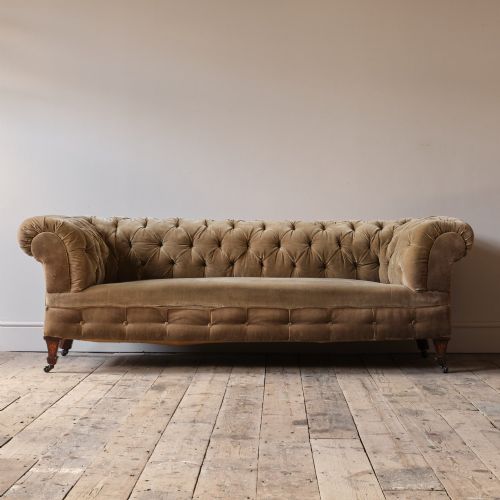
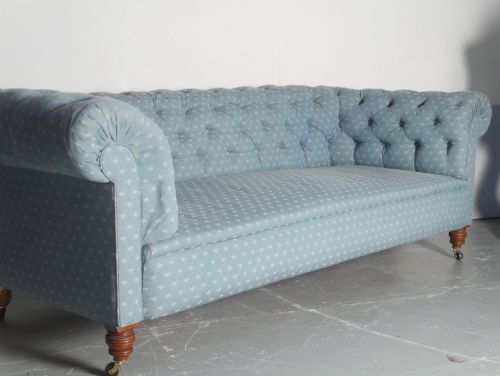
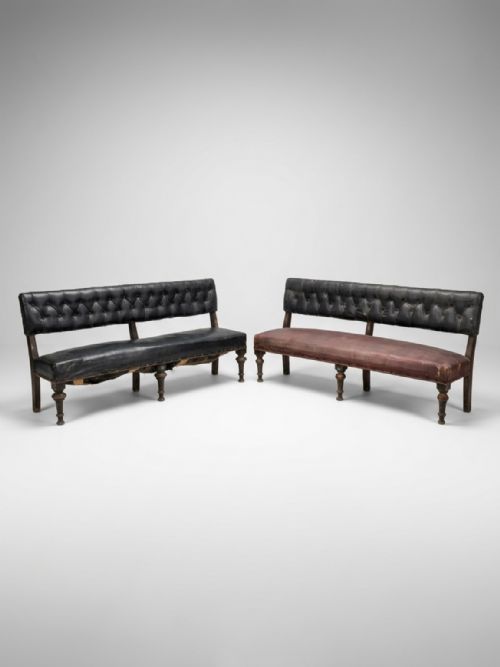
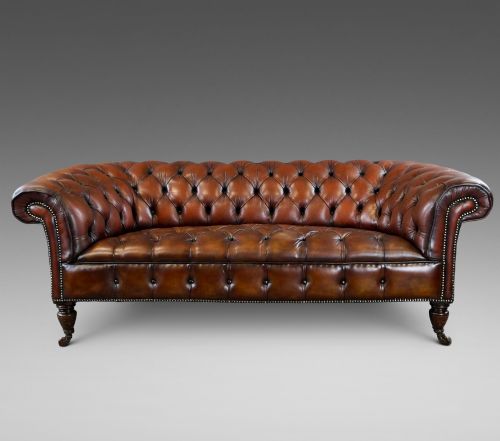
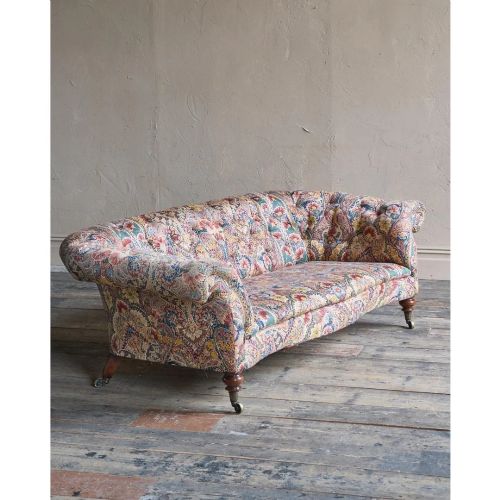
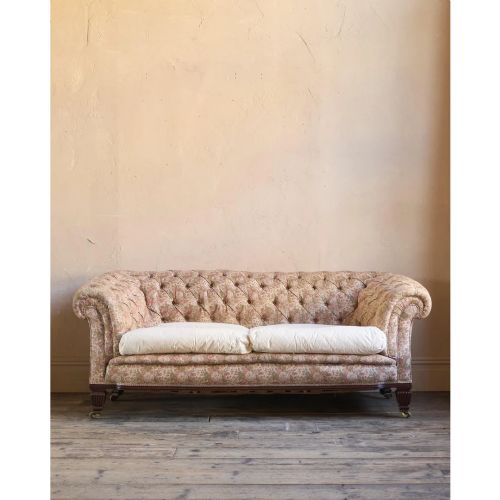
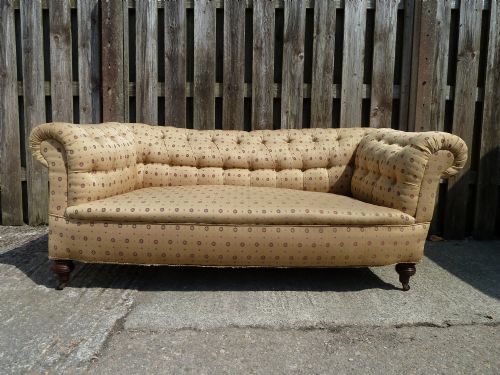
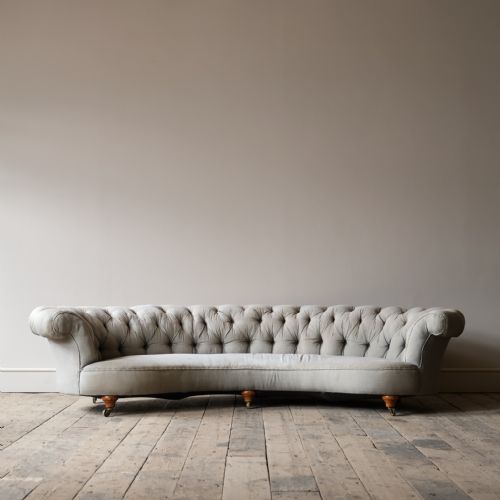
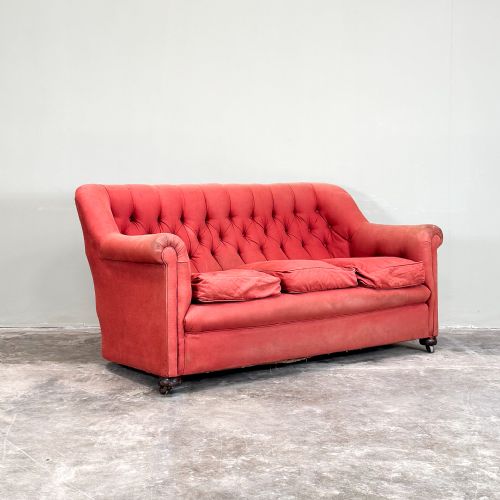
When you search for a vintage buttoned settee, you are looking at substantial upholstered seating dominated by Victorian and later Chesterfields alongside button-back salon forms. These pieces serve as anchoring focal points in studies, libraries and drawing rooms.
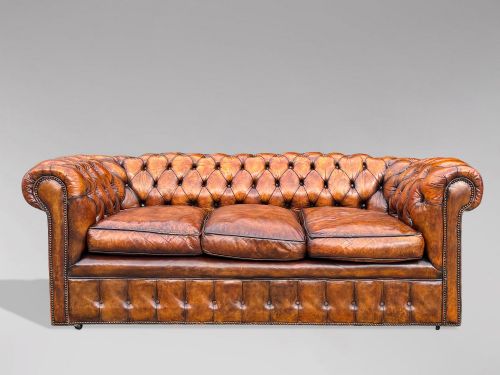
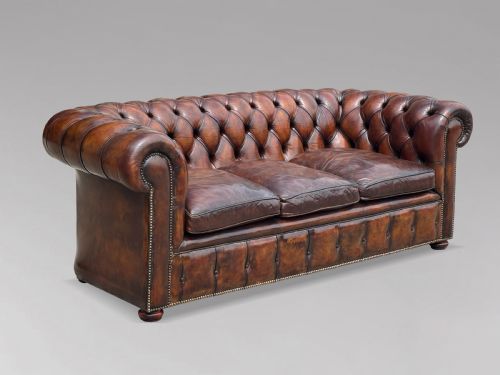
The versions most likely to meet you on this page are nineteenth-century brown leather Chesterfields and wide multi-seater sofas. Evidence shows frequent examples carrying deep tufting across the back and arms.
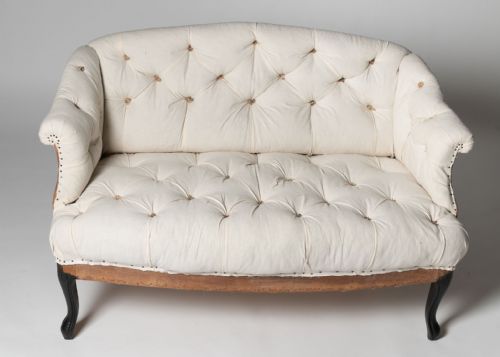
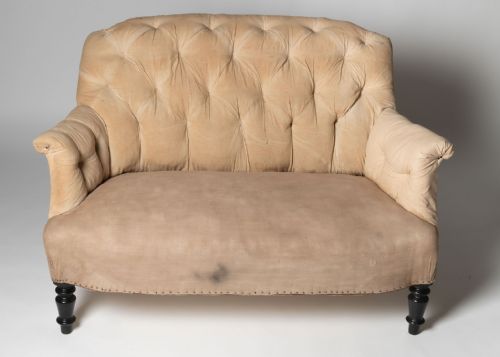
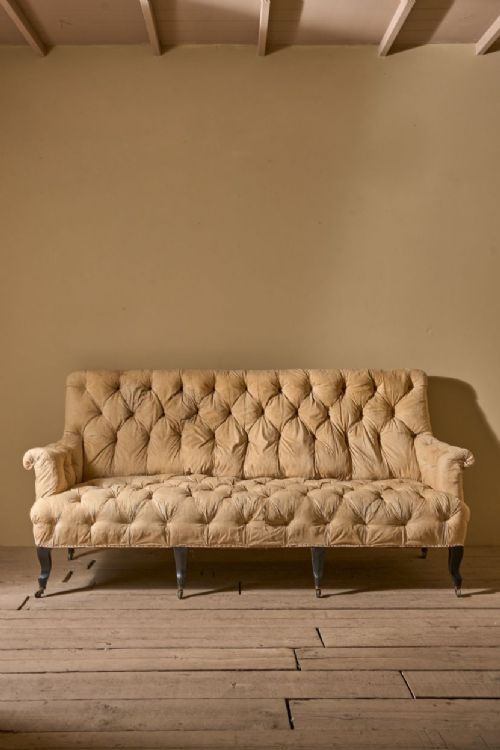
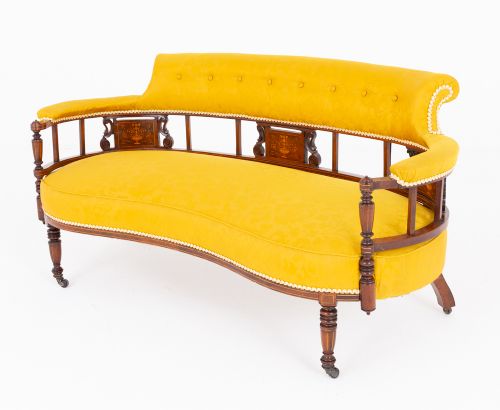
Beyond the standard Chesterfield, the selection spans Napoleon III buttoned high-back chairs, rosewood and walnut frames, and early twentieth-century club sofas. Forms range from compact bedroom settees to sprawling country house proportions.
How they were made
Construction relies on sturdy timber frameworks built from mahogany, walnut, rosewood and general hardwood. These solid skeletons support extensive padding and heavy upholstery.
Traditional stuffing methods utilise coil sprung interiors paired with horsehair stuffing to maintain firm yet yielding support. Button tufting secures this internal filling directly through the cover.
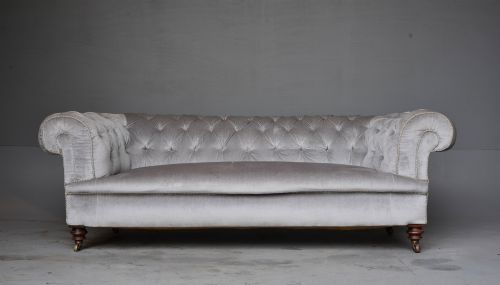
Outer coverings lean heavily on rich brown and red leathers, alongside select velvet and fabric trims. Brass detailing and specialised hand dyeing complete the finishing process.
Vintage Buttoned Settee Retail Price Guide 2026
Typical asking prices for vintage buttoned settee among the pieces listed under this phrase on Sellingantiques today, from the lower quarter to the upper quarter. They describe what is for sale here now, not the wider market.
Listings feature eighteenth and nineteenth-century periods, alongside styles ranging from Regency and Victorian to early twentieth-century British designs.
What varies in quality
The integrity of the internal stuffing and coil springing dictates the baseline comfort and structural longevity of each frame. Hand-tied foundations provide superior resilience compared to later simplified alternatives.
Leather selection and finishing create a distinct division between ordinary upholstery and superior examples. Premium hides display rich depth of colour and supple handling.
Maker attribution elevates specific pieces significantly. Signatures or structural markers from notable cabinet makers and upholsterers distinguish standard workshop output from premier commissions.
Howard and Sons·Hampton and Sons of Pall Mall·Jas Shoolbred·Gillows
The Vintage Buttoned Settee Glossary
- Chesterfield
- A large upholstered sofa with arms and back of the same height, traditionally featuring deep button tufting. This form remains the definitive style for traditional library and study seating.
- Buttoned back
- An upholstery technique where buttons are pulled deep into the padding in a diamond grid pattern. This secures the internal stuffing while creating distinct geometric folds.
- Chaise Longue
- An upholstered chair with a long seat meant for reclining, often featuring a single raised armrest. These pieces combine sofa comfort with extended leg support.
- Scroll end
- A sweeping, curved arm design terminating in a rolled scroll shape. This profile appears frequently on nineteenth-century frames.
- Horsehair gilled
- An interior stuffing method utilising cleaned horsehair to pack the upholstery. This traditional material delivers breathable and durable cushioning.
Vintage Buttoned Settee: Frequently Asked Questions
How do I spot a genuine Victorian Chesterfield?
Look for traditional construction methods such as hand-tied coil springs and horsehair stuffing beneath the leather. Genuine nineteenth-century examples show authentic wear patterns and heavy timber frames beneath the upholstery.
Examine the depth of the buttoning and the weight of the hide. Period pieces often utilise thick, hand-dyed leathers that develop a deep patina over decades of use.
Are these settees comfortable for daily sitting?
These pieces offer firm, supportive seating due to their traditional deep-sprung interiors and dense stuffing. The upright backrests and rolled arms provide solid support for reading or relaxing.
Because internal padding varies by age and restoration history, comfort levels depend on whether the original coil springing remains intact or has been recently serviced.
How should I care for vintage leather?
Maintain the hide by applying specialised leather balms periodically to prevent drying and cracking. Keep the surface away from direct sunlight and strong heat sources to preserve the natural colour.
Dust regularly with a soft cloth and avoid harsh chemical cleaners that strip the original dye and protective finishes from the leather.
What rooms suit a buttoned settee best?
These substantial pieces anchor studies, libraries and formal living spaces with traditional architectural character. Their rich leather tones and buttoned detailing complement wood-panelled walls and antique bookcases.
Smaller bedroom settees and chaise longues work well in private dressing areas or quiet reading corners where floor space is more limited.