

Vintage Buttoned Chair
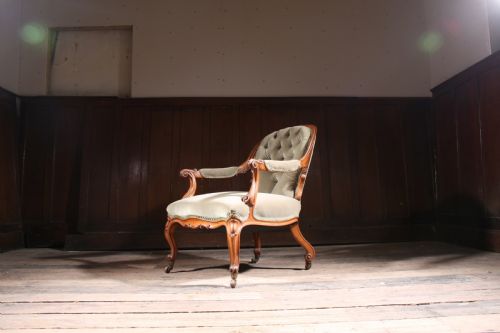
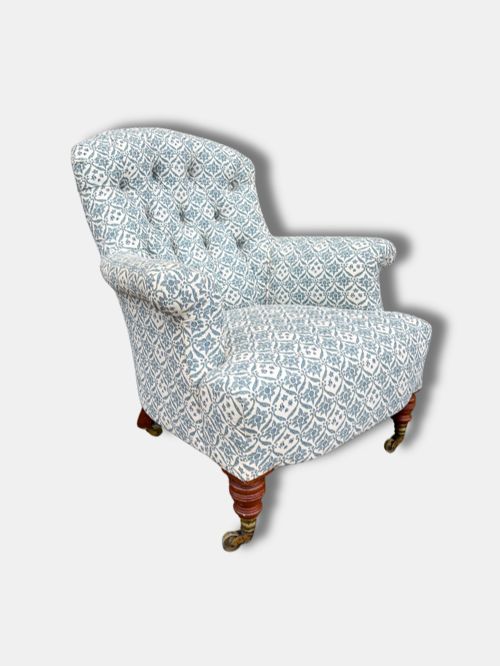
A vintage buttoned chair is a seat of deep upholstery and tailored tufting that brings immediate character and tactile comfort to a room.
Vintage Buttoned Chair
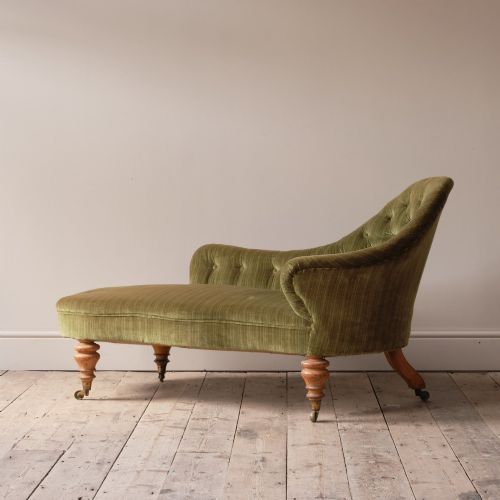
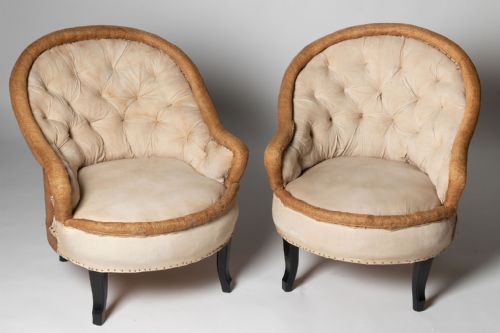
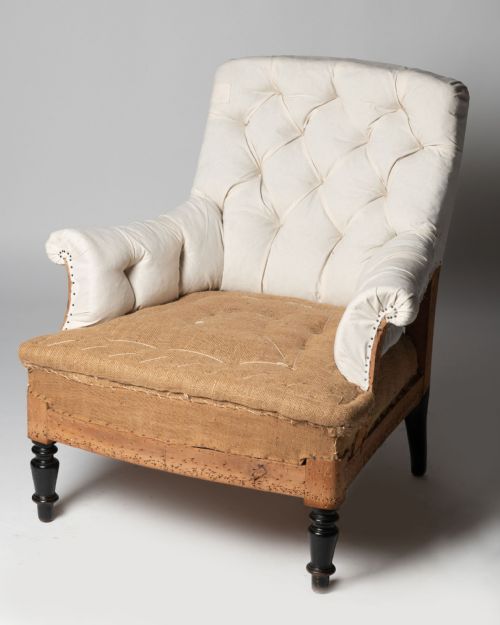
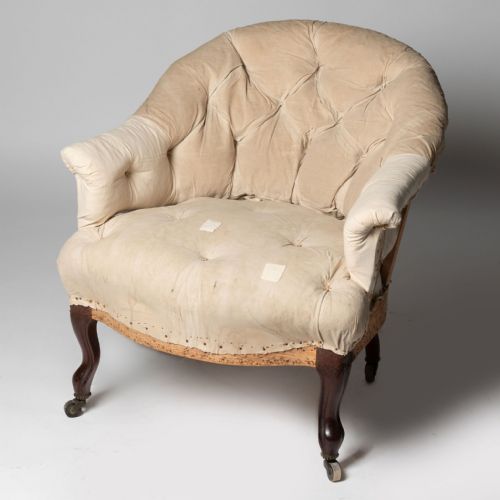
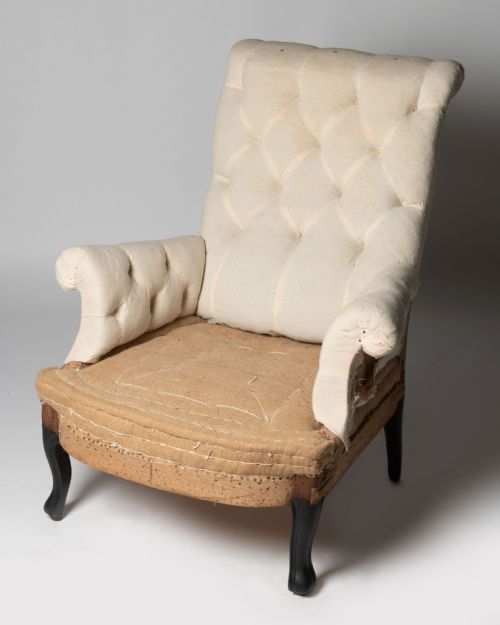
A vintage buttoned chair encompasses a variety of upholstered forms designed for rest and formal display, spanning armchairs, library chairs, nursing chairs, and chaise longues. Buyers searching this phrase meet nineteenth-century Victorian examples alongside twentieth-century Edwardian and later pieces in leather, velvet, and fabric.
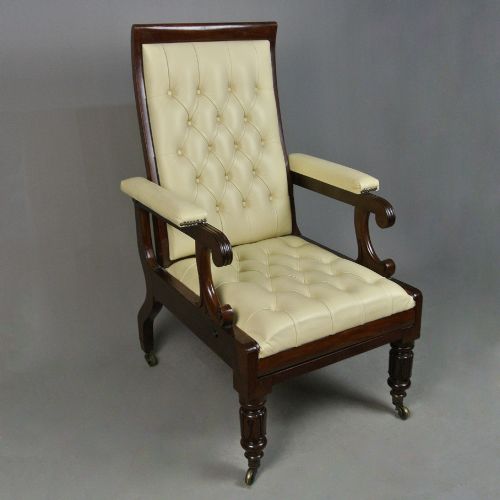
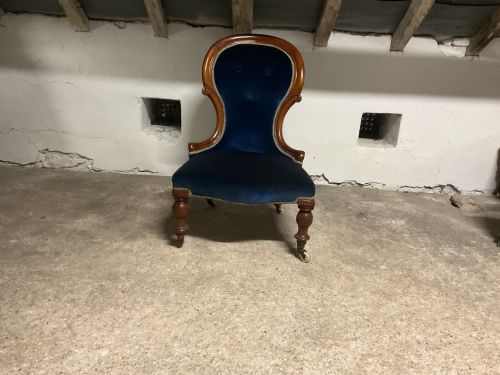
The selection ranges from low-slung French low back chairs and spoonback chairs to substantial mahogany library chairs and deep Chesterfield club armchairs. Frames often reflect historical revivals, incorporating Regency, William IV, or Georgian style influences into domestic seating.
Makers such as Howard and Sons, Gillows, and Mellier and Co appear among the broader assortment of English and French workshop output. Timber frames in walnut, mahogany, oak, and rosewood support the padded upholstery that defines the group.
Materials and construction
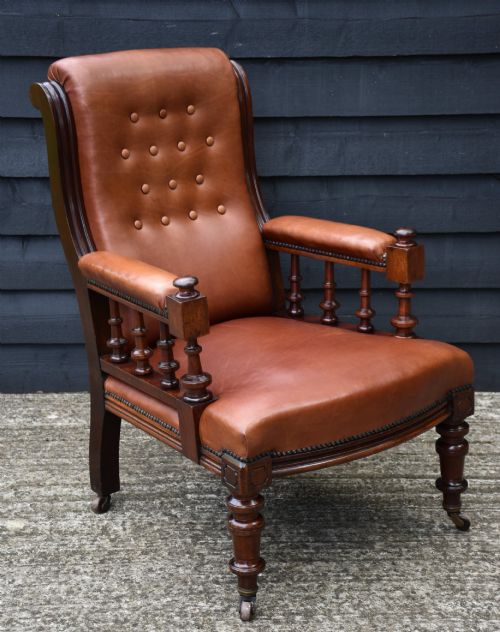
Frames rely on solid hardwoods like mahogany, walnut, oak, and rosewood, shaped into open armchairs, rocking chairs, and revolving desk chairs. Structural stability often depends on turned or carved wooden legs, occasionally featuring brass castors or ionic column details.
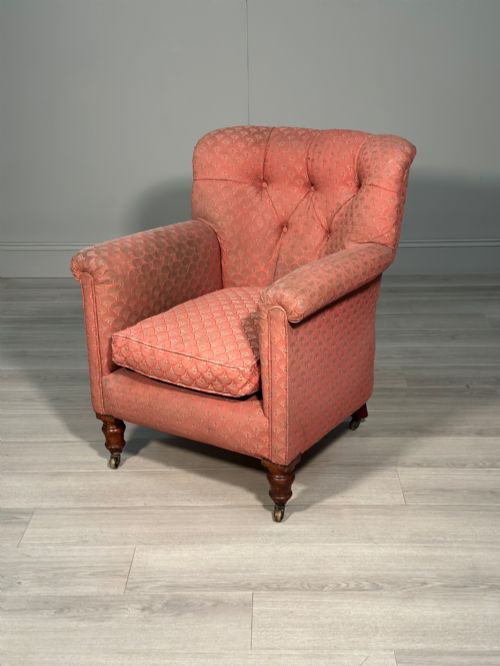
Upholstery relies on traditional stuffing secured beneath top covers of leather, velvet, calico, or rexine. Deep buttoning requires meticulous hand-pleating of the textile to pull the material back toward the frame in a diamond pattern.
Vintage Buttoned Chair Retail Price Guide 2026
Typical asking prices for vintage buttoned chair among the pieces listed under this phrase on Sellingantiques today, from the lower quarter to the upper quarter. They describe what is for sale here now, not the wider market.
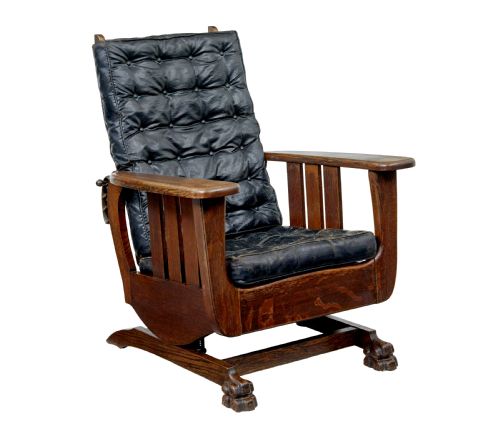
One exceptional nineteenth-century revolving desk chair includes a patent mechanism for reclining while reviewing heavy ledgers.
Assessing the standard
Quality rests in the architectural integrity of the timber frame and the precision of the upholstery work. Superior pieces display crisp carving on exposed mahogany or walnut and tight, uniform buttoning that maintains tension across the backrest.
The choice of covering material and the harmony of the design proportions dictate the standing of a piece within its period. Maker attribution, such as works bearing stamps from established cabinet makers, elevates the historical interest of the chair.
Howard and Sons·Gillows·Mellier and Co
The Vintage Buttoned Chair Glossary
- Button back
- A traditional upholstery method where tufts of string or twine are pulled through the padding and secured with buttons to create a diamond pattern. This technique provides both structural support and decorative depth.
- Chaise longue
- An elongated upholstered seat designed for reclining, combining a chair with an extended footrest. Examples often feature a single raised end and decorative wooden legs.
- Chesterfield armchair
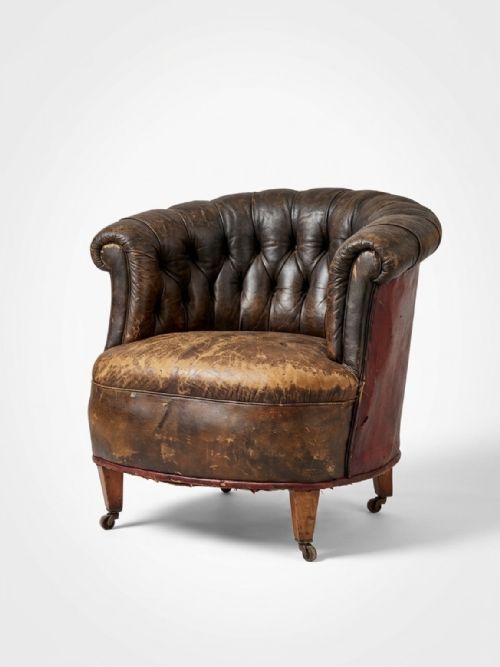
- A deep-seated, fully upholstered armchair characterised by rolled arms and a low back with button tufting. Versions frequently utilise leather or rexine coverings.
- Nursing chair
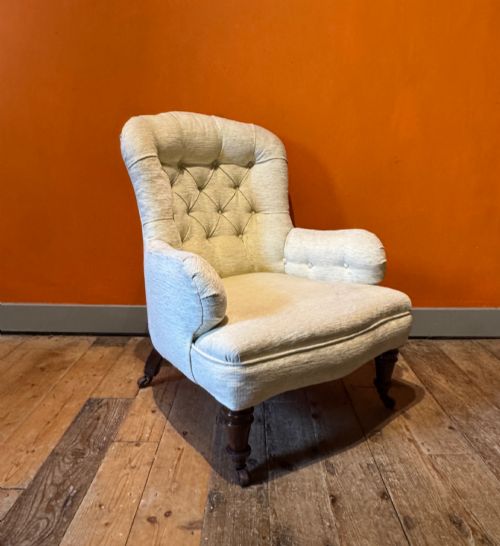
- A low-seated Victorian chair designed originally for comfort in private chambers or nurseries. The low posture allowed the sitter to tend to children with ease.
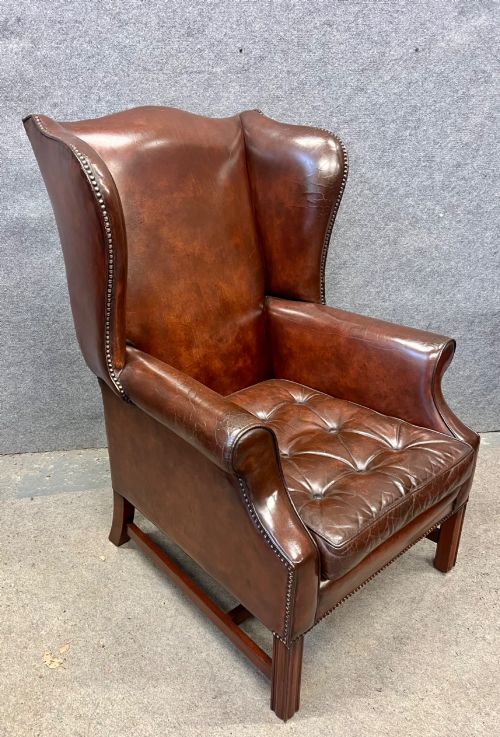
- Wing armchair
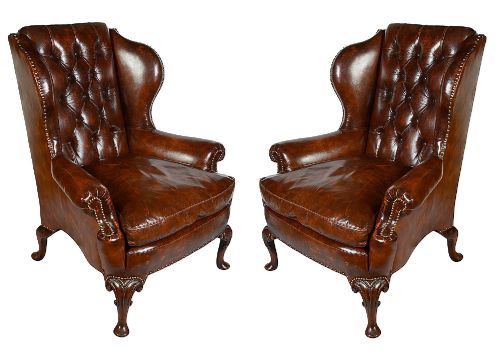
- A high-backed chair featuring projecting side panels designed to shield the occupant from draughts. Early forms frequently pair exposed timber legs with leather upholstery.
Vintage Buttoned Chair: Frequently Asked Questions
What is a buttoned armchair?
A buttoned armchair is a seated piece featuring deep tufting secured by buttons across the upholstered backrest. This method pulls the fabric into structured folds.
Such chairs appear in numerous forms, from heavy leather library models to velvet-covered Victorian nursing seats.
How do I date a vintage chair?
Dating relies on examining the timber species, leg turning style, and upholstery construction methods. Victorian pieces often employ walnut or mahogany with elaborate carved details.
Later Edwardian or twentieth-century examples shift towards simpler frames and alternative materials like rexine or oak.
Where were these chairs used?
These seats served primarily in domestic reception rooms, libraries, studies, and private dressing chambers. Library chairs offered sturdy support for reading and working at large desks.
Smaller nursing chairs and low-backed seats suited private rooms and bedroom suites.
Are leather and fabric versions different?
Leather and fabric versions offer distinct tactile qualities and historical contexts within domestic interiors. Leather frequently appears on library armchairs and Chesterfield club seats for durability.
Fabric and velvet upholstery tend to feature on Victorian spoonback and nursing chairs designed for formal drawing rooms.