



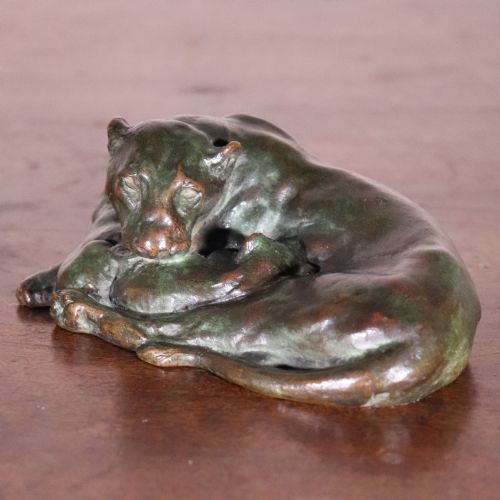
Vintage Bronze Panther
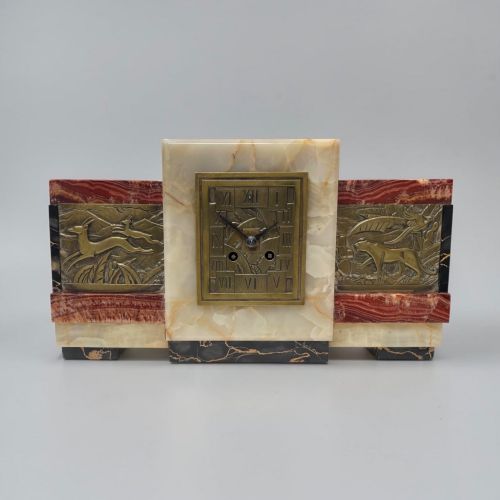
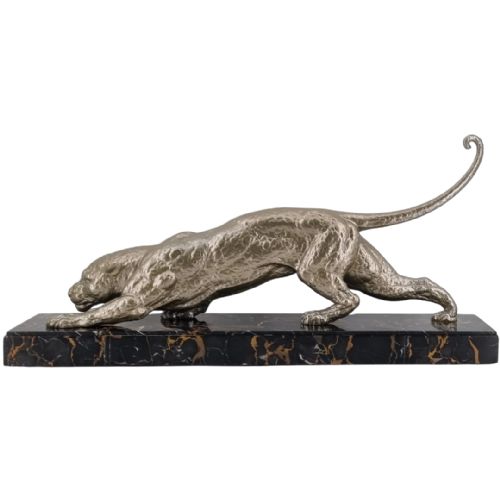
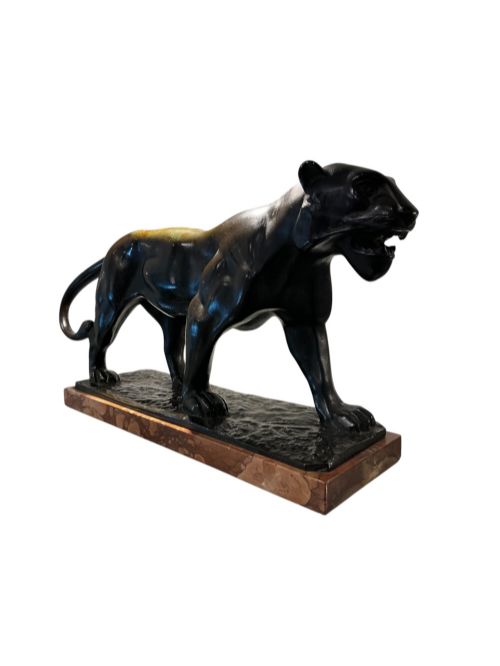
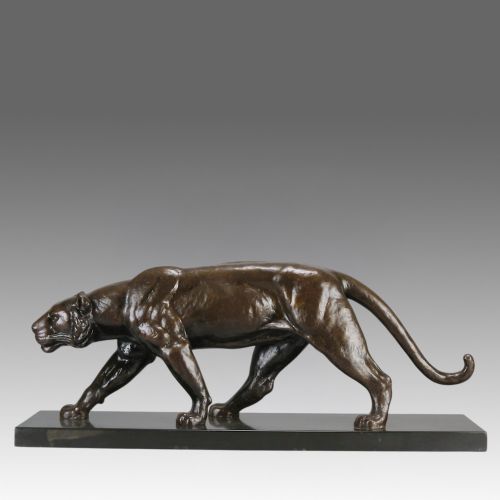
These vintage bronze panther sculptures bring the fierce elegance of Art Deco design into a room through dynamic feline forms.
Vintage Bronze Panther
A vintage bronze panther captures the predatory grace and stylised geometry of the early twentieth century, most frequently appearing in Art Deco sculpture. These pieces interpret the great cat through sleek lines and low, prowling postures that reflect the modernism of the period.
Most examples found on this page date from the 1920s and 1930s, aligning with the height of the Animalier movement in France. Sculptures commonly pair metal figures with contrasting stone plinths to emphasise the weight and presence of the animal.
While genuine bronze dominates the upper tier of these works, patinated metal and spelter frequently appear as contemporary alternatives. Buyers encounter both solitary hunting panthers and complex group compositions that integrate other predatory cats or human figures.
How they were made
Foundries produced these sculptures using traditional hot cast bronze techniques, applying patination to achieve deep dark tones on the metal surface. Some variations utilise silvered bronze or painted finishes to highlight the musculature and sleek coat of the animal.
The heavy bases beneath the metal figures rely on contrasting stone, predominantly black marble, Portoro marble, or onyx. Masons shaped and polished these mineral slabs to anchor the dynamic, outstretched forms of the leaping or prowling panthers.
Vintage Bronze Panther Retail Price Guide 2026
Typical asking prices for vintage bronze panther among the pieces listed under this phrase on Sellingantiques today, from the lower quarter to the upper quarter. They describe what is for sale here now, not the wider market.
Listings feature works spanning the Art Deco period, early twentieth-century modernism, and later twentieth-century casting traditions.
What varies in quality
The artistic merit of a vintage bronze panther rests upon the sculptural sensitivity of the casting, where crisp anatomical detail and expressive tension separate superior works from generic production. Finer pieces demonstrate careful hand-chasing after the cast cools, preserving the taut sinews and facial definition of the animal.
Material choice dictates the standing of the piece, with solid hot cast bronze commanding greater substance than alternative metal alloys like spelter. Furthermore, the selection of the base contributes to overall quality, as richly veined Portoro marble or thick onyx elevates the architectural proportion of the sculpture.
D. H. Chiparus·Alexandre Ouline·Anna Vaughn Hyatt Huntington·Michel Decoux·Andrey
The Vintage Bronze Panther Glossary
- Animalier
- Art that depicts animals, particularly sculptures produced during the nineteenth and twentieth centuries with a focus on realistic or stylised anatomy. This genre encompasses the dramatic poses of the panthers found in Art Deco interiors.
- Spelter
- A zinc-based alloy used as a cost-effective alternative to bronze in decorative metalwork. It frequently receives a dark patination to mimic heavier metals on twentieth-century figures.
- Patinated Metal
- Metal surfaces treated with chemical solutions to produce a specific colouration or aged finish. This process darkens bronze or base metals to accentuate the sleek coat of a predatory cat.
- Portoro Marble
- A distinctive black Italian limestone featuring prominent gold and yellow veins. It provides a luxurious contrasting foundation for twentieth-century sculptural bases.
- Hot Cast Bronze
- A traditional foundry method where molten bronze is poured into a mould to create solid metal sculptures. This technique captures fine details and ensures long-term durability.
Vintage Bronze Panther: Frequently Asked Questions
What periods do these panthers come from?
The pieces originate primarily from the early decades of the twentieth century, with a strong concentration in the Art Deco period of the 1920s and 1930s. Later examples extend into the mid-twentieth century and beyond.
Design styles shifted across these decades from realistic early interpretations toward more stylised, geometric representations of the animal form.
Where should I display a sculpture?
These sculptures suit prominent placement on sturdy horizontal surfaces such as sideboards, mantels, or dedicated pedestals where their silhouette can be appreciated from multiple angles. The heavy marble bases require stable furniture that can support their considerable weight.
Keep the figures away from direct sunlight and excessive moisture to preserve the polished finish of the stone and the chemical patination on the metal.
What distinguishes an animalier sculpture?
Animalier works focus entirely on the behaviour, movement, and anatomy of animals rather than treating them as mere background elements. Twentieth-century iterations of this genre apply modernist simplification to capture the predatory tension of panthers in motion.
This artistic approach prioritises expressive lines over strict biological accuracy, creating a sense of dynamic energy within the room.