

Vintage Brass Wall Appliques
Vintage brass wall appliques bring classical illumination to a room, offering sculptural form and warm metallic reflection.
Vintage Brass Wall Appliques
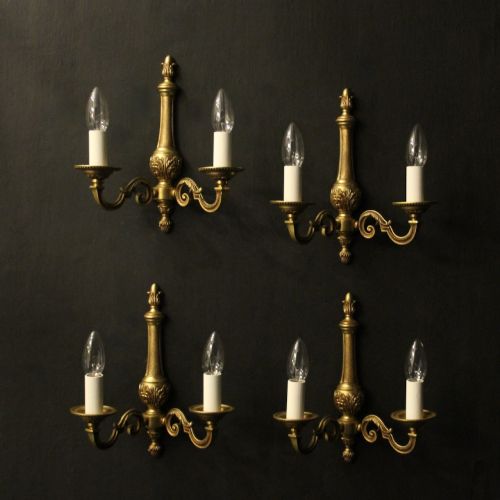
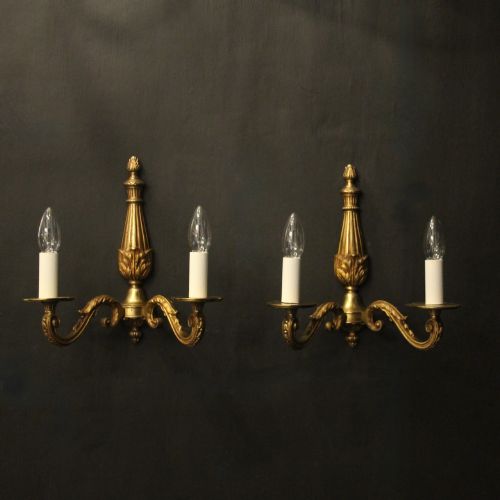
Vintage brass wall appliques encompass wall-mounted light fixtures designed to hold candles or electric bulbs, frequently referred to in listings as wall lights and wall sconces. Buyers searching for vintage brass wall appliques encounter pieces shaped by historical design idioms ranging from the Georgian and Victorian eras to the early twentieth century. French origins dominate the selection, bringing specific decorative traditions into domestic interiors.
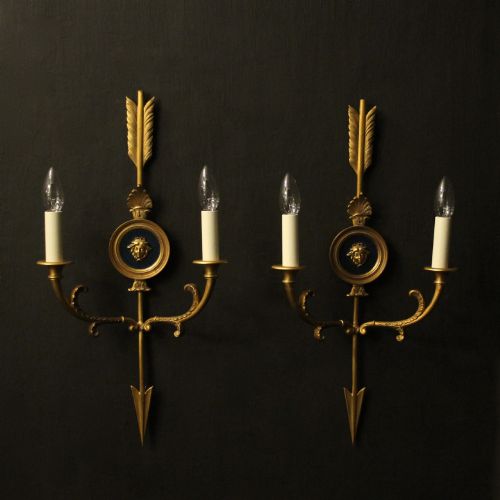
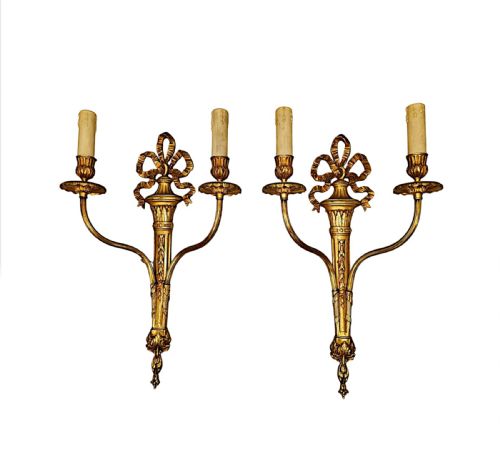
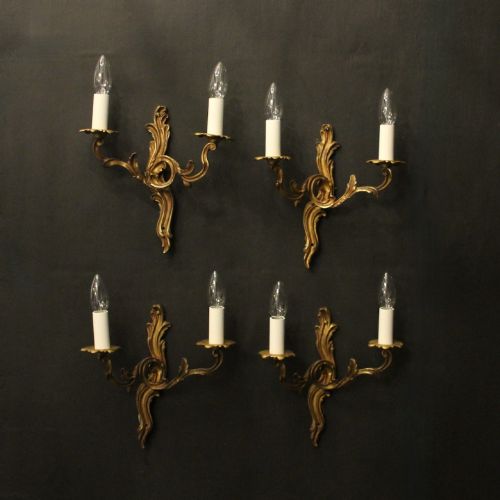
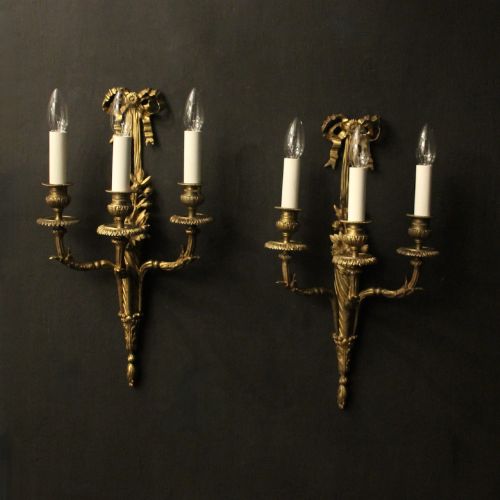
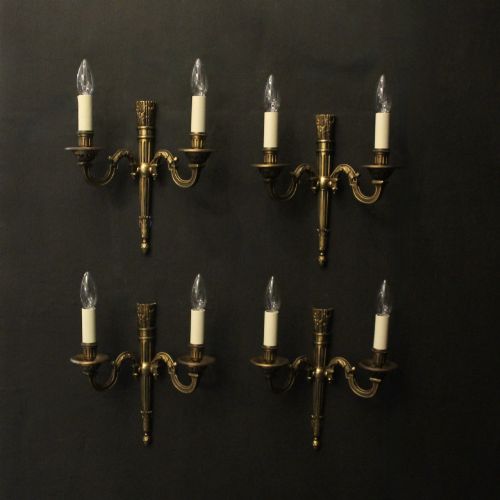
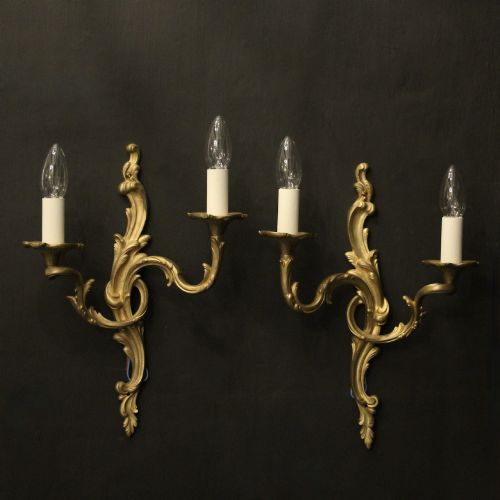
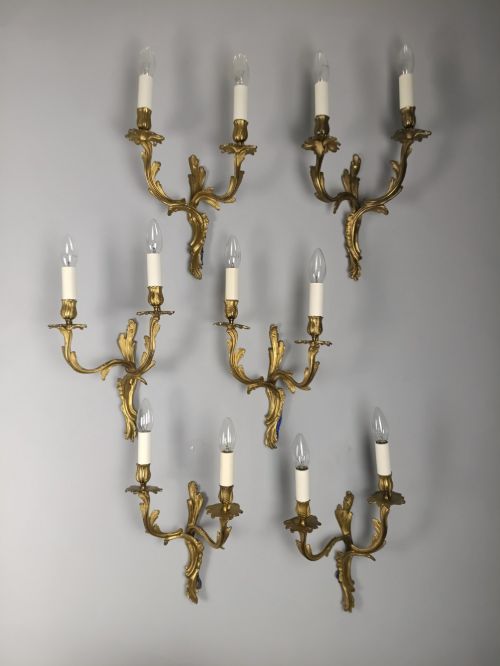
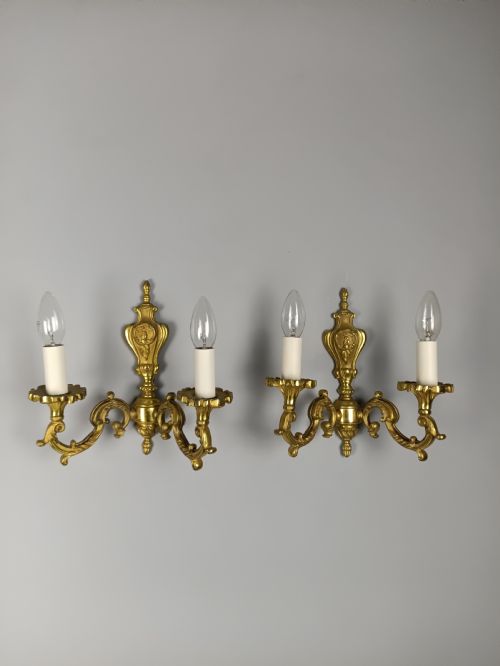
The most common version on this page is the French twin-arm or triple-arm wall light from the 1920s and 1930s, cast in gilded brass or bronze. These fixtures often display Rococo or Louis XVI styling, featuring scrollwork or ribbon motifs. Alongside French examples, English brass and bronze pieces from the nineteenth century appear, alongside occasional Swedish and Italian designs.
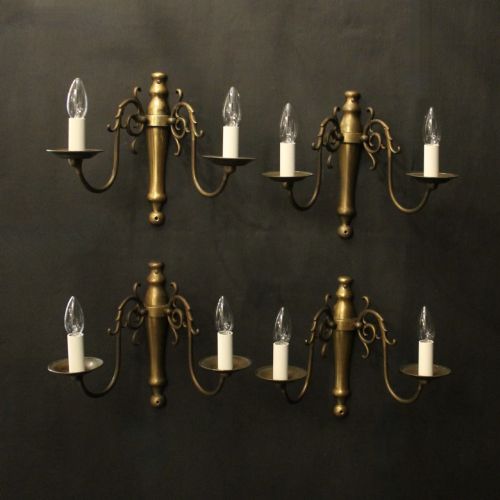
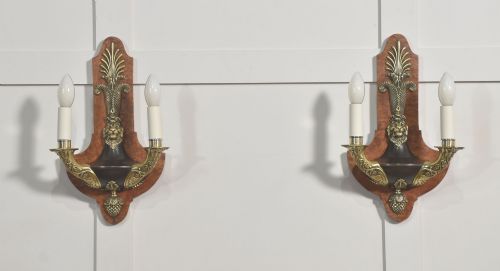
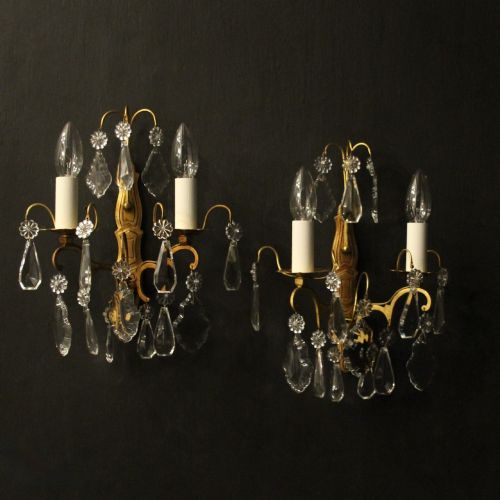
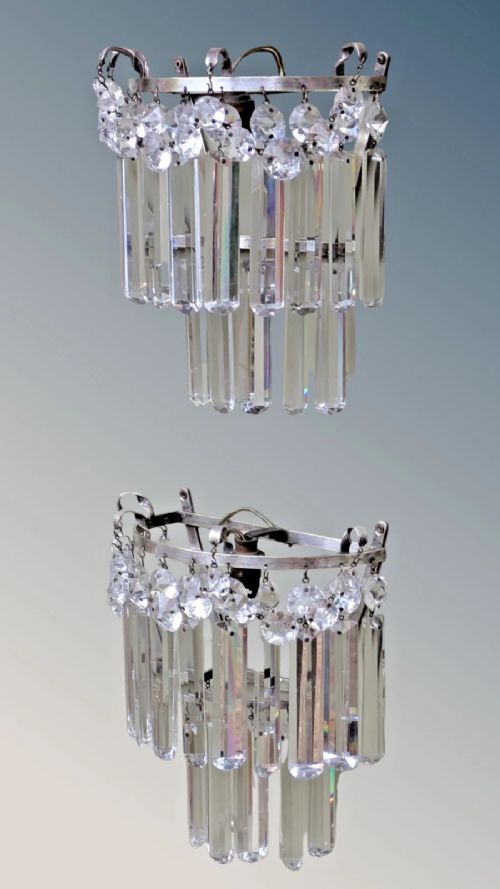
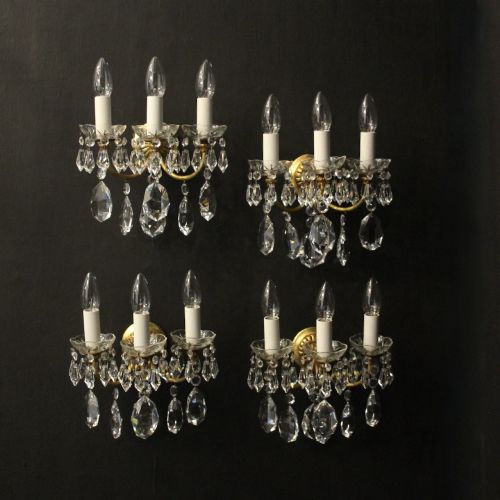
Design variations include single-arm lanterns, multi-branch appliques accented with cut crystal drops, and sculptural forms incorporating porcelain flowers or burr walnut panels. The scale ranges from small pairs suitable for intimate spaces to large sets of four or six intended for larger rooms. Each piece attaches directly to the wall surface to project light outward.
How they were made
The construction of these wall fittings relies primarily on cast brass, bronze, and ormolu, shaped through metal casting techniques to form intricate backplates and branching arms. Molten metal was poured into moulds to create high-relief scrollwork, cherubs, and Neoclassical patterns. Smiths and metalworkers then chased and finished the metal surfaces by hand.
Gilding methods included applying gold leaf or employing mercury gilding on bronze to achieve a durable, lustrous finish known as ormolu. Many pieces integrate glass elements such as cut crystal drops, pendants, or half-lantern panels secured to the metal frames by wire pins or small screws.
Several French pairs incorporate carved ribbon bows at the top, capturing fabric in solid bronze.
What varies in quality
The distinction between standard production and superior craftsmanship lies in the crispness of the metal casting and the depth of the hand-chasing. High-grade pieces exhibit sharp relief in ornamental details like acanthus leaves and ribbons, whereas lesser examples show softer contours resulting from worn moulds. The quality of the gilding further separates categories, with thick gold leaf or well-preserved ormolu retaining a rich tone over decades.
Structural integrity and the complexity of the design also determine the tier of a fixture. Multi-arm appliques with balanced branch symmetry and integrated crystal components demonstrate greater ambition than simple single-arm brackets. Original mounting plates and uniform patination across matched sets indicate a higher grade of manufacture.
The Vintage Brass Wall Appliques Glossary
- Ormolu
- Gilded bronze, produced by applying a gold-mercury amalgam to a bronze base and heating it to vaporise the mercury. This technique creates a rich, matte gold surface characteristic of fine French decorative metalwork.
- Applique
- A wall-mounted decorative light fixture designed to hold candles or electric lamps. In historical contexts, the term is frequently interchangeable with wall sconce.
- Rococo
- An ornate design style originating in eighteenth-century France and revived in later periods, characterised by asymmetrical scrollwork, C-curves, and naturalistic plant motifs. Fixtures in this style feature fluid, twisting arm branches.
- Louis XVI
- A neoclassical style prevalent in the late eighteenth century and later revived, defined by symmetry, straight lines, urns, ribbons, and classical architectural details. Wall lights of this type present disciplined geometric forms.
- Gilding
- The application of a thin layer of gold leaf or gold powder to a base metal surface such as brass or bronze. This process protects the underlying metal from tarnishing while providing a bright metallic finish.
Vintage Brass Wall Appliques: Frequently Asked Questions
How do I wire vintage wall appliques?
Most vintage wall lights require modern electrical rewiring to meet current safety standards before installation. A qualified electrician connects the internal wiring to your wall supply during fitting.
Many surviving pieces have already been adapted for modern electricity, but older sockets and cables benefit from professional inspection prior to use.
How do I clean gilded brass?
Gilded surfaces require gentle dusting with a soft, dry cloth to remove everyday particles. Avoid abrasive cleaning compounds and chemical dips that strip away the gold leaf or ormolu.
Applying moisture should be avoided unless strictly necessary, and any cleaning must be performed with care to preserve the original patina.
Are crystal drops original?
Crystal pendants and drops on period wall lights were often added or replaced over the lifespan of the fixture. Matching glass cuts and uniform mounting wires help determine whether the elements belong to the same period.
Minor variations in crystal clarity or shape are common in pieces that have survived for a century or more.
How do I identify Louis XVI style?
Louis XVI wall lights feature straight vertical lines, symmetrical arrangements, and classical motifs such as ribbons, urns, and beading. This aesthetic contrasts with the curved, asymmetrical forms typical of Rococo designs.
Identifying markers include architectural proportions and restrained ornamentation derived from classical antiquity.