


Vintage Brass Spice Grinder
These vintage brass spice grinders are heavy metal vessels designed for crushing kitchen ingredients and apothecary preparations, offering both utility and historic weight.
Vintage Brass Spice Grinder
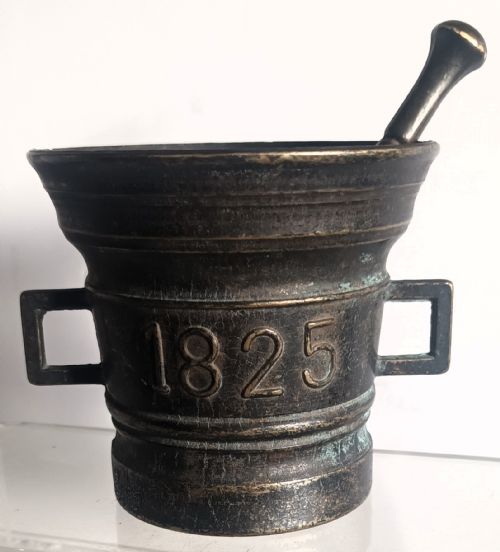
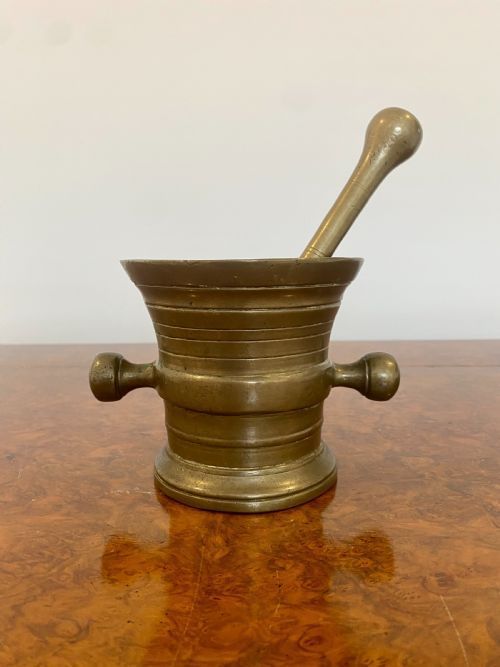
When you search for a vintage brass spice grinder, you are looking at mortar and pestle sets that served kitchens and chemists across centuries. The pieces on this page span from the seventeenth century through the Victorian era, including Georgian examples and Dutch Baroque designs.
Most items you meet here take the form of heavy bronze or brass mortars accompanied by matching pestles. Their origins range from English apothecary workshops to Indo-Persian metalware traditions.
How they were made
Metalworkers cast these vessels in bronze, brass, bell metal, and cast brass using traditional foundry methods. This produced thick walls capable of withstanding heavy pounding without cracking.
Many examples feature decorative surface work applied during or after casting, such as moulded rims and bands. The accompanying pestles were forged or cast to fit the interior contour of the mortar.
Listings feature items from the seventeenth, eighteenth, and nineteenth centuries, alongside Georgian and Victorian periods.
What varies in quality
The standard of a piece depends on the crispness of the cast decoration and the preservation of its original surface metal. Earlier examples from the seventeenth and eighteenth centuries often display heavier proportions and more deliberate hand-finishing.
Completeness also defines the grade of a set, particularly whether the original pestle survives alongside the mortar. Weight and balance further distinguish robust apothecary pieces from lighter domestic items.
The Vintage Brass Spice Grinder Glossary
- Mortar
- The heavy bowl in which substances are crushed or ground with a pestle. It provides a stable base for heavy-duty kitchen and apothecary work.
- Pestle
- The club-shaped tool used for pounding and grinding materials against the interior of the mortar. It is matched in scale to the vessel it serves.
- Bell Metal
- An alloy of copper and tin used for casting metalware and bells. It yields a resonant sound and exceptional durability.
- Apothecary
- A historical practitioner who prepared and sold medicines and drugs. Their equipment included robust brass and bronze mortars.
Vintage Brass Spice Grinder: Frequently Asked Questions
What were vintage brass spice grinders used for?
These vessels served chemists and cooks for crushing dried herbs, spices, and medical ingredients into powders. Their thick metal construction handled daily grinding without wearing down.
Over centuries, households and apothecaries relied on them for food preparation and medical compounding before modern machinery took over.
How do I date a brass spice grinder?
Dating relies on stylistic clues like moulded rim profiles, surface decoration, and material composition such as bell metal versus cast brass. Earlier pieces from the seventeenth century often show heavier casting and simpler, robust proportions.
Victorian and later nineteenth-century examples frequently feature cleaner lines or distinct chemist markings associated with apothecary use.
Are mortar and pestle sets usually found together?
Many surviving examples retain their original matching pestles, though separation occurred frequently over centuries of use. Finding a complete set from the same period enhances the integrity of the piece.
Pestles often match the metal alloy and wear patterns of their corresponding bowls.
How do I display a brass mortar at home?
Their heavy metal presence makes them suitable for placement on open kitchen shelves, sideboards, or display cabinets. They require stable surfaces due to their substantial weight.
Keeping them in dry spaces helps preserve the natural brass and bronze patinas built up over generations.