
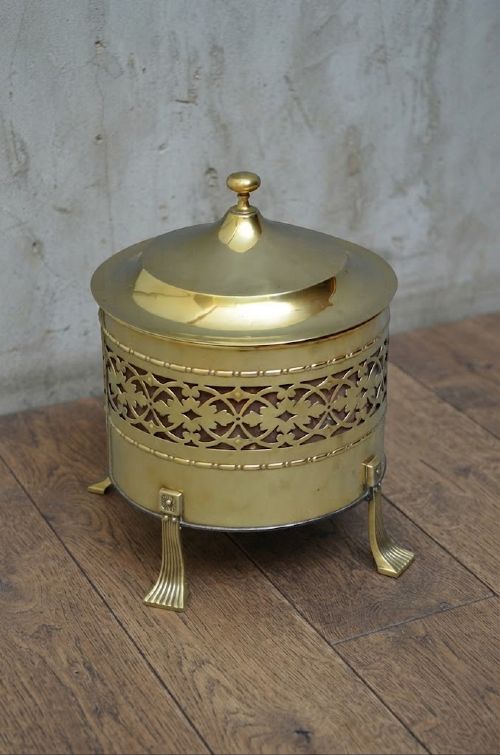
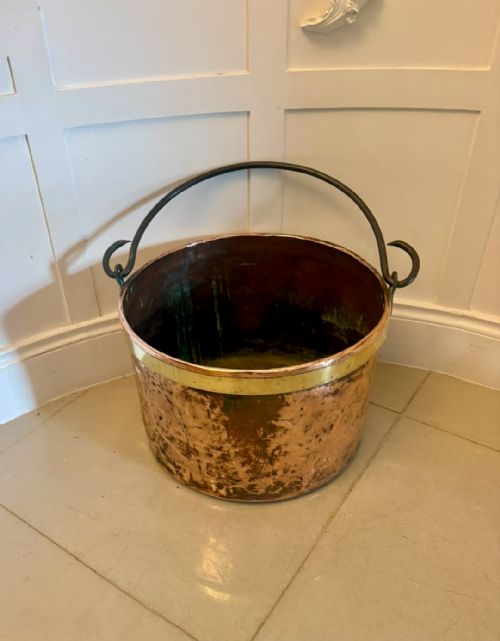
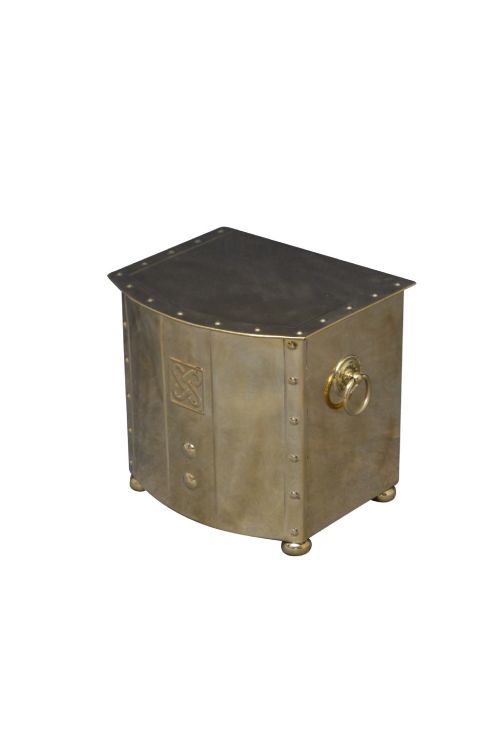


Vintage Brass Planter Accessories
These vintage brass planter accessories bring warmth and heavy metal texture to a room, functioning equally well as fireside storage or plant holders.
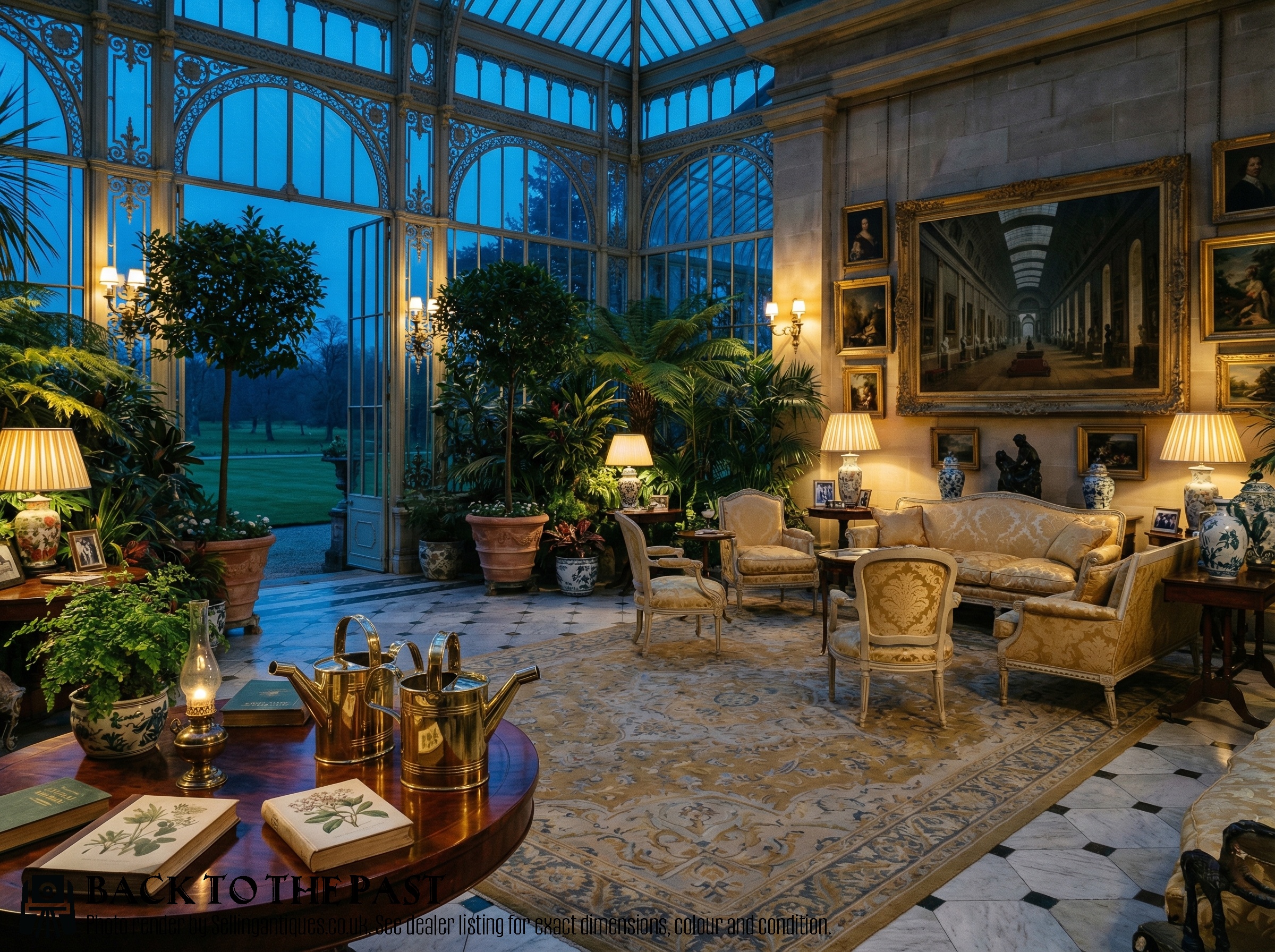
Vintage Brass Planter Accessories
When you search for vintage brass planter accessories, you encounter robust vessels originally built for holding coal, logs, or water in period homes. These utilitarian items cross over easily into decorative use as jardinieres and indoor plant containers.
The pieces on this page span the Victorian and Edwardian eras, alongside Georgian and Art Deco examples. Forms range from heavy log bins and coal buckets to country house watering cans.
Makers often combined brass with copper bands or wrought iron elements, producing varied containers that suit traditional and contemporary interiors alike.
How they were made
Makers utilised sheet brass and copper, hammering, embossing, and joining the metal sheets to form durable vessels. Many examples feature decorative fretwork designs or contrasting copper bands.
Workshops incorporated iron and tin components for structural reinforcement, particularly on heavy-duty fireside buckets and coal scuttles designed to carry dense fuel.
What varies in quality
Quality rests in the weight of the metal and the crispness of the embossed detail or fretwork. Heavy gauge brass and secure riveting distinguish superior vessels from lighter, purely decorative items.
The harmony of mixed metals, such as well-fitted copper bands on a brass body, elevates a piece. Surface patination achieved through age also dictates the visual appeal of each accessory.
The Vintage Brass Planter Accessories Glossary
- Fretwork
- Ornamental design created by cutting or piercing patterns through metal sheets. This technique lightens the visual weight of heavy brass containers.
- Coal scuttle
- A bucket or box specifically designed for holding and transporting domestic coal to a fireplace. Many feature hinged lids or swinging handles.
- Patina
- The surface sheen and colour acquired by metal through age and handling. Collectors value a rich patination for its historical depth.
Vintage Brass Planter Accessories: Frequently Asked Questions
How do I clean a brass planter?
Wash the metal gently with warm soapy water and a soft cloth to remove dust and dirt. Avoid harsh chemical polishes that strip away the desirable historic patina.
Dry the surface thoroughly with a microfiber cloth to prevent water spots. Leaving a gentle, lived-in finish preserves the character of older metalwork.
Can I use these outdoors?
These items were designed for interior domestic use around hearths and in reception rooms. Exposure to persistent rain and frost will accelerate corrosion on iron fittings and soldered seams.
Keep them inside as decorative plant holders or dry storage bins. If placed on damp surfaces indoors, use a protective saucer underneath to guard against moisture rings.
How do I date a brass bucket?
Examine the construction methods, such as hand-beaten seams, riveted joints, and the style of any decorative embossing. Victorian and Edwardian examples often display specific floral or geometric motifs tied to their period.
Compare the weight and alloy composition against known benchmarks from the nineteenth and early twentieth centuries. Subtle shifts in manufacturing techniques help narrow down the decade of production.
What is the difference between a log bin and a jardiniere?
Log bins and coal buckets were built with thick, durable walls to withstand the heavy impact of firewood and coal. They often feature robust swinging handles for carrying.
Jardinieres prioritise decorative surface work, such as fine embossing or fretwork, as they were meant to display plants in main rooms. However, many sturdy historical vessels now serve both functions interchangeably.