



Vintage Brass Navigational
These vintage brass navigational instruments offer precision metalwork and marine history, built for practical use on deck or in the field.
Vintage Brass Navigational
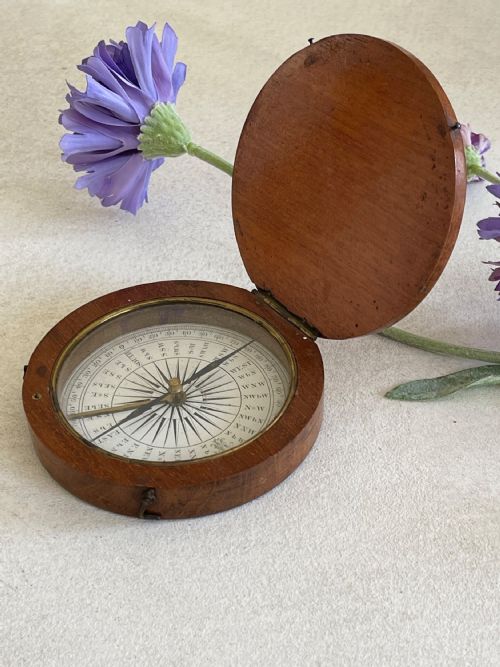
Vintage brass navigational items encompass a range of scientific and maritime equipment, including compasses, telescopes, chronometers, and sextants. These objects served vital functions for explorers, sailors, and surveyors navigating oceans and land.
The selections span multiple eras, featuring Georgian travelling compasses, Victorian marine chronometers, and mid-twentieth-century aviation and naval instruments. Brass is the dominant material, often paired with mahogany, leather, and glass.
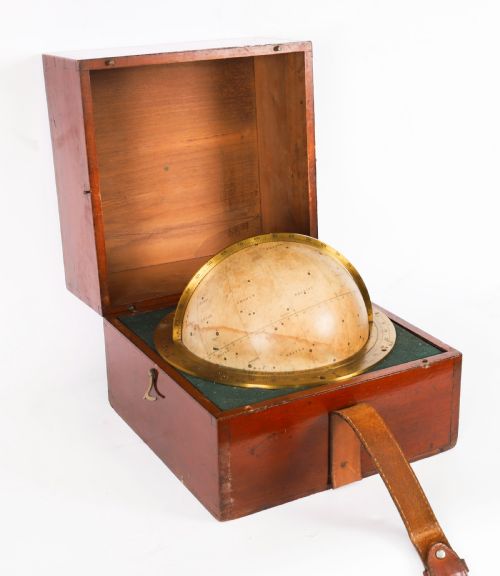
Buyers encounter items ranging from pocket sundials and desk compasses to complex celestial globes and ship's telegraphs. Each piece reflects the technological demands of its specific period of manufacture.
How they were made
Makers shaped heavy brass through casting and turning, creating robust housings designed to withstand harsh marine environments. Components often received polished finishes or protective lacquer to prevent corrosion at sea.
Enclosures combined brass with timber casings in mahogany, walnut, or ebony, frequently lined with velvet or leather to secure delicate internal mechanisms. Silvered metal dials and paper scale inserts provided clear, precise readings for navigators.
Optics utilised carefully ground glass lenses housed within multi-draw telescoping brass tubes. Engraved markings and signature plates identified the maker and production details directly onto the metal surface.
Vintage Brass Navigational Retail Price Guide 2026
Typical asking prices for vintage brass navigational among the pieces listed under this phrase on Sellingantiques today, from the lower quarter to the upper quarter. They describe what is for sale here now, not the wider market.
Listings feature scientific instruments, marine chronometers, and pocket compasses spanning the Georgian, Victorian, and mid-twentieth-century periods.
What varies in quality
The reputation of the maker influences the standing of a piece, with signed works from established London and regional workshops commanding attention. Precision in the graduating scales and the crispness of engraved lettering distinguish superior items.
The integrity of the original casing and the survival of secondary components, such as matching wooden boxes and internal glass covers, affect completeness. Graduated movements in chronometers and smooth extending actions in telescopes demonstrate functional excellence.
Mercer of London·Thomas Mercer·Litherland Davies Of Liverpool·Voigtländer Sohn AG Braunschweig·W T Gilbert London·Henri de Magnac·Elliott Bros of London·James McCabe·W H Harling·G adams of london·H Hughes·John Lilley Son London·John Newman of Regent Street·Barker Son
The Vintage Brass Navigational Glossary
- Marine chronometer
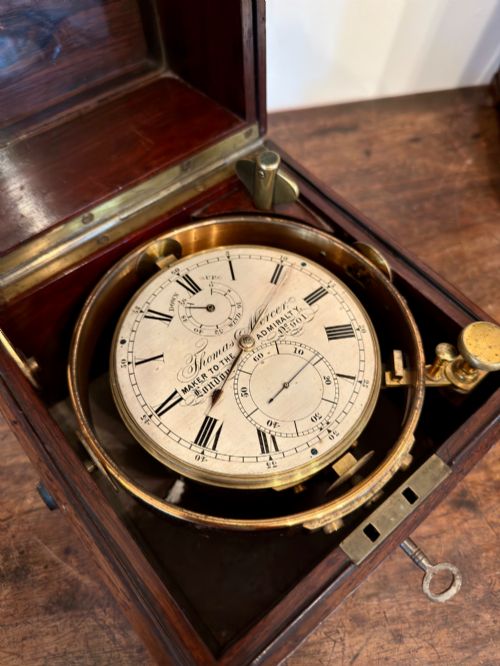
- A highly accurate timekeeper used at sea to determine longitude by observing celestial bodies. These clocks are typically housed in gimbaled brass boxes to maintain a level position despite the motion of a ship.
- Sextant
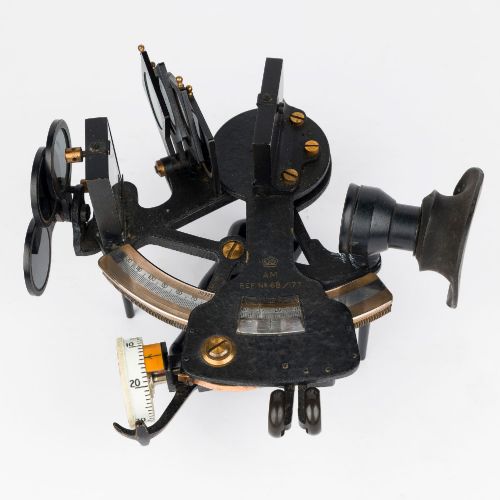
- An instrument used to measure the angle between an astronomical object and the horizon for celestial navigation. The device relies on an arc measured in degrees, mirrors, and a sighting telescope.
- Clinometer
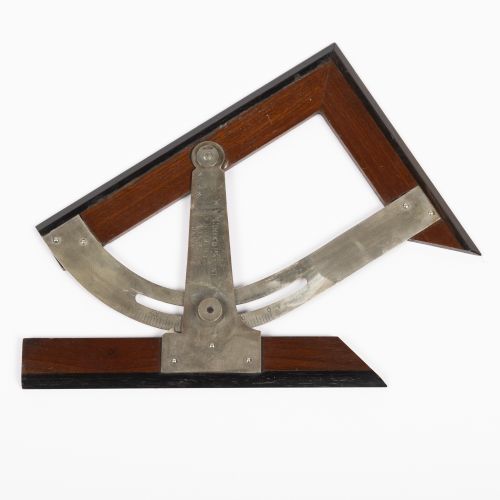
- A tool for measuring angles of slope, tilt, or elevation of an object with respect to gravity. Maritime versions helped calculate the roll and pitch of a vessel.
- Butterfield dial
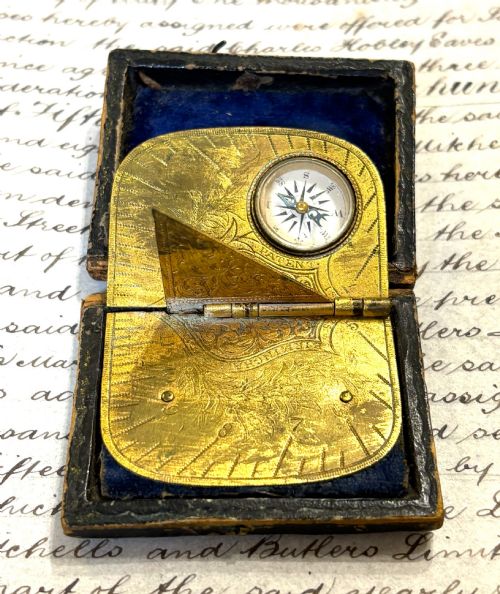
- A portable pocket sundial featuring a bird-gnomon and a hinged hour plate with multiple latitude scales. These pieces allowed users to tell time across different European cities.
Vintage Brass Navigational: Frequently Asked Questions
How do I maintain brass navigational instruments?
Keep the metal clean with a soft cloth and avoid abrasive polishes that remove historic patination or engraved details. Store wooden cases in stable environments away from direct sunlight and excessive humidity.
Inspect moving parts on telescopes and compasses periodically to ensure mechanisms operate without force. Proper care preserves both the physical structure and the legibility of maker signatures.
Are these navigational instruments still accurate?
While many instruments retain their mechanical function, vintage pieces serve primarily as historical artefacts and display objects rather than primary tools for modern navigation.
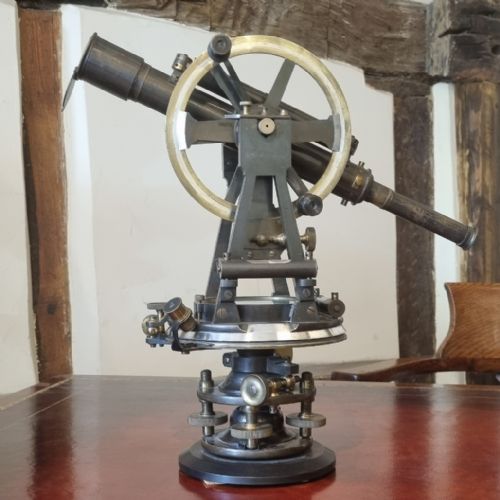
Complex mechanisms like marine chronometers or theodolites may require professional servicing by a specialist if operation is desired. Most buyers appreciate them for their craftsmanship and connection to maritime history.
How can I identify the age of a piece?
Examine the style of engraving, the materials used for the case, and any visible maker signatures or patent dates. Georgian and Victorian pieces often feature hand-engraved lettering and solid mahogany or walnut cabinetry.
Twentieth-century items, such as WWII aviation sextants or typhoon barometers, introduce stamped serial numbers and alternative finishes like black enamel. Comparing details with recorded examples from known workshops helps narrow the production window.
What is the purpose of a cased octant?
An octant is an early reflecting instrument used by sailors to measure the angle between the sun or stars and the horizon. Its eighth-circle arc allowed navigators to calculate latitude during long voyages.
The protective wooden cases ensured the delicate mirrors and glass components survived damp conditions aboard ship. Surviving examples often retain original ebony frames and brass index arms.