




Vintage Brass Handled Pan
These vintage brass handled pan examples bring robust hearth utility and warm metal tones directly into contemporary kitchens and firesides.
Vintage Brass Handled Pan
A vintage brass handled pan encompasses functional domestic cookware and hearth accessories originating from the Georgian, Victorian, and Arts and Crafts eras. Buyers encounter substantial preserving vessels, chestnut roasters, saucepans, and warming pans designed for daily culinary labour or fireside warmth.
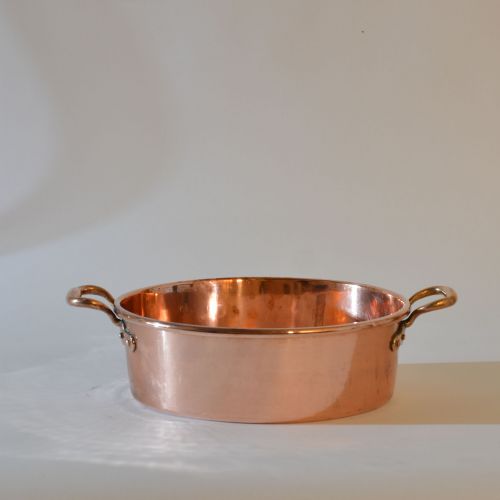
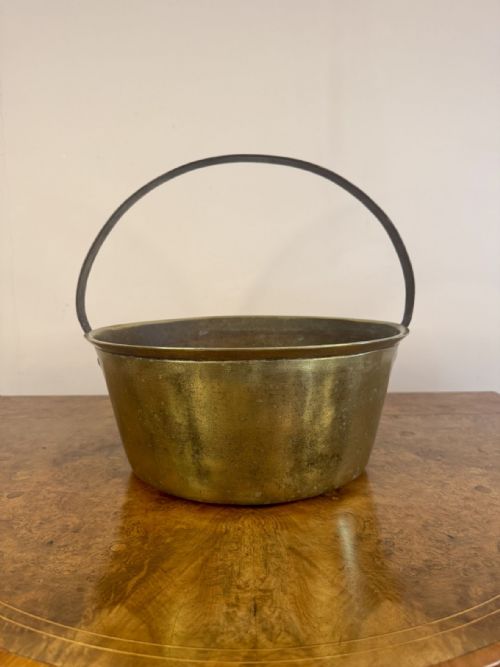
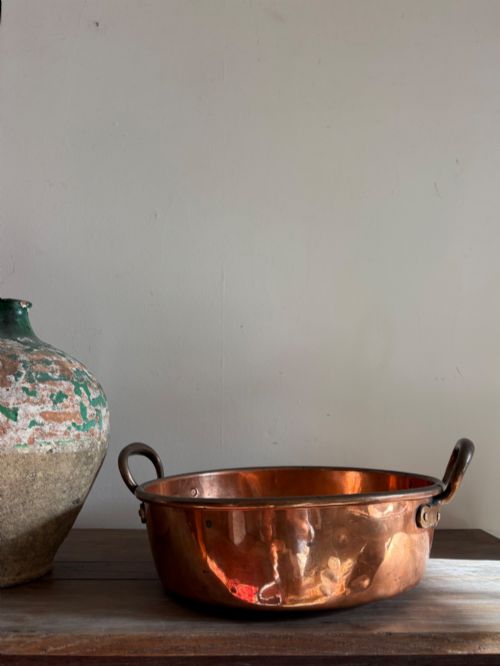
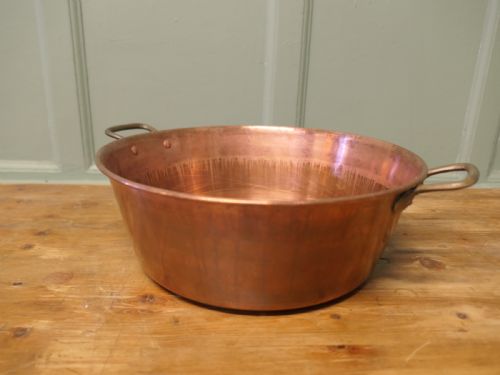
The most frequent form on this page is the large copper or brass preserve pan, often fitted with sturdy brass handles for lifting heavy loads of fruit and sugar. These vessels reflect provincial kitchens, country houses, and domestic workspaces from the eighteenth and nineteenth centuries.
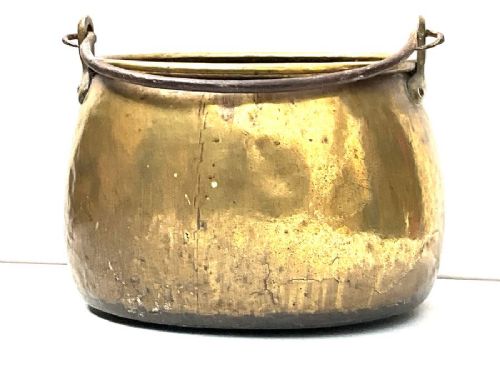
Objects range from deep cauldrons and fish kettles to flat-bottomed skillets and chambersticks, showing stylistic influences from French provincial to rustic farmhouse traditions. Each piece serves as a tangible link to historical food preparation and home heating methods.
Materials and construction methods
The construction of a vintage brass handled pan typically combines beaten sheet metal or cast bodies with securely fastened handles. Metalworkers utilised heavy copper and brass for thermal conductivity, joining parts with visible rivets and hammered seams.
Foundries and smiths employed casting for solid brass elements like handles and feet, while sheet metal was hammered over forms to create deep bowls and kettles. These traditional techniques resulted in durable, heavy-gauge utensils built for decades of household use.
Vintage Brass Handled Pan Retail Price Guide 2026
Typical asking prices for vintage brass handled pan among the pieces listed under this phrase on Sellingantiques today, from the lower quarter to the upper quarter. They describe what is for sale here now, not the wider market.
The inventory bridges multiple styles, from rustic farmhouse and French provincial to formal Georgian hearth accessories.
Assessing quality and craftsmanship
The calibre of a vintage brass handled pan rests upon metal thickness, handle attachment integrity, and the preservation of original surfaces. Heavier gauge metal indicates utility intended for demanding kitchen environments rather than lighter display pieces.
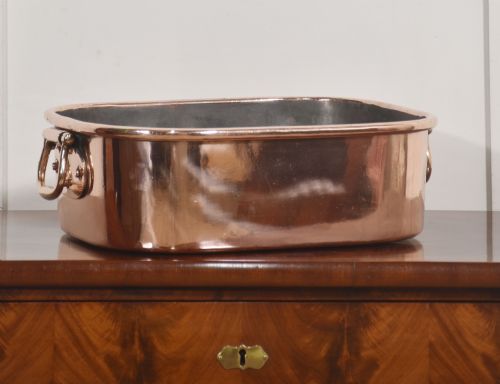
Superior examples display clean hammering marks, secure riveted or cast joints, and well-balanced proportions that demonstrate the maker's skill. The harmony between the brass handles and the primary vessel body reveals deliberate design choices in period workshops.
The Vintage Brass Handled Pan Glossary
- Preserve pan
- A wide, open vessel designed for boiling fruit and sugar mixtures into jams and jellies. These pans typically feature rounded bases and sturdy handles for pouring.
- Chestnut roaster
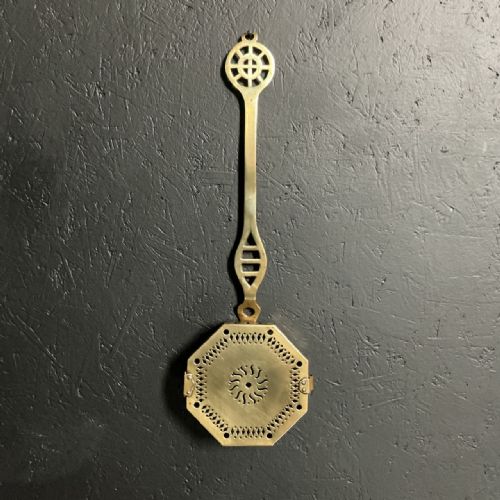
- A long-handled utensil with a lidded metal pan used for roasting chestnuts over open hearth coals. The design kept hands safely away from direct fire.
- Fish kettle
- An elongated metal pan equipped with a lid and internal draining rack for poaching whole fish. This specialised cookware formed part of substantial Victorian kitchen inventories.
- Warming pan
- A lidded metal pan on a long handle filled with hot embers to warm bedsheets. These items combined functional hearth utility with decorative brass craftsmanship.
- Skillet
- A short-legged metal cooking pot designed to stand directly among hearth coals. The iron or brass handle allowed the cook to position the vessel securely.
Vintage Brass Handled Pan: Frequently Asked Questions
How were these metal pans originally cleaned?
Households typically scoured copper and brass surfaces using mild abrasives like fine sand, salt, and vinegar to maintain their bright metallic lustre.
Regular polishing prevented heavy tarnish buildup and kept domestic utensils hygienic for daily food preparation.
Can I cook with an antique brass pan?
Most antique pans require professional re-tinning of the interior surface before modern food preparation to prevent metal transfer.
Many collectors prefer to display these items as decorative objects rather than subjecting them to active kitchen use.
How do I date a brass handled pan?
Dating relies on observing construction methods, such as hand-hammered seams, early rivet styles, and material combinations like wrought iron and cast brass.
Design motifs tied to Georgian or Victorian domestic trends also help place the object within a specific century.
What is the difference between a preserve pan and a saucepan?
Preserve pans feature wide, open tops designed to evaporate moisture quickly during jam making, while saucepans have deeper, straighter walls for boiling liquids.
Preserve pans usually rely on dual side handles for lifting heavy loads, whereas saucepans feature a single extended handle.