
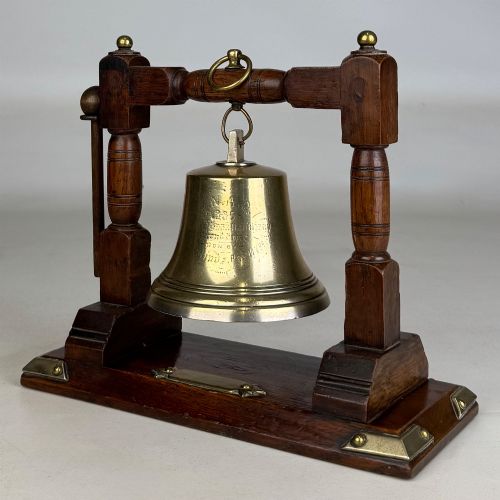
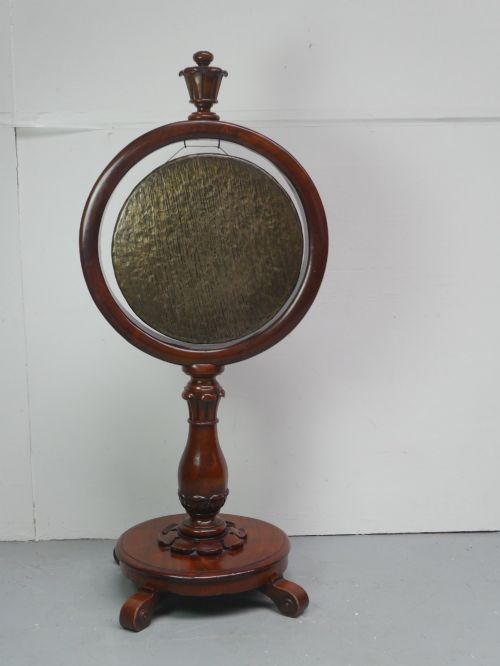
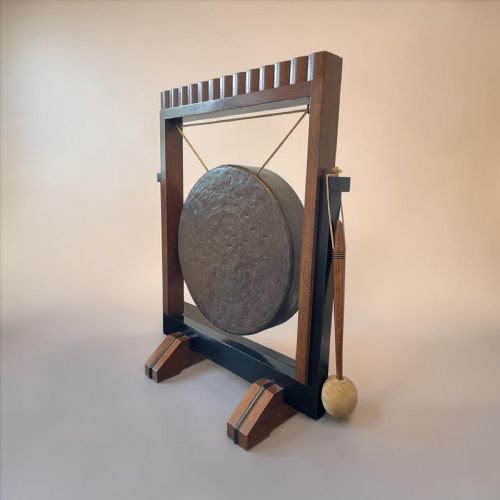

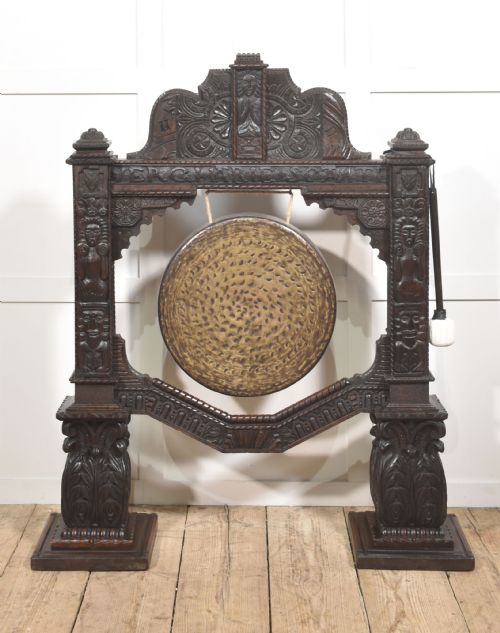


Vintage Brass Gong Stand
A vintage brass gong stand holds a resonant metal disc or bell, bringing deep historic presence and clear acoustic tones into domestic rooms.
Vintage Brass Gong Stand
A vintage brass gong stand functions as the supportive structure for a suspended dinner gong, temple bell, or table gong. Buyers seeking a vintage brass gong stand encounter pieces designed for summoning household members or marking formal occasions.
The selections span the Victorian, Edwardian, and Art Deco periods, alongside Chinese Export and Arts and Crafts examples. Forms range from compact table top pieces to monumental floor-standing designs and framed dining room accessories.
Materials paired with the brass elements include oak, mahogany, walnut, wrought iron, and carved hardwood. Many items combine a resonant brass or bronze gong with substantial wooden framing or textile cord suspension.
How they were made
Makers utilised cast brass, bronze, and iron for the hanging bells and gongs, often shaping the metal through casting and hammering techniques. Frames were constructed from seasoned timbers such as oak, mahogany, and hardwood.
Joinery techniques on the wooden stands involve traditional mortise and tenon construction, frequently enhanced by hand-carved ornamentation. Textile cords and sturdy mounting hooks secure the suspended bells within their frames.
Several examples double as musical instruments, including an oak-cased glockenspiel ready to chime tunes between courses.
What varies in quality
The standard of carving on the wooden frames creates a clear distinction between standard production pieces and finer examples. Elaborate ornamentation, such as Gothic Revival motifs or detailed Chinese dragon carving, elevates the craftsmanship.
Material selection and structural stability dictate the overall caliber of the stand. Substantial hardwoods paired with heavy cast brass bells demonstrate superior construction compared to lighter framed alternatives.
The Vintage Brass Gong Stand Glossary
- Dinner Gong
- A suspended metal disc or bell struck with a mallet to announce meals in large houses. These pieces often feature fitted wooden frames designed for dining rooms or halls.
- Gothic Revival
- An architectural and decorative style drawing inspiration from medieval forms. Pieces in this category display pointed arches, heavy tracery, and robust oak framing.
- Art Nouveau
- A design movement characterised by flowing, organic lines and floral motifs. Stands from this period utilise sinuous brass work and stylised natural carving.
- Arts and Crafts
- A movement prioritising traditional craftsmanship and visible construction methods. Items from this tradition display honest joinery and simple, robust materials.
- Chinese Export
- Goods manufactured in China specifically for Western markets. These objects frequently incorporate intricate hand-carved wooden stands and traditional temple bell forms.
Vintage Brass Gong Stand: Frequently Asked Questions
What were vintage brass gong stands used for?
These pieces served primarily as acoustic signals within large domestic interiors. Households struck the suspended metal disc to announce dinner or summon staff across distant rooms.
Over time, their role shifted towards decorative utility, bringing distinctive sound and striking focal points into domestic spaces.
How do I date a brass gong stand?
Dating relies heavily on stylistic indicators within the woodwork and metal framing. Victorian and Gothic Revival pieces show heavy, ornate timber carving, whilst Edwardian and Art Deco examples favour cleaner lines.
Reference to specific periods like the nineteenth century or the nineteen-thirties helps narrow down the exact decade of manufacture.
Are all gong stands made of oak?
Oak appears frequently among the listed wooden frames, particularly in nineteenth-century and Edwardian pieces. However, makers also utilised mahogany, walnut, wrought iron, and carved hardwoods.
Brass and bronze remain consistent for the suspended bells, whilst the support structures vary considerably across different design movements.
How do I look after the brass and wood?
Maintenance involves gentle dusting of both the wooden frame and the suspended metal gong. Avoiding harsh chemical polishes preserves the natural patination built up over decades.
Checking the suspension cord periodically ensures the bell remains securely hung within its supporting structure.