




Vintage Brass Fire Bucket
These vintage brass fire bucket pieces bring hearth-side utility and gleaming metal warmth to a room.
Vintage Brass Fire Bucket
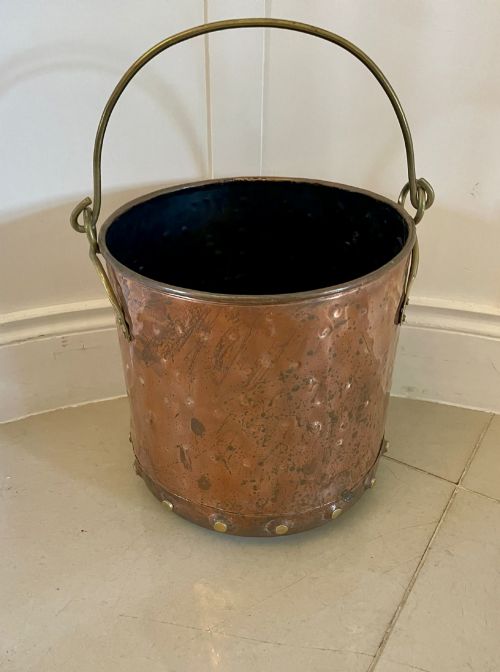
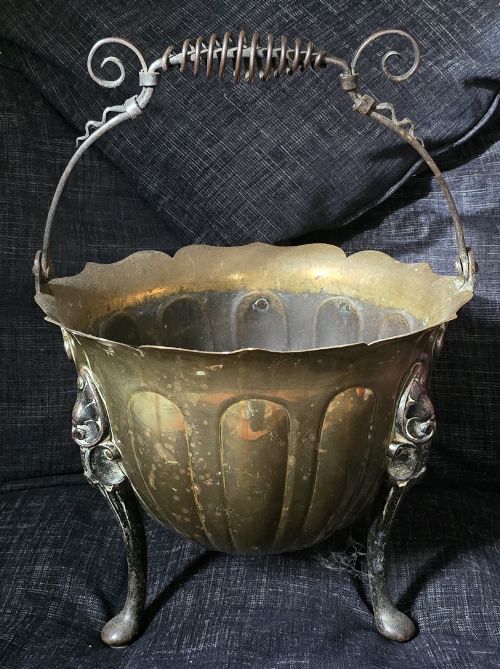
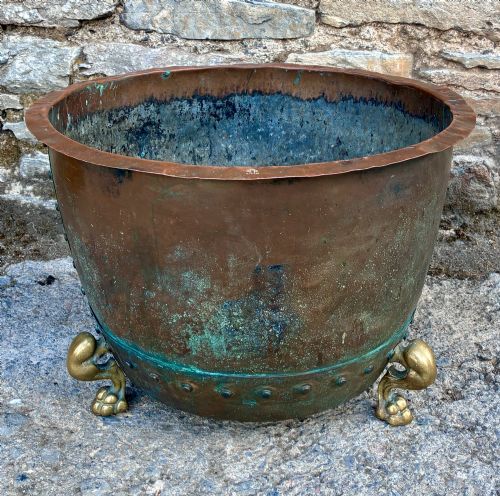
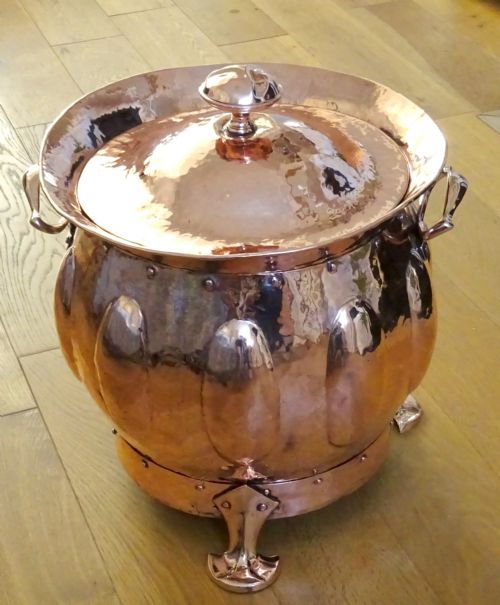
When you search for a vintage brass fire bucket, you are looking at substantial metal and wood containers designed for hearths and coal handling. The examples found here span the nineteenth and early twentieth centuries, taking forms such as coal scuttles, log bins, cauldrons, and coopers' work.
The assortment includes related fireside accessories like coal buckets and log tubs that share the same utilitarian origins. Each item reflects the domestic routines of period homes where fuel storage needed to be both durable and presentable.
How they were made
Makers built these vessels using heavy sheet brass and copper, frequently joined with visible rivets along the seams. Handles and rims often incorporate cast iron or solid brass mountings for structural strength.
Wooden examples rely on traditional coopering techniques, utilising staves of oak or mahogany bound together with brass bands. These wooden buckets combine metal hardware with turned timber construction to handle heavy loads of fuel.
Vintage Brass Fire Bucket Retail Price Guide 2026
Typical asking prices for vintage brass fire bucket among the pieces listed under this phrase on Sellingantiques today, from the lower quarter to the upper quarter. They describe what is for sale here now, not the wider market.
Listings feature items spanning the nineteenth and early twentieth centuries, incorporating materials such as zinc, cast iron, and leather alongside brass and copper.
What varies in quality
Quality in these vessels rests upon the weight of the metal gauge and the integrity of the construction. Heavier brass and thicker copper sheets maintain their shape better under regular domestic use.
Finishing details also separate standard examples from finer ones. Well-fitted brass banding on coopered oak bins and crisp hand-beaten hammering on Arts and Crafts copper mark out superior workmanship.
Henry Loveridge
The Vintage Brass Fire Bucket Glossary
- Coopered
- Built using wooden staves joined together with metal bands, much like a traditional barrel. This method was essential for creating sturdy wooden log bins and buckets.
- Riveted
- Joined by metal pins that are hammered flat at the ends to secure overlapping sheets. This technique provides both structural strength and a distinct industrial aesthetic.
- Armorial crest
- A heraldic design engraved or applied to metal surfaces. Such crests indicate institutional or aristocratic commission.
- Coal scuttle
- A container specifically designed for carrying and storing coal near a fireplace. These often feature an angled opening or a hinged lid for easy pouring.
Vintage Brass Fire Bucket: Frequently Asked Questions
What is a vintage brass fire bucket?
A vintage brass fire bucket is a metal or wood-bound vessel originating from the nineteenth or early twentieth century. Originally intended for water storage near hearths to combat chimney sparks, they survive today as decorative fireside containers.
These pieces transitioned from practical safety equipment into domestic accessories used for holding logs, coal, or kindling. Their durable construction allowed them to withstand heavy daily use beside open fires.
How do I clean a brass fire bucket?
Cleaning depends on the finish you prefer and the age of the metal. Many collectors choose to preserve a dark, aged patina rather than polishing the brass to a bright shine.
If cleaning is necessary, use a gentle metal cleaner suitable for vintage brass or copper. Avoid harsh abrasives that can thin the historic metal or remove hand-hammered surface textures.
Can I use these for logs?
Many of these metal and wood vessels function well as log bins or coal scuttles. Their original purpose involved heavy duty, making them suitable for holding firewood.
Check the interior condition of the bucket before loading logs. Lined or particularly solid examples handle dry timber without issue.
How do I date a copper log bin?
Dating relies on observing construction methods, materials, and stylistic markers such as Arts and Crafts hand-beating or Victorian proportions. Rivet types and metal thickness also offer clues to the manufacturing decade.
Comparing the specific brass mounts and wood types against documented examples helps narrow down the period of production between the mid-nineteenth and early twentieth centuries.