



Vintage Brass Dinner Bell
A vintage brass dinner bell summons household staff or calls guests to the table with a crisp, resonant tone.
Vintage Brass Dinner Bell
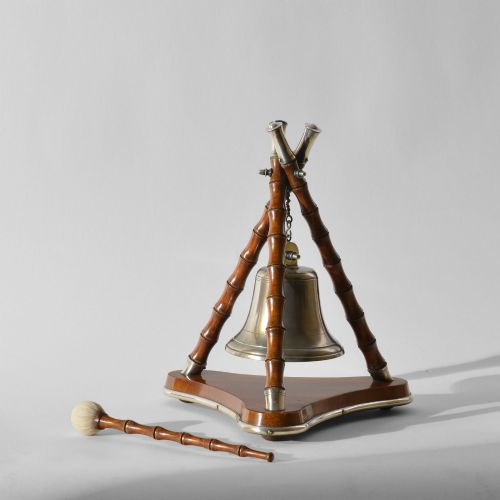
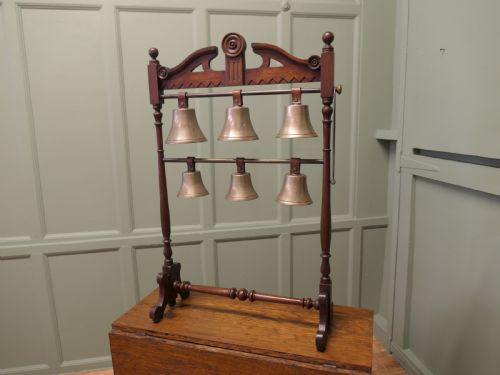
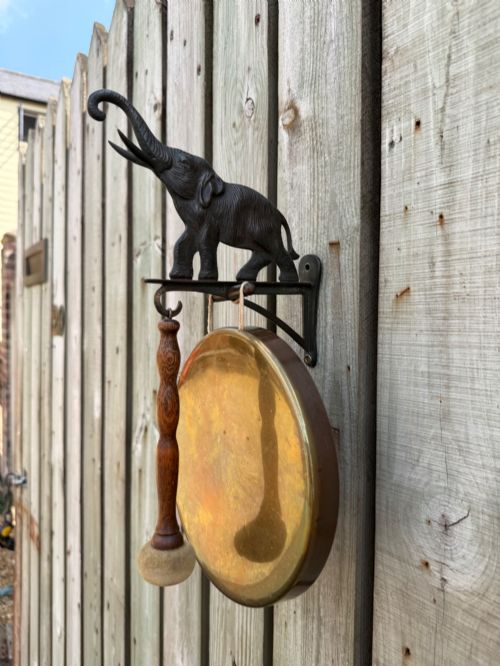
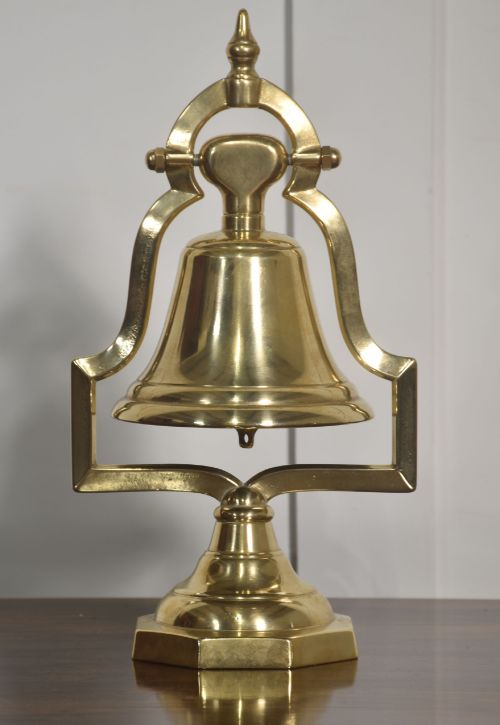
A vintage brass dinner bell spans table gongs mounted on wooden stands, handheld bells, and wall chimes. When searching this phrase, buyers encounter pieces from the Victorian and Edwardian eras alongside 19th-century examples.
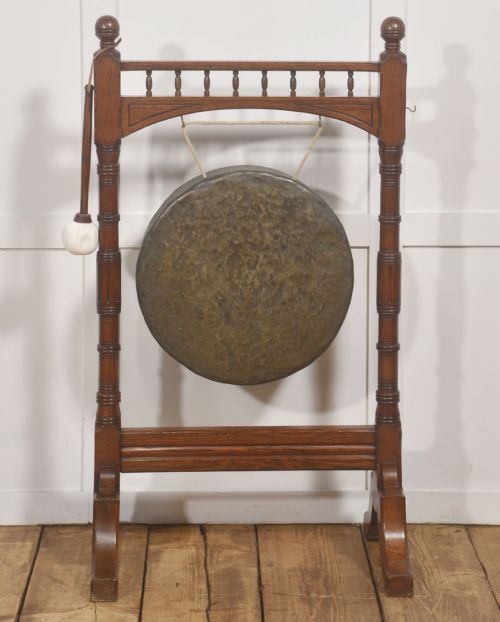
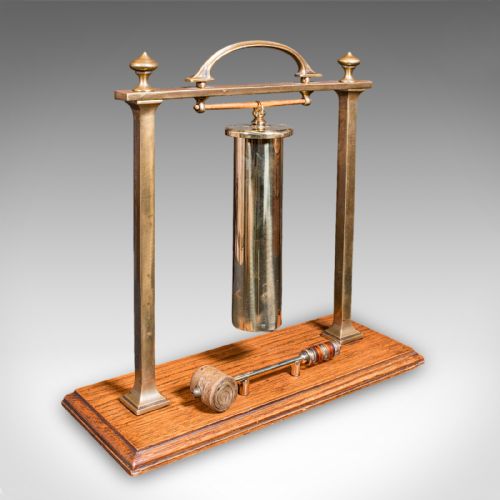
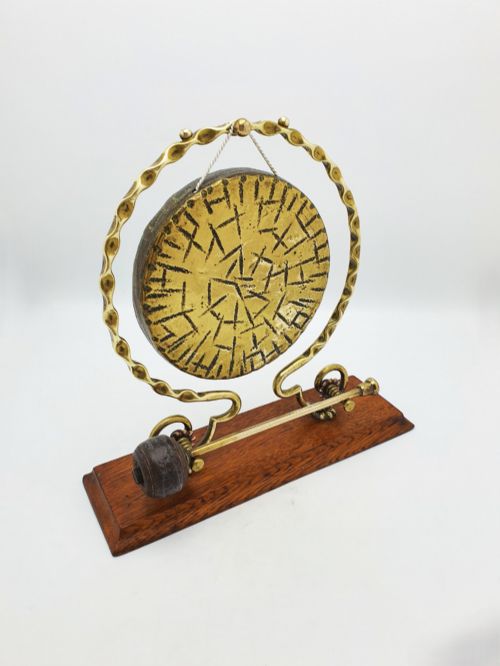
The selection ranges from simple tabletop bells on stands to carved oak frames holding suspended gongs and multi-strike chimes. Many pieces incorporate wooden bases or frames made of oak, walnut, or other hardwoods.
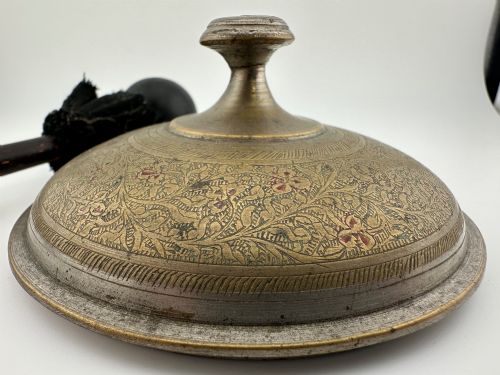
Origins include English, Italian, Chinese, and Burmese examples, reflecting diverse domestic and ceremonial contexts. Table gongs and handheld bells dominate the selection, often accompanied by wooden strikers or mallets.
Materials and Construction
Construction relies primarily on cast brass or bronze for the sounding components, paired with carved hardwood bases and frames. Oak and walnut provide stable mountings for suspended gongs and multi-strike mechanisms.
Hanging gongs utilise cord or rope to suspend the metal plate from a wooden arch, allowing free vibration. Handheld bells feature turned wooden or metal handles secured directly to the bell body.
Vintage Brass Dinner Bell Retail Price Guide 2026
Typical asking prices for vintage brass dinner bell among the pieces listed under this phrase on Sellingantiques today, from the lower quarter to the upper quarter. They describe what is for sale here now, not the wider market.
Some bells served as schoolmaster's alarms or town crier instruments before finding a quieter retirement on the dining table.
Quality and Craftsmanship
Quality rests in the purity and resonance of the metal tone, alongside the depth and precision of any woodwork. Finely carved oak frames and robust mounting stands elevate a piece beyond basic utilitarian examples.
Attention to detail in the casting of the brass, the stability of the stand, and the retention of original strikers or mallets distinguish superior examples. The integration of materials, such as felt cushioning or turned handles, marks finer production standards.
The Vintage Brass Dinner Bell Glossary
- Dinner Gong
- A large suspended metal disc or bowl struck with a mallet to produce a deep tone. These pieces usually hang from a dedicated wooden frame.
- Table Bell
- A handheld or stand-mounted bell designed for domestic service on a dining or side table. They often feature cast brass bodies and turned wooden handles.
- Striker
- A mallet or small hammer used to ring a dinner gong. Original strikers often feature turned wooden handles matching the gong frame.
- Gothic Revival
- A 19th-century style drawing inspiration from medieval architecture and ornamentation. Pieces in this style often feature pointed arches and heavy carved oak.
- Art Nouveau
- A design movement popular around 1900 characterised by flowing, organic lines and floral motifs. Brass gongs from this period display stylised plant forms on their stands.
Vintage Brass Dinner Bell: Frequently Asked Questions
How do I clean a brass bell?
Dust the piece regularly with a soft, dry cloth to maintain the surface. Avoid harsh chemical polishes that strip away the aged patina accumulated over decades.
For wooden bases and stands, use a microfibre cloth and gentle wood wax if necessary. Keep moisture away from any cord or felt components.
Are these bells meant for daily use?
Most pieces are sturdy enough for regular ringing when handled with care. Table gongs and handheld bells function just as they did a century ago.
Consider the mechanics of suspended gongs and ensure the suspension cord remains secure before striking.
What wood is commonly used for stands?
Oak and walnut appear frequently in the framing and base construction of these pieces. Carved hardwood provides the necessary weight and stability to support suspended metal gongs.
Lighter woods and hardwoods sometimes feature hand-carved ornamentation reflecting Victorian and Edwardian design tastes.
How do I date an antique bell?
Examine the style of the metal casting, the construction methods of the wooden base, and any visible maker's marks. Victorian and Edwardian pieces often exhibit distinct decorative motifs like Art Nouveau curves or Gothic Revival arches.
Materials such as oak frames and cast bronze help narrow the period of manufacture alongside any documented provenance.