
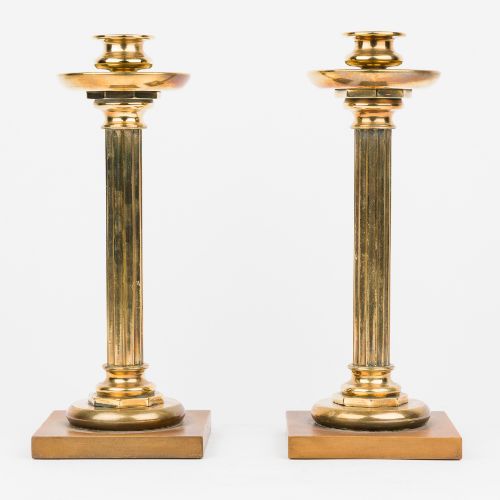
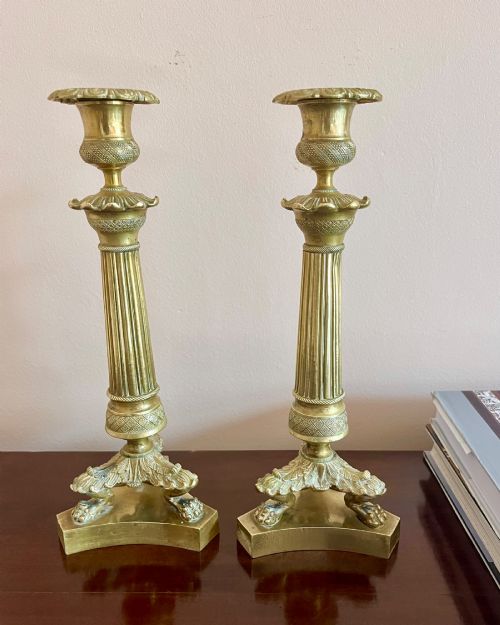
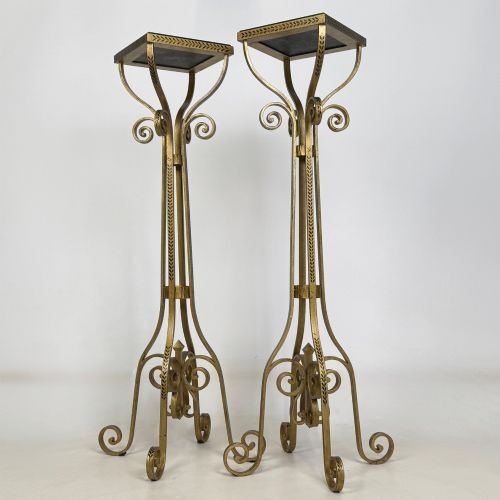
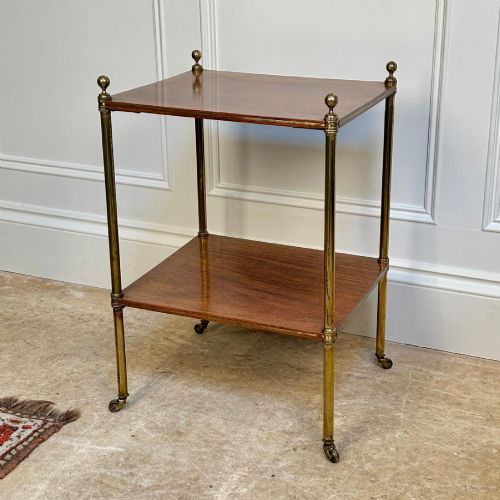



Vintage Brass Column Stand
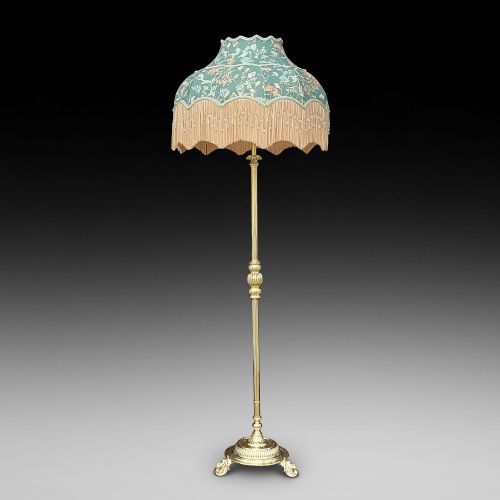
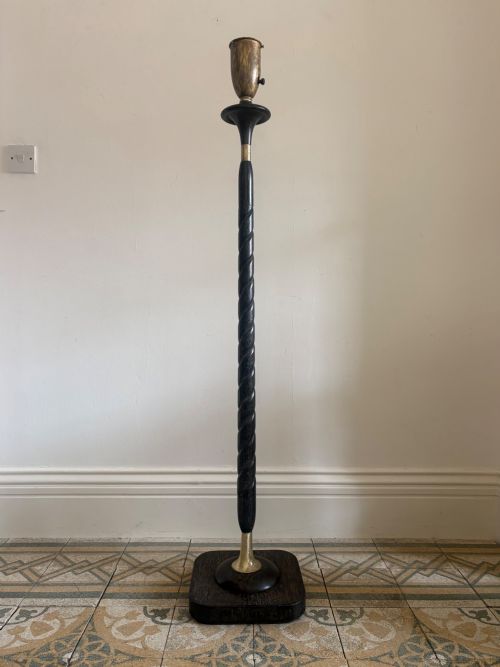
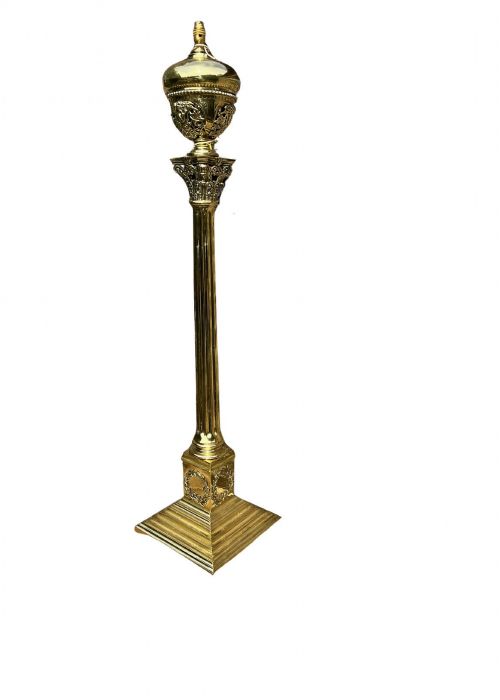
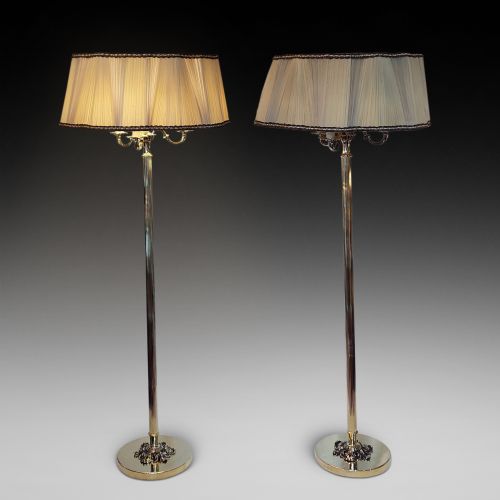
A vintage brass column stand brings architectural form and polished metal to a room, functioning primarily as a floor lamp, standard lamp, or plant stand.

Vintage Brass Column Stand
When searching for a vintage brass column stand, buyers encounter a mix of functional lighting and display furniture dating from the eighteenth century through the twentieth century. These pieces encompass standard floor lamps, adjustable oil lamp standards, plant stands, and torchere stands rooted in Victorian, Edwardian, and Neoclassical styles.
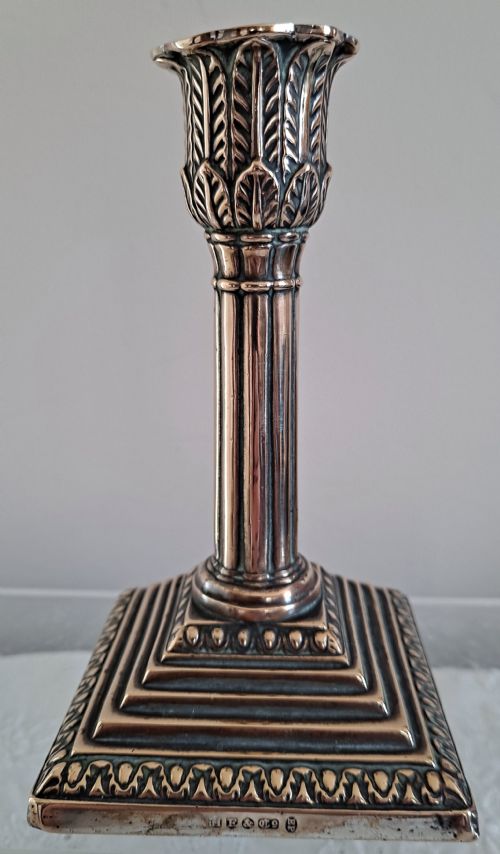
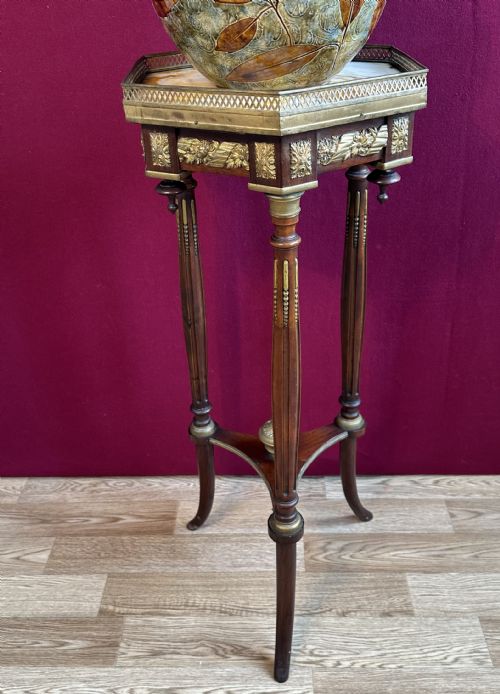
The selection on this page demonstrates that column supports appear frequently in domestic settings configured as tall lighting fixtures with Corinthian capitals or as display pedestals topped with marble or mahogany. Makers drew on French Empire and Georgian design vocabularies to produce substantial metal columns intended to anchor a room's corners or illuminate seating areas.
How they were made
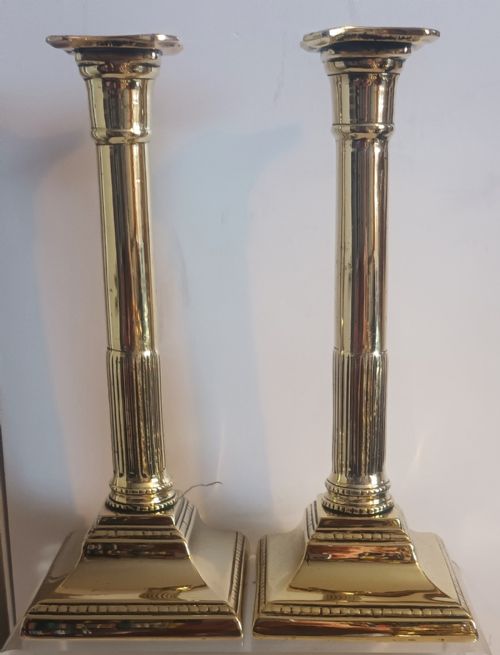
Makers utilised solid brass, cast brass, and bronze alongside supporting elements of mahogany, ebonised wood, marble, and glass. Metal components were cast, chiseled, and turned to create fluted shafts and stepped bases, while wooden elements like rosewood and oak provided contrasting structural frames.
Lighting standards incorporated internal wiring channels or oil reservoirs, often featuring adjustable stems with screw keys to alter height. Multi-media construction paired metal columns with stone tops for plant stands, or integrated fabric shades and glass chimneys for floor lamps.
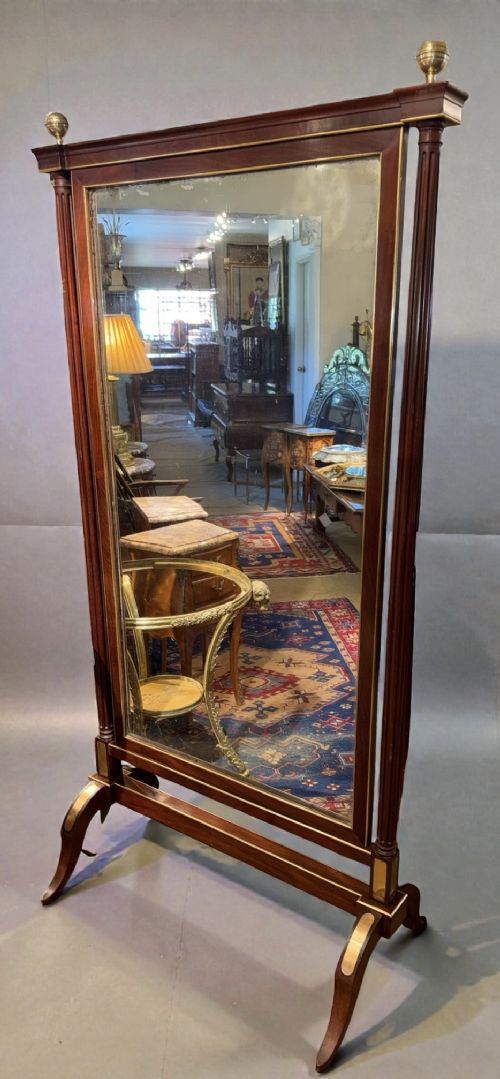
The object forms recorded here range from floor lamps and standard oil lamps to plant stands, torcheres, and cheval mirrors.
What varies in quality
The distinction between standard examples and top-tier pieces rests on the crispness of the cast ornamentation, such as the depth of acanthus leaves on a Corinthian capital versus a plain turned shaft. Heavier gauge brass and solid construction create stability, whereas lighter pieces rely on weighted bases that can feel less substantial.
Proportion and material integration also dictate worth, distinguishing mass-produced twentieth-century adaptations from finely weighted nineteenth-century examples with integrated marble tiers or fire-gilt bronze surfaces. The precision of threading on adjustable stems and the integrity of joints where metal meets wood indicate the original workshop standard.
Hinks
The Vintage Brass Column Stand Glossary
- Corinthian column
- A classical architectural column style featuring an ornate capital decorated with carved or cast acanthus leaves. This motif appears frequently on nineteenth-century standard lamps and monumental candlesticks.
- Torchere stand
- A tall, slender stand originally designed to hold a torch or candle, later adapted for electric lamps or decorative display. These pieces emphasise verticality and often feature tripod or circular bases.
- Standard lamp
- A freestanding floor lamp designed to provide ambient or task lighting over seating furniture. Many antique versions originate from conversions of oil lamps.
- Plant stand
- A piece of furniture raised on legs or a central column intended to elevate flora. Surfaces in this category frequently incorporate marble, glass, or inset mahogany.
- Neoclassical
- A style drawing inspiration from the classical art and architecture of ancient Greece and Rome. It is characterised by symmetrical geometry, columns, and restrained ornamentation.
Vintage Brass Column Stand: Frequently Asked Questions
What is a standard lamp?
A standard lamp is a tall, freestanding floor lamp designed to illuminate a room from a corner or beside a piece of furniture. These fixtures often feature adjustable stems to alter the height of the light source.
In the nineteenth and early twentieth centuries, many standard lamps were originally configured for oil before conversion to electricity. Their substantial brass columns provided the necessary weight to keep the tall structure stable.
How do I use a column stand at home?
Column stands function as versatile decorative and practical objects within living spaces. Floor lamp versions provide vertical illumination next to armchairs, while plant stands or torchere tables elevate greenery, urns, or decorative items.
Placement in corners or empty alcoves makes effective use of their architectural height without obstructing room flow. Their metallic and wood surfaces introduce textural contrast against soft furnishings.
How do I tell Victorian from Edwardian stands?
Victorian stands typically exhibit heavier, more ornate cast brass decoration, including detailed Corinthian capitals and robust proportions. They frequently date from an era when oil lamps required heavy bases for stability.
Edwardian pieces often lean towards lighter forms, occasionally incorporating satinwood, rosewood, or slender ebonised elements. Design influences from this later period show a transition towards refined domestic interiors with less visual clutter.
Are these stands adjustable?
Many floor lamps and standard lighting pieces include adjustable mechanisms using internal brass keys or sliding stems. This allowed nineteenth-century users to modify the height of the oil font or light bulb.
Non-adjustable variants include rigid column candlesticks, torcheres, and fixed-height display pedestals. Checking for a sliding collar or thumbscrew reveals whether a specific piece offers height adjustment.