
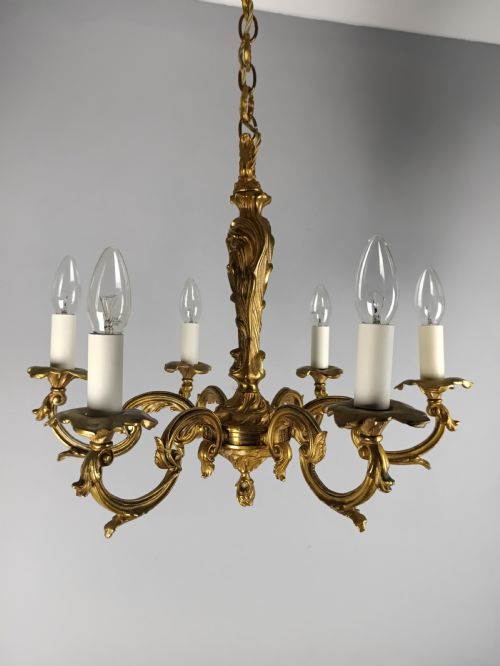
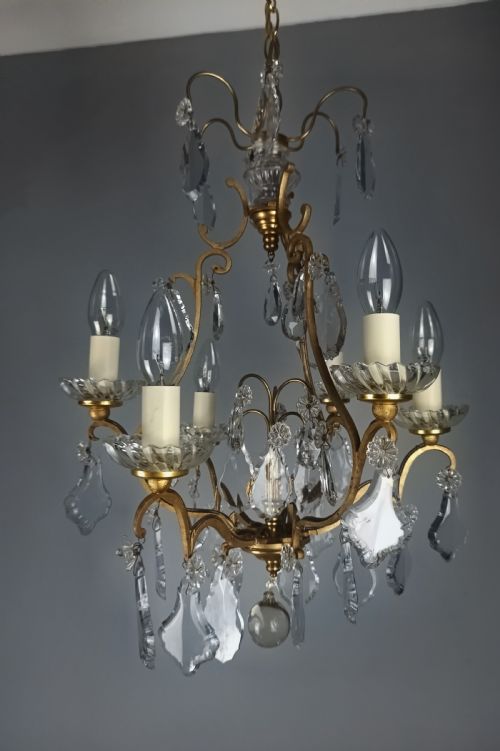
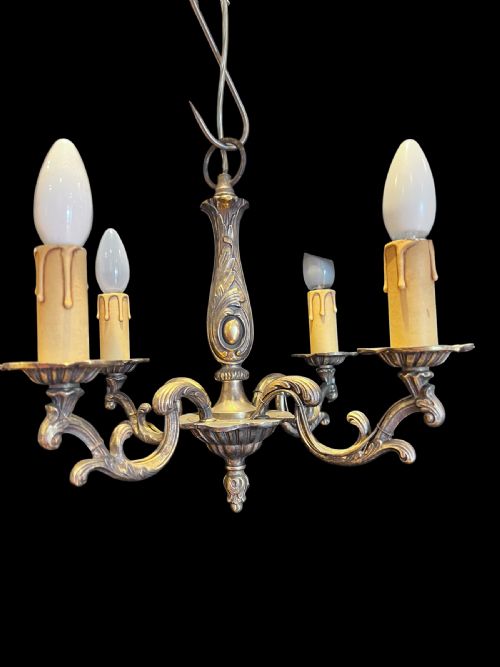
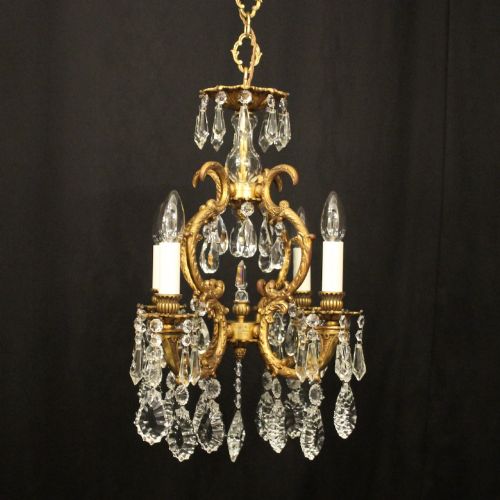


Vintage Brass Chandelier Light
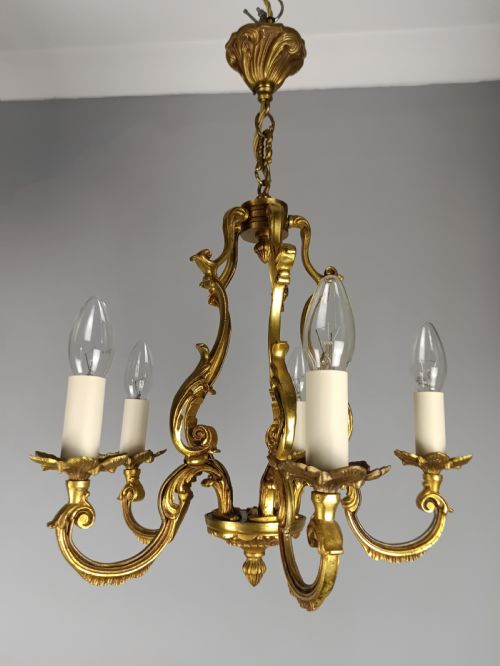
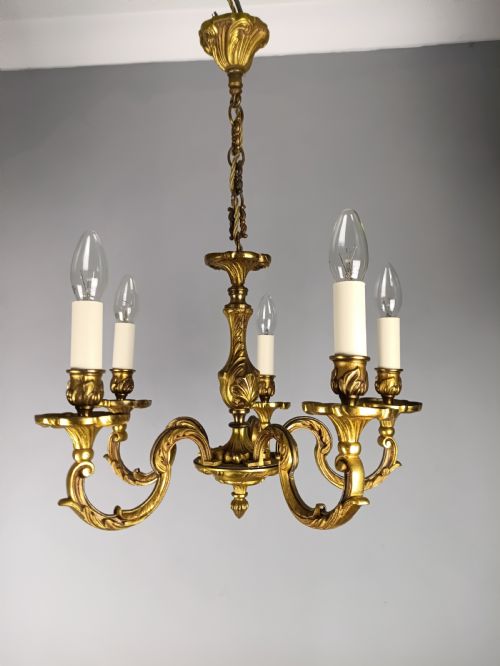
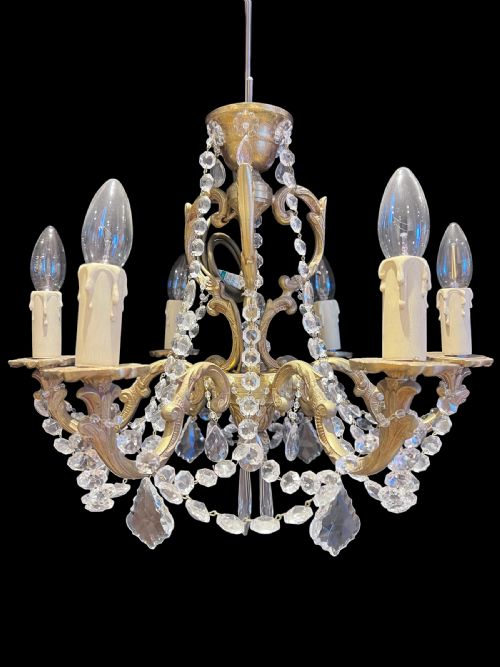
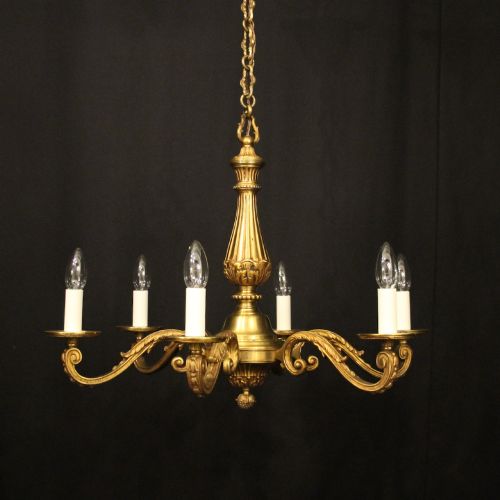
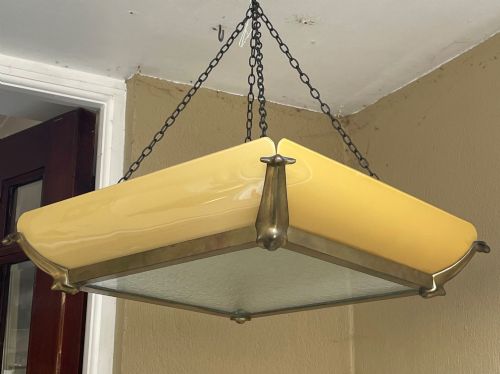
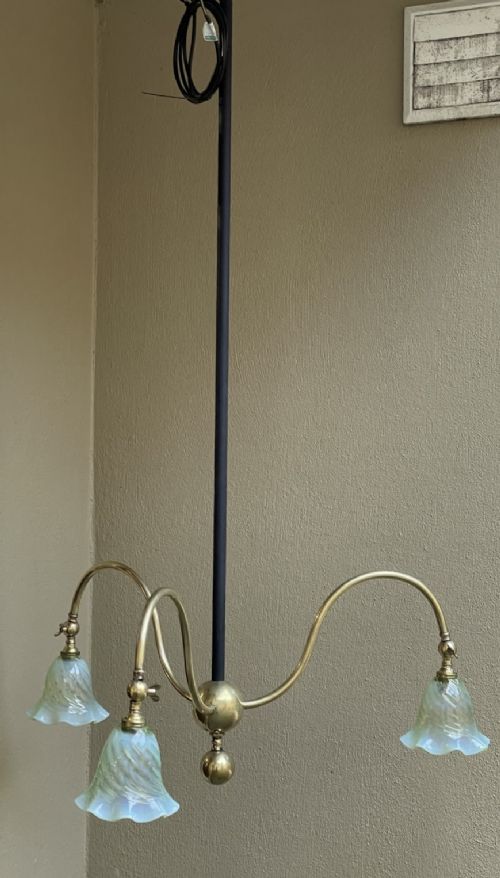
A vintage brass chandelier light brings direct, warm illumination and period presence to a room, drawing the eye upwards with cast metal and glass.
Vintage Brass Chandelier Light
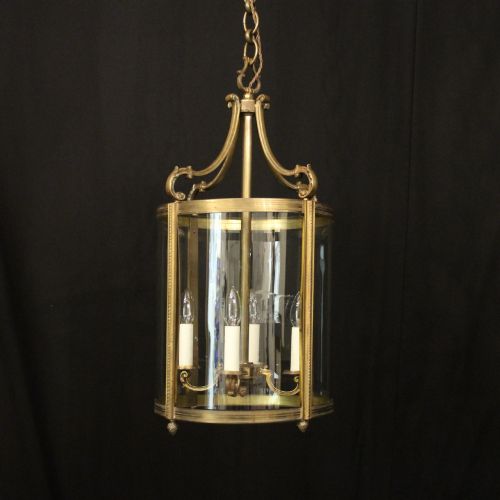
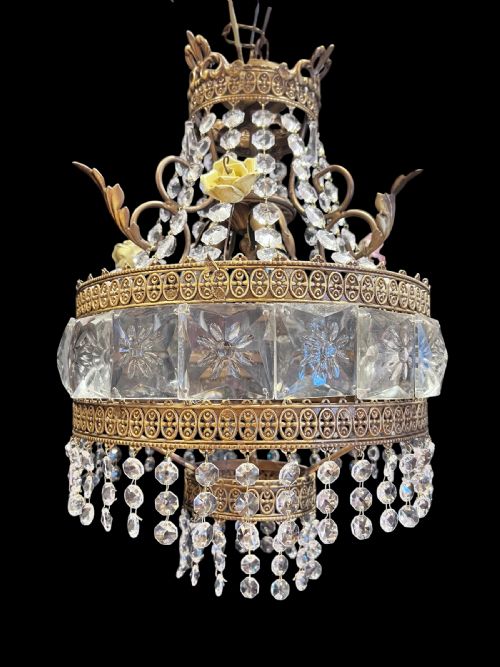
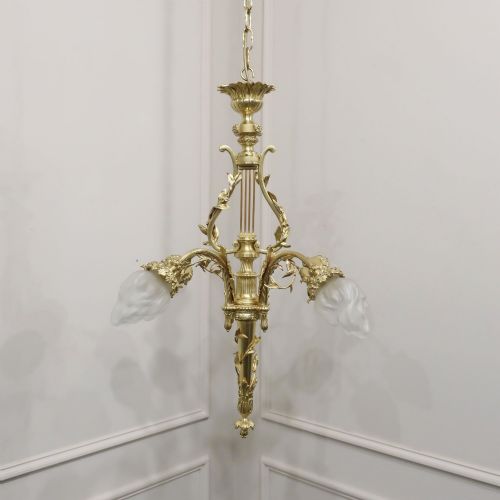
A vintage brass chandelier light spans multi-armed ceiling fixtures, hanging lanterns, and pendants produced across the nineteenth and twentieth centuries. The selection here leans heavily towards French designs from the 1920s and 1930s, alongside English and Italian pieces.
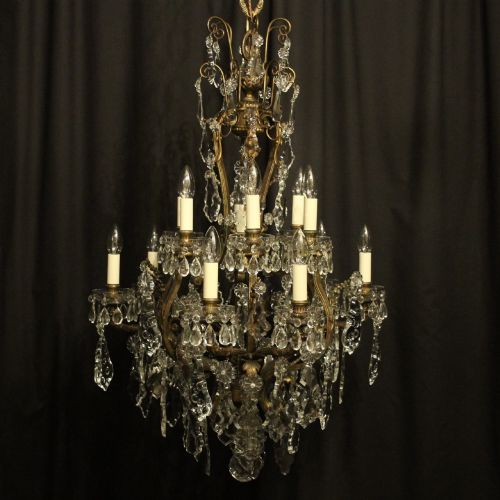
Forms range from basket and birdcage frames to grand tent and waterfall crystal structures, plus simpler Arts and Crafts brass lanterns and Art Deco glass globes. Many examples incorporate multiple candle-style lights, arranged across branches from three up to twelve points.
Materials combine solid brass, gilt bronze, and gilded brass with varied glass elements including cut crystal lustres, bevelled panels, and slip shades. Pieces arrive from periods spanning the Victorian and Edwardian eras through to early twentieth-century decorative styles.
How they were made
Metalwork forms the structural foundation of these fixtures, utilising cast brass, bronze, and copper that is frequently gilded to create a rich surface finish. Frames are constructed with pierced panels, soldered joints, and articulated arms designed to support heavy glass components.
Glass is integrated through distinct methods, ranging from hand-cut crystal drops and faceted lustres wired to the metal frame to blown glass globes and pressed slip shades. Pierced brass lanterns utilise soldered geometric tracery to hold coloured or bevelled glass panes securely in place.
Some lanterns carry Manchester City Town Hall provenance, bringing civic dignity straight to your hallway ceiling.
What varies in quality
The refinement of the casting and the depth of the metal finishing dictate the character of the piece, with crisper surface detail and heavier gauge brass separating finer works from simpler production. Gilding quality and the preservation of the original surface patination contribute significantly to the visual weight of the fixture.
The integration of the glass elements defines the overall execution, where hand-cut crystal lustres and heavy bevelled panes demonstrate superior craftsmanship compared to standard pressed alternatives. The structural integrity of the internal wiring channels and the weight distribution across the branches reflect the original maker's intent.
The Vintage Brass Chandelier Light Glossary
- Tent and waterfall
- A chandelier configuration featuring an upper triangular tent of crystal beads cascading down into a wider bowl-like drop below. This style maximises light refraction through dense arrays of cut glass.
- Birdcage
- A rounded metal frame resembling an avian enclosure, constructed from curved brass bars that house internal light fittings and glass drops. The form creates a distinct vertical silhouette popular in French lighting design.
- Plafonniere
- A shallow ceiling-mounted light fixture designed to sit close to the plasterwork, often comprising a glass bowl held in a decorative metal mount. It provides direct downward illumination without a hanging chain or drop.
- Gasolier
- A hybrid lighting fixture originally designed to burn coal gas before later conversion to electricity during the twentieth century. These pieces often retain characteristic gas keys and heavy brass tubing.
- Lustre
- A cut glass pendant or droplet suspended from the arms or crown of a chandelier to amplify the reflection of light. They hang on small wire loops and move gently with air currents.
Vintage Brass Chandelier Light: Frequently Asked Questions
How do I hang a heavy chandelier?
Heavens require direct attachment to a structural ceiling joist using an appropriate steel hook and fixing plate rather than resting on plaster alone. The weight of brass and crystal demands professional weight-bearing assessment.
Electrical connection must be routed through the hanging chain or rod to a certified ceiling supply. Local electricians should verify the internal wiring of older fixtures before installation.
What rooms suit a brass hall lantern?
Compact hanging lanterns suit entrance halls, stairwells, and narrow corridors where ceiling height allows for a dropped pendant. Their enclosed glass panels protect the interior components from dust and drafts.
Larger vestibules accommodate multi-light framed lanterns that distribute light evenly across transitional spaces. The glazed sides project a welcoming pattern against surrounding walls.
How do I clean crystal drops?
Crystal lustres should be unhooked individually and washed in warm water with a mild dish soap solution. Drying them with a lint-free cloth restores maximum sparkle without scratching the surface.
Leaving the lustres attached while wiping with a specialised glass spray avoids dismantling complex wire connections. This method suits regular maintenance between deep cleans.
How do I date a brass light?
Stylistic indicators such as geometric Art Deco slip shades or pierced Arts and Crafts brackets provide initial chronological markers. Construction methods like cast bronze versus stamped sheet metal also point to specific manufacturing eras.
Maker signatures or registration marks stamped onto the brass frame offer precise evidence of origin. Comparing the wiring type and socket style helps confirm whether components are original to the period.