




Vintage Brass Alarm Clock
A vintage brass alarm clock brings mechanical precision and nineteenth-century carriage design to a desk or mantelpiece.

Vintage Brass Alarm Clock
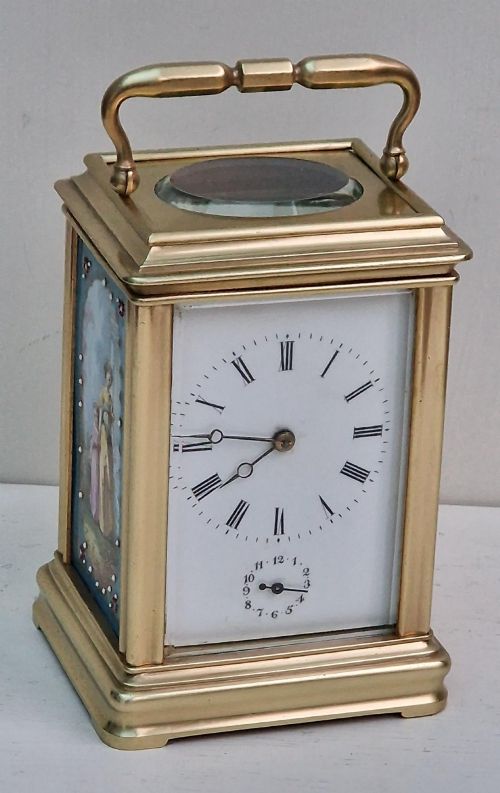
A vintage brass alarm clock combines timekeeping and an audible wake-up mechanism within a metallic housing, frequently drawing on nineteenth-century French carriage clock designs. Buyers searching this phrase encounter portable brass timepieces alongside desk models, often incorporating glass panels and enamel dials.
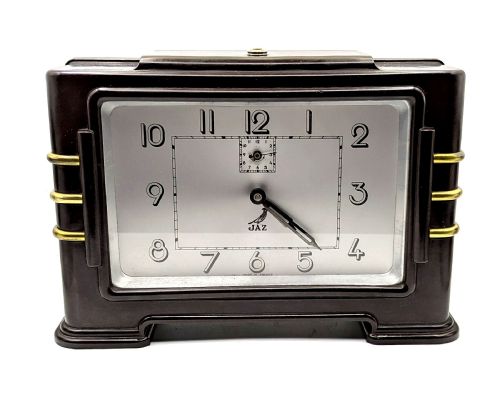
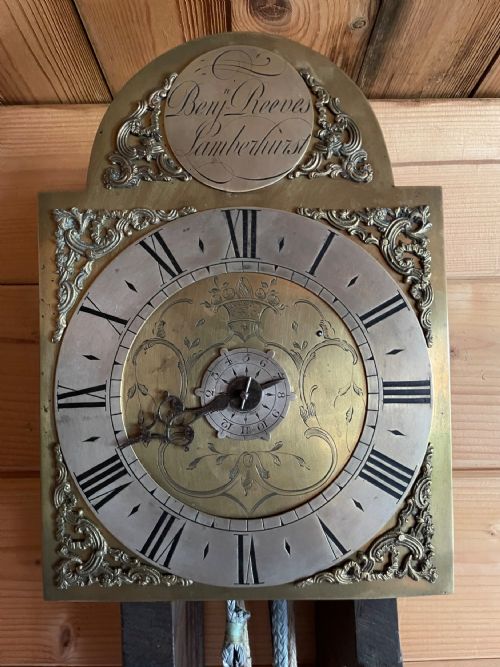
The selection ranges from Victorian carriage clocks to Art Deco metal designs and eighteenth-century lantern or bracket clocks with alarm functions. French makers dominate the brass and gilt bronze examples, whilst English workshops provide mahogany and brass longcase or bracket variations.
How they were made
These clocks utilise brass, gilt metal, and bronze for their structural cases, paired with glass viewing panels and white enamel dials. Movements incorporate steel gears, verge or lever escapements, and specialised striking or repeating trains for the alarm function.
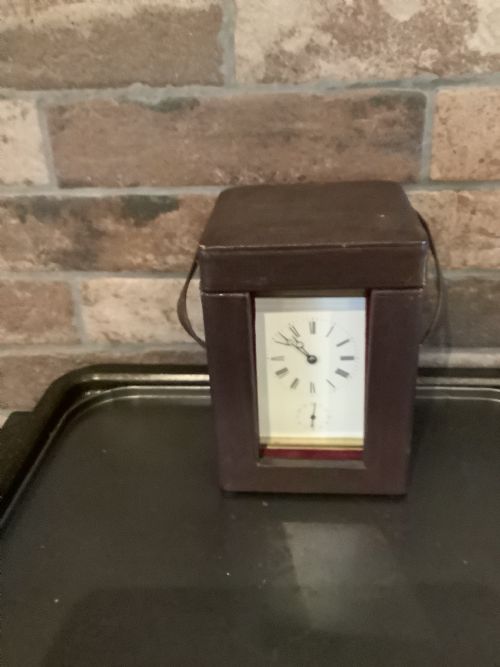
Many specimens feature hand-engraved brass corniche or gorge cases, sometimes accompanied by fitted leather travel cases. Certain variants integrate porcelain panels or bakelite elements depending on the production period.
The listings feature brass and gilt metal carriage clocks spanning the Victorian era through to mid-century luxury models.
What varies in quality
Quality rests upon the complexity of the movement, distinguishing standard timepieces with alarms from those featuring grande sonnerie striking or quarter-repeating complications. The crispness of hand-engraving on the brass or gilt bronze case also defines the upper tiers of manufacture.
The integrity of the original enamel dial, the presence of matching numbers on the movement and case, and the survival of a fitted leather travelling case elevate a piece. Maker attribution to notable firms adds historical weight to the mechanical execution.
Antoine Redier of Paris·Benj Reeves Lamberhurst·William Barrow London·Drocourt·Van Cleef And Arpels·J F Bautte Et Cie·Bourdin Paris·John Taylor London·Hunt And Roskell·Jaeger Lecoultre·E White·Iames Richards Liverpool
The Vintage Brass Alarm Clock Glossary
- Carriage clock
- A portable spring-driven timepiece designed for travel during the nineteenth century. These brass-framed clocks typically feature glass sides to display the internal escapement.
- Gorge case
- A stepped architectural brass case style common on nineteenth-century French carriage clocks. The top and bottom mouldings have concave pillared profiles.
- Grande sonnerie
- A striking mechanism that chimes the hours and the quarters automatically on every quarter hour. It represents a high degree of watchmaking complexity.
- Verge escapement
- An early type of mechanical escapement utilising a crown wheel and a rod with pallets. It controls the release of power in older lantern and bracket clocks.
Vintage Brass Alarm Clock: Frequently Asked Questions
How do I wind a vintage carriage clock?
Most portable brass clocks require a dedicated winding key inserted into the arbours on the back plate. One square typically controls the time train whilst the other powers the alarm or striking train.
Care should be taken not to overwind the mainsprings, stopping as soon as resistance is felt. Ensure the alarm hand is set correctly relative to the hour hand if the model relies on a mechanical disc.
What is a repeating button on a clock?
A repeating button, often mounted on top of a carriage clock case, allows the user to sound the last struck hour or quarter hour on demand. Pushing this plunger activates the striking train independently of the clock's ongoing timekeeping.
This complication was particularly useful for checking the time in darkness before electric lighting became common. It demonstrates high-grade mechanical assembly within the brass housing.
How were eighteenth-century alarm clocks different?
Earlier examples, such as lantern clocks or bracket clocks, were driven by weights or heavier spring movements housed in mahogany or brass cabinetry. Their alarm mechanisms often utilised a spiked hoop wheel and an external top-mounted bell rather than an internal gong.
These pieces served as stationary household timekeepers rather than portable travel clocks. Their construction reflects domestic English craftsmanship prior to the standardisation of French carriage clock production.