





Vintage Bovine Art
Vintage bovine art gathers painted pastoral scenes, carved horn powder flasks, and ceramic tiles portraying cattle from centuries past.
Vintage Bovine Art
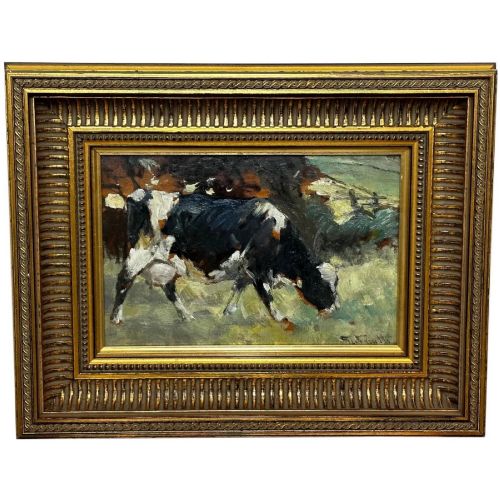
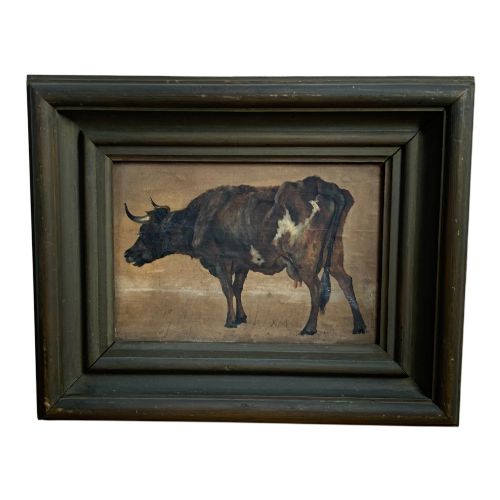
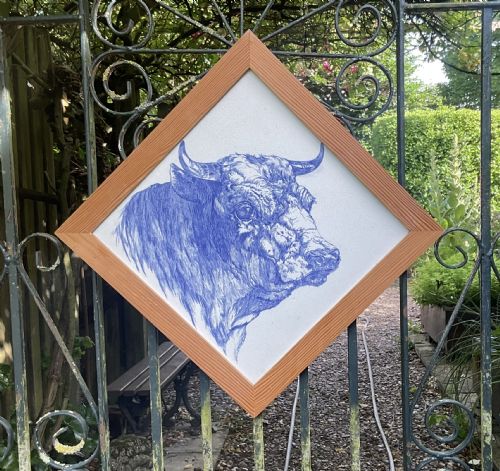
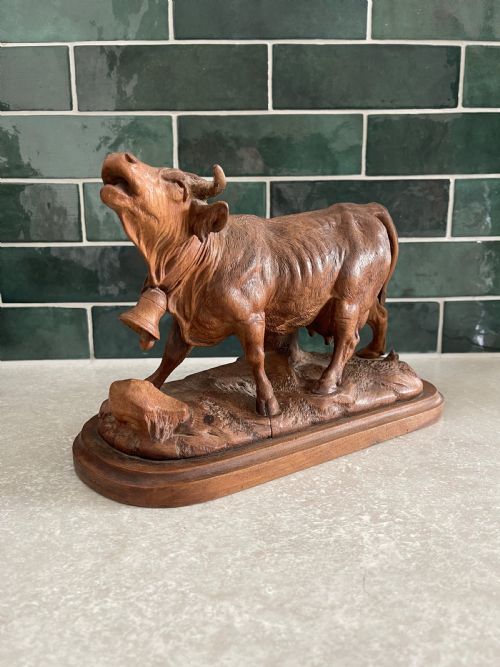
Vintage bovine art encompasses oil paintings on canvas, watercolour paintings, carved wooden figures, and decorative ceramic tiles featuring cattle. These pieces capture the rural landscapes and agricultural scenes favoured by Victorian, Edwardian, and earlier artists.
Buyers encounter pastoral realism, folk art, and Black Forest carvings amongst the available selections. Oil paintings by named artists sit alongside utilitarian items such as powder horns and walking sticks.
The objects stem from the eighteenth, nineteenth, and early twentieth centuries, reflecting changing British and American artistic depictions of livestock over time.
How they were made
Painters used oil on canvas or watercolour on paper, often framing their work in gilt wood or burr frames. Artists rendered cattle in fields and near landmarks using layered brushwork and naturalistic palettes.
Carvers shaped bone, horn, and wood to create walking sticks, powder horns, and three-dimensional animal sculptures. Ceramic makers produced glazed tiles, incorporating detailed transfer printing or hand-painted pastoral designs.
Vintage Bovine Art Retail Price Guide 2026
Typical asking prices for vintage bovine art among the pieces listed under this phrase on Sellingantiques today, from the lower quarter to the upper quarter. They describe what is for sale here now, not the wider market.
Listings feature oil paint, canvas, wood, gilt, ceramic, and horn across objects dated from the eighteenth to the twentieth century.
What varies in quality
Quality rests in the precision of the draughtsmanship and the expressive rendering of the animal subjects. Works by established Royal Scottish Academicians or recorded painters display superior anatomical accuracy and atmospheric depth compared to anonymous folk art.
Material preservation dictates distinction, from the crispness of a Black Forest woodcarving to the intact glaze on a dated Victorian tile. Original framing and well-maintained surfaces elevate the standing of paintings and carved artefacts alike.
Mintons·W.A. Clark·George Smith RSA·William Sidney Cooper
The Vintage Bovine Art Glossary
- Black Forest carving
- Wood sculpture originating from the central European mountain region. These pieces typically depict animals, including cattle, rendered in dark carved wood with realistic textures.
- Pastoral realism
- An artistic style focusing on rural life and farm animals. It portrays scenes of livestock in natural agricultural settings without romantic exaggeration.
- Powder horn
- A container made from animal horn used to hold gunpowder. Carved examples often feature intricate folk art engravings of animals and landscapes.
- Burr frame
- A picture frame constructed from burr wood veneers. The swirling grain patterns provide a decorative border for watercolours and paintings.
Vintage Bovine Art: Frequently Asked Questions
What periods do these pieces span?
The available selection ranges from the late eighteenth century through the nineteenth century and into the Edwardian era and the nineteen-twenties. This timescale covers Georgian realism, Victorian folk art, and early twentieth-century British school painting.
Different eras brought distinct techniques, moving from detailed canvas oils to carved horn and decorative ceramic tiles.
How do I care for oil paintings on canvas?
Keep painted canvases away from direct sunlight and fluctuating humidity to protect the oil pigment and the canvas support. Dust them gently with a soft, dry brush without applying pressure to the surface.
Avoid using liquid cleaners on the paint or the gilt frames, as moisture damages aged varnishes and wooden mouldings.
Were powder horns used practically?
Powder horns served as durable, waterproof flasks for carrying gunpowder for firearms during earlier centuries. Many were later decorated with folk art carvings depicting animals and maps.
Today, they are collected as historical artefacts and examples of early organic carving.