



Vintage Bottle Holder
These vintage bottle holder pieces keep table service orderly, drawing on centuries of silver plate, brass, and mahogany craftsmanship to secure wine, champagne, and decanters.
Vintage Bottle Holder
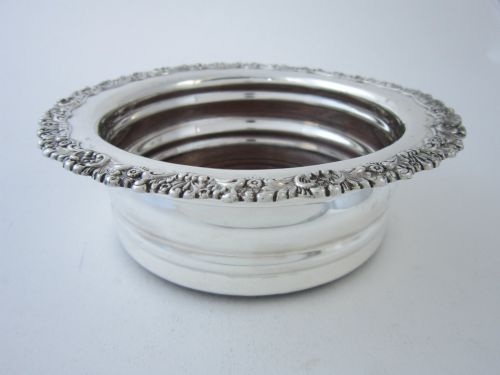
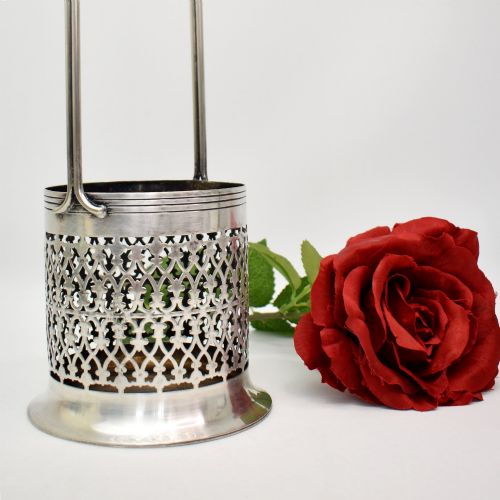
A vintage bottle holder encompasses wine coasters, decanter stands, champagne cradles, and multisuite cruet sets designed to protect dining surfaces during service. These objects span from the Georgian and Regency eras through the Victorian, Edwardian, and Art Deco periods, reflecting changing dining rituals across two centuries.
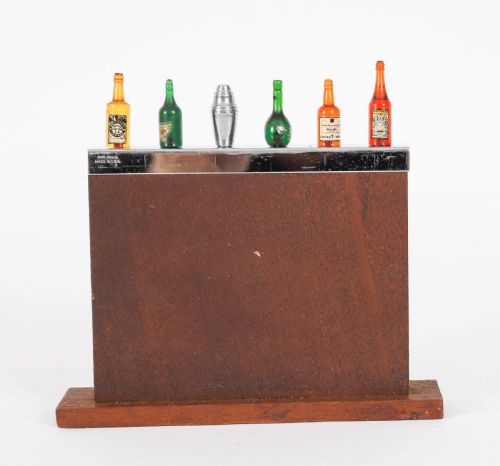
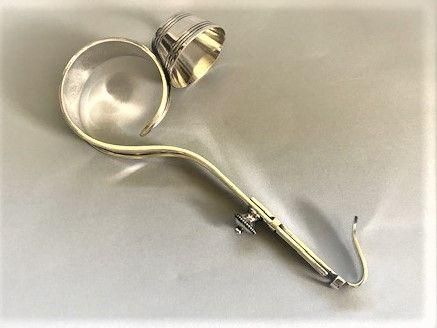
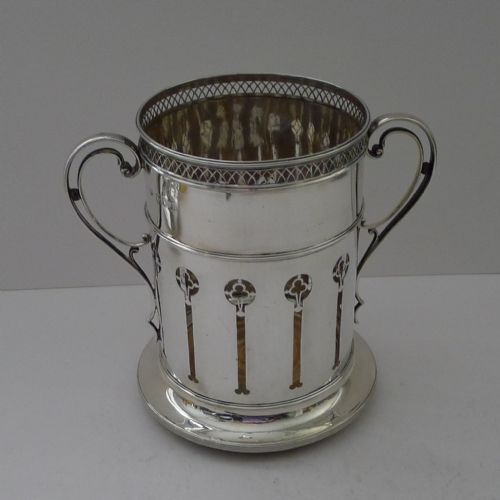
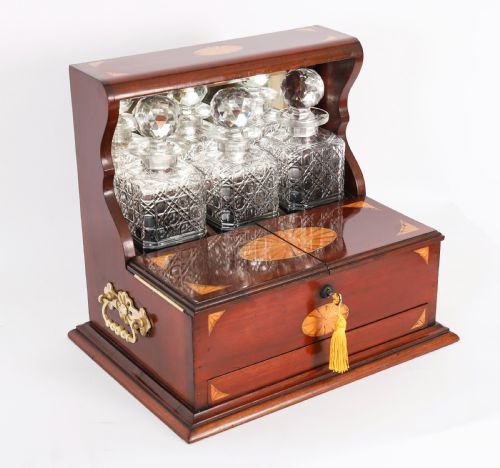
The most common examples on this page are Edwardian and early twentieth century silver-plated wine coasters and multi-bottle holders, often incorporating turned mahogany bases or cut glass inserts. Alongside table coasters, buyers encounter occasional novelty pieces, tantalus frames, and specialised barware from the same periods.
Materials and Construction
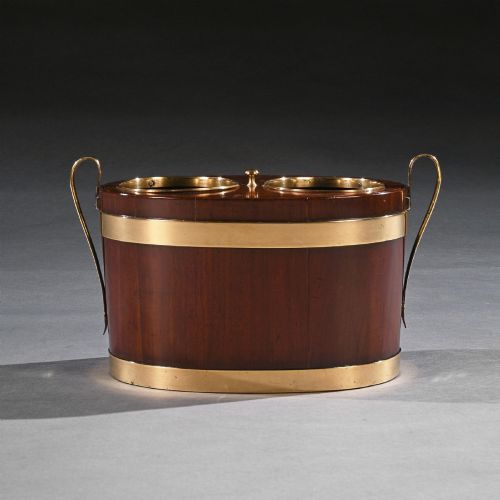
Silversmiths and makers utilised sterling silver, silver plate, and Old Sheffield Plate alongside brass mountings to construct durable frames and rims, frequently punching hallmarks or maker marks onto the metal. These metal components were combined with turned hardwoods, notably mahogany, oak, and satinwood, often featuring inlaid details or brass banding.
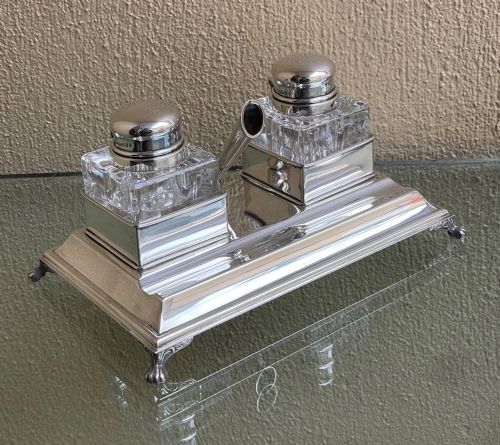
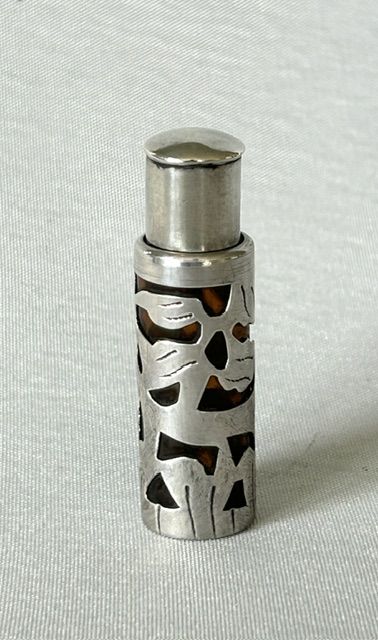
Glass elements such as cut crystal decanters, scent bottles, and inkwells were hand-blown or moulded to fit snugly within dedicated wooden or metal partitions. Leather cases and straps also appear on portable iterations like saddle flasks and explorer sets, stitched to safeguard glass vessels during travel.
Listings incorporate items spanning the eighteenth, nineteenth, and twentieth centuries, featuring wood, glass, brass, and silver plate.
Distinctions in Quality
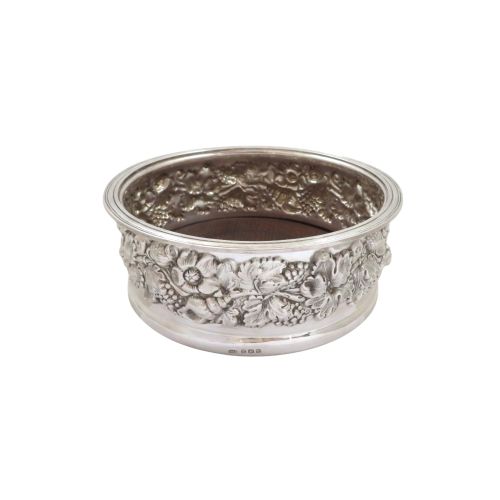
Quality rests upon the weight of the metal and the integrity of the joinery between wood and silver, where heavier gauge silver plate and solid hardwoods indicate superior workshop standards. Finer pieces demonstrate crisp piercing, detailed cast vine or grape motifs, and well-preserved turning that has endured generations of handling.
The proportion and originality of fitted components dictate the standing of an item, with intact cut glass inserts and matching hallmarked elements elevating a piece above adapted or mismatched assemblies.
Brook & Son, Edinburgh·Christofle·Elkington·G H James & Co·Matthew Boulton·Rupert Favell & Co
The Vintage Bottle Holder Glossary
- Wine Coaster
- A small, flat-bottomed tray with raised sides designed to hold a bottle on the dining table and protect the cloth from drips. They frequently feature turned wooden bases fitted with silver-plated rims.
- Tantalus
- A locking wooden frame that secures decanters of spirits behind a metal bar, preventing access while displaying the bottles through glass panels. The mechanism typically requires a key to release the stoppers.
- Cruet Set
- A matched collection of glass bottles or cruets for condiments, held together in a metal stand with a central handle for transport to the table. These units often accommodate oil, vinegar, mustard, and pepper.
- Old Sheffield Plate
- A composite material created by fusing a thin sheet of sterling silver to a thicker copper base before rolling and shaping. This technique predates modern electroplating and leaves a characteristic subtle copper seam along edges.
Vintage Bottle Holder: Frequently Asked Questions
How do I clean silver-plated holders?
Clean silver plate with a soft cloth and a gentle, non-abrasive silver polish formulated to preserve the remaining plating over the base metal. Avoid harsh chemical dips that strip underlying layers.
Polish sparingly around raised decorative motifs like grape and vine borders, and dry thoroughly with a lint-free cloth to prevent tarnishing.
Were these holders meant for daily use?
Dining rooms of the Victorian and Edwardian periods utilised these stands during formal meals to pass wine around the table without damaging polished wood surfaces. They served both a practical containment role and a decorative display function.
Today, they continue to function reliably for modern dining, holding standard wine bottles and champagne magnums during gatherings.
How do I date a mahogany wine coaster?
Examine the timber species, turning style, and the method used to secure the central metal button or base plate. Georgian and Regency examples often feature dense, dark mahogany with hand-turned profiles.
Later Victorian and Edwardian pieces tend to show machine-turned bases, standardised silver plate thicknesses, and different mounting screws that reflect industrial production shifts.
Can I replace missing glass decanters?
Finding exact period replacements requires matching the precise diameter and height restrictions of the original metal frame or wooden dividers. Cut crystal inserts vary significantly across individual workshops.
Many collectors accept period-appropriate glass that fits the aperture, even if the cut pattern differs slightly from the manufacturer's original specification.