

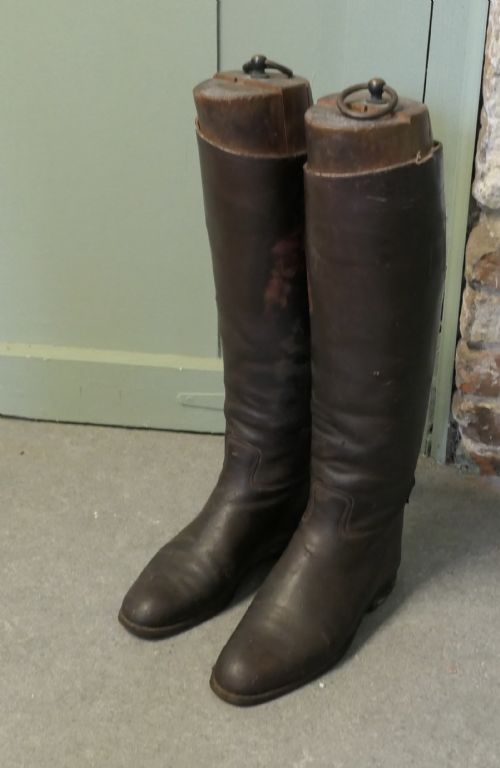


Vintage Boot Trees
Vintage boot trees preserve leather footwear and shape tall boots, offering both practical utility and equestrian heritage for the home.
Vintage Boot Trees
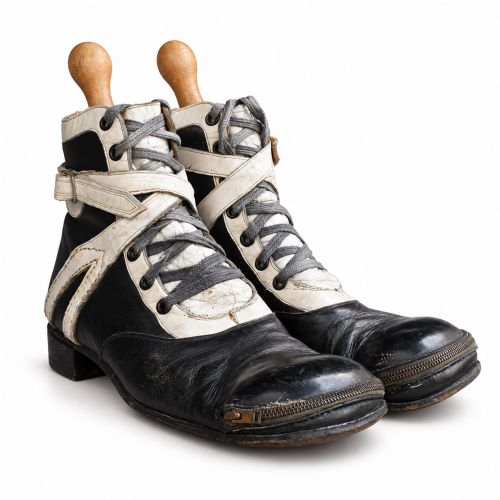
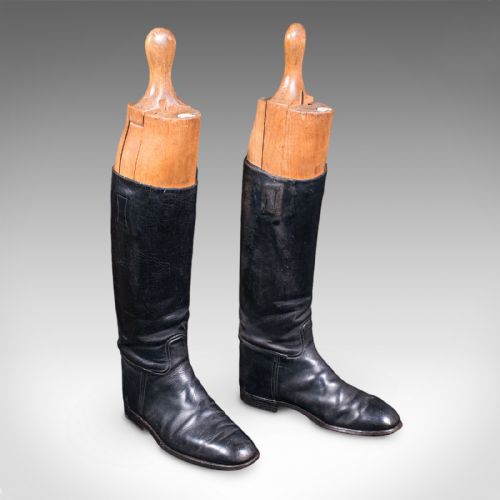
Vintage boot trees are functional shoe care devices and stands designed to maintain the form of tall footwear. When you search for vintage boot trees, you find wooden and metal apparatuses that once kept leather boots upright and stretched.
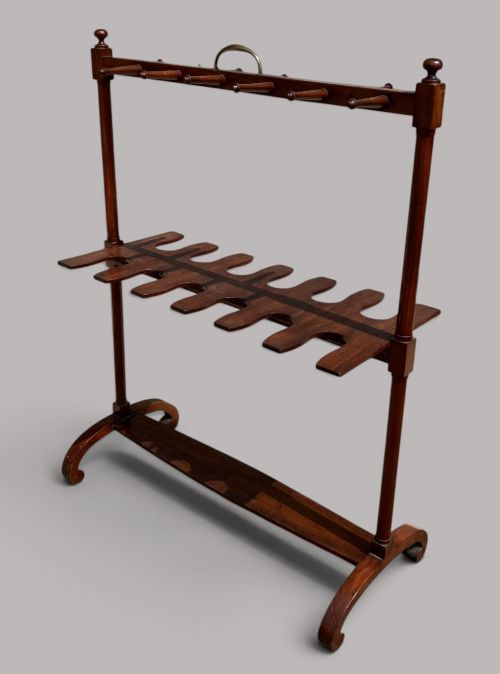
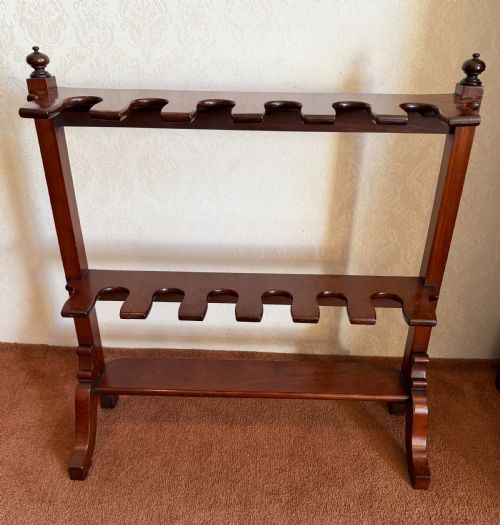
The pieces on this page span the nineteenth century, Edwardian era, and early twentieth century. They appear as standalone stretchers, display stands, and combined boot and whip racks originating from English and French traditions.
Forms include dedicated boot stretchers made from beech and hardwood alongside mahogany boot racks and stands. Many items incorporate brass hardware and leather elements, reflecting their equestrian and domestic origins.
How they were made
Maker's workshops constructed these pieces primarily from solid timber such as beech, mahogany, and other hardwoods. Woodworkers shaped the components by hand, carving and turning the timber to fit inside tall riding boots.
Makers integrated metal components, including brass and iron mechanisms, to allow the wooden blocks to expand and stretch the leather. The combination of dense timber and adjustable metal hardware ensured the trees applied even pressure.
The selection includes pieces originating from both English workshops and French traditional makers.
What varies in quality
Quality rests in the fidelity of the hand-carving and the choice of timber, with dense mahogany and well-figured beech marking the superior pieces. Plain utility items serve a purely functional role, while fitted display stands and country house racks exhibit finer joinery.
The complexity of the mechanism also separates standard stretchers from more elaborate designs. Integrated brass fittings and well-preserved wooden turning elevate the construction of the better examples.
Maxwell London
The Vintage Boot Trees Glossary
- Boot tree
- A device inserted into a boot to preserve its shape and absorb moisture when not worn. These adjustable wooden forms prevent the leather from sagging or cracking over time.
- Boot stretcher
- A specialised tool equipped with mechanical parts to gently expand tight leather footwear. They often feature wooden blocks operated by a central screw mechanism.
- Boot rack
- A piece of furniture designed to store multiple pairs of boots in an inverted position to keep the interiors dry and clean. They frequently incorporate hooks for riding whips and spurs.
- Last
- A solid form shaped like a human foot around which a boot or shoe is moulded or repaired. Bootmakers utilised these wooden blocks during the construction process.
Vintage Boot Trees: Frequently Asked Questions
What do vintage boot trees do?
Vintage boot trees maintain the shape of tall leather footwear and prevent shrinkage as the material dries. They exert gentle outward pressure inside the boot shaft.
Collectors and riders also utilise them as decorative objects or functional display pieces in hallways and boot rooms.
How do you date wooden boot trees?
Dating relies on the timber species, the style of turning, and the complexity of any metal hardware. Mahogany and heavy hardwoods point towards nineteenth-century craftsmanship.
Later Edwardian and early twentieth-century examples often display simpler beech construction and standardised adjustment screws.
Are boot trees and shoe trees the same?
Shoe trees are smaller and designed specifically to fit low-cut shoes and oxford footwear. Boot trees extend higher up to support the calf and shaft of riding boots.
Many vintage sets include vertical handles or hinged mechanisms tailored for tall equestrian boots.
How should I clean antique boot trees?
Wooden sections benefit from a light application of beeswax to nourish the dry timber and protect the surface. Metal components require gentle dusting to preserve the original patina without removing age.
Avoid harsh chemical cleaners that can strip the historic finish from the wood or corrode the brass and iron.