




Vintage Book Slide
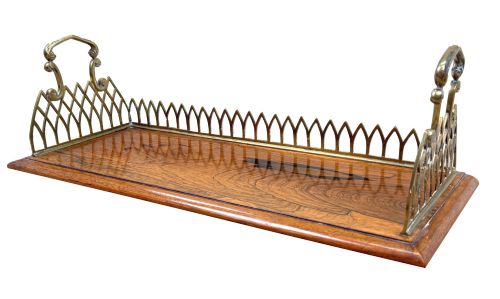
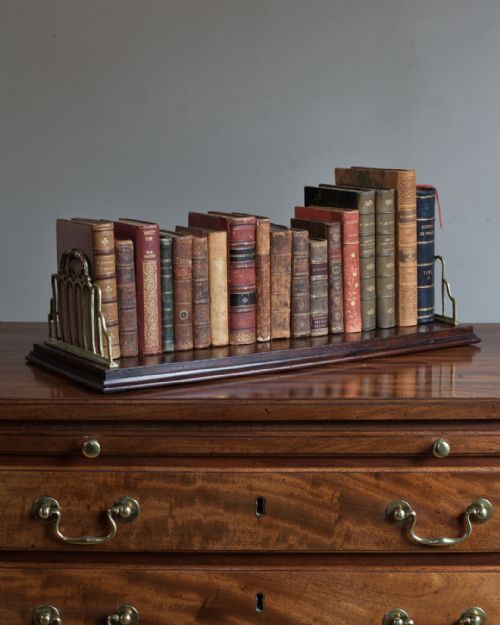
These vintage book slide pieces are practical desktop accessories for keeping volumes orderly, crafted in timber and brass.
Vintage Book Slide
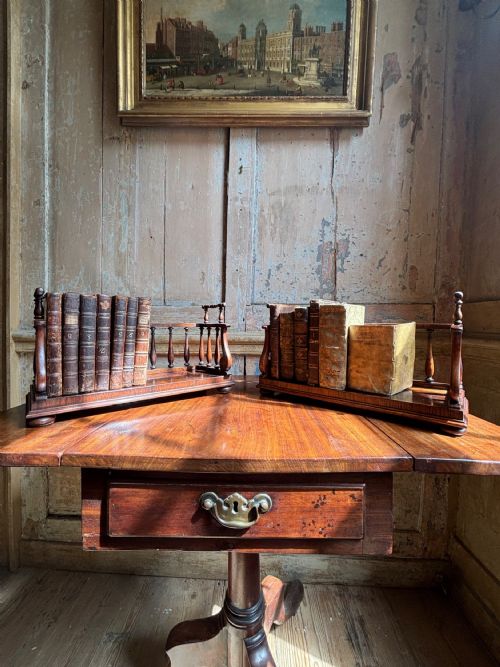
A vintage book slide serves as an extending desk accessory to hold a row of volumes upright between folding or fixed ends. These items appear in forms such as book stands, book racks, and book troughs across the nineteenth and twentieth centuries.
Buyers searching for a vintage book slide encounter pieces originating from Victorian periods through to Art Deco eras. Common regional varieties include Anglo-Indian and Jerusalem designs alongside standard English workshop pieces.
The objects function equally well on a library table or desk to organise reference materials. Most examples utilise extending mechanisms to accommodate varying numbers of books.
How they were made
Cabinet makers utilised dense hardwoods such as rosewood, walnut, burr walnut, mahogany, oak, and maple to construct the main bodies. Olive wood and teak also appear in specific regional examples.
Metal components such as brass provide hinges, mounts, and extending scissor actions that allow the frames to expand. Decorative elements include painted porcelain plaques and Tunbridge mosaic work.
Carving defines pieces from specific traditions, such as Kashmiri and Anglo-Indian production. Joinery ranges from simple robust box construction to articulated extending frames.
Vintage Book Slide Retail Price Guide 2026
Typical asking prices for vintage book slide among the pieces listed under this phrase on Sellingantiques today, from the lower quarter to the upper quarter. They describe what is for sale here now, not the wider market.
Several Victorian models include secret compartments for storing miniature novels or perhaps forgetting where you left your reading glasses.
What varies in quality
The selection of timber grain dictates the visual appeal of walnut and burr walnut examples. Plain domestic timbers sit at one end of the scale while highly figured veneers and exotic woods occupy the other.
The integration of decorative media separates standard pieces from finer ones. Hand-painted porcelain plaques and intricate Tunbridge woodwork elevate the status of an ordinary desk accessory.
The smoothness of the extending mechanism and the robustness of the brass mounts determine daily utility. Solid mahogany and rosewood frames offer greater structural permanence than lighter constructions.
The Vintage Book Slide Glossary
- Book slide
- An extending rack designed to hold books upright on a desk or table surface. It expands or contracts to fit the quantity of volumes placed within it.
- Tunbridge ware
- Woodwork decorated with tiny mosaic tiles forming pictorial or geometric patterns. It originates from the town of Tunbridge Wells in Kent.
- Anglo-Indian
- Items produced in the Indian subcontinent under British rule, typically featuring intricate carved woodwork and native timbers like teak.
- Burr walnut
- Timber taken from the wart or burl of a walnut tree, exhibiting swirling and knotty grain patterns. Cabinet makers prized it for decorative veneering.
- Extending mechanism
- The hinged or sliding hardware that allows a book rack to adjust in length. It often incorporates brass scissors actions.
Vintage Book Slide: Frequently Asked Questions
What is a vintage book slide used for?
These pieces keep a curated selection of reference books or novels upright on a desk, library table, or shelf. The extending sides adjust to securely grip the volumes as the row shrinks or grows.
Historically, they sat on writing desks to hold current reading matter within arm reach. Today, they serve a similar domestic function while displaying decorative timber and brass work.
How do I date a book slide?
Stylistic markers such as Art Deco geometric lines or Victorian Gothic brass mounts help determine the era of manufacture. Timber choices also provide clues, with rosewood common in nineteenth-century examples and oak favoured in Edwardian times.
Construction methods, including the type of brass hinges and extending actions, further indicate the period of production. Comparing the decorative techniques against known historical styles narrows down the date.
What woods were used for these pieces?
Cabinet makers utilised a range of domestic and exotic timbers depending on the period and origin. Walnut, burr walnut, rosewood, oak, and solid mahogany form the backbone of English production.
Regional pieces incorporate local materials such as olive wood from Jerusalem, teak from India, and maple. These timbers were selected for both structural stability and decorative grain patterns.
Are all book slides adjustable in length?
Most examples feature extending actions that allow the frame to slide outwards to accommodate more books. Brass scissor mechanisms or overlapping wooden channels facilitate this movement.
Fixed-length book troughs and stands also exist alongside the extending variants. These non-adjustable versions provide a set capacity for holding volumes.