




Vintage Book Set
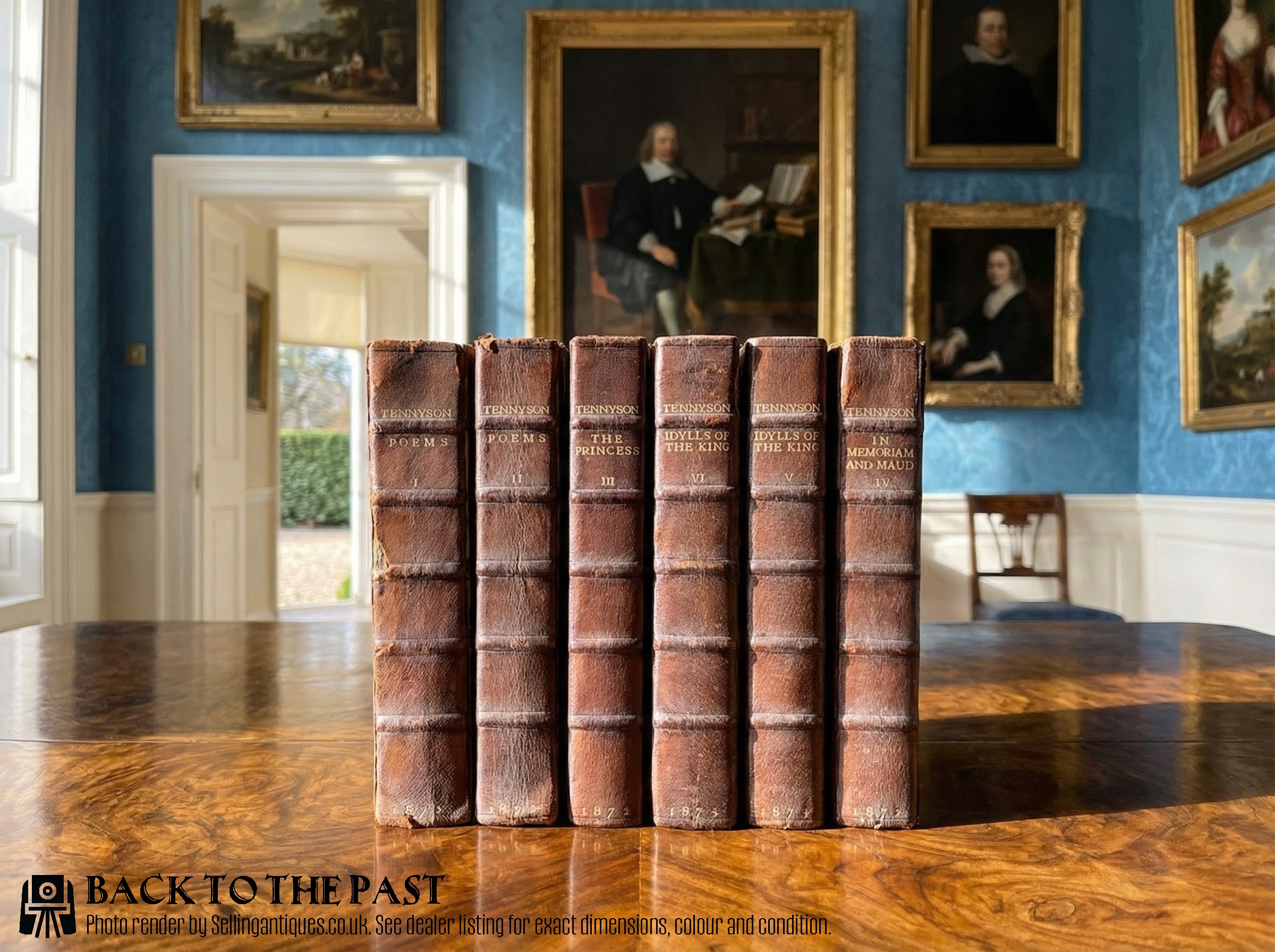
A vintage book set brings together literature, history and the rich textures of paper, leather and vellum for any library shelf.
Vintage Book Set
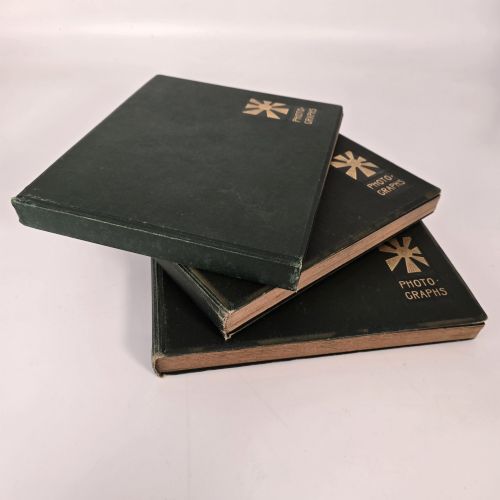
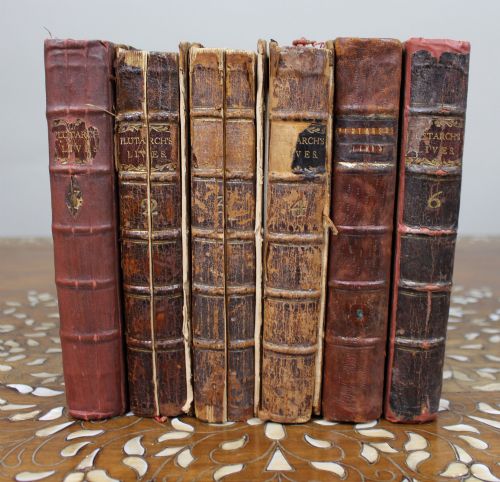
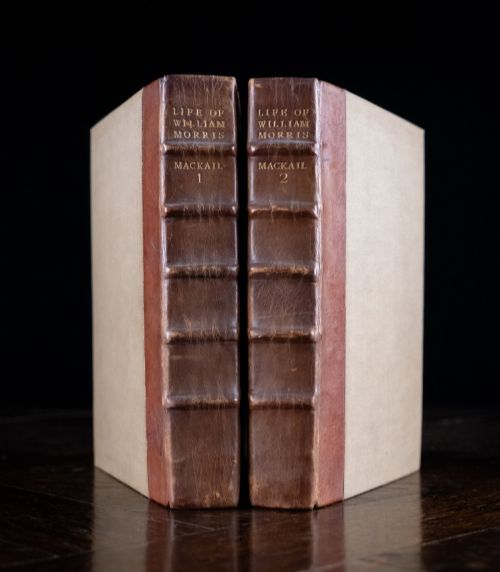
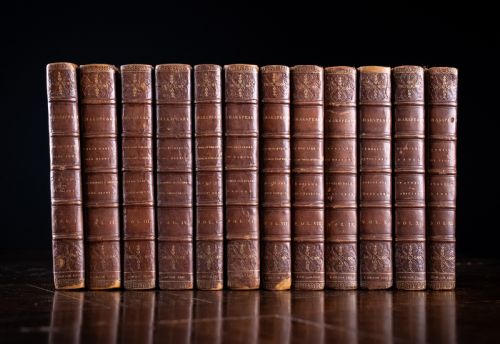
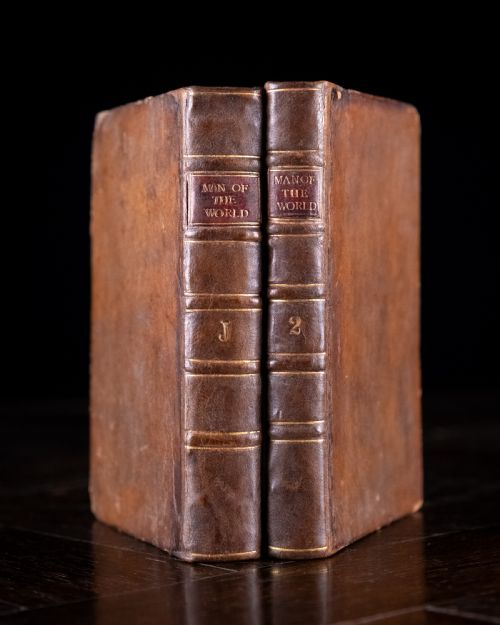
A vintage book set comprises multi-volume collections of literature, history, poetry and reference works produced primarily during the eighteenth, nineteenth and early twentieth centuries. These groupings range from multi-volume sets of Shakespeare plays and nineteenth-century novels to specialised sporting volumes and historical treatises.
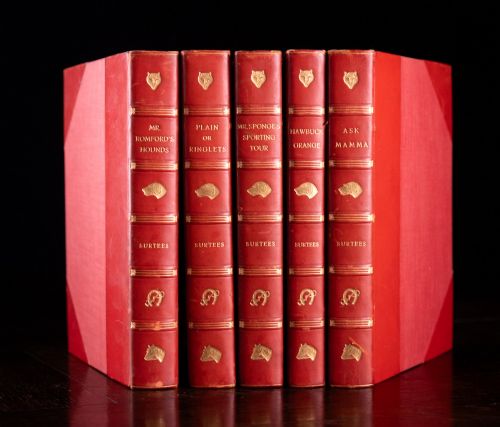
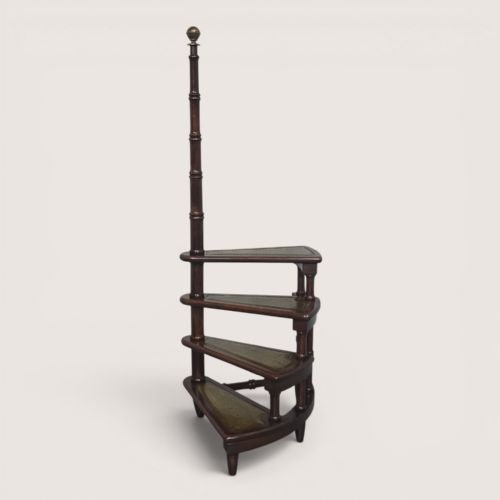
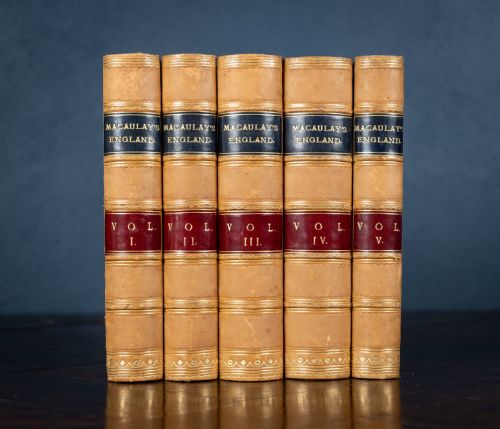
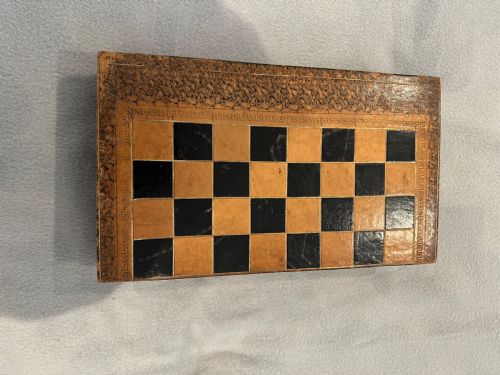
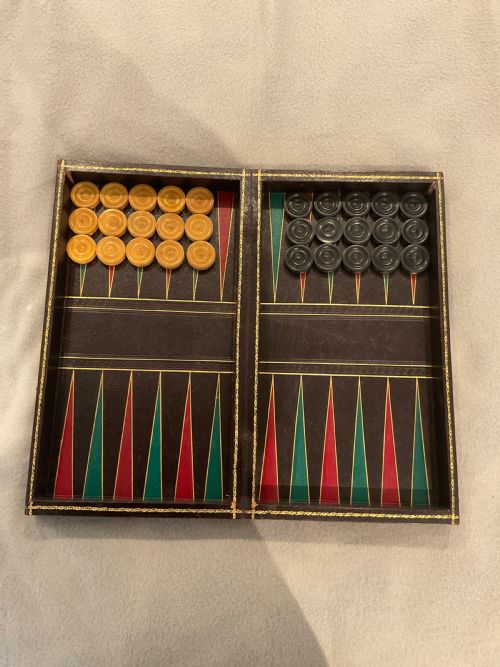
The most common versions met on this page include uniform bindings produced by publishers or binders to create a cohesive appearance on a shelf. Alongside standard literary works, collectors encounter specialised objects such as leather-bound faux book games boards and wooden library steps designed for accessing high shelves.
How They Were Made
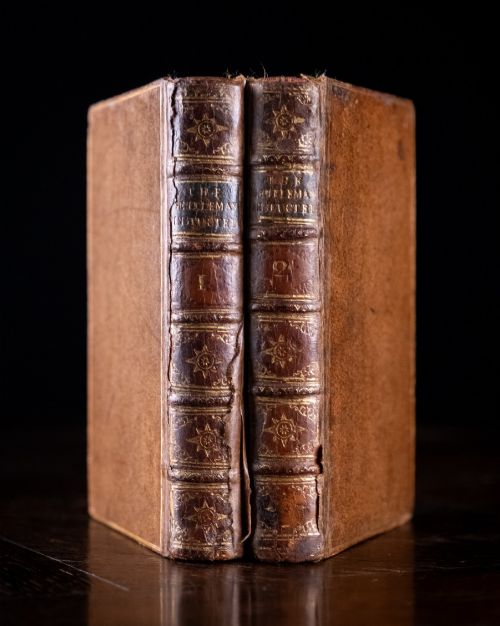
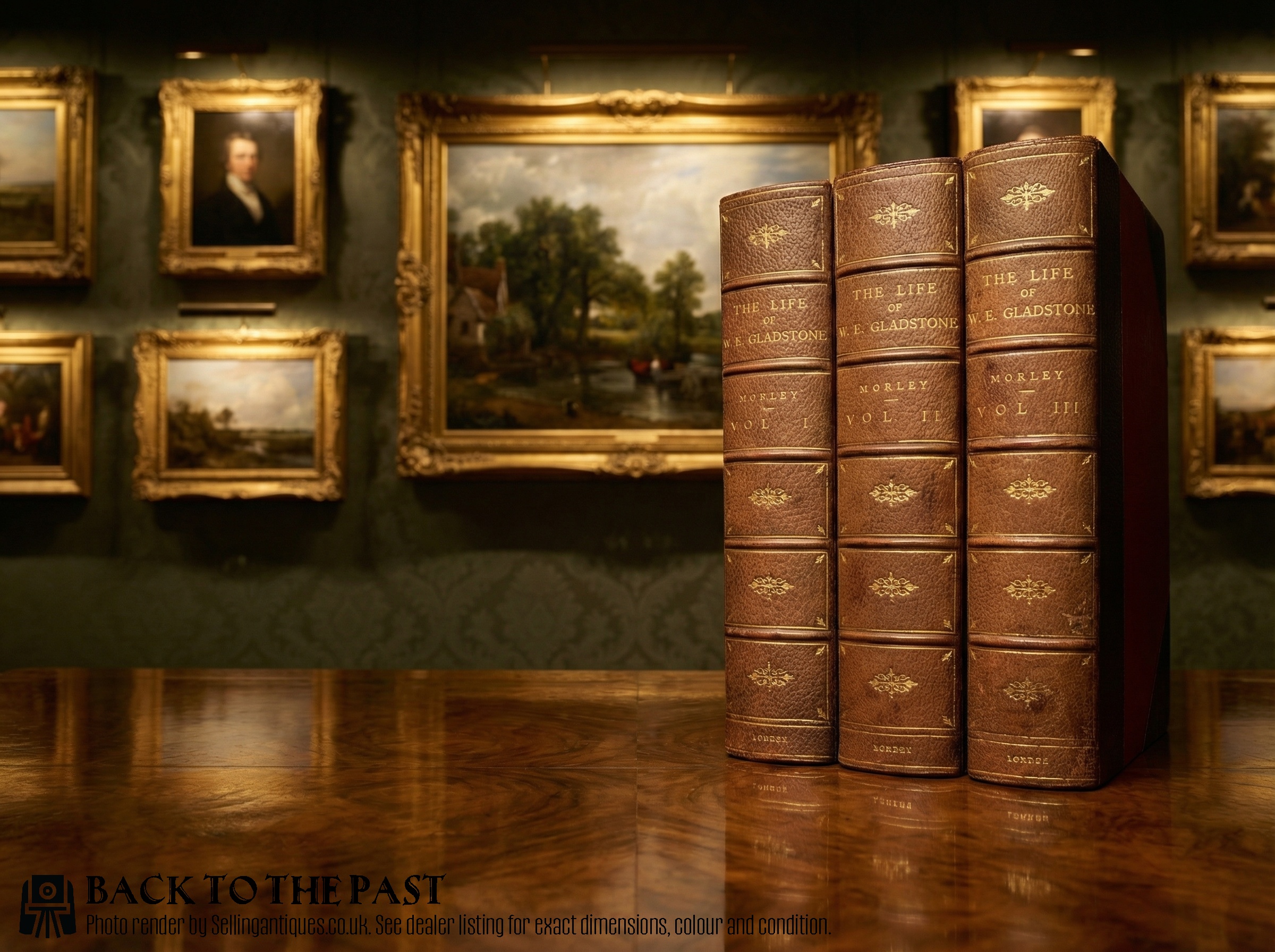
Bindings rely heavily on natural materials including calfskin, vellum, cloth and leather over wooden or pasteboard cores, often finished with gold leaf tooling along the spines and boards. Paper leaves carry typography printed with traditional presses, occasionally accompanied by engraved illustrations.
Binders utilised sewing techniques to secure signatures into sturdy text blocks before attaching protective covers. Uniform sets required careful manual trimming and lettering so that volumes matched in height, colour and spine decoration when placed side by side.
Listings feature paper, leather, vellum and oak across periods from the eighteenth century to the Edwardian era.
What Varies In Quality
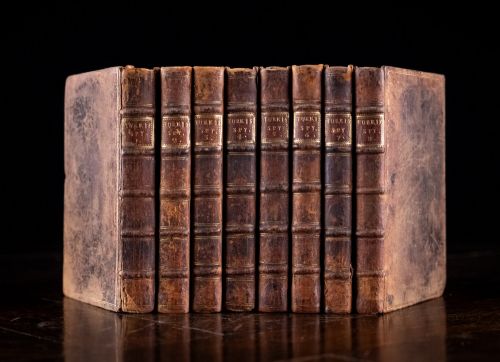
Quality rests upon the integrity of the original binding and the uniformity of the volumes within a group. Sets that retain their original matching calfskin, vellum or cloth bindings present greater cohesion than those assembled later from mismatched editions.
The crispness of gold leaf tooling and the legibility of spine lettering differentiate standard editions from finer productions. Surviving structural soundness in the hinges and text blocks determines how well a set withstands handling.
J. and R. Tonson
The Vintage Book Set Glossary
- Vellum
- A fine parchment material prepared from calfskin, prized for its smooth, durable surface and pale creamy tone. It provides a robust and distinctive cover for classical literature and historical texts.
- Calfskin
- A soft, supple leather derived from the skin of a calf, frequently used for finer bindings. Binders often polished this material to a smooth finish and applied decorative tooling.
- Tooling
- The craft of impressing designs, titles and ornamentation onto book covers using heated metal tools and gold leaf. This technique defines the visual richness of nineteenth-century spines.
- Signature
- A group of printed pages folded together from a single sheet of paper as part of the bookbinding process. Multiple signatures are sewn together to form the text block.
- Faux Book
- An object constructed to resemble a group of books, often functioning as a hidden storage container or a games board. These decorative pieces utilise leather and paper to mimic real volumes.
Vintage Book Set: Frequently Asked Questions
How do I care for leather bindings?
Leather and vellum require stable environmental conditions away from direct sunlight and excessive humidity to prevent the material from drying out or cracking. Gentle dusting with a dry cloth keeps the surfaces clean.
Avoid applying modern chemical cleaners or oils unless specifically formulated for antique leather preservation. Allowing air circulation around the shelves helps maintain the longevity of the paper and bindings.
What defines a uniform book set?
A uniform set consists of multiple volumes published or bound to match in height, spine design and material. Publishers and binders produced these collections so they appeared harmonious when shelved together.
Many of these sets cover the complete works of an author, such as Shakespeare or Walter Scott, or multi-volume historical accounts. The shared binding style distinguishes them from assembled collections of disparate individual titles.
How are different publication periods identified?
Publishers usually included publication dates on the title pages or within the preliminary text blocks of nineteenth- and eighteenth-century books. Bindings, typography and paper characteristics also offer clues to the era of production.
Later Victorian and Edwardian editions often feature publisher stamps, cloth grain variations or specific typographic styles distinct from Georgian printing. Consulting the internal publication details confirms the precise era of the volumes.
Are faux books functional items?
Faux books serve decorative and practical purposes, frequently functioning as chess boards, backgammon sets or storage compartments. Artisans constructed these items using leather and wood to mimic the appearance of real library volumes.
Victorian homes utilised these pieces to conceal game pieces or utility items while maintaining a scholarly aesthetic in the room. They combine bookbinding craftsmanship with functional domestic utility.