




Vintage Bobbin Table
A vintage bobbin table brings seventeenth-century character into a modern room through distinctive spool-turned legs.
Vintage Bobbin Table
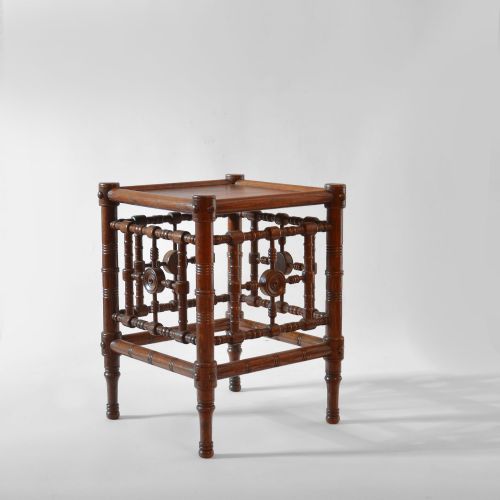
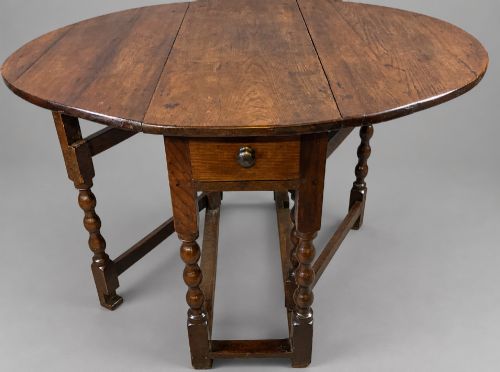
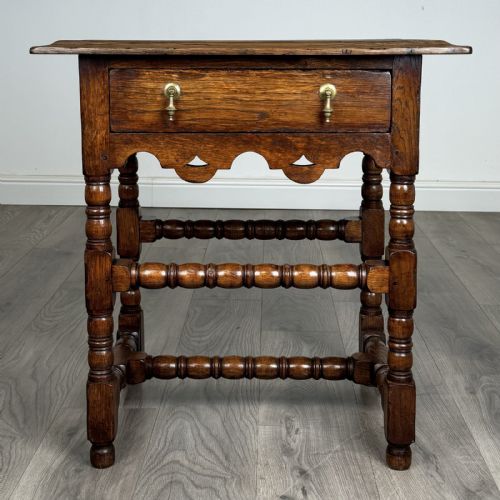
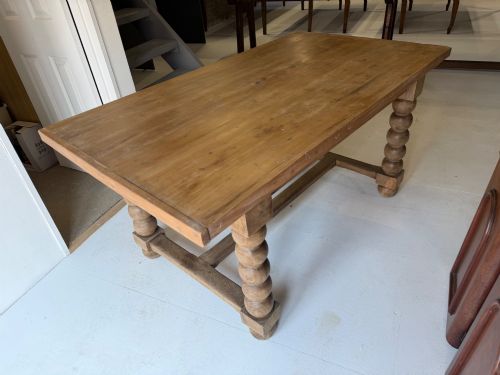
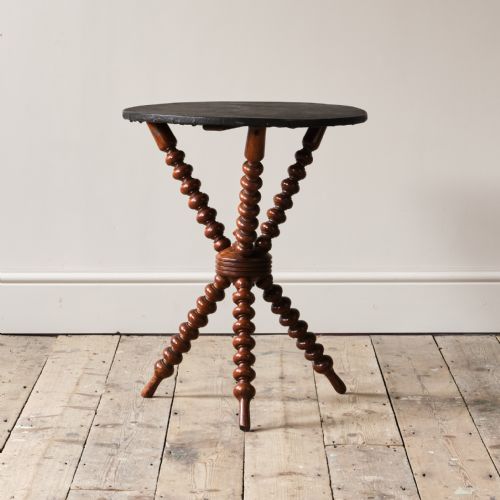
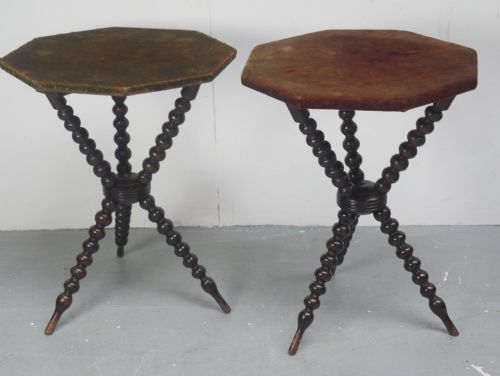
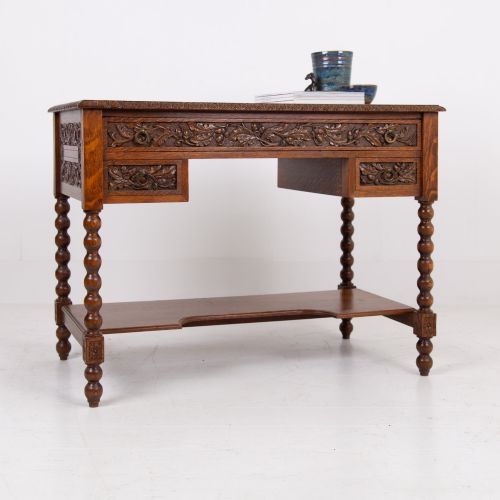
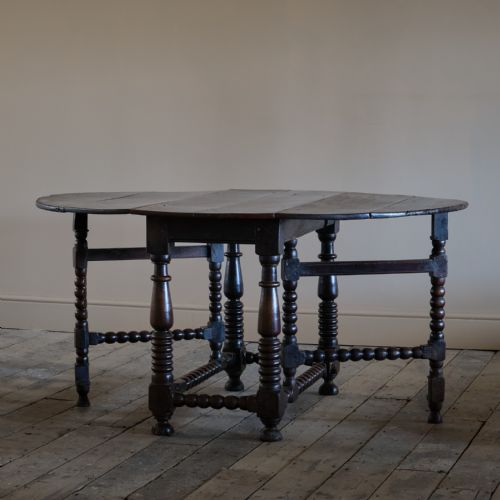
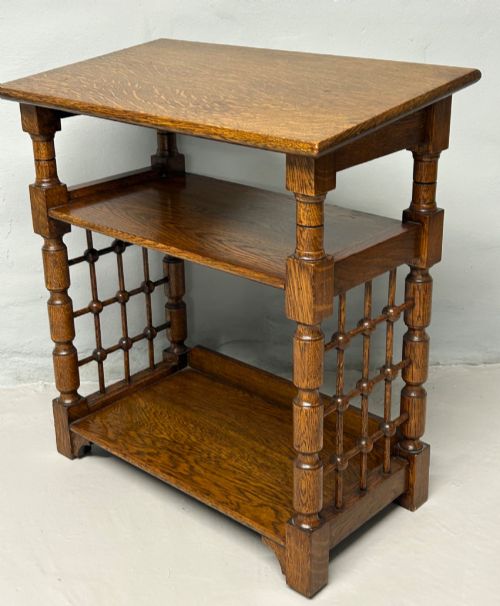
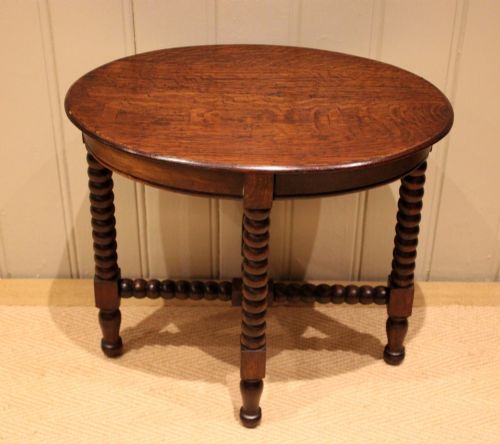
A vintage bobbin table centres on turned woodwork resembling a string of spools or bobbins, appearing across side tables, gateleg tables, and occasional pieces. These forms emerge from seventeenth-century traditions and later revivals spanning the nineteenth and early twentieth centuries.
The version most commonly met on this page is the oak side table or gateleg table, often built in the Jacobean revival style. Alongside these, buyers find occasional tables, coffee tables, and gypsy tables featuring the same characteristic turned framing.
How they were made
Makers shaped the distinctive spool legs on a lathe, cutting repeating rounded collars into timber such as oak, beech, walnut, or mahogany. These turned components were then joined to solid tops, drawers, or drop leaves using traditional pegged and mortise construction.
Surface finishes rely on the natural grain of woods like oak and yew, occasionally paired with brass fittings or velvet inserts. The construction balances sturdy side and gateleg frames with the intricate lathe work defining the style.
Vintage Bobbin Table Retail Price Guide 2026
Typical asking prices for vintage bobbin table among the pieces listed under this phrase on Sellingantiques today, from the lower quarter to the upper quarter. They describe what is for sale here now, not the wider market.
Listings feature oak, walnut, beech, mahogany, and yew wood across periods spanning the seventeenth century to the early twentieth century.
What varies in quality
The standard of a vintage bobbin table rests on the crispness of the lathe turning and the selection of timber. Sharp, well-defined spool profiles and richly grained solid oak or walnut elevate a piece above simpler utilitarian versions.
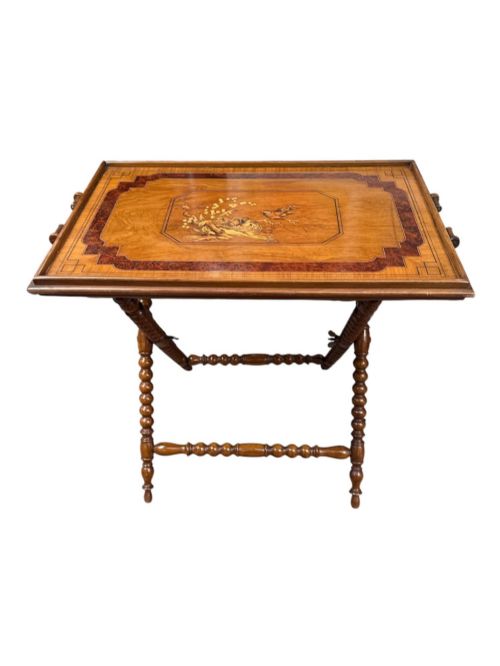
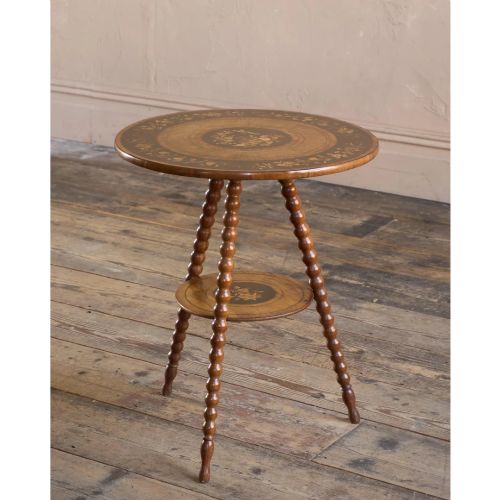
Proportion and structural integrity also divide the range, as well-balanced gateleg actions and tight joints show superior craftsmanship. Pieces combining marquetry or fitted drawers alongside the turned legs demonstrate a higher tier of workmanship.
The Vintage Bobbin Table Glossary
- Bobbin turning
- A form of lathe work featuring a sequence of rounded wooden collars resembling spools of thread. This technique defines the legs and supports of seventeenth-century and revival furniture.
- Gateleg table
- A drop-leaf table with hinged legs that swing out to support the opened leaves. This form frequently incorporates bobbin-turned framing.
- Jacobean revival
- A nineteenth and early twentieth-century style copying seventeenth-century English furniture forms. It heavily utilises oak and bobbin turnings.
- Gypsy table
- A lightweight occasional table, often with turned legs and a fabric-covered top. These appeared frequently during the Victorian and Edwardian periods.
- Marquetry
- The art of applying decorative veneer pieces to a surface to form intricate patterns. It occasionally appears on the tops of tables featuring bobbin legs.
Vintage Bobbin Table: Frequently Asked Questions
What is a bobbin table?
A bobbin table is a piece of furniture featuring legs and stretchers shaped on a lathe to resemble a series of wooden spools or bobbins. These tables appear in forms ranging from small side tables and gypsy tables to larger gateleg dining tables.
Most examples utilise solid timbers like oak, beech, or walnut, drawing on seventeenth-century English styles as well as nineteenth and twentieth-century revivals.
How do I date a bobbin table?
Dating a bobbin table involves examining the timber species, joinery methods, and the overall form of the table. Seventeenth-century originals display hand- split timbers and early construction techniques, while nineteenth-century and Edwardian revival pieces show later manufacturing marks.
The style of the turnings and associated details like drawers, hinges, or marquetry inlay also help distinguish authentic seventeenth-century work from later Jacobean revival interpretations.
Are bobbin tables sturdy?
Bobbin tables are generally robust, particularly oak gateleg and side tables built with sturdy turned underframes. The repeating spool turnings distribute weight effectively while providing rigid structural support.
Tables with swing legs, such as gateleg and drop-leaf designs, rely on tight hinges and level placement to maintain their stability during daily use.
Where should I place a bobbin table?
A bobbin table fits well as an occasional or side table in living rooms, hallways, or studies where the turned woodwork adds texture to the space. Smaller side and gypsy tables serve beside chairs or sofas, while gateleg versions adapt well to dining spaces.
The distinct silhouette of the spool legs complements both traditional period rooms and modern interiors seeking historic wooden detail.