



Vintage Board Games
Vintage board games bring centuries of competition and social play into the home through timber, bone, and leather.
Vintage Board Games
Vintage board games encompass a wide variety of domestic pastimes, ranging from folding travel sets and compendiums to large freestanding tables and wall-mounted scoreboards. These pieces span the nineteenth and early twentieth centuries, capturing the leisure habits of the Victorian, Edwardian, and Regency eras.
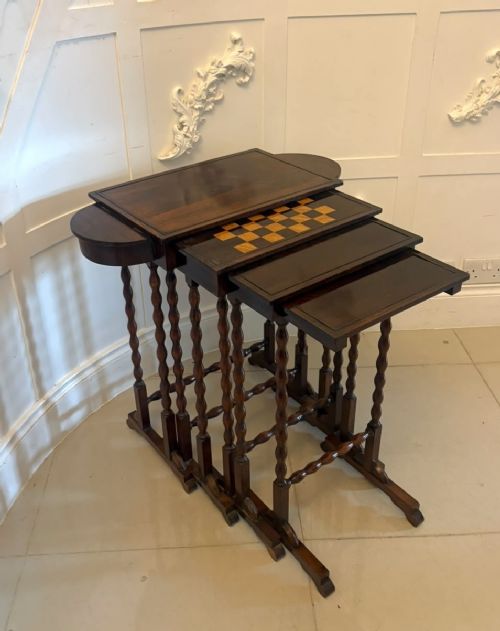
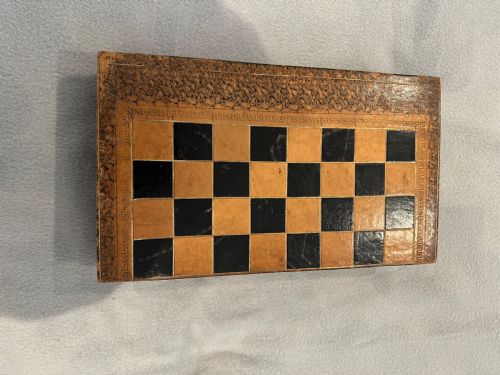
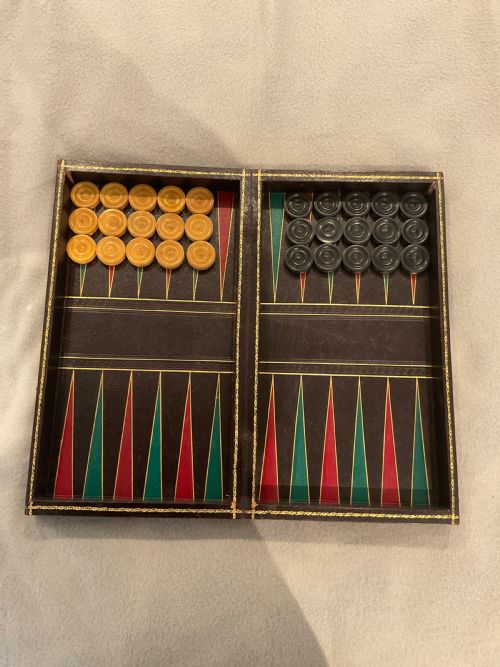
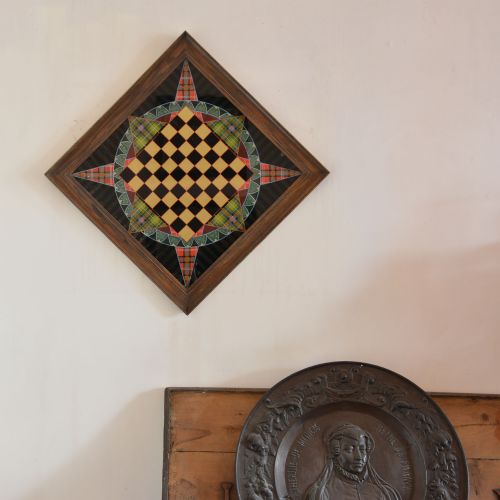
Buyers will encounter items built for specific social games such as chess, cribbage, backgammon, solitaire, and bagatelle. Many survive as portable leather-bound volumes, wooden boxes, or elaborate marquetry tables designed to sit permanently within a library or drawing room.
Assessing quality and integrity
Quality rests upon the selection of timber and the precision of the joinery and inlay work, where tight, flush joints separate fine cabinetmaking from utilitarian production. Retaining original components, such as matching sets of turned chess pieces, compatible marbles for solitaire boards, or complete score markers, heavily influences the integrity of the piece.
Subtleties in surface finish, hand-carved bone detail, and maker attribution through branded panels or distinct regional patterns distinguish standard items from exceptional workshop examples.
The listings feature diverse timber varieties including mahogany, rosewood, oak, walnut, boxwood, and birch across the nineteenth and early twentieth centuries.
Orme & Sons Manchester·Thurston & Co. of London·The British Chess Company
The Vintage Board Games Glossary
- Compendium
- A fitted box containing the equipment for multiple different games, often including chess, backgammon, and cards. These multi-use sets became popular social items during the Victorian period.
- Cribbage board
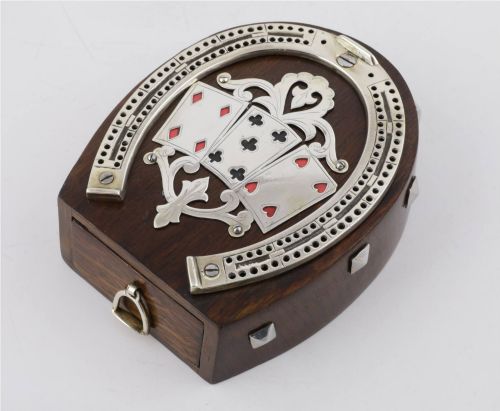
- A scoring board drilled with rows of small holes to track points using pegs during the card game cribbage. They are frequently carved from bone or housed in decorative wooden boxes.
- Solitaire board
- A circular timber or glass board featuring a geometric indentation pattern designed to hold marbles or pegs. Players jump pieces over one another to isolate a final marble in the centre.
- Bagatelle
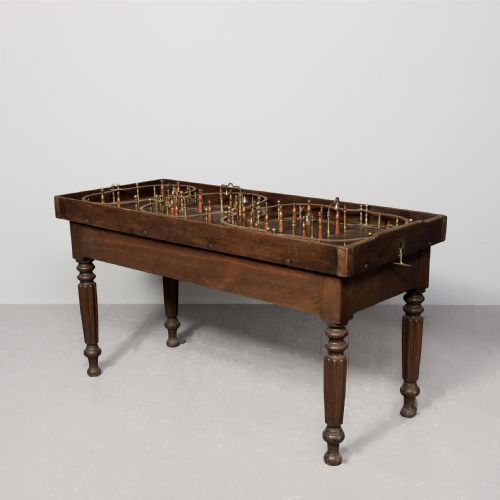
- A nineteenth-century table game precursor to modern billiards and pinball, where players cue balls up an inclined wooden board into numbered cups. Tables often fold or rest upon existing furniture.
- Scoreboard
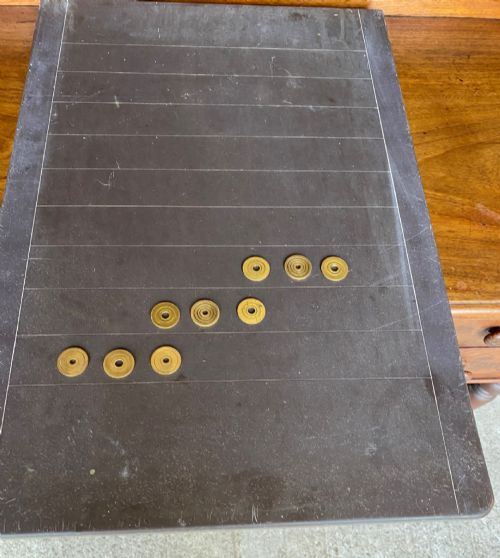
- A wall-mounted wooden panel fitted with sliding brass indicators or rotating rollers to track points during cue sports. Larger Victorian examples display intricate craftsmanship by specialised billiard firms.
Vintage Board Games: Frequently Asked Questions
How do I date a wooden games board?
Dating relies on examining the timber species, construction joints, and decorative style relative to known historical periods. Regency and Victorian pieces often display distinct turning, brass hardware, or marquetry patterns characteristic of their decade of manufacture.
Secondary clues include handwritten paper labels inside compartments, patent stamps, and the wear patterns on hinges or locking mechanisms. Comparing these elements with documented examples helps narrow the production window.
Are antique travel chess sets usable?
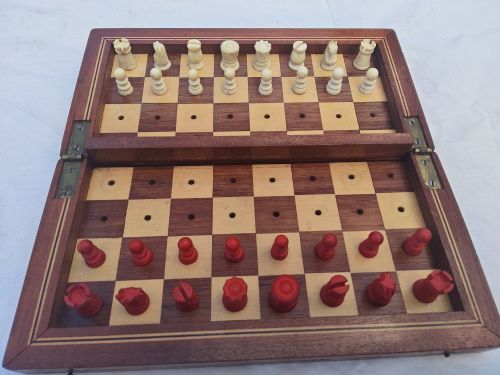
Many nineteenth-century travel sets remain fully functional for modern play. Folding boards and compact wooden boxes with pegged or magnetic pieces were specifically engineered to secure positions during transit.
Care should be taken with delicate materials such as carved bone or aged leather hinges. Gentle handling ensures these portable pastimes survive another century of regular use.
What is a compendium of games?
A compendium is a comprehensive wooden box or chest designed to hold the equipment for several distinct pastimes in one enclosure. These sets typically include folding boards, playing cards, dice, cribbage markers, and complete chess or backgammon sets.
They represent peak Victorian social entertainment, offering a portable entertainment system for country houses and hotels. The interior trays lift out to reveal tiered storage compartments tailored for each game.
How were nineteenth-century scoreboards used?
Wall-mounted scoreboards tracked points during billiards, snooker, and pool matches in domestic billiard rooms and public clubs. Players slid brass pointers along numerical scales or turned rotating cylinders as scores mounted.
These large oak and mahogany boards served both a functional tallying purpose and a decorative function within a gentleman's study or games room. Their size and complexity often reflect the prominence of the establishment they originally inhabited.