


Vintage Blue Transferware
Vintage blue transferware brings crisp monochrome imagery to the table, offering centuries of printed ceramics shaped by changing British tastes.
Vintage Blue Transferware
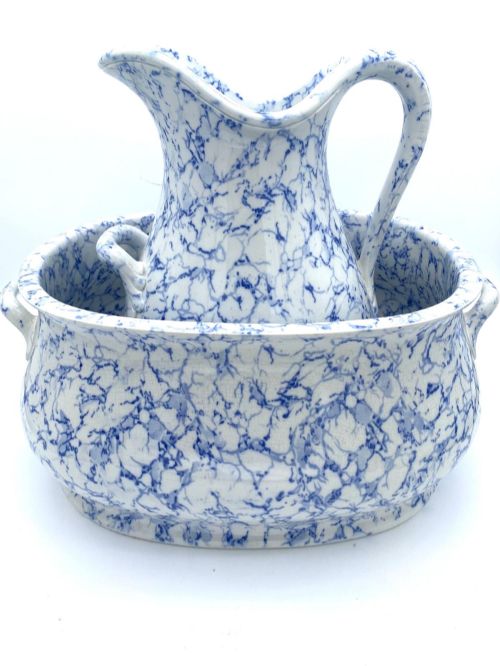
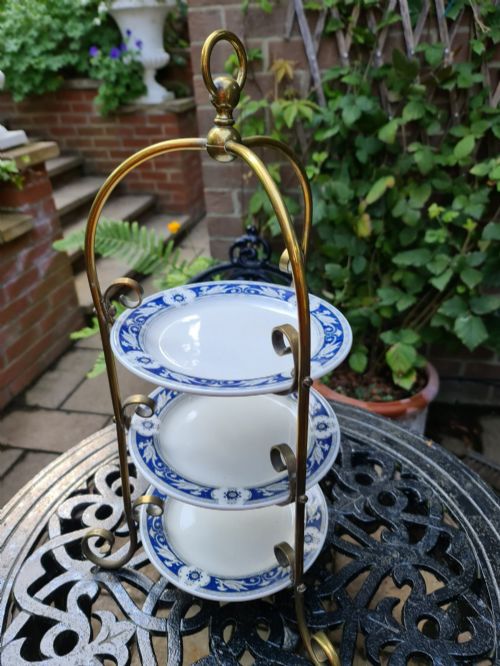
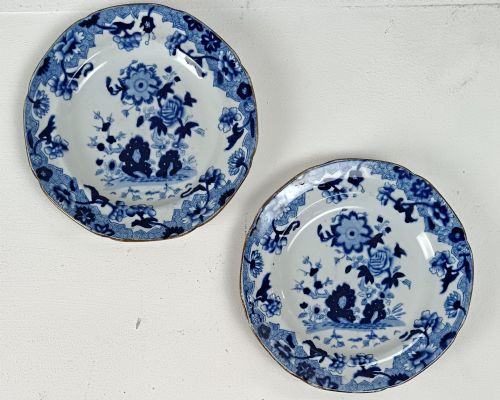
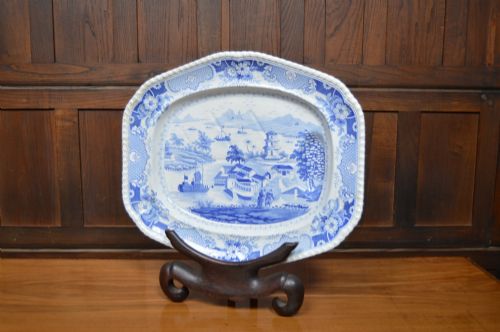
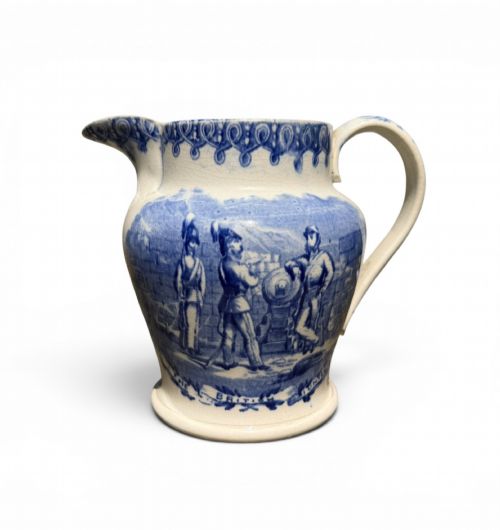
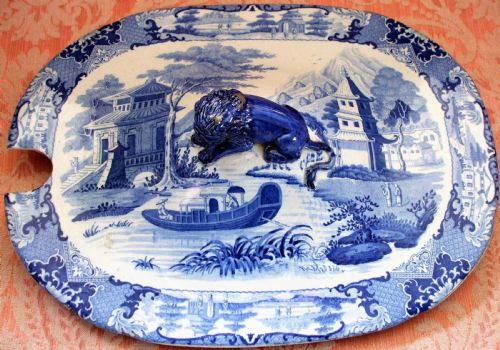
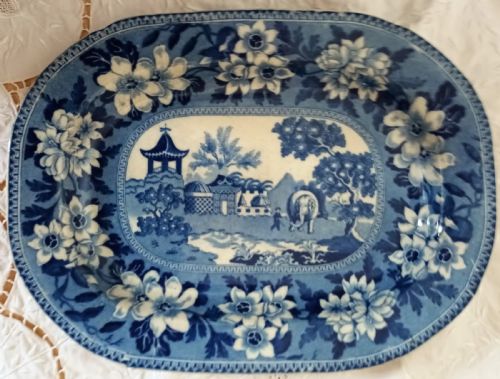
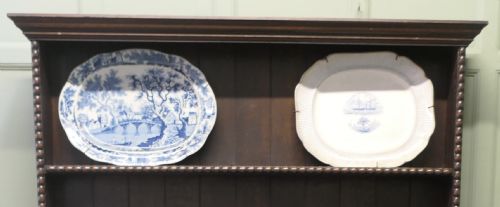
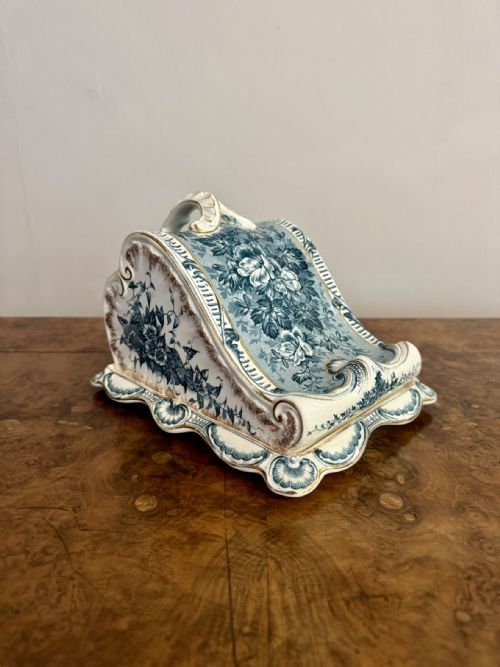
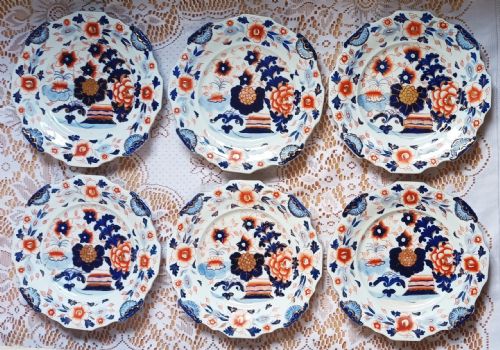
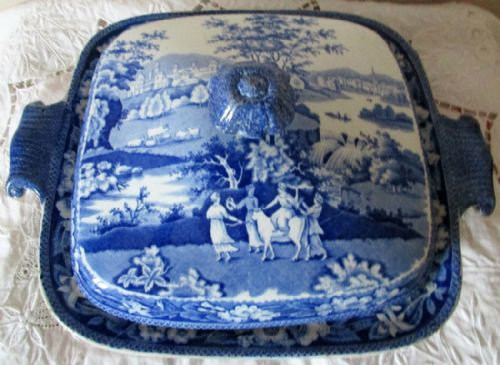
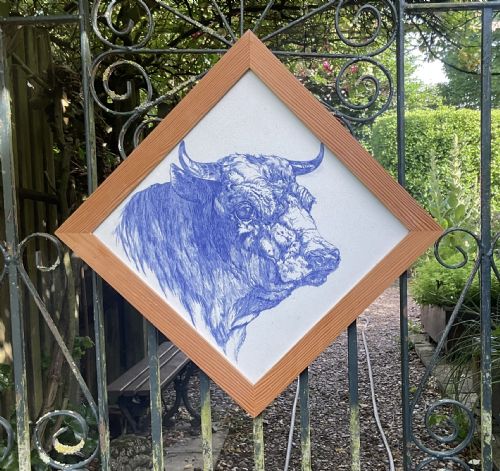
Vintage blue transferware covers a wide span of domestic pottery and decorative tableware, ranging from heavy meat platters and large chargers to delicate tea plates and footbaths. These items bring printed imagery to functional ceramics, depicting intricate scenes from landscapes to architectural views.
Buyers encountering this material on the market will find examples originating primarily across the nineteenth century, reflecting Victorian, Georgian, Regency, and Edwardian periods. Forms include utilitarian vessels alongside grand serving dishes and complete bathroom sets.
The aesthetic bridges formal dining display with everyday household use, capturing historic English pottery traditions through cobalt blue pigment applied to various earthenware and ironstone bodies.
How they were made
Potters produced these objects by transferring engraved copperplate designs onto tissue paper using cobalt blue ink, which was then pressed onto the unfired ceramic body before glazing. This transfer technique allowed complex, detailed patterns to be applied efficiently across plates, platters, and tureens.
The underlying material varied from porous earthenware and pearlware to durable ironstone and porcelain, glazed to seal the surface and protect the printed decoration beneath during kiln firing.
Listings span nineteenth-century periods including Georgian, Regency, and Victorian eras, alongside Edwardian examples.
What varies in quality
Quality in these ceramics depends heavily on the crispness of the transfer print and the registration of the copperplate design, where sharp lines and deep cobalt tones indicate superior execution. Smudged prints or uneven colour application reveal less careful workshop production.
The refinement of the ceramic body itself - whether a heavy, robust ironstone or a finer earthenware base - alongside the preservation of the clear glaze and any supplementary gilt highlights, sets finer exhibition pieces apart from everyday utility wares.
Minton·Spode·Robert Hamilton·John Rogers and Son·John and Richard Riley·Copeland·Mason·Caughley Coalport·Elkin and Newbon·J. and R. Clews
The Vintage Blue Transferware Glossary
- Transferware
- Pottery decorated by printing a design from an engraved copper plate onto tissue paper and transferring it onto the ceramic body. This process revolutionised the ceramic industry by enabling intricate, repeatable patterns.
- Ironstone
- A heavy, durable type of ceramic patented in the nineteenth century to imitate Chinese porcelain. It resists chipping and forms a sturdy base for printed glazes.
- Pearlware
- A refined earthenware developed in the late eighteenth century featuring a subtle bluish glaze that pooled in recesses. It served as a transitional body toward whiter Victorian ceramics.
- Charger
- A large decorative plate or platter used traditionally for serving food or as a base beneath other dishes. These items often display the most ambitious printed scenes.
- Flow Blue
- A style of Staffordshire pottery where cobalt blue intentionally bled into the surrounding white glaze during firing. This created a soft, misty aesthetic popular in the nineteenth century.
Vintage Blue Transferware: Frequently Asked Questions
Can I use these plates for serving food?
Most nineteenth-century pieces can safely serve dry or cold foods, though acidic items should not be left in contact with older glazes for extended periods.
Keep in mind that crazing or hairline cracks mean the ceramic is porous, making it better suited for display rather than holding wet dishes.
How do I date a piece of transferware?
Examine the ceramic body, maker's marks, and style of the printed pattern to narrow down the decade of production across the Georgian and Victorian eras.
Registry marks or specific topographical scene titles often provide a precise timeframe for when the copperplate was first registered and manufactured.
Why are some blue patterns blurry?
Blurry lines often indicate intentional flow blue manufacturing, where lime or ammonia vapours were introduced into the kiln to deliberately scatter the cobalt pigment.
In other instances, a hazy print results from the tissue paper shifting slightly during the transfer process onto the absorbent earthenware surface.