

Vintage Blue Sapphire Band
A vintage blue sapphire band combines durable precious metals with rich blue corundum stones spanning multiple antique eras.
Vintage Blue Sapphire Band
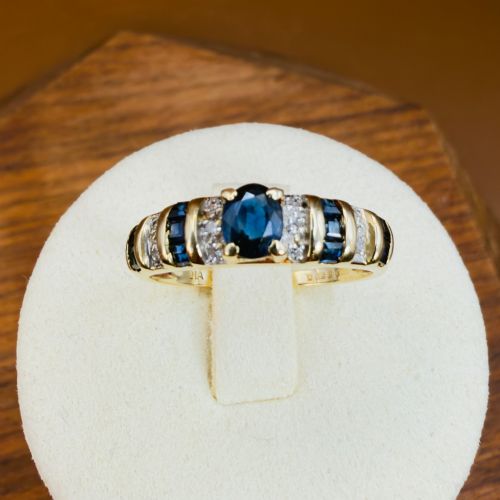
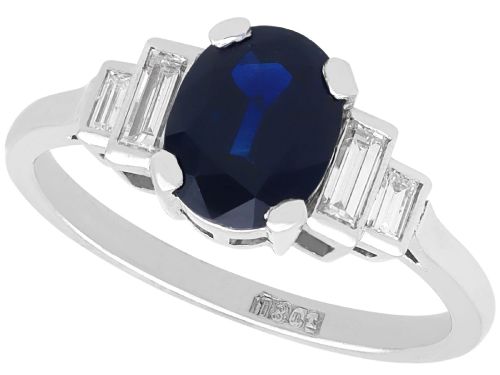
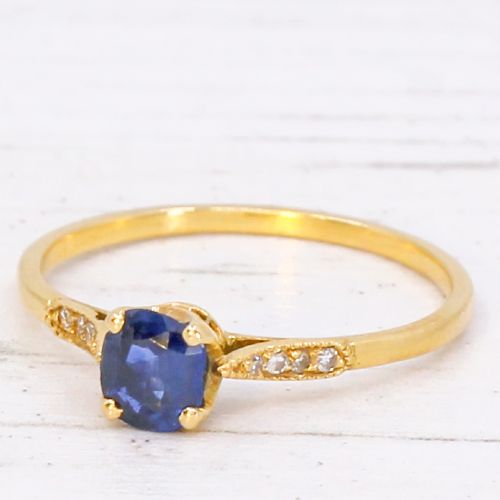
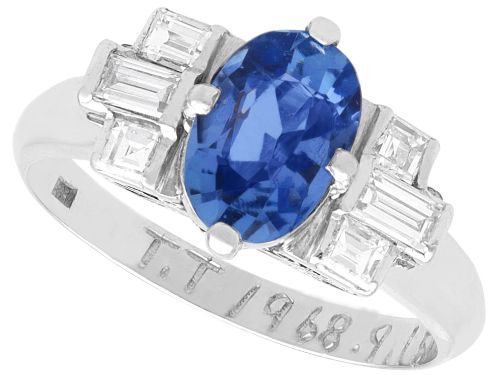
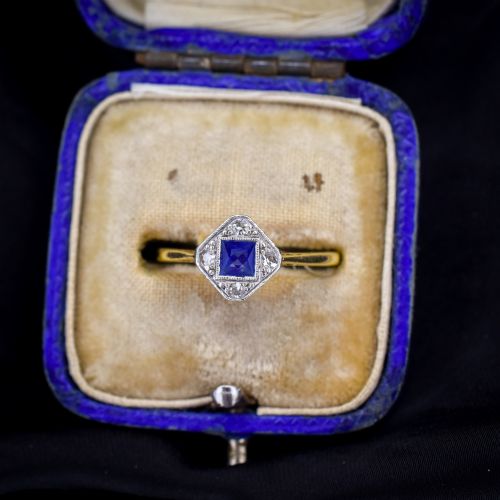
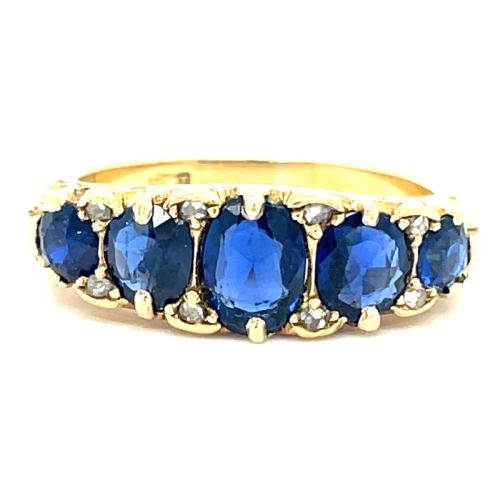
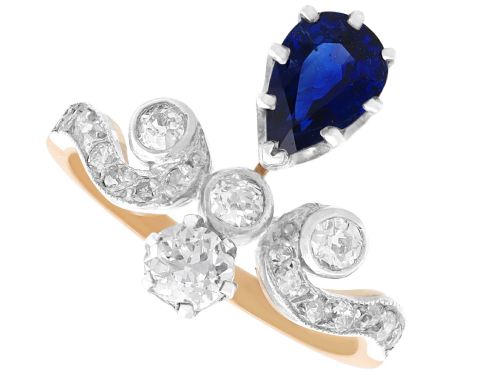
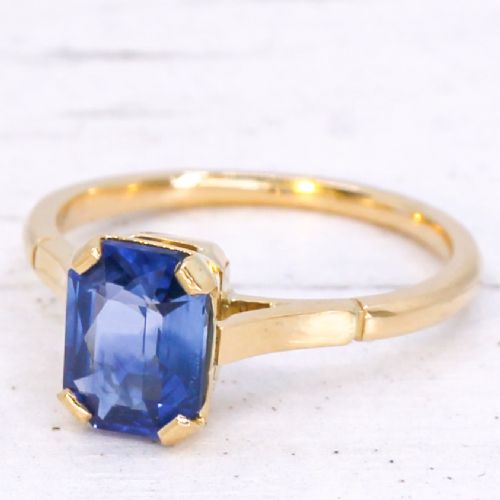
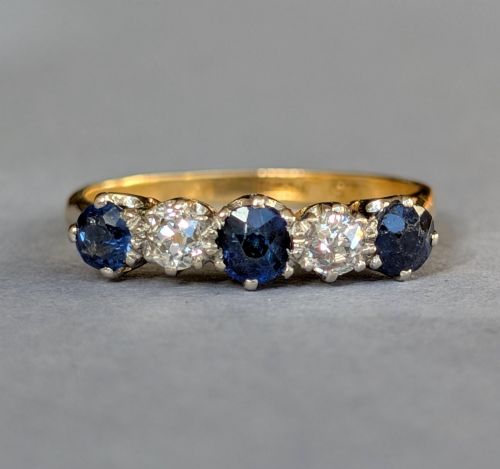
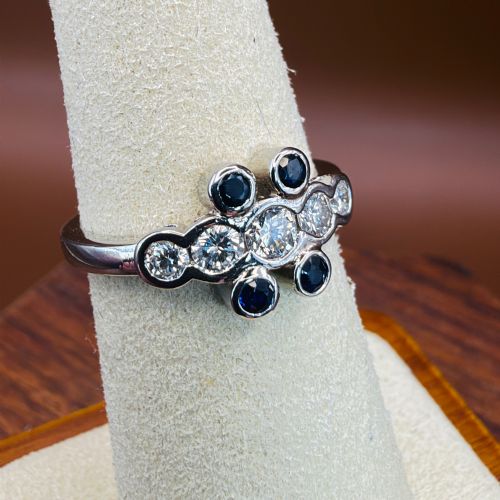
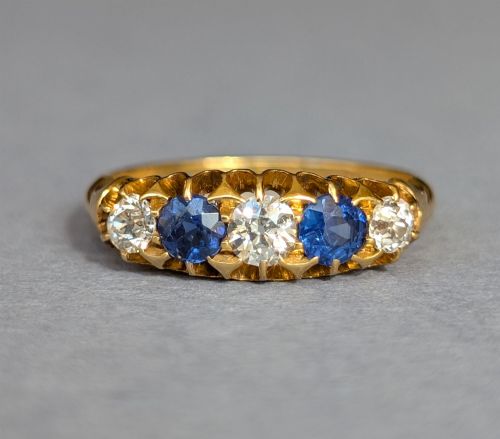
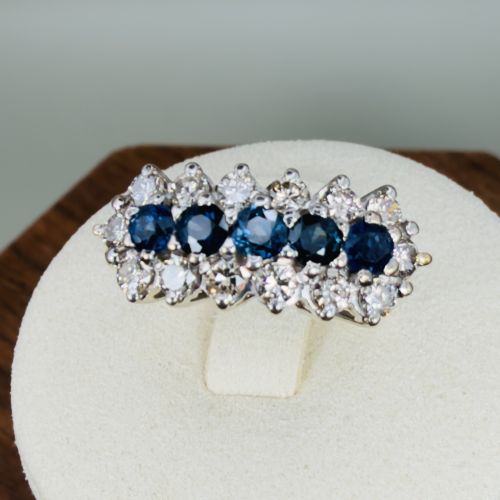
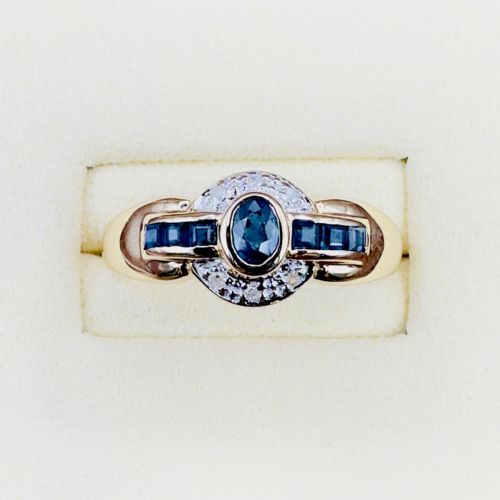
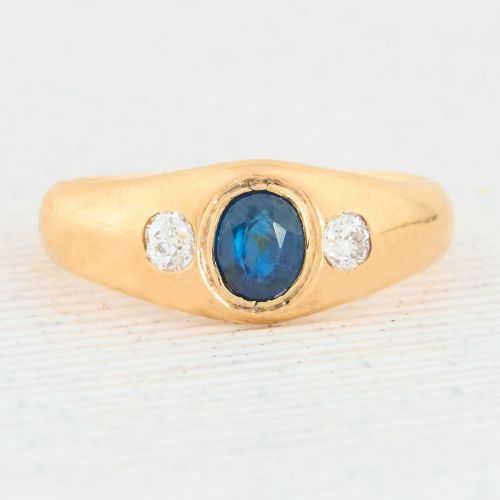
A vintage blue sapphire band spans periods from the Victorian and Edwardian eras through the mid-20th century, offering distinct historical craftsmanship. Collectors encounter various forms, including five-stone settings, cluster configurations, gypsy mounts, and half eternity styles.
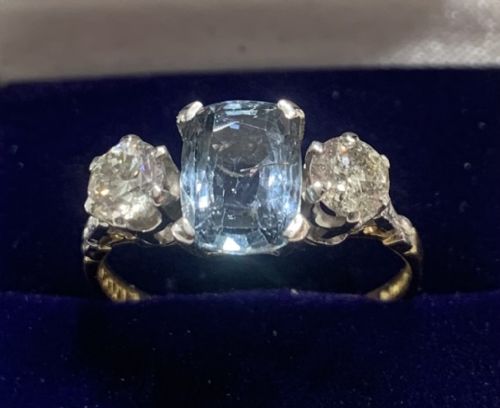
The pieces on this page originate from diverse decades, featuring stones set alongside diamonds in platinum or gold frameworks. Buyers find traditional boat rings, trilogy designs, and simple bands that reflect the prevailing aesthetic of their respective decades.
Materials and Construction Techniques
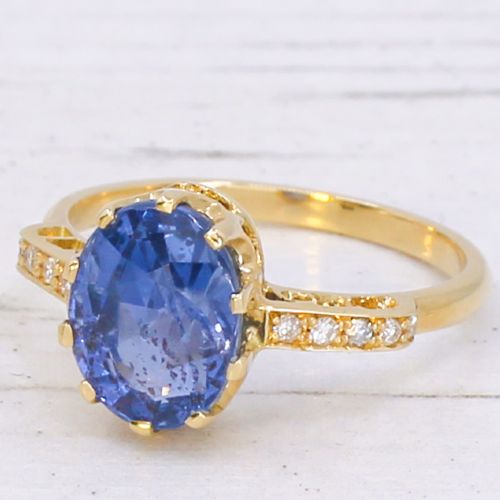
Goldsmiths utilised 9ct gold, 18ct yellow gold, white gold, and platinum to fabricate the structural mounts for these rings. Precious stones including diamonds and split pearls frequently accompany the central sapphires.
Craftsmen secured the gems using claw settings, gypsy flush mounts, and cluster arrangements, often incorporating hand-cut old cut or brilliant cut diamonds. Hallmarks stamped into the metal bands provide official records of assay offices and manufacturing years.
Vintage Blue Sapphire Band Retail Price Guide 2026
Typical asking prices for vintage blue sapphire band among the pieces listed under this phrase on Sellingantiques today, from the lower quarter to the upper quarter. They describe what is for sale here now, not the wider market.
Differentiating Quality Among Pieces
Quality rests upon the natural origin and thermal treatment status of the sapphire, with unheated stones from regions like Ceylon, Kashmir, and Burma commanding distinct interest. The clarity, carat weight, and colour saturation of the central blue sapphire dictate the visual impact of each ring.
The integrity of the metalwork, the condition of old cut or princess cut diamonds, and the preservation of original hallmarks define the standard of execution. Settings that retain their structural depth without excessive metal wear represent superior craftsmanship.
The Vintage Blue Sapphire Band Glossary
- Band ring
- A finger ring of uniform or graduated width throughout its circumference, often channel-set or flush-set with multiple stones.
- Cluster ring
- A design featuring a central gemstone surrounded by a perimeter of smaller accent stones, typically diamonds.
- Gypsy ring
- A style where stones are flush-set directly into a heavy, tapered metal band that is wider at the front.
- Old cut
- A historical diamond cutting style characterised by a high crown, small table, and deep pavilion that predates modern brilliant cuts.
- Trilogy ring
- A three-stone ring symbolising past, present, and future, commonly pairing a central sapphire with flanking diamonds.
- Unheated sapphire
- A natural corundum gemstone that has not undergone thermal enhancement to alter its colour or clarity.
Vintage Blue Sapphire Band: Frequently Asked Questions
What periods do these sapphire rings date from?
The pieces span the Victorian, Edwardian, and Art Deco periods, alongside mid-century and later twentieth-century decades.
Individual examples display hallmarked evidence or stylistic traits pointing to specific eras between the late nineteenth century and the 1970s.
How do I care for a vintage sapphire band?
Clean the metal and stones gently using warm soapy water and a soft brush, avoiding harsh chemical ultrasonic cleaners.
Store the ring separately from other jewellery to prevent harder diamonds from scratching the gold band or the sapphire surface.
Are the sapphires natural or treated?
Many listings specify unheated stones originating from notable geographical sources such as Ceylon, Kashmir, and Burma.
Specific reports or descriptions indicate whether a sapphire has maintained its natural properties since extraction.
What metals were used in these bands?
Goldsmiths predominantly worked with 18ct yellow gold, 9ct gold, white gold, and platinum across the various manufacturing periods.
Some Edwardian and Victorian pieces combine yellow gold bands with platinum settings to enhance the brilliance of the mounted diamonds.