
Vintage Blue Jewellery
Vintage blue jewellery brings together sapphire, aquamarine, zircon and enamel across rings, brooches and bracelets spanning the Edwardian to mid-century periods.
Vintage Blue Jewellery
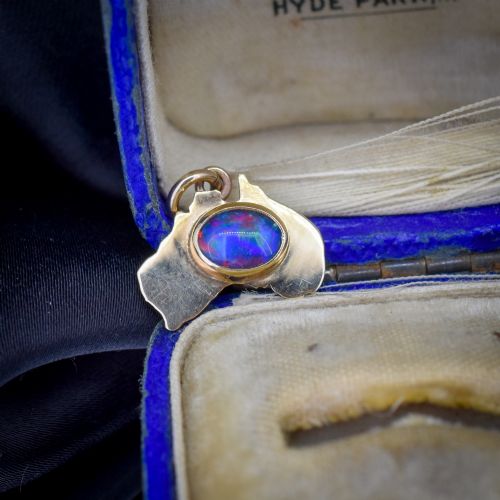
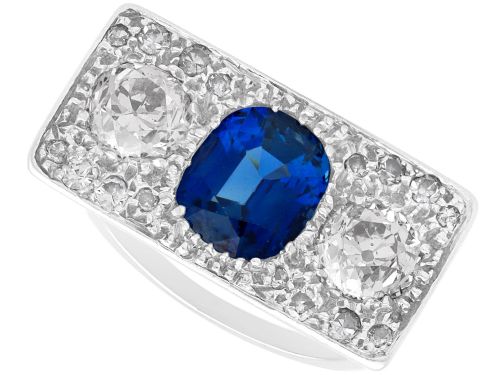
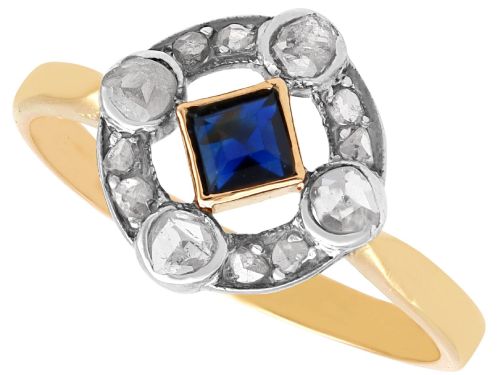
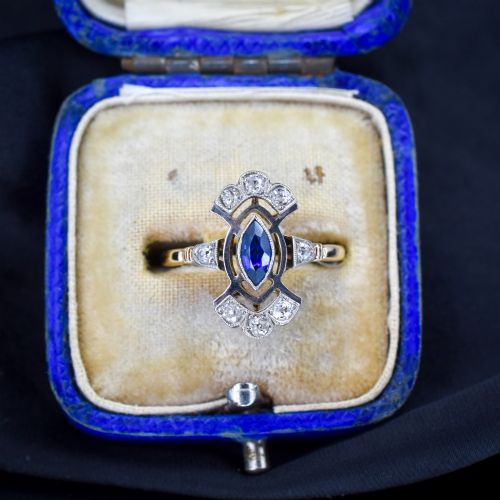
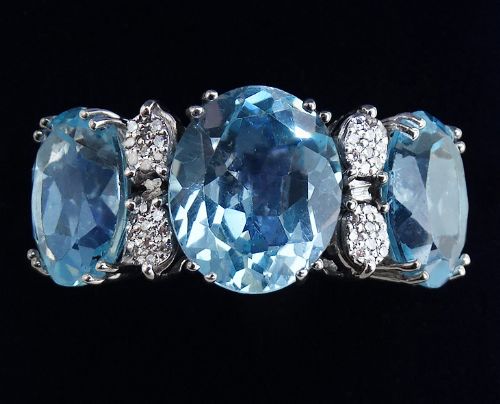
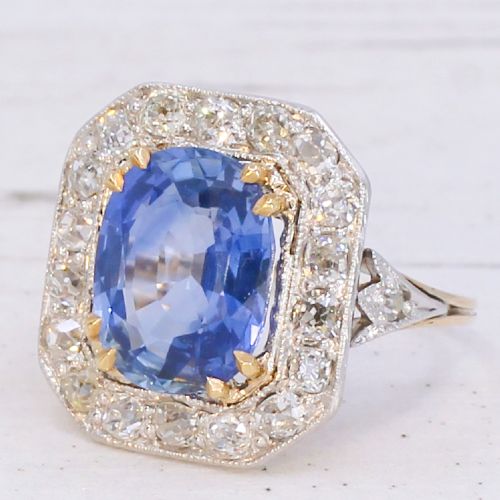
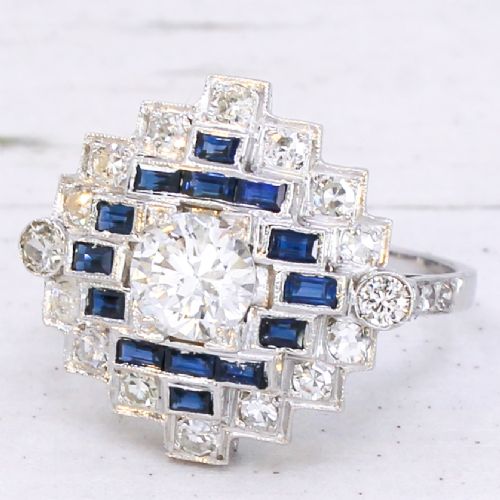
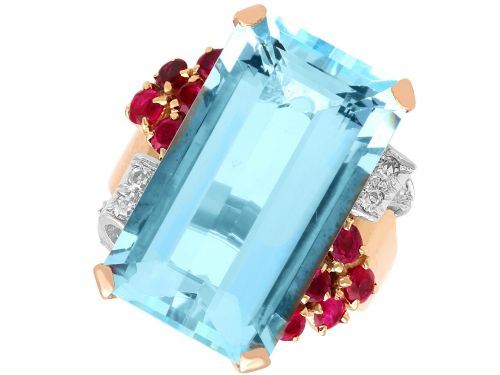
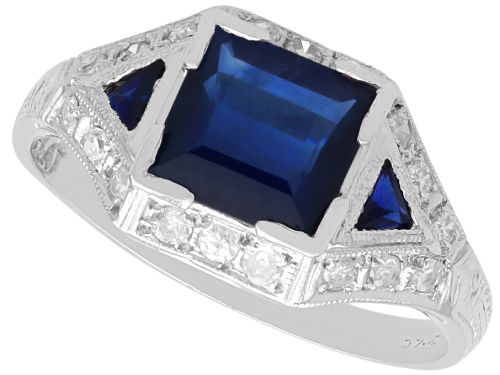
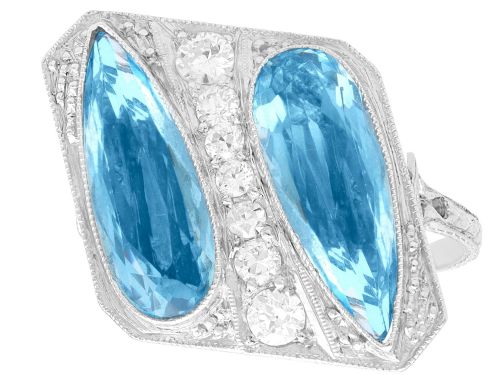
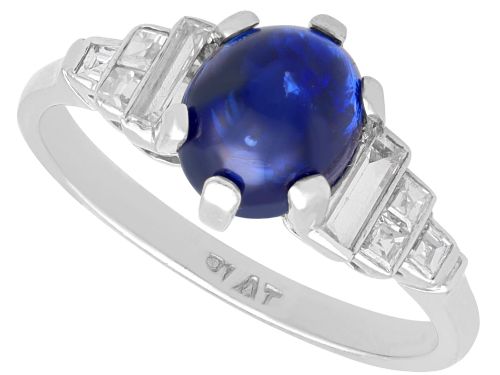
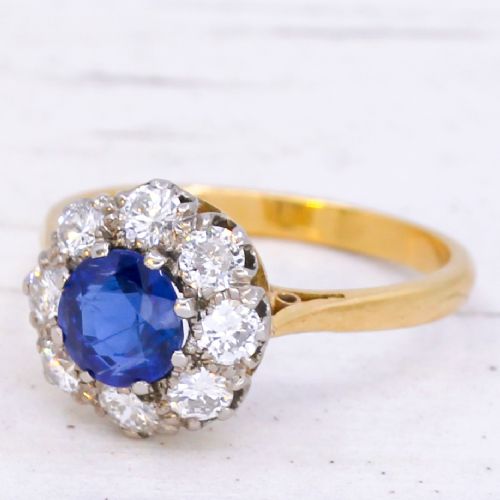
Vintage blue jewellery encompasses a wide array of personal adornments defined by cool-toned gems and vitreous materials. Rings dominate the selection, ranging from Edwardian boat shapes and cluster designs to bold mid-century crossover mountings.
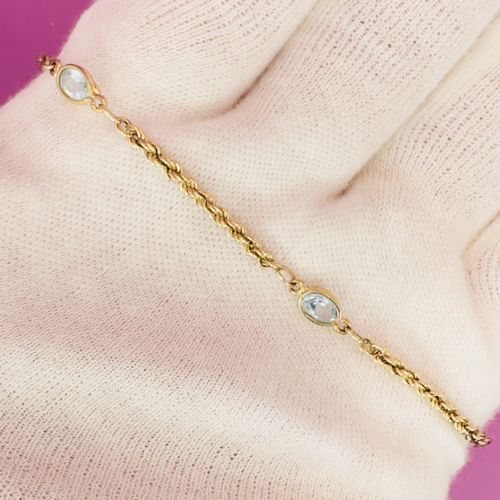
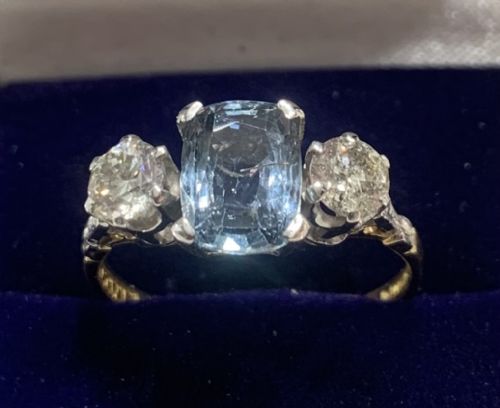
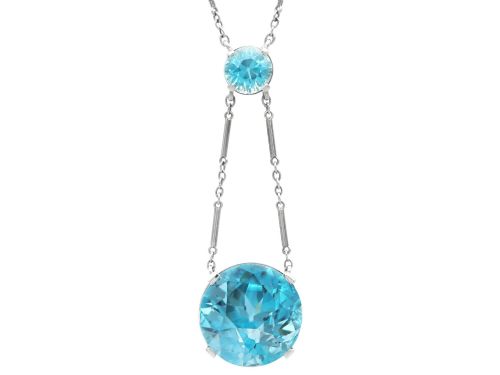
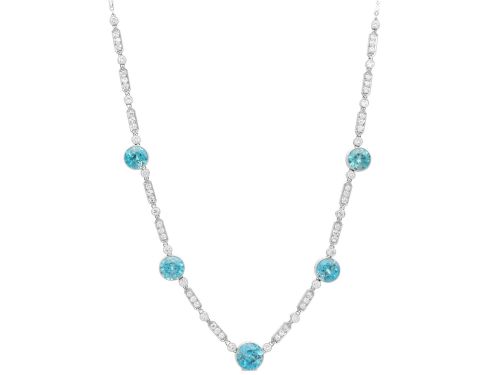
Beyond finger rings, the selection includes platinum line bracelets, drop earrings, pendants and circular brooches. Pieces frequently pair central blue stones with contrasting diamonds in gold, white gold or platinum settings.
The objects stem from distinct aesthetic movements, notably Art Deco geometry, Art Nouveau curves and mid-century modernism. Buyers encounter items ranging from delicate silver work to substantial cocktail rings carrying heavy central stones.
Materials and construction methods
Goldsmiths and platinum smiths utilised precious metals to house diverse blue stones, including Ceylon and basaltic sapphires, aquamarines, zircons and topazes. Platinum gained widespread favour during the Art Deco era for its strength in holding intricate diamond and sapphire clusters.
Enamelling techniques, such as guilloché, added vibrant translucent colour to silver and gold foundations. Stones were shaped into various cuts, including navette, pear and traditional faceting, and secured via claw settings or bezel mountings.
Listings span periods from 1860 to 1960, incorporating diamond, sapphire, aquamarine, enamel, silver, platinum and yellow, white and rose gold.
Factors of distinction
Distinction in these pieces rests upon the stone origin, carat weight and the precision of the metalwork. Ceylon sapphires and large aquamarines command attention, particularly when paired with well-matched diamond accents.
The integrity of the setting and the refinement of the period style further separate standard pieces from exceptional examples. Original fitted presentation cases and maker signatures also elevate specific items.
Aksel Holmsen·Archibald Knox for Liberty & Co Murrle Bennett·Kutchinsky
The Vintage Blue Jewellery Glossary
- Navette
- A boat-shaped gemstone cut or mounting with pointed ends. This silhouette was particularly popular during the Art Deco period.
- Guilloché
- A decorative technique where a precise pattern is機械-engraved into metal beneath translucent enamel. It frequently appears on Edwardian and mid-century brooches.
- Basaltic sapphire
- A sapphire originating from basalt geological sources, known for deep, saturated hues. These stones appear frequently in early twentieth-century cluster rings.
- Cluster ring
- A ring design featuring a central stone encircled by smaller gems, often diamonds. This arrangement maximises visual impact and light reflection.
Vintage Blue Jewellery: Frequently Asked Questions
What periods do these pieces represent?
The selection spans from the late Victorian and Edwardian eras through the Art Deco and Retro years, extending into mid-century modern designs.
Items date from the late nineteenth century up to the 1960s, reflecting changing aesthetic preferences across decades.
How do I care for vintage blue jewellery?
Precious metals and durable stones like sapphire require gentle cleaning with warm soapy water and a soft brush. Avoid harsh chemical dips, particularly for enamelled pieces or softer gems.
Store items separately in lined boxes to prevent metal scratching and stone abrasion.
What distinguishes Art Deco blue rings?
Art Deco rings utilise geometric platinum or white gold settings featuring navette or cluster layouts. They frequently combine strong blue sapphires with sharp diamond pavé work.
The aesthetic prioritises symmetry, clean lines and architectural presence on the hand.