



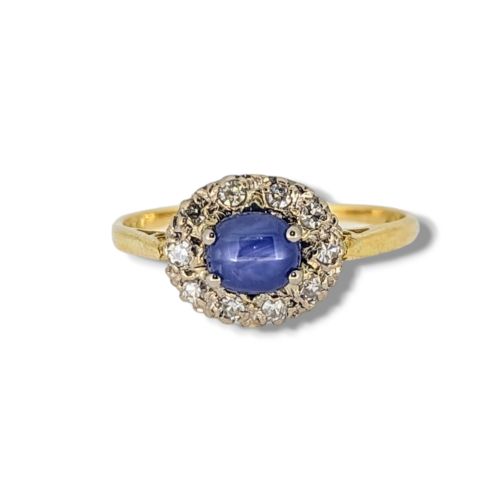


Vintage Blue Cabochon Ring
A vintage blue cabochon ring brings a smooth, polished stone to the finger, offering deep colour without the facets of a traditional cut.
Vintage Blue Cabochon Ring
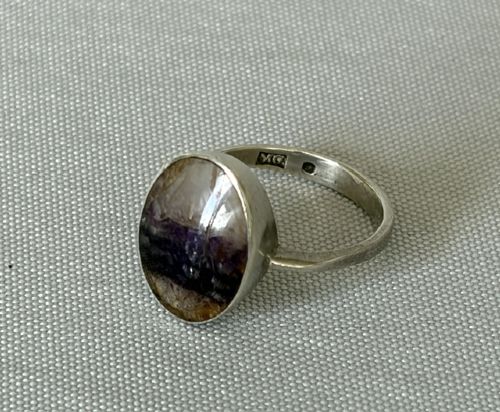
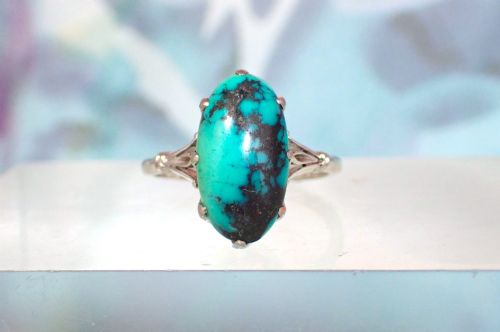
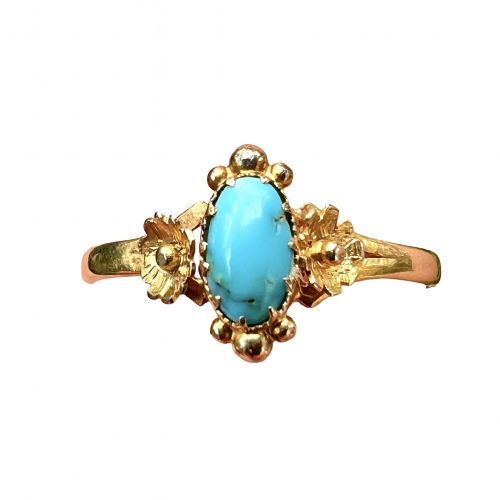
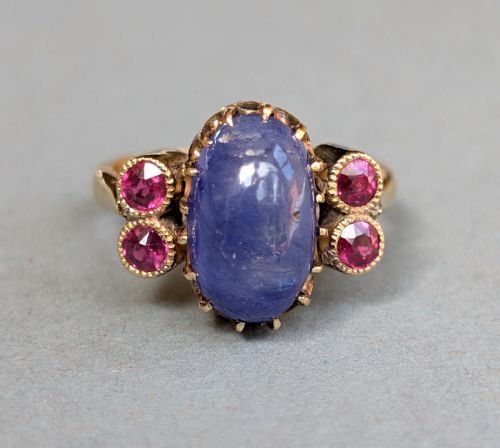
A vintage blue cabochon ring draws the eye through the domed, unfaceted profile of its central gem, which displays the natural depth of the material. When exploring a vintage blue cabochon ring, buyers encounter pieces spanning from the Victorian and Edwardian eras through Art Deco and mid-century designs. Dress rings and cluster rings dominate the selection, often pairing the smooth central blue stone with surrounding diamonds.
The stones in these rings include sapphires, moonstones, star sapphires, and turquoise, set into yellow gold, white gold, platinum, or silver. Victorian examples lean towards turquoise flower and star motifs in gold, while Art Deco pieces frequently mount large cabochon sapphires in platinum or white gold alongside old-cut diamonds.
How they were made
The construction of these rings relies on precious metals such as 18ct gold, platinum, and silver, shaped to house domed cabochon gems securely. Jewellers of the Victorian and Edwardian periods often employed yellow gold for turquoise clusters, whilst Art Deco and mid-century makers favoured platinum and white gold to complement the cool tones of sapphires and diamonds.
Stones are typically cut into smooth, rounded domes rather than facets, a technique that highlights optical phenomena such as asterism in star sapphires or the adularescence in moonstones. Settings range from secure bezel mounts to intricate claw settings in cluster configurations that frame the central dome with smaller diamonds.
The selection spans multiple periods, including the Victorian era, Edwardian period, Art Deco, and mid-century years.
What varies in quality
Quality in these rings rests upon the optical character and natural purity of the central cabochon stone, whether it is a sapphire displaying a distinct star or a moonstone with a strong blue sheen. Superior stones possess an even distribution of colour and a smooth, well-proportioned dome that catches the light cleanly.
The standard of metalwork and the integration of secondary stones also set pieces apart, with finer examples showing precise claw work or seamless bezel settings. Maker craftsmanship appears in the balance of the cluster and the preservation of original hallmarks and metal integrity across decades of wear.
The Vintage Blue Cabochon Ring Glossary
- Cabochon
- A gemstone shaped with a smooth, convex rounded dome and a flat or slightly curved base, lacking facets.
- Cluster ring
- A ring design featuring a prominent central stone encircled by a border of smaller gems, typically diamonds.
- Asterism
- An optical phenomenon displayed by star sapphires where light creates a star-shaped pattern across the domed surface.
- Adularescence
- The glowing optical phenomenon that glides across the surface of a moonstone as the angle of light changes.
- Old-cut diamond
- A diamond cut by hand in earlier centuries, characterised by a high crown, small table, and deep culet.
Vintage Blue Cabochon Ring: Frequently Asked Questions
What is a cabochon cut?
A cabochon is a gemstone that has been shaped and polished rather than faceted. This cutting style produces a smooth, rounded top and is chosen for stones with specific optical properties.
By avoiding flat facets, the smooth dome allows light to interact with inclusions or structural qualities inside the stone. This method is frequently seen on sapphires, moonstones, and turquoise.
How do I care for a turquoise ring?
Turquoise is a softer, more porous gemstone compared to diamond or sapphire and requires gentle handling. It should be kept away from harsh chemicals, cosmetics, and prolonged immersion in water to protect its colour.
Storing the ring separately in a lined box prevents scratching from harder jewellery pieces. Regular cleaning should be done with a soft, dry cloth rather than ultrasonic cleaners.
How can I date my ring?
Dating relies on a combination of metal types, gemstone cuts, and overall design characteristics. For instance, platinum settings paired with geometric sapphire domes often point to the Art Deco period of the 1920s and 1930s.
Assay office hallmarks, maker marks, and stylistic motifs like Victorian star clusters provide further chronological markers. Comparing these details against known periods helps narrow down the year of creation.