


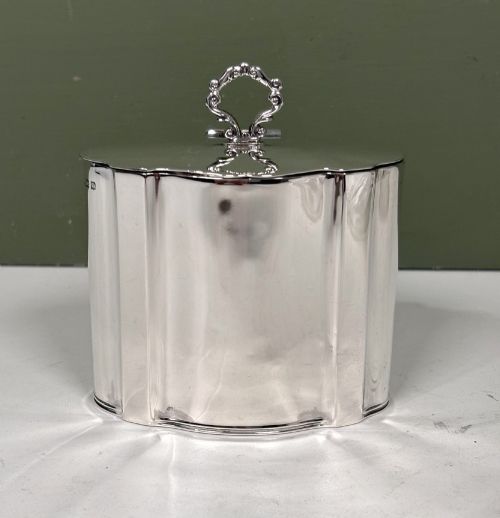
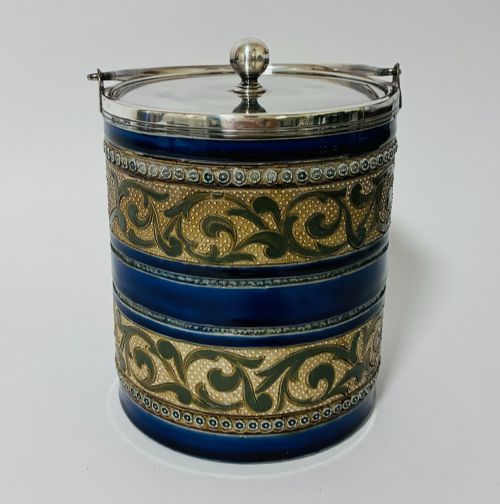
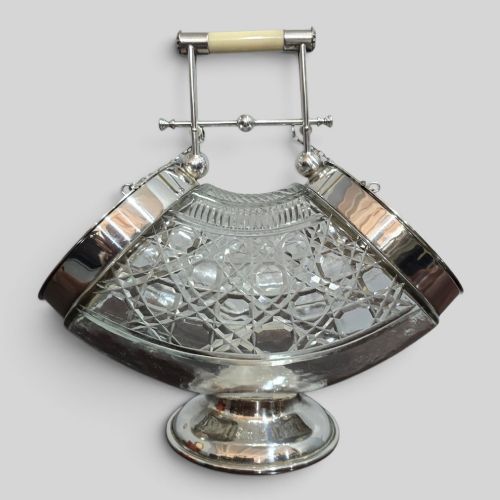
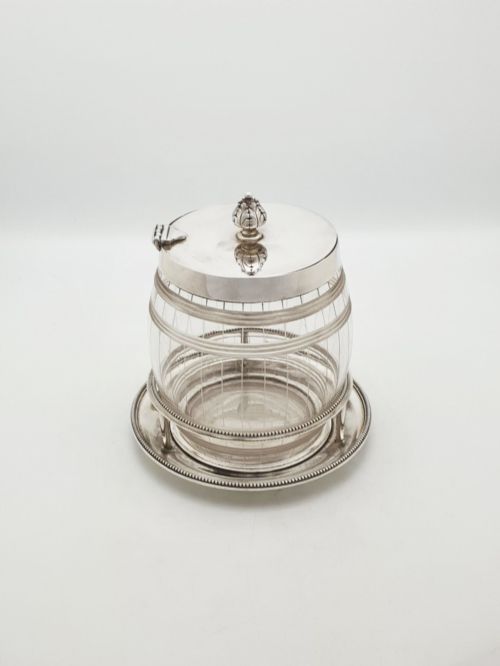


Vintage Biscuit Jar
A vintage biscuit jar brings formal Edwardian and Victorian dining traditions to the modern sideboard, offering a decorative container for daily treats.
Vintage Biscuit Jar
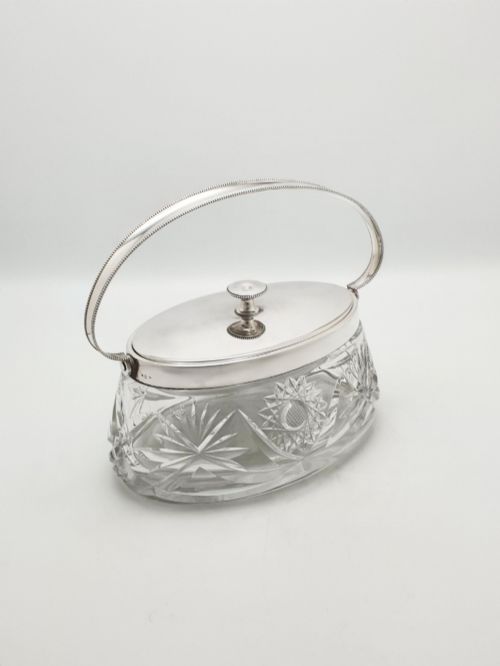
A vintage biscuit jar sits among the most charming vessels of the dining room, combining utility with ornamental display across late nineteenth and early twentieth century periods. When searching for a vintage biscuit jar, buyers meet barrel forms, drum shapes, and handled boxes originating from Victorian, Edwardian, and George V eras.
The selections span ceramic bodies, heavy cut glass, and mounted oak vessels, often fitted with swing handles and hinged lids. Makers housed these dry goods in structures ranging from simple ceramic crocks to elaborate silver-plated mounts.
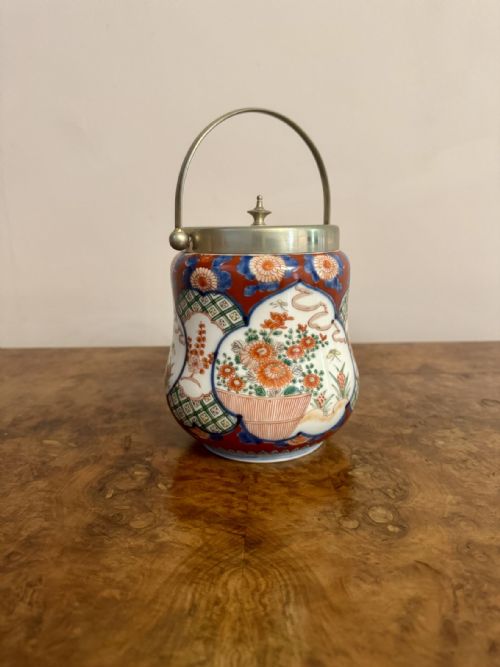
Origins stretch from English potteries to continental workshops, capturing styles from Neoclassical and Jugendstil to Japanese Imari patterns. The most frequent encounters on this page involve Edwardian cut glass and silver plate combinations alongside Victorian ceramic bodies.
Materials and construction
Makers combined vitreous materials like cut glass, cranberry glass, and glazed earthenware with robust metal mounts in silver plate or sterling silver. Oak and stoneware provided sturdy alternatives for drum forms and novelty shapes.
Metal components involved electroplating silver onto base metals, or forming solid sterling silver elements alongside hallmarked mounts. Glass bodies received deep hobnail cutting, faceting, or enamel decoration fired directly onto the surface.
Ceramic variations include Jasper Ware relief, flow blue transfers, and hand-painted Japanese Imari designs fixed with hinged lids and finials.
Vintage Biscuit Jar Retail Price Guide 2026
Typical asking prices for vintage biscuit jar among the pieces listed under this phrase on Sellingantiques today, from the lower quarter to the upper quarter. They describe what is for sale here now, not the wider market.
Makers occasionally produced novelty biscuit jars shaped entirely as travel hat boxes or standard iron weights.
Judging execution
Quality rests on the depth of the glass cutting, the crispness of ceramic moulding, and the weight of the metal mounts. Heavy hobnail cutting and well-defined Jasper Ware reliefs signal superior workshops.
The integrity of the silver plating and the smoothness of the hinged mechanism distinguish standard production from finer output. Makers who integrated secure handles and balanced lids created pieces that retained their structural harmony over decades.
Doulton Lambeth·Elkington·WMF·Crown Devon·Carlton Ware·Wedgwood·John Grinsell And Sons·James Dixon And Sons
The Vintage Biscuit Jar Glossary
- Biscuit barrel
- A covered ceramic or glass container designed specifically for storing dry biscuits on the dining table. These vessels typically feature a fixed or swing handle for passing around the room.
- Silver plate
- A layer of silver fused to a base metal, commonly utilised for the rims, lids, and swing handles of glass and ceramic jars. This technique offered the appearance of solid silver at a lower cost during the Victorian period.
- Hobnail cut
- A decorative surface pattern featuring sharp, intersecting geometric facets cut into glassware. It catches the light and adds considerable weight to the body of the jar.
- Jasper ware
- A fine stoneware developed with a matte finish, famous for applied white neoclassical relief figures against a coloured background. It remains one of the most recognisable ceramic styles encountered in these vessels.
- Imari
- A traditional Japanese style of porcelain decoration employing underglaze blue and iron red with gold additions. Examples seen in these jars reflect international trade and aesthetic exchange.
Vintage Biscuit Jar: Frequently Asked Questions
What were vintage biscuit jars used for?
These vessels held dry biscuits and sweet cakes for afternoon tea or formal dining in nineteenth and twentieth century homes. They kept contents protected from moisture while resting on the sideboard.
Servants brought them to the table during social gatherings, allowing guests to serve themselves from the lidded interior.
How do I clean a glass biscuit jar?
Wash the glass body gently using warm water and mild soap, avoiding harsh abrasive pads that might scratch the surface. Dry the interior thoroughly before replacing the lid.
Keep silver-plated mounts dry and polish them sparingly with a soft cloth to preserve the underlying metal.
Can I use these jars for food today?
Most vintage pieces serve well for dry goods like biscuits, sweets, or individually wrapped items. Ensure the interior glaze or glass remains clean and free from old residue.
Avoid storing moist or highly acidic foods directly against older ceramic bodies or worn silver plating.
How do I date an antique biscuit jar?
Examine the style of the mounts, ceramic marks on the base, and manufacturing techniques such as cut glass patterns. Victorian examples often display heavier ornamentation, while Edwardian pieces lean toward refined cut glass.
Silver hallmarks on the mounts provide exact assay years for sterling components.