



Vintage Bedroom Lockers
Vintage bedroom lockers bring compact utility and period character to bedside spaces, offering practical surface area and enclosed storage within distinct historical designs.
Vintage Bedroom Lockers
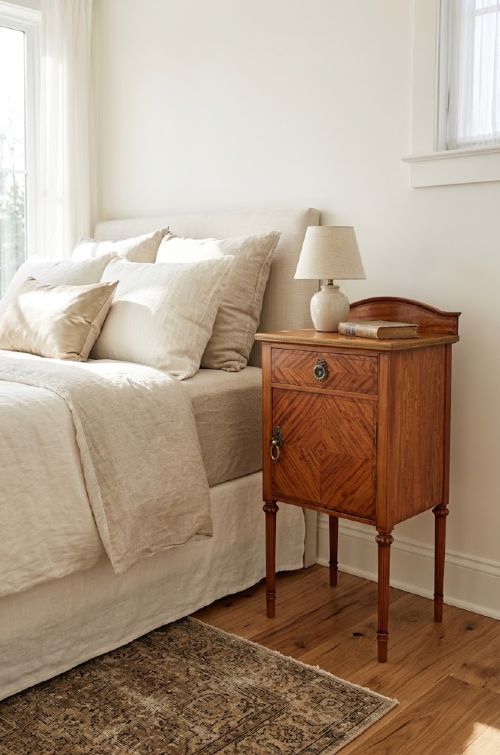
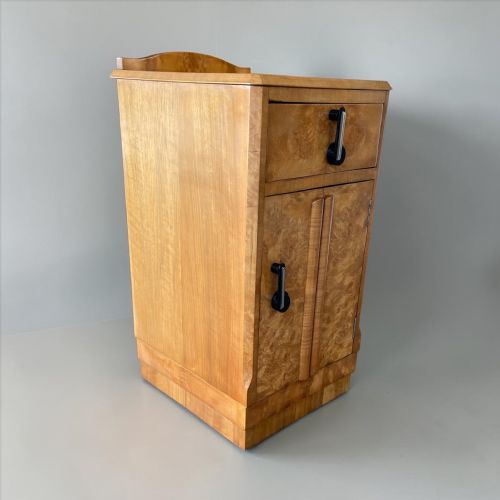
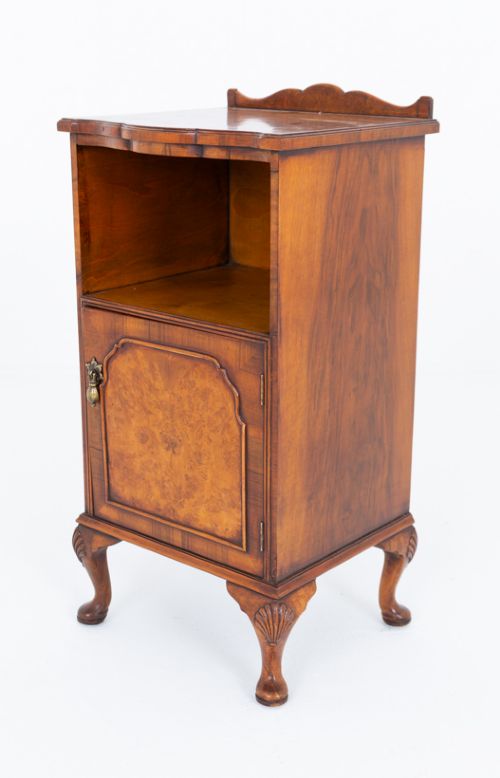
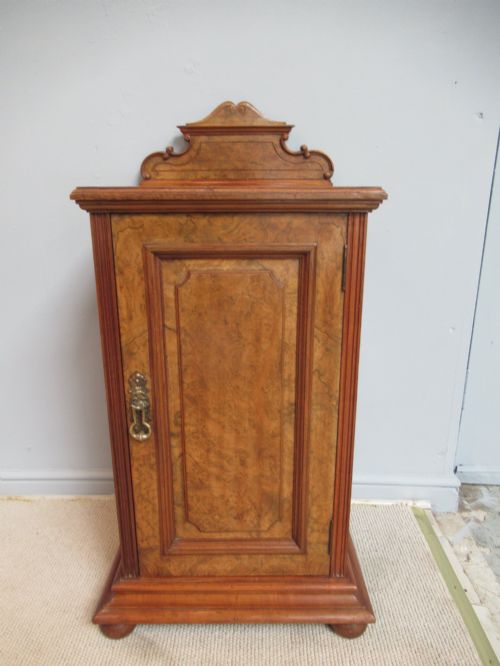
Vintage bedroom lockers encompass bedside cabinets, tables, cupboards, and chests spanning from the nineteenth century into the mid-twentieth century. These pieces function primarily as bedside storage, taking the form of small cupboards with doors, drop flaps, or stacked drawers.
How they were made
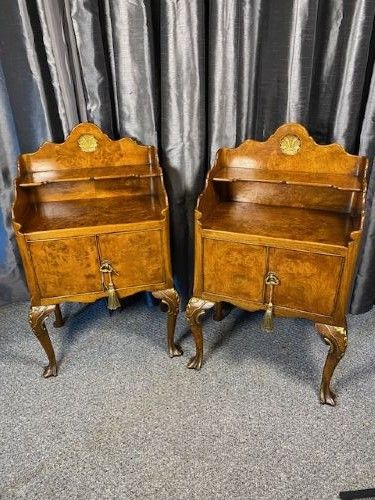
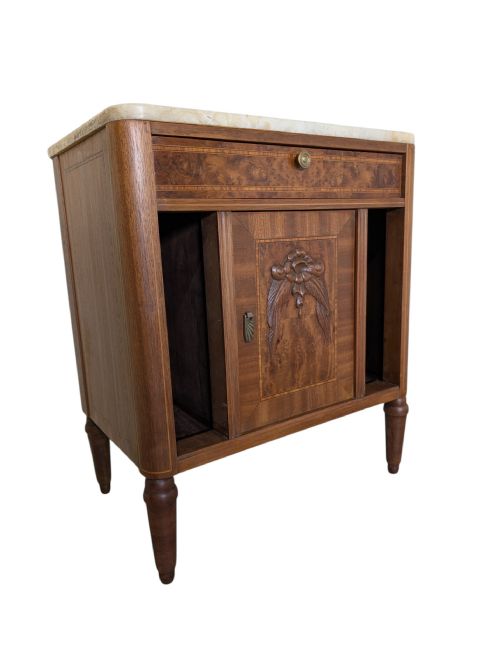
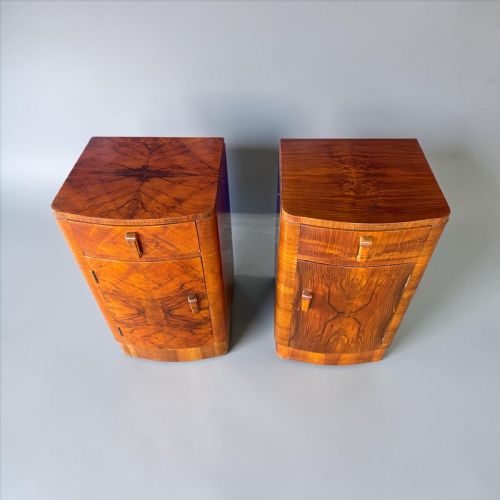
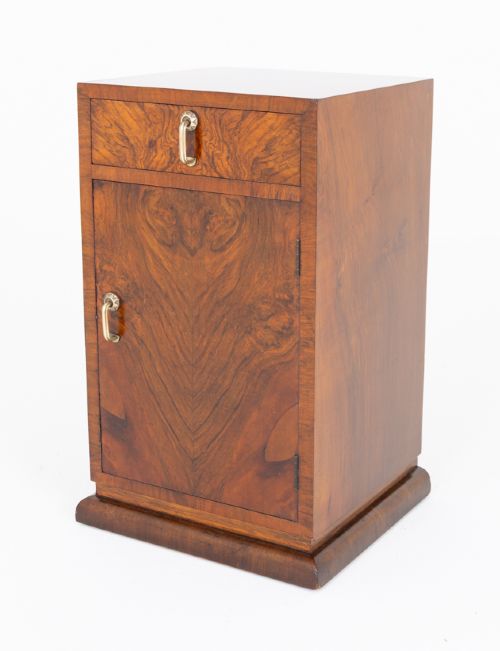
Cabinetmakers utilised dense timbers including mahogany, oak, walnut, and satinwood, often applying burr walnut veneer or figuring to enhance visual texture on doors and drawer fronts. Inlaid details and contrasting woods appear frequently in Edwardian examples.
Drop-flap mechanisms offer hidden compartments for midnight secrets.
What varies in quality
Quality rests in the choice of timber and the precision of the cabinetwork, visible in figured veneers, tight joints, and balanced proportions. Finer examples display thoughtful grain matching and well-executed inlay work.
Makers and workshops of note introduce higher refinement in their construction, whereas simpler utility pieces rely on plain timbers and straightforward forms.
Maple and Co
The Vintage Bedroom Lockers Glossary
- Bedside cabinet
- A small enclosed piece of furniture designed to sit beside a bed, usually featuring a door opening to a shelf.
- Burr walnut
- Timber taken from the burl of a walnut tree, prized by cabinetmakers for its intricate, swirling grain patterns.
- Drop flap
- A hinged panel that lowers to reveal an open compartment or workspace within the cabinet structure.
- Pedestal cabinet
- A tall, narrow freestanding cupboard designed to elevate a bedside surface.
- Satinwood
- A luminous, yellowish wood utilised across the Edwardian period for fine cabinetmaking and decorative inlay.
Vintage Bedroom Lockers: Frequently Asked Questions
What is a bedside locker?
A bedside locker is a small piece of furniture designed to hold night-time essentials close to the bed, combining a top surface with enclosed storage underneath.
These pieces take various forms including cupboards, small chests of drawers, and open-shelf tables dating from the nineteenth and twentieth centuries.
How do I date a bedside cabinet?
Dating relies on observing timber choices, construction techniques, and stylistic markers such as Victorian mahogany framing or Art Deco geometry.
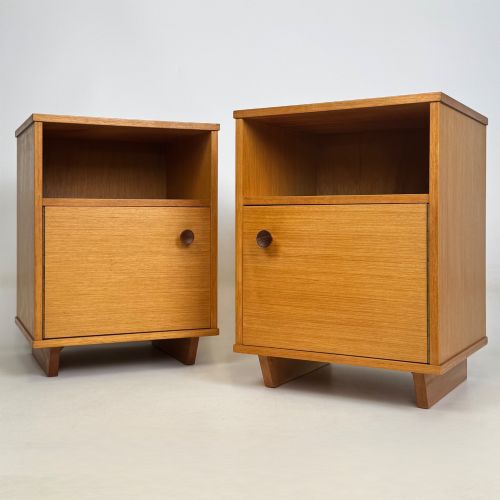
Specific periods bring distinct characteristics, from Edwardian inlaid satinwood to mid-century Scandinavian silhouettes and nineteenth-century proportions.
Are bedside tables sold in pairs?
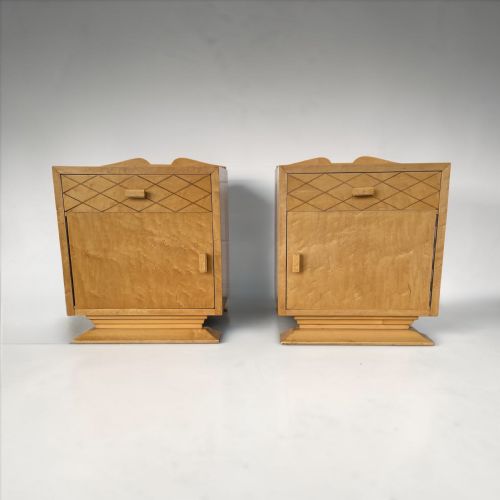
Many listings feature matched pairs of cabinets designed to sit symmetrically on either side of a double or king-size bed.
Single bedside cupboards also appear frequently for tighter spaces or eclectic interior arrangements.
What woods were used?
Cabinetmakers worked with a wide spectrum of hardwoods, most notably mahogany, walnut, oak, and satinwood.
Decorative treatments often involved burr walnut veneer, exotic hardwoods, and light wood inlay to create visual contrast.