

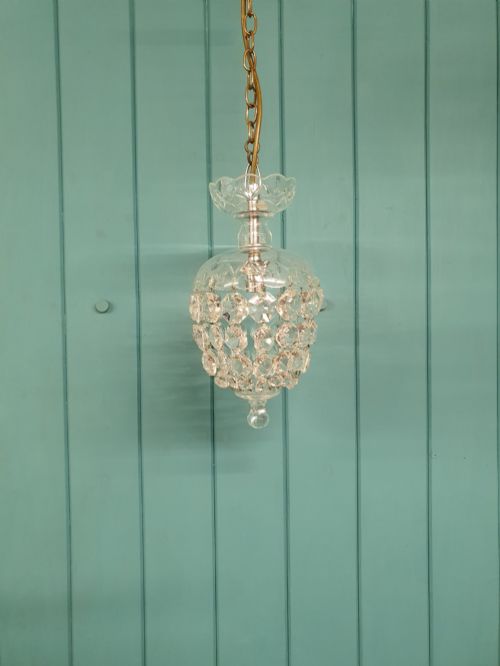


Vintage Beaded Shade Light
These vintage beaded shade light fixtures bring sparkle and soft illumination to a room, spanning styles from Edwardian chandeliers to Art Deco pendants.
Vintage Beaded Shade Light
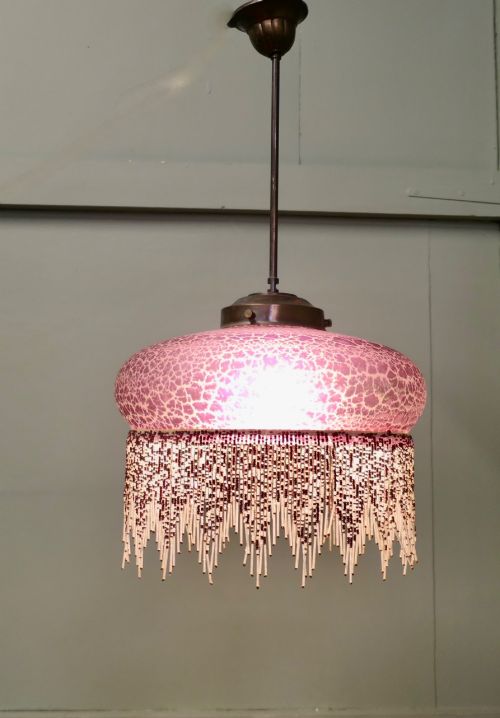
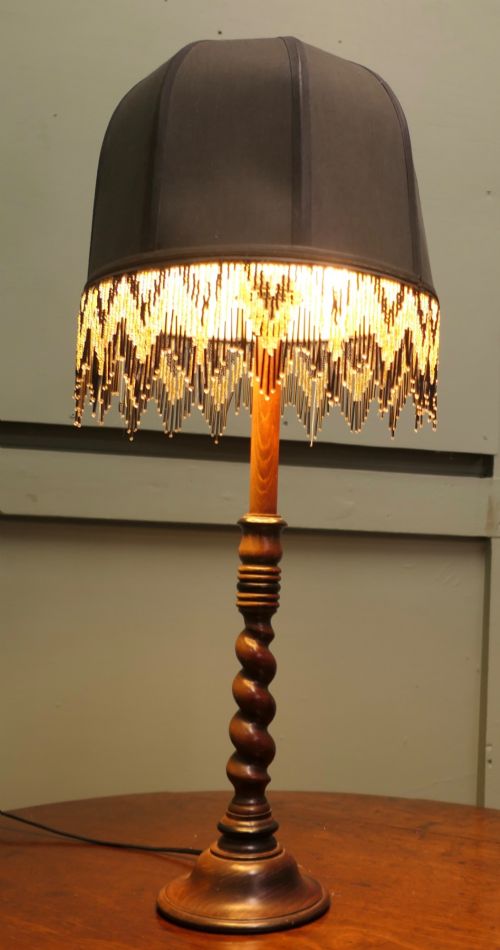
When you search for a vintage beaded shade light, you encounter a range of domestic lighting forms including table lamps, chandeliers, pendants, wall lights, and floor lamps. These pieces originate from periods spanning the late nineteenth century through the 1930s, taking forms such as dome top chandeliers, bag chandeliers, and turned barley twist table lamps.
The most common examples on this page combine brass, bronze, or gilt metal frames with glass beads, crystal droplets, and fabric elements. Pieces often incorporate French Art Deco, Edwardian, or Victorian aesthetic influences, reflecting the interior decoration tastes of those decades.
Materials and construction
Makers constructed the structural frames of these lamps and chandeliers using cast or turned brass, bronze, silver plate, and occasionally marble or carved wood. Metal components frequently feature gilt finishes, Corinthian column details, or ornate foliate casting.
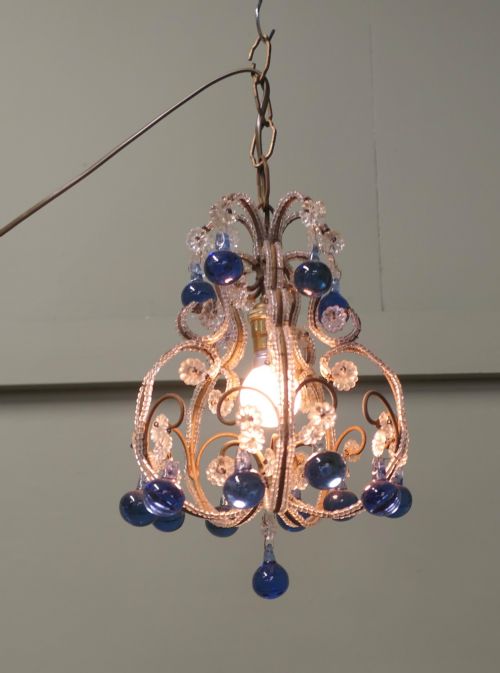
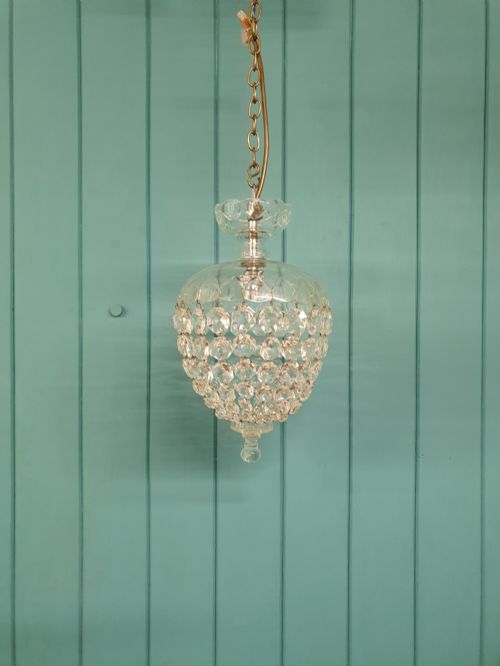
Lighting shades and embellishments rely heavily on glass and crystal elements, including cut glass crystals, amber glass, cobalt details, and threaded glass beads. Wire frameworks hold intricate arrangements of beads and prisms, sometimes complemented by fabric or toleware.
Vintage Beaded Shade Light Retail Price Guide 2026
Typical asking prices for vintage beaded shade light among the pieces listed under this phrase on Sellingantiques today, from the lower quarter to the upper quarter. They describe what is for sale here now, not the wider market.
Bronze cherubs and porcelain figures occasionally find a second life supporting lampshades after historical conversions.
Assessing quality and craftsmanship
The standard of a vintage beaded shade light rests on the weight and integrity of its metal frame and the clarity of its glass components. Solid brass and bronze castings with crisp detailing denote superior production compared to lighter spelter alternatives.
Finer examples display careful hand-stringing of glass beads and integrated prisms that catch the light evenly. The harmony between the original metal base and the glass shade or beadwork indicates thoughtful design and period assembly.
The Vintage Beaded Shade Light Glossary
- Bag chandelier
- A light fitting shaped like a inverted bag or dome where dense rows of glass beads cascade downwards to a lower terminal ring. This form became popular during the Edwardian era and the 1930s.
- Tent and waterfall
- A chandelier style featuring an upper triangular tent of glass beads above a looser cascading waterfall of crystal strands. Such designs maximise light refraction in reception rooms.
- Corinthian column
- A classical architectural column form utilised for lamp bases, featuring fluted shafts and ornate capitals adorned with acanthus leaves. Makers cast these in brass and silver plate during the late nineteenth and early twentieth centuries.
- Spelter
- An alloy of zinc and lead cast into decorative figures and lamp bases, often given a bronze or gilt finish to imitate costlier metals. It provides a lighter and more malleable alternative to solid bronze.
Vintage Beaded Shade Light: Frequently Asked Questions
How do I clean a beaded glass chandelier?
Cleaning requires patience and gentle handling to avoid disturbing delicate wirework and aged metal finishes. Use a mild solution of warm water and washing-up liquid applied with a soft cloth, wiping each bead individually before allowing it to air dry.
Avoid submerging wired electrical components or using harsh chemical cleaners that might strip the gilt or patination from the brass and bronze frames.
Are these lights compatible with modern wiring?
Many vintage table lamps and chandeliers arrive with older wiring that benefits from professional rewiring to meet current safety standards. A qualified electrician can easily update the internal flex and lamp holders while preserving the exterior antique components.
Retaining the original switch mechanisms or patinated brass collars is usually possible during the rewiring process, maintaining the historical integrity of the fixture.
How do I distinguish Edwardian from Art Deco lights?
Edwardian lighting often draws on classical revival motifs, featuring delicate crystal swags, intricate brass castings, and ornate floral or column details. These pieces lean towards traditional elegance and softer, romantic silhouettes.
Art Deco fixtures from the 1920s and 1930s favour cleaner geometric lines, streamlined metalwork, and bolder use of coloured glass such as amber or cobalt. The beadwork and shade designs reflect a shift towards modern industrial and decorative arts.
Can table lamps with beaded shades take LED bulbs?
Standard LED bulbs fit most vintage lamp holders provided the wattage and physical dimensions align with the original fitting requirements. Low-heat LED bulbs are particularly beneficial as they prevent thermal stress on older fabric shades and fragile glass beads.
Choosing warm white LED temperatures helps replicate the gentle glow produced by early twentieth-century carbon filament bulbs.