
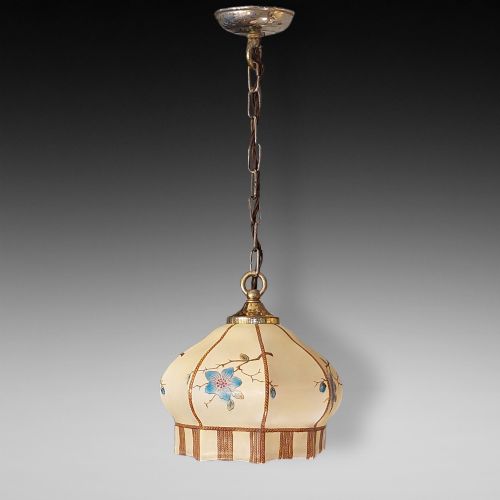
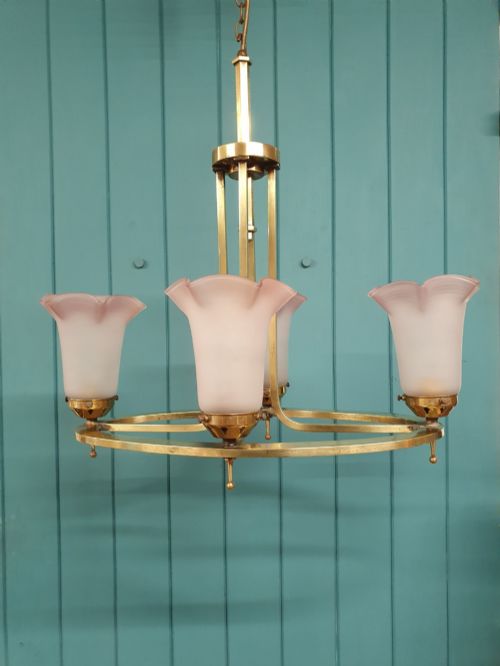


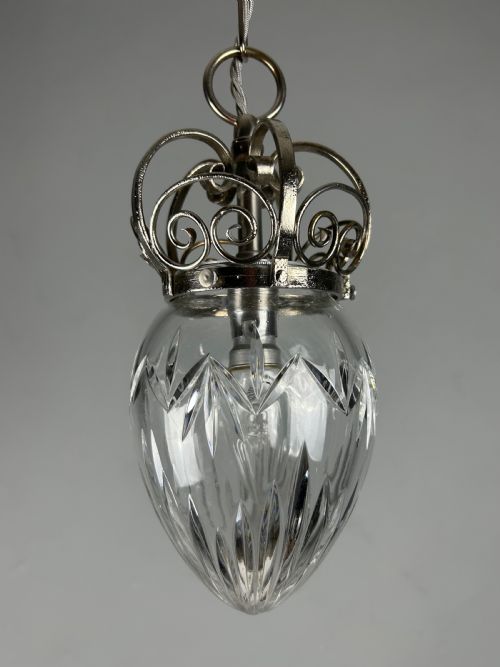


Art Deco Ceiling Fitting
An art deco ceiling fitting brings architectural geometry and period warmth to a room, offering distinct styling from the 1920s and 1930s.
Art Deco Ceiling Fitting
An art deco ceiling fitting encompasses chandeliers, pendant lights, flush fixtures, and slip shade ceiling lights designed primarily during the 1920s and 1930s. These pieces illuminate spaces using geometric forms, stepped tiers, and streamlined profiles characteristic of the period.
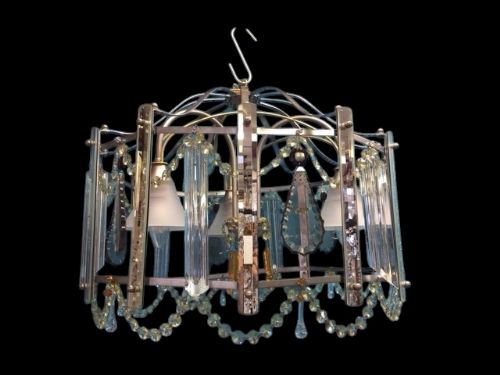
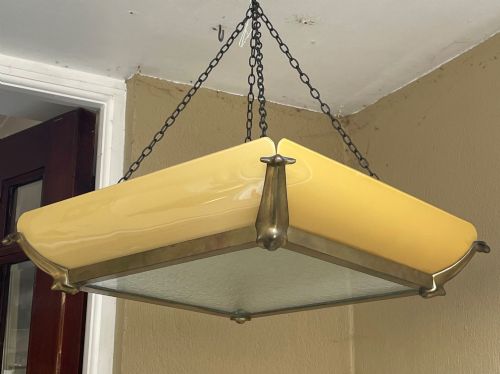
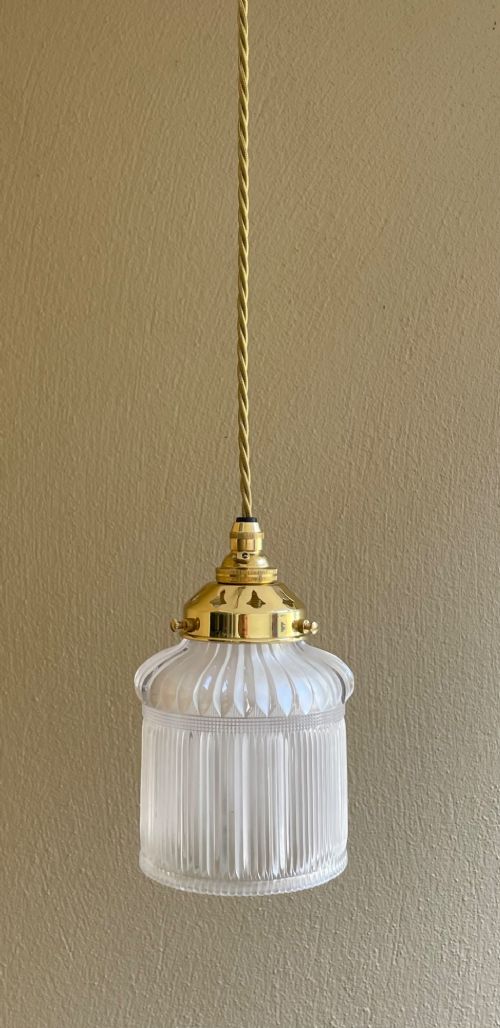
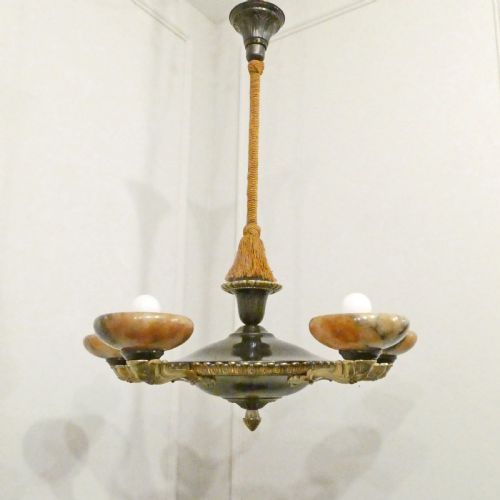
The most common examples on this page are brass or chrome frames paired with frosted, cut, or moulded glass shades. Pieces range from small single-bulb pendants to multi-armed chandeliers and large domed centre lights originating from French and British workshops.
Materials and construction
Makers constructed these frames using cast brass, plated chrome, bronze, and copper, forming rigid structures that held heavy glass elements. Metalwork often displays clean linear styling or industrial influences alongside traditional casting techniques.
Glass components were formed through pressing, etching, frosting, or cutting. Alabaster, opaline glass, and mercury mirrored glass also appear, diffusing light through textured or patterned surfaces.
Some fixtures spent decades illuminating grand hotel lobbies and conference rooms before finding their way into domestic hallways.
Distinctions in quality
Quality rests in the weight of the metal casting and the depth of the glasswork, such as thick moulded slip shades or heavy cut crystal tiers. Signed pieces by established designers display sharper relief moulding and refined mounting hardware.
Subtle differences in proportion, the integrity of original plating, and the complexity of multi-tier structures distinguish standard domestic lighting from monumental architectural commissions.
René Lalique·Jean Gauthier
The Art Deco Ceiling Fitting Glossary
- Plafonnier
- A bowl-shaped ceiling light mounted close to or directly against the ceiling surface. These fixtures often feature moulded or frosted glass bowls held by metal mounts.
- Slip Shade
- A type of glass shade designed to slide into a matching metal frame on a chandelier or sconce. These shades are frequently moulded with geometric or floral low-relief patterns.
- Holophane
- A brand and style of prismatic glass designed to direct and diffuse light efficiently. These shades feature characteristic external ribs or prisms.
- Amsterdam School
- An early twentieth century architectural and design movement originating in the Netherlands. Work in this style utilises expressive brickwork, heavy brass elements, and dynamic geometric forms.
- Opaline Glass
- A translucent white glass that diffuses light softly. It was frequently blown into bowls and dishes for early twentieth century pendant lighting.
Art Deco Ceiling Fitting: Frequently Asked Questions
How do I choose the right size ceiling fitting?
Consider the room height and floor area when selecting a chandelier or pendant light. Multi-tier or monumental fixtures suit high ceilings, while flush or close-mount fittings work better in compact spaces.
Check the diameter and drop measurements provided in the listings to ensure proper clearance above walkways and furniture.
Were these lights originally wired for modern electricity?
Many period fittings have been rewired during their lifetime to meet modern electrical standards. Listings often specify if a piece has been updated.
Buyers should consult a qualified electrician to install vintage fixtures safely and check compatibility with current building regulations.
How do I identify a 1920s fitting from a 1930s one?
Fittings from the 1920s often retain elements of earlier decorative traditions combined with emerging geometric motifs. They frequently feature bronze, brass, or hand-painted glass.
Pieces from the 1930s lean towards streamlined chrome, stepped profiles, and industrial influences as manufacturing shifted towards mass production.
How do I clean and maintain vintage glass shades?
Remove delicate glass shades from the metal frame before cleaning to prevent accidental damage. Wash them gently in warm soapy water using a soft cloth.
Avoid harsh chemical cleaners on frosted, etched, or mercury mirrored surfaces to preserve the original finish.