

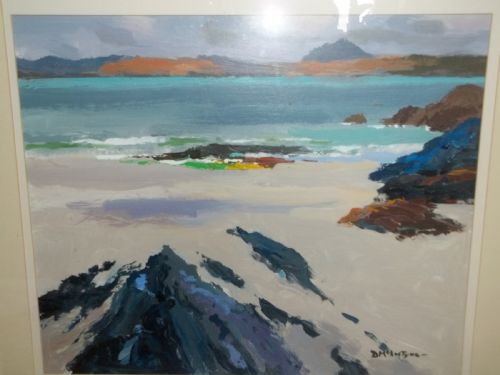

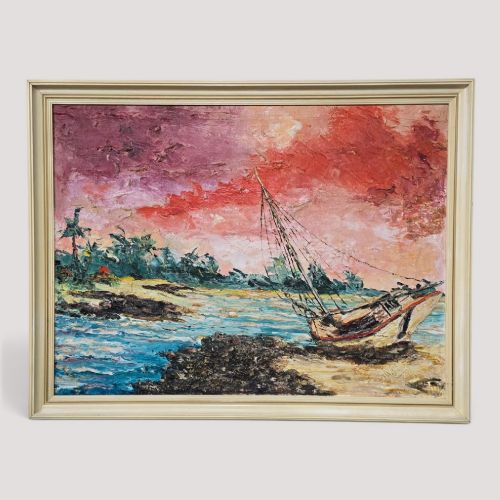


Vintage Beach Landscape
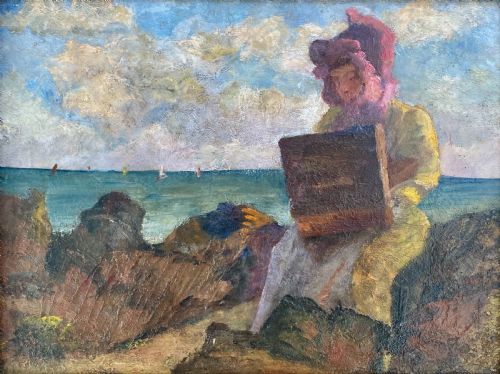
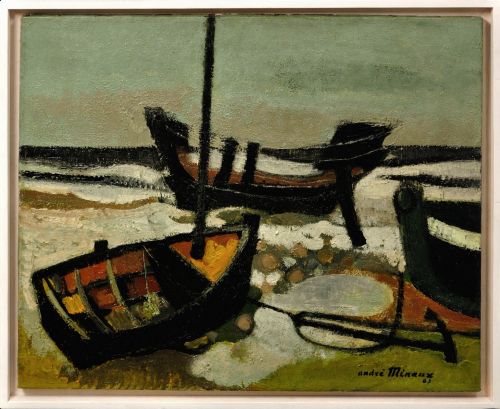
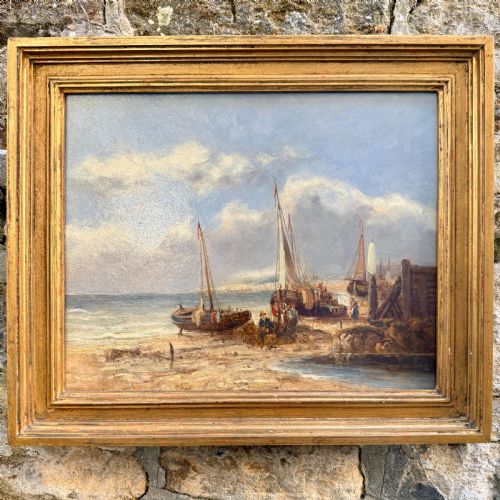
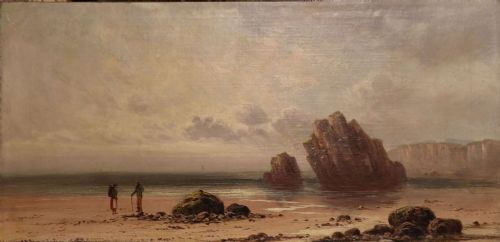
These vintage beach landscape works capture shorelines, harbours and coastal scenes across various periods from the Victorian era to the mid-twentieth century.
Vintage Beach Landscape
A vintage beach landscape captures maritime environments, shorelines, and coastal activities through the eyes of artists working from the nineteenth century onwards. The selection on this page ranges from traditional Victorian watercolours of harbours to mid-century impressionist oil paintings of quiet shores.
Buyers encounter different formats including framed oil paintings on canvas or board, delicate watercolours under glass, and occasional prints or etchings. These pieces span British Impressionism, Post-Impressionism, and nineteenth-century realism, reflecting how different generations interpreted the sea and sand.
Materials and construction
Artists painted these coastal views using oil paint on canvas or board, watercolour on paper, and occasionally gouache or mixed media. Canvases provide texture and depth for impressionist brushwork, whilst watercolours allow for translucent washes that capture coastal light.
The supports range from heavy wood panels to stretched linen and fine paper, often housed in period frames made of wood, sometimes with hand-enamelled polychrome or ebonised details. Gold leaf accents occasionally appear on frames from the Victorian and Edwardian periods, adding a traditional finish.
Vintage Beach Landscape Retail Price Guide 2026
Typical asking prices for vintage beach landscape among the pieces listed under this phrase on Sellingantiques today, from the lower quarter to the upper quarter. They describe what is for sale here now, not the wider market.
Listings feature works spanning from the nineteenth century through the 1960s, executed in oil, watercolour, and etching.
Distinguishing quality
Quality rests upon the artist's ability to handle light, atmosphere, and movement within a coastal setting. A stronger piece demonstrates confident brushwork and precise colour harmony, capturing the specific quality of sea air and shifting tides rather than relying on formulaic depiction.
The relationship between the support, the medium, and the framing influences the overall integrity of the work. Well-preserved surfaces retain their original pigment strength, while frames complement the era of the painting without overwhelming the composition.
André Minaux·William Shayer·Donald McIntyre·William Banks Fortescue·Joseph Edward Hennah·Robert Leslie Howey·Jules Evarist van Biesbroeck·George Hamilton Constantine·Sir David Murray·William Russell Flint·Owen Bowen·Robert Macaulay Stevenson·William Greaves·Samuel Edward Kelly·GM de L'Aubiniere·Daniel Sherrin·Edmund Gouldsmith·Norman Janes·Yves Brayer·Thomas Bush Hardy
The Vintage Beach Landscape Glossary
- Oil painting
- A work created using pigments bound in a drying oil, typically linseed, applied to canvas, board, or panel. This medium allows for rich texture and blending.
- Watercolour
- A painting method where water-soluble pigments are suspended in a water-based solution, usually applied to paper. It produces transparent layers of colour.
- Impressionism
- An art movement focusing on accurate depiction of light and its shifting qualities, often using small, thin yet visible brush strokes. It prioritises open compositions.
- Marine art
- Artistic works that depict the sea, ships, beaches, and coastal views. This genre includes historical naval battles, port scenes, and quiet shorelines.
- Aquatint
- A intaglio printmaking technique that produces tonal effects by using acid to etch into a metal plate. It often resembles the appearance of a watercolour wash.
Vintage Beach Landscape: Frequently Asked Questions
How do I date a beach landscape?
Dating relies on stylistic clues, clothing styles of figures on the shore, and framing materials. Victorian works often feature detailed realism, while mid-century pieces tend towards impressionism.
Signatures, artist registry dates, and canvas stamps also help establish the decade of creation.
Where should I hang a coastal painting?
These works suit rooms with natural light, complementing neutral walls or traditional interiors. Placing them away from direct sunlight protects watercolours and oils from fading.
Consider the scale of the frame relative to wall space to ensure the piece commands the room properly.
How do I care for vintage art?
Keep paintings away from damp environments and extreme temperature fluctuations that could warp wood panels or canvas. Dust frames gently with a dry, soft cloth.
Avoid using chemical cleaners on the painted surface or the frame gilding.