



Vintage Bag Face
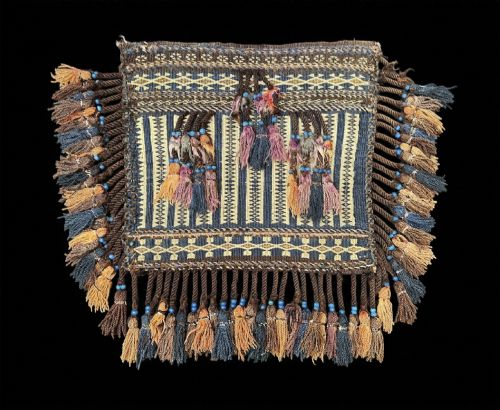
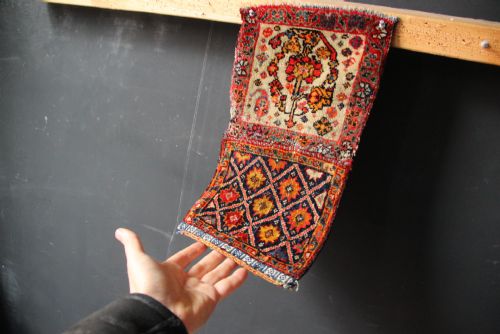
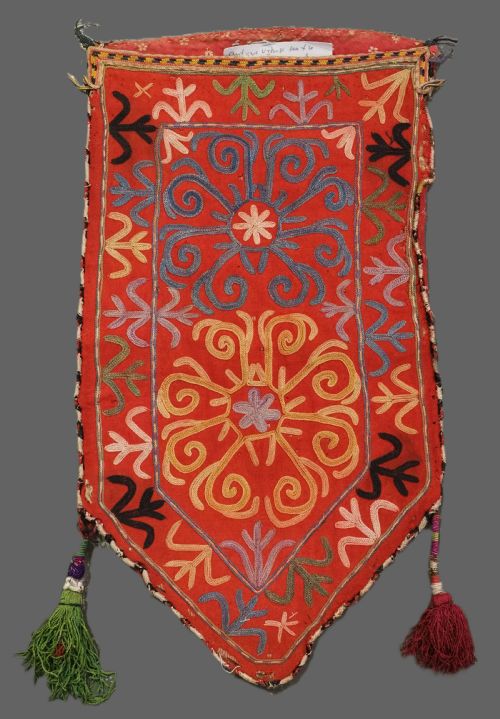
When buyers search for vintage bag face, they are selecting the decorative front panels of nomadic storage sacks woven in Persia, Central Asia, and the Caucasus during the nineteenth and early twentieth centuries.
Vintage Bag Face
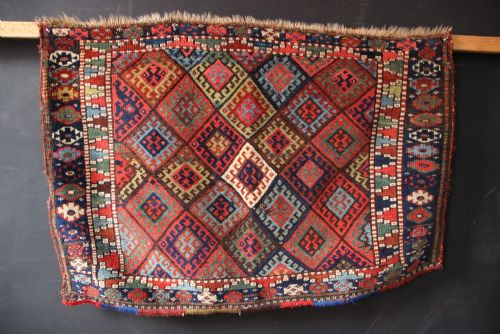
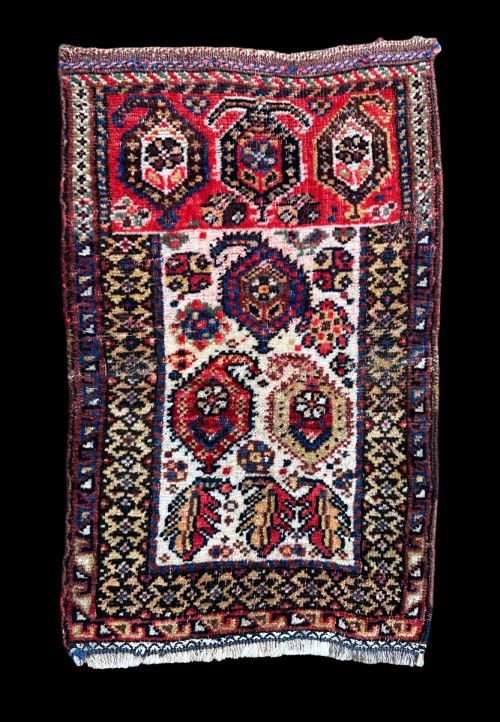
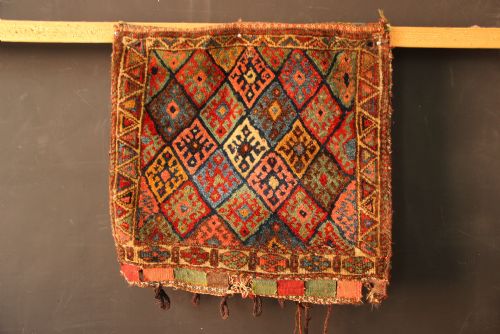
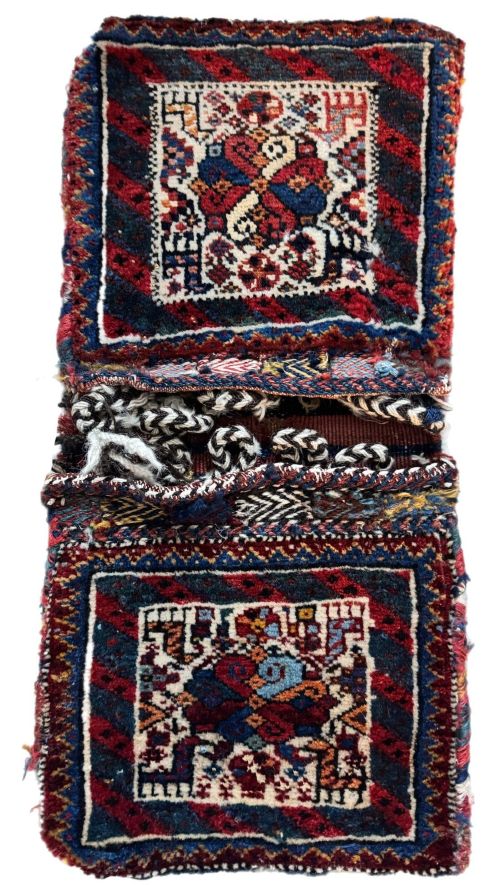
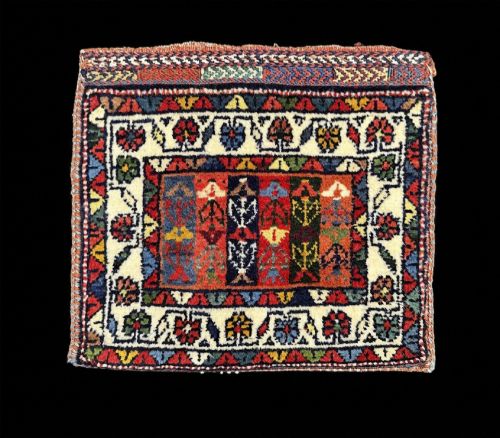
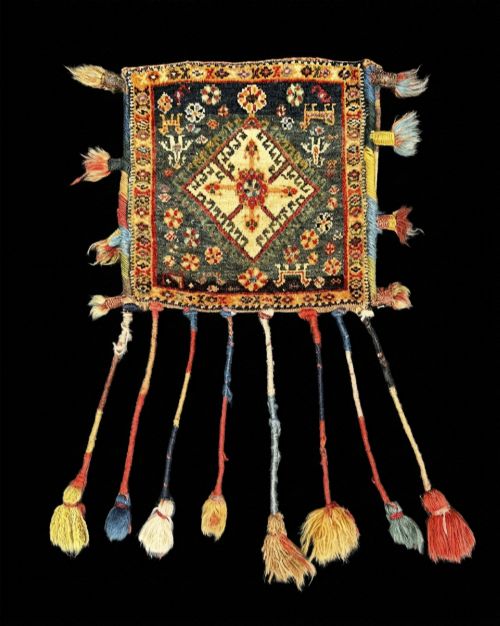
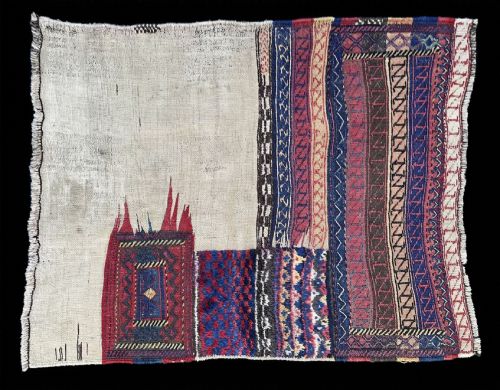
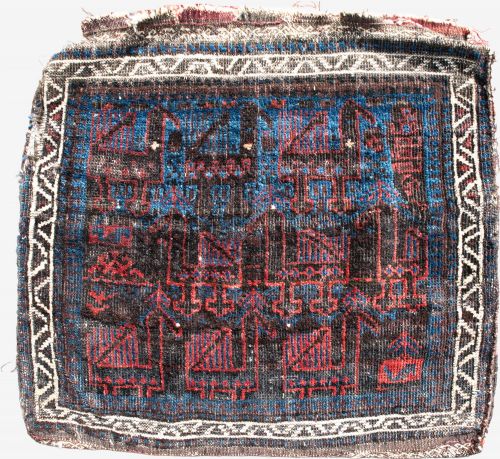
A vintage bag face represents the surviving decorative front of a utilitarian tribal container, such as a saddlebag, storage sack, or tent hanging. These fragments were separated from their plain woollen backs either through wear or deliberate division, leaving behind a dense panel intended originally for nomadic utility.
The inventory on this page spans tribal traditions from Persian and Central Asian groups, including Turkmen subgroups like the Tekke, Yomut, and Ersari, alongside Qashqai, Afshar, Baluch, and Shahsavan weavers. Pieces take the form of torbas, chuvals, khorjins, and smaller specialised pouches.
Dating across the collection generally centres on the late nineteenth and early twentieth centuries, drawing upon nineteenth-century weaving traditions. Buyers encounter format styles ranging from square storage faces to elongated saddlebag panels.
Materials and construction methods
Weavers relied principally on wool, incorporating both hand-spun wool and cotton foundations to construct these durable textiles. Natural and vegetable dyes provided the rich palette characteristic of these tribal pieces, sustained by traditional dyeing methods.
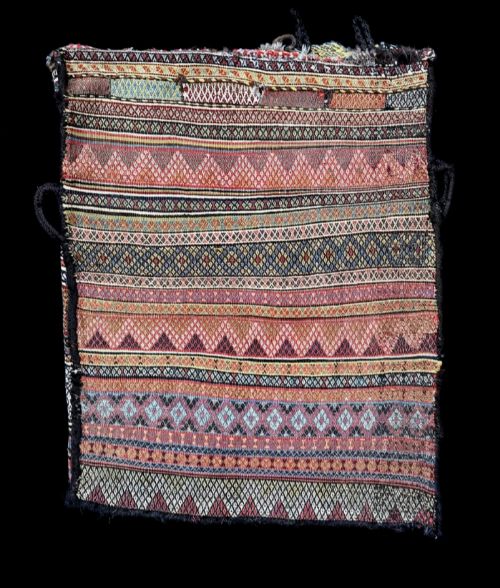
The construction frequently utilises pile knotting or flatweave techniques such as sumac, depending on whether the item originated as a storage sack or a riding bag. Finished pieces often display reinforced borders and surviving hanging loops or attachments from their functional days.
Vintage Bag Face Retail Price Guide 2026
Typical asking prices for vintage bag face among the pieces listed under this phrase on Sellingantiques today, from the lower quarter to the upper quarter. They describe what is for sale here now, not the wider market.
Nomads wove intricate bird bags and spindle pouches, ensuring even sewing needles travelled in proper tribal style.
Factors determining quality
Quality rests significantly upon the density of the weave and the precision of the knotting execution. Finer examples display meticulous control over complex geometric layouts, such as repeating guls or curled leaf motifs.
The choice and depth of natural dyes dictate visual success, with certain palettes retaining greater vibrancy and tonal variation across the surface. The integrity of the remaining wool pile and the survival of original borders also distinguish superior survivals.
The Vintage Bag Face Glossary
- Gul
- A primary medallion or repeating octagonal motif frequently found in Turkmen weaving. These patterns often identify the specific tribal group or sub-tribe that made the textile.
- Torba
- A small storage bag produced by nomadic tribes for domestic organisation inside a tent. They are wider than they are tall and traditionally hung against yurt walls.
- Chuval
- A large tent storage bag utilised by Turkmen groups for bedding and heavy belongings. The remaining faces are among the most structurally substantial pieces available.
- Khorjin
- A traditional double-sided saddlebag designed for transport on animals during seasonal migrations. When divided, the single remaining side forms a bag face.
- Sumac
- A flatweave technique involving wrapping weft threads over warp threads to create a durable, textured surface. It provides distinct structural definition without a cut pile.
Vintage Bag Face: Frequently Asked Questions
What is a bag face?
A bag face is the decorative front panel salvaged from a nomadic storage sack or saddlebag. These pieces were separated from their utilitarian wool backs over time.
They function today as wall hangings, small rugs, or cushion covers while retaining their original tribal iconography.
How were these bags used?
Nomadic groups utilised these textile containers within tents and during seasonal migrations for storing household possessions, bedding, and personal items. Saddle variants were slung over pack animals to carry goods across rugged terrain.
Over decades, worn utility backs were removed, preserving the ornamental front panels for display.
How do I identify tribal origins?
Tribal attribution relies upon specific structural patterns, border designs, and medallion types known as guls. For instance, Tekke and Yomut pieces display distinct geometric vocabularies unique to those Turkmen communities.
Palette choices and flatweave techniques further assist in separating Persian nomadic groups like the Qashqai and Baluch from Central Asian makers.
How do I care for a bag face?
Display these textiles away from direct sunlight to protect natural vegetable dyes from fading. Gentle surface cleaning or professional textile conservation preserves the integrity of the wool pile and cotton foundations.
When mounting on walls, distribute the weight evenly to prevent stress on the antique fibres.