



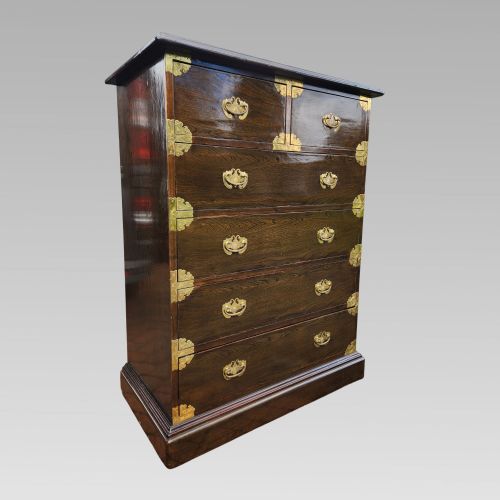


Vintage Asian Storage Chest
These vintage asian storage chest items bring together traditional craftsmanship and practical storage from nineteenth and early twentieth century workshops.
Vintage Asian Storage Chest
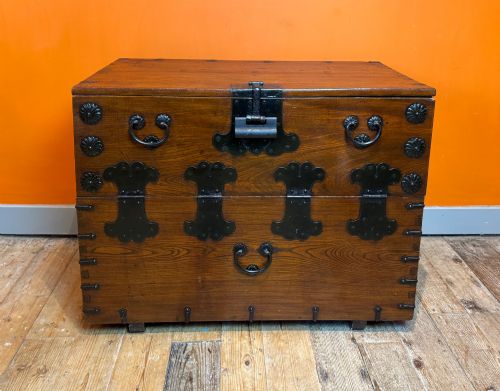
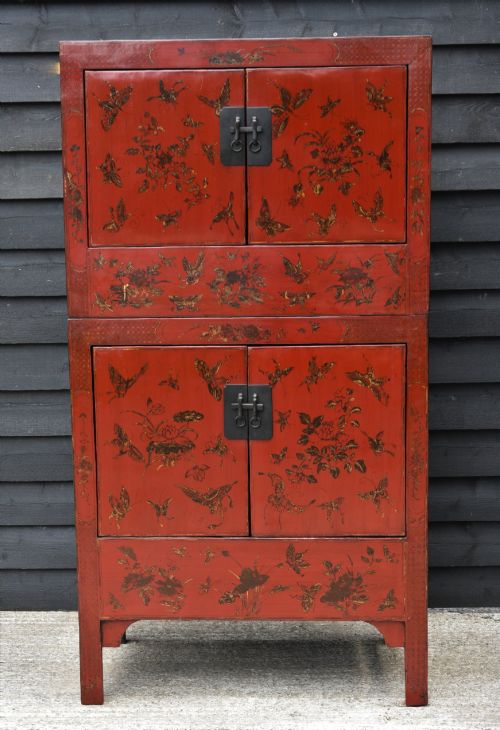
A vintage asian storage chest encompasses a wide variety of utilitarian and decorative forms originating from China, Japan, Korea, Tibet, and Burma. Buyers searching for a vintage asian storage chest encounter everything from heavy camphorwood trunks and intricately carved cabinets to wheeled Japanese tansu chests and elm bandaji storage units.
The pieces on this page span the nineteenth century through the early twentieth century, taking the form of blanket boxes, apothecary cabinets, sideboards, and merchant chests. Most examples demonstrate traditional regional construction methods intended for household storage or travel.
Japanese tansu chests and Chinese camphorwood trunks appear most frequently among the current listings, alongside lacquered cupboards and Korean elm drawer units. Each regional type serves a distinct domestic function while displaying the characteristic aesthetic of its period and origin.
Materials and construction
Makers utilised native timbers such as camphorwood, elm, keyaki, and general hardwood, often applying black or red lacquer, hand-painted floral decoration, or mother-of-pearl inlay to the exterior surfaces. Camphorwood was particularly favoured for trunks due to its insect-repellent properties, whilst elm and keyaki provided durable framing for heavy cabinets and tansu.
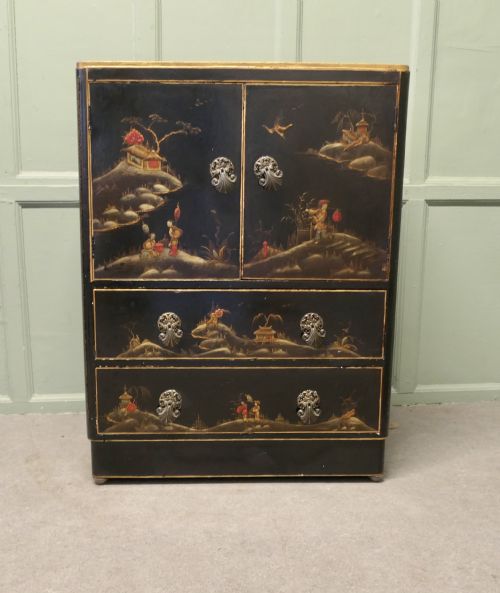
Metalwork played a structural and decorative role, with substantial brass and iron hinges, corner brackets, and elaborate locking plates reinforcing the wooden joints. Carved relief work and hand-painted motifs depicting birds and flowers completed the surface treatment on Chinoiserie cupboards and decorative storage boxes.
Vintage Asian Storage Chest Retail Price Guide 2026
Typical asking prices for vintage asian storage chest among the pieces listed under this phrase on Sellingantiques today, from the lower quarter to the upper quarter. They describe what is for sale here now, not the wider market.
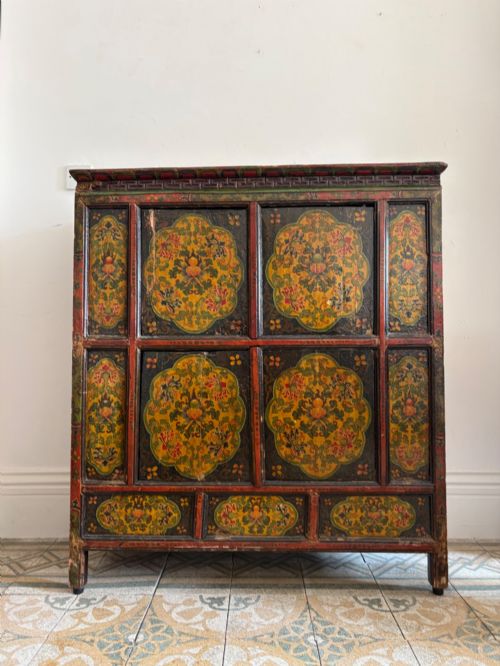
The inventory records diverse origins including Japanese tansu, Korean bandaji chests, Tibetan painted cabinets, and British influenced Chinese export pieces.
Evaluating quality and condition
Quality in these storage pieces rests upon the integrity of the timber joinery, the retention of original surface finishes such as lacquer or polish, and the completeness of traditional metal hardware like brass or iron mounts. Pieces retaining their hand-carved details and original painted decoration without extensive modern intervention stand distinctly apart.
The refinement of the carving, the weight and choice of secondary woods, and the complexity of internal configurations differentiate standard utilitarian boxes from superior merchant chests and apothecary cabinets. Original hinges, locks, and handles securely fitted to the frame indicate higher workshop standards.
The Vintage Asian Storage Chest Glossary
- Tansu
- Traditional Japanese mobile storage cabinetry or chests featuring iron hardware and specialised drawer configurations. These units were built for domestic organisation and merchant transport.
- Bandaji
- A traditional Korean wooden storage chest characterised by prominent brass or iron strapwork and hinges. The term translates literally as band-door chest.
- Chinoiserie
- European decorative style reflecting Chinese artistic influences, frequently seen on lacquered cupboards and cabinets finished in black with painted floral scenes. This style gained immense popularity during the late nineteenth and early twentieth centuries.
- Camphor Wood
- A fragrant hardwood native to Asia, chosen for trunks and blanket boxes because its natural scent protects stored textiles from moths and dampness. The wood often exhibits a rich grain when polished.
- Keyaki
- Japanese elm timber utilised extensively in the construction of traditional merchant and kitchen tansu due to its exceptional hardness and pronounced grain pattern.
Vintage Asian Storage Chest: Frequently Asked Questions
What is a Japanese tansu chest used for?
A Japanese tansu chest served as flexible domestic storage for clothing, kitchen utensils, or account books in traditional homes. Many featured wheels or specific drawer layouts tailored to the daily needs of merchants and families.
Today, these chests function well as living room storage or side tables, bringing historic utility and modular design into modern interiors.
How do I care for a lacquered cabinet?
Lacquered cabinets require protection from direct sunlight, extreme temperature fluctuations, and excessive dryness to prevent the surface finish from cracking. Dust them gently with a soft, dry cloth without applying modern chemical polishes.
Maintaining a stable indoor climate helps preserve the integrity of both the wooden substrate and the delicate decorative lacquer layers.
Why use camphorwood for storage boxes?
Camphorwood naturally emits a strong aromatic scent that acts as a powerful deterrent against moths, silverfish, and other fabric-destroying insects. This practical quality made the timber the primary choice for blanket boxes and luggage chests.
Placing woolen garments or linens inside a camphor trunk keeps them naturally protected without the need for chemical mothballs.
How do I distinguish Korean bandaji chests?
Korean bandaji chests are readily identified by their heavy front-opening doors and striking geometric brass or iron strapwork hinges. The dark elm wood and stark metal mounts create a bold architectural appearance unique to Korean woodworking traditions.
Unlike standard side-opening cabinets, the front panel of a bandaji drops down or lifts off to access the deep interior storage space.