




Vintage Asian Screen
These vintage asian screen pieces bring intricate woodwork, lacquer, and silk into a room, offering distinct decorative division and historical craftsmanship.
Vintage Asian Screen
When you search for a vintage asian screen, you encounter folding room dividers, wall panels, and table screens originating from various eastern traditions. These pieces frequently incorporate multiple folds or panels designed to partition spaces or adorn walls.
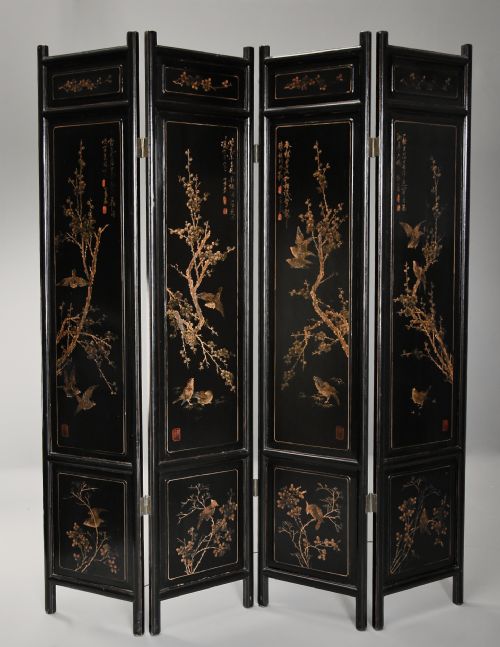
The selections available here span from the nineteenth century through the mid-twentieth century, showcasing diverse regional forms. You are most likely to meet freestanding four-leaf black lacquered folding screens alongside smaller silk table screens and carved wooden wall panels.
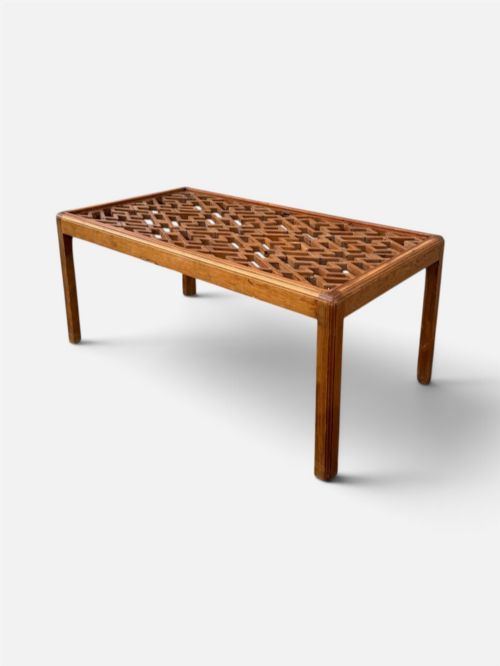
Many examples utilise traditional motifs, depicting birds, foliage, or dragons carved into wood or rendered in lacquer. The variety extends to coffee tables incorporating antique panel elements beneath glass tops.
How they were made
Makers constructed these screens using solid woods and hardwoods as a foundational structure, often applying deep layers of black or decorated lacquer. Surfaces frequently received detailed hand carving, creating high-relief scenes across the wooden panels.
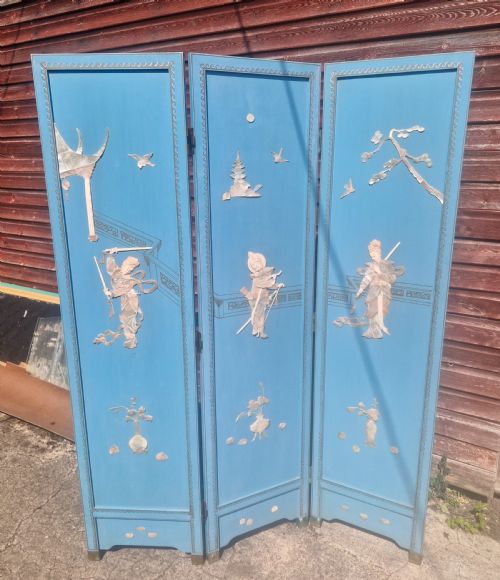
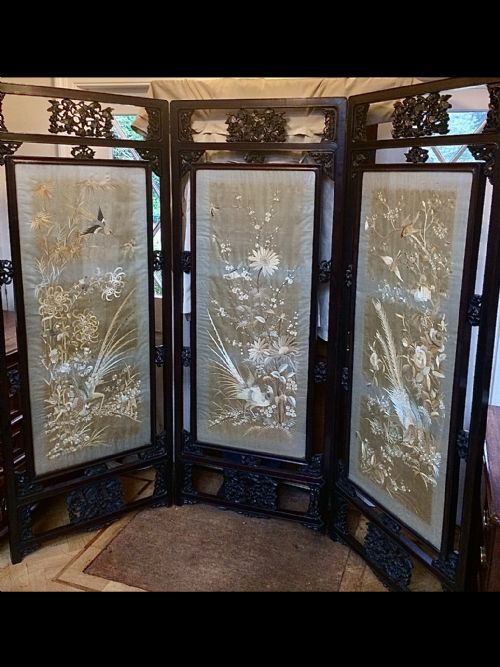
Artisans integrated delicate decorative elements including mother-of-pearl, abalone, and hardstone mounts to construct pictorial details like birds in branches and foliage. Silk textile panels also appear, stretched within intricately carved wooden stands or larger folding frames.
Metal components such as brass hardware occasionally support the construction of folding leaves and hinges, ensuring functional movement across multiple panels.
Recorded periods span from the nineteenth century through the 1950s, capturing diverse nineteenth and twentieth-century manufacturing dates.
What varies in quality
The calibre of a piece depends heavily on the depth and precision of the hand carving executed on the wood. Finer examples display meticulous detail in rendered subjects such as dragons or natural foliage.
Quality also rests in the application and preservation of the lacquerwork and inlay materials. Superior screens feature securely mounted hardstone, mother-of-pearl, or abalone that integrates seamlessly with the surrounding lacquered surface.
The structural integrity of the folding mechanism and the quality of the silk or textile elements further distinguish higher-grade items from simpler decorative panels.
The Vintage Asian Screen Glossary
- Lacquer
- A durable resin finish applied in multiple layers to wooden surfaces to create a smooth, glossy protective coating. This technique allows for detailed painting and incised decoration.
- Hardstone
- Naturally occurring semi-precious stones cut and polished for use in decorative inlays. Artisans mount these stones onto lacquered panels to depict figures, flora, and fauna.
- Chinoiserie
- A European artistic style reflecting Chinese and East Asian artistic traditions. It appears in decorative items adapted by Western makers.
- Freestanding screen
- A movable partition composed of multiple panels joined by hinges. These units stand independently to divide interior spaces.
- Table screen
- A smaller decorative panel mounted on an intricately carved wooden stand. These items sit upon desks or tables rather than standing on the floor.
Vintage Asian Screen: Frequently Asked Questions
How do I use a folding screen at home?
Folding screens serve primarily to divide large rooms, create private alcoves, or act as substantial decorative backdrops against plain walls.
Smaller variations, such as table screens or wall panels, function as focal points on tabletops or are hung directly to display carved woodwork.
What materials are common in these screens?
Wood and hardwood form the primary structural body of these items, frequently finished with glossy black or decorated lacquer.
Inlays composed of mother-of-pearl, abalone, hardstone, and painted silk panels frequently decorate the primary surfaces.
How can I tell different periods apart?
Nineteenth-century examples often display deep hand-carved wood panels and traditional motifs like dragons or specific dynastic styling.
Early to mid-twentieth-century pieces tend to incorporate black lacquer with applied hardstone elements or textile sections reflecting Japanese and Chinese export traditions.
Are these screens purely decorative?
While many serve an aesthetic purpose by introducing texture and colour to an interior, multi-leaf folding versions remain functional room dividers.
Wall panels and table screens are strictly ornamental, designed to showcase intricate craftsmanship and traditional iconography.