




Vintage Animal Pottery
These vintage animal pottery figures bring character to a room through traditional ceramic forms, ranging from Staffordshire pugs to Art Deco cats.
Vintage Animal Pottery
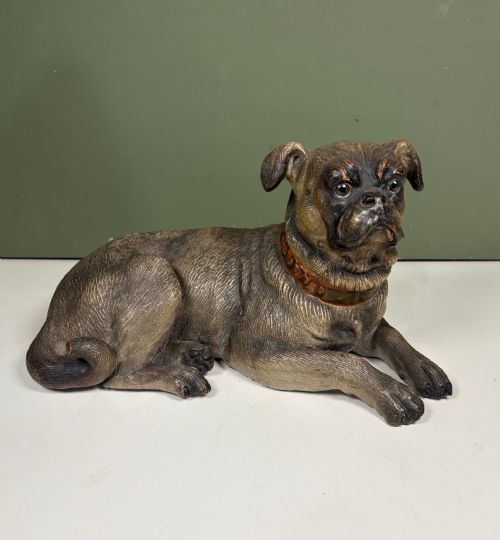
Vintage animal pottery encompasses decorative figurines, sculptural bookends, and lamp bases produced across the nineteenth and twentieth centuries. Buyers seeking vintage animal pottery frequently encounter traditional Staffordshire dog pairs, recumbent lions, and feline sculptures originating from English and European workshops.
The selection ranges from late nineteenth century Dutch Delft blue and white cows and Staffordshire pugs to Art Deco ceramic deer and French cat figures with glass eyes. Makers across different periods utilised earthenware and terracotta to model domestic pets, farm animals, and exotic wildlife.
Victorian examples often take the form of mantel ornaments and inkwells, while later twentieth century pieces reflect Art Deco and Modernist sensibilities. These ceramic representations survive in various forms, including table lamps and architectural roof tiles.
Materials and production methods
Makers shaped these pieces primarily from earthenware and terracotta, building forms through hand modelling or moulding before firing the clay. Glazes defined the surface finish, spanning traditional blue and white decoration, copper lustre, and maroon-red tones with gilded highlights.
Detailed work often involved supplementary components, such as glass eyes fitted to French cat sculptures or wooden bases supporting multi-figure ceramic groups. Terracotta roof tile ornaments utilised regional French folk art traditions to depict feline subjects with durable exterior finishes.
Vintage Animal Pottery Retail Price Guide 2026
Typical asking prices for vintage animal pottery among the pieces listed under this phrase on Sellingantiques today, from the lower quarter to the upper quarter. They describe what is for sale here now, not the wider market.
Listings feature earthenware and terracotta pieces spanning the Victorian period through the Art Deco era.
Distinctions in quality
The sophistication of the glaze application differentiates standard commercial output from superior works, such as those featuring copper lustre or gilded highlights. Preservation of original elements, including glass eyes or paired configurations, influences the integrity of the piece.
Joseph Constant·Le Manceau·Guido Cacciapuoti·Royal Worcester
The Vintage Animal Pottery Glossary
- Earthenware
- A porous type of pottery fired at lower temperatures, commonly utilised for traditional figures and glazed ceramics. It forms the body of many nineteenth century Staffordshire pieces.
- Staffordshire pottery
- Ceramic figures produced in the English pottery districts, famously including pugs, lions, and zebras intended for mantel display. These items date predominantly from the Victorian era.
- Copper lustre
- A metallic glaze technique that imparts a reflective, coppery sheen to the ceramic surface. This finish appears on sculptural lion figures.
- Animalier
- A nineteenth and twentieth century artistic tradition focusing on realistic or expressive depictions of animals. Sculptures in this style range from French terracotta cats to bronze-influenced ceramic bulls.
Vintage Animal Pottery: Frequently Asked Questions
What are Staffordshire pottery dogs?
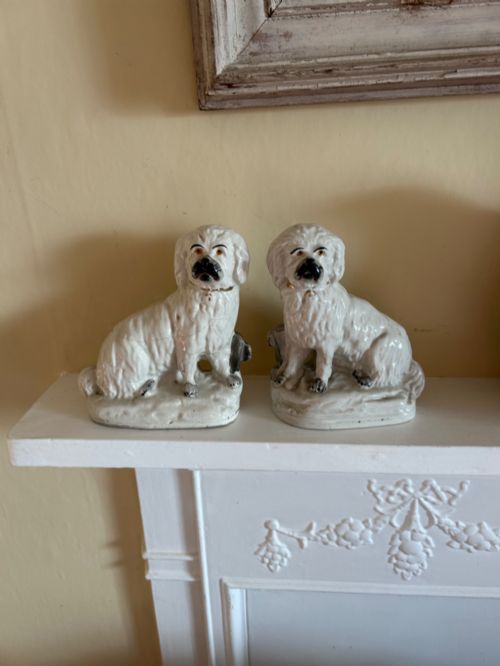
Staffordshire pottery dogs are traditional ceramic figures, typically pugs or spaniels, produced in English workshops during the Victorian period for domestic mantelpiece display.
Collectors often find them in pairs, reflecting popular household ornaments of the nineteenth century.
Where were nineteenth century ceramic pigs made?
Nineteenth century ceramic pig sculptures were produced in various European regions, including specific workshops in France such as Bavent in Normandy.
These French examples often utilised terracotta and served as decorative architectural elements or folk art figures.
How were antique animal lamp bases used?
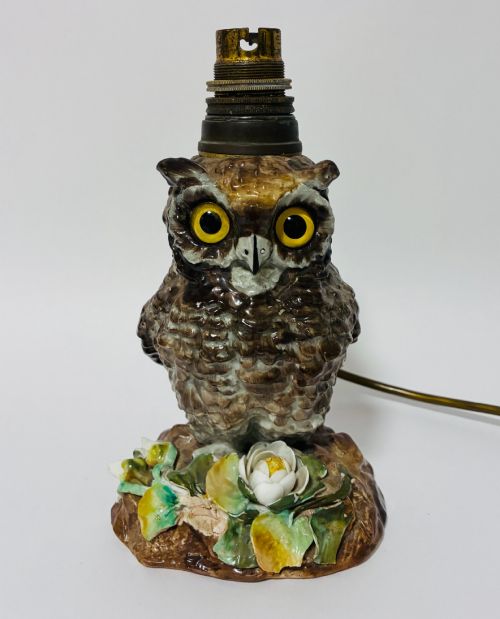
Antique animal lamp bases incorporated sculptural ceramic figures, such as Victorian owls, into functional lighting for period interiors.
They combine decorative figurine modelling with electrical fittings adapted during the twentieth century.