
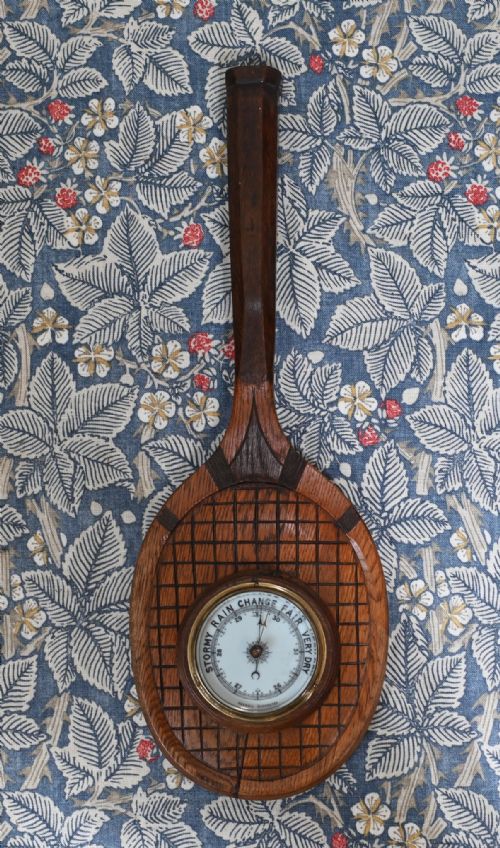
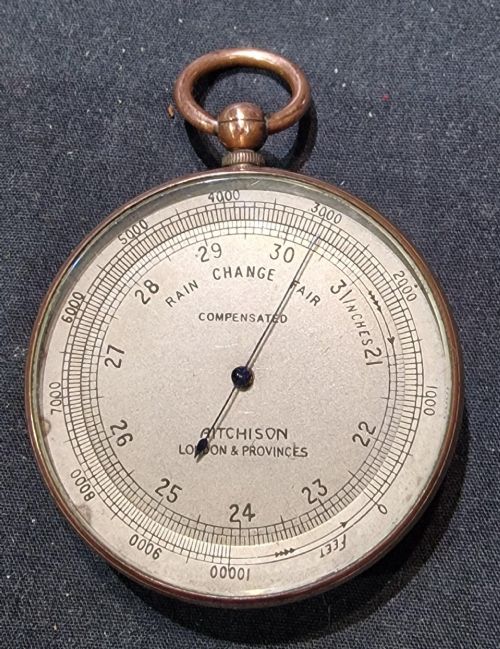


Vintage Aneroid Gauge
A vintage aneroid gauge measures atmospheric pressure using a sealed metal capsule rather than liquid mercury, offering a reliable weather reading for any interior wall or pocket.
Vintage Aneroid Gauge
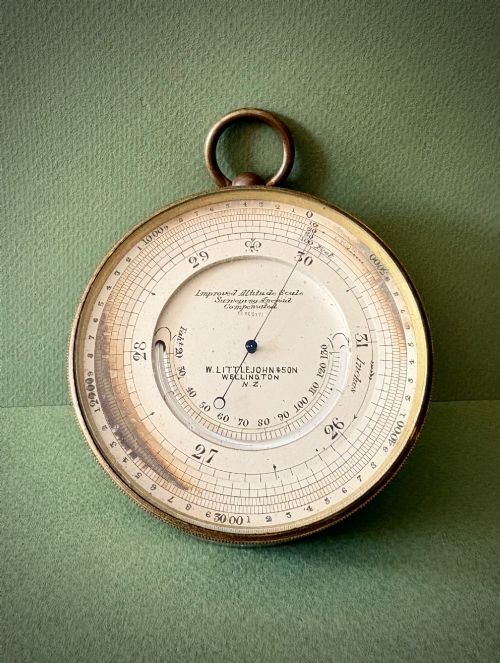
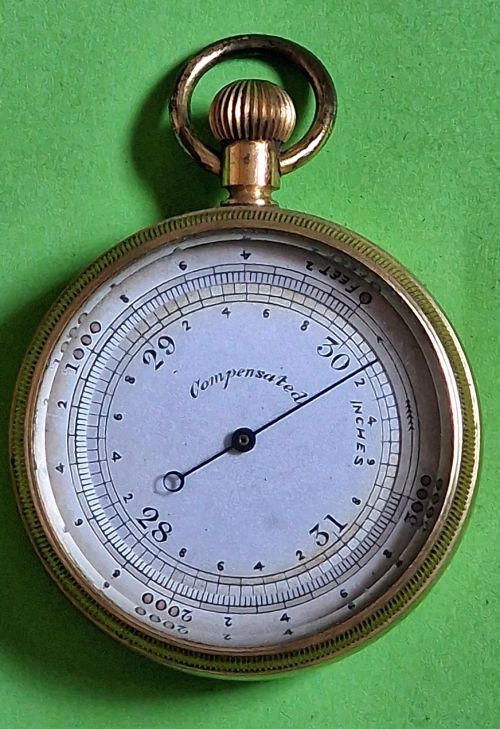
A vintage aneroid gauge encompasses scientific instruments such as barometers, pocket barometers, and wall barometers spanning from the Victorian and Edwardian eras into the 1930s. These pieces range from small pocket instruments and pocket barometer altimeters to large wall-mounted banjo barometers and dial instruments housed in timber cases.
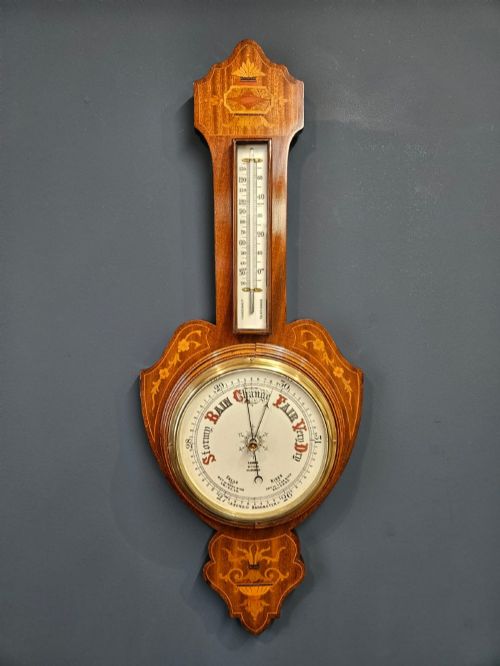
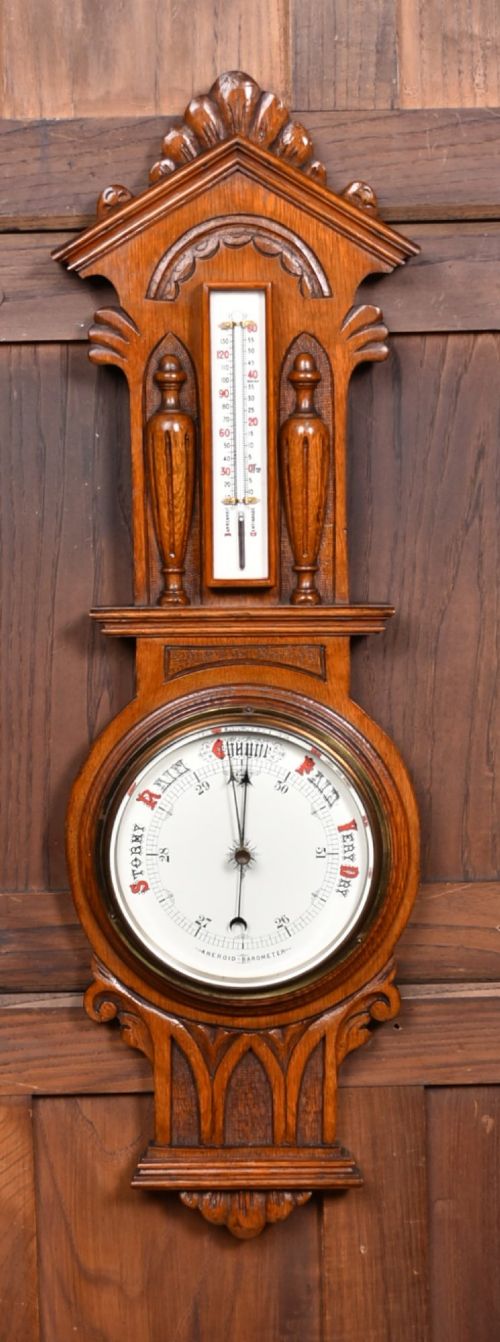
The domestic wall barometer is the version most frequently encountered on this page, often framed in oak, mahogany, walnut, or beechwood. Alongside these domestic styles appear more specialised meteorological instruments, including marine barometers and observation balloon altimeters.
Materials and construction
Brass mechanics and silvered metal dials form the technical heart of these instruments, encased in turned or carved timber housings of mahogany, oak, walnut, rosewood, and beechwood. Glass protects the delicate dial face and pointer, whilst ceramic components occasionally feature on specific regional models.
Cabinetmakers and instrument makers employed various decorative techniques, ranging from inlaid veneers and ebonised finishes to the intricate hand-carved foliage characteristic of Black Forest work and hand-painted Chinoiserie decoration.
Materials recorded across the inventory include brass, glass, mahogany, oak, walnut, rosewood, beechwood, ceramic, and silvered metal.
Qualities of craftsmanship
Excellence in a vintage aneroid gauge rests upon the precision of the maker's signature and the legibility of the silvered metal dial. Finer examples display crisp engraving on the dial face and robust, complex mechanical movements that maintain calibration over time.
The housing distinguishes standard production from superior craftsmanship through the selection of timber, such as figured mahogany or walnut, and the depth of carving or quality of inlay. Maker attribution to known firms elevates the significance of an instrument.
Short & Mason London·Negretti & Zambra·Blake & Son·Dollond of London
The Vintage Aneroid Gauge Glossary
- Aneroid barometer
- An instrument that measures atmospheric pressure by the expansion and contraction of a flexible metal capsule, eliminating the need for liquid mercury. This design allowed barometers to be made in portable pocket sizes and wall-mounted banjo formats.
- Altimeter
- A specialised aneroid gauge calibrated to measure altitude above sea level based on changes in atmospheric pressure. These instruments were utilised in aviation, mountaineering, and military observation balloons.
- Banjo barometer
- A wall-mounted barometer housed within a case shaped loosely like a banjo, typically featuring a thermometer section above a circular dial. This form became popular during the Victorian and Edwardian periods.
- Barograph
- A mechanical barometer that records atmospheric pressure over a period onto a rotating drum of graph paper. It provides a continuous visual history of weather changes.
- Silvered metal
- A brass or copper dial plate treated to achieve a silvery finish, usually engraved with weather descriptors and scale graduations. The engraving is frequently filled with black wax for legibility.
Vintage Aneroid Gauge: Frequently Asked Questions
How do I read an aneroid barometer?
The pointer indicates the current barometric pressure on the dial, moving towards "fair" for high pressure and "rain" for low pressure. Many instruments feature a secondary movable hand that you align with the primary pointer to track daily pressure shifts.
Rising pressure generally indicates improving weather, whilst falling pressure suggests approaching rain or wind.
Can I calibrate a vintage barometer?
Most aneroid barometers include a small adjustment screw accessible on the back or through the dial face. By comparing the reading to a known local meteorological report, you can turn the screw to match the current pressure.
Calibration should be done gently to avoid placing sudden tension on the internal metal vacuum capsule.
Where should I hang a wall barometer?
Wall barometers belong in interior spaces protected from direct sunlight, extreme temperature fluctuations, and excessive moisture. Hallways and living rooms provide stable environments that keep the timber case and internal brass mechanism preserved.
Ensure the mounting hook is secure, as these instruments possess heavy timber and glass components.
How do I date a Victorian barometer?
Dating relies upon stylistic clues within the timber case, such as the heavy carving of Victorian Gothic Revival or the dark ebonised finishes popular in the late nineteenth century. Inscribed maker signatures and patent dates on the metal dial offer more precise verification.
Earlier nineteenth-century pieces often display simpler mahogany frames before the ornate banjo styles gained widespread popularity.