

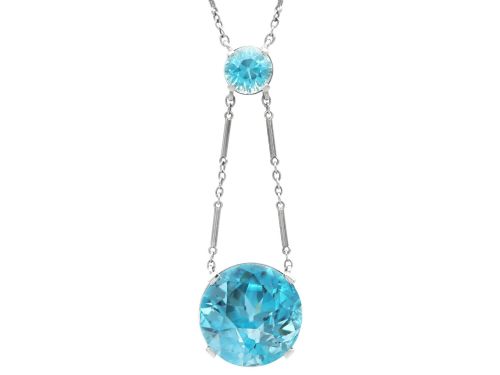
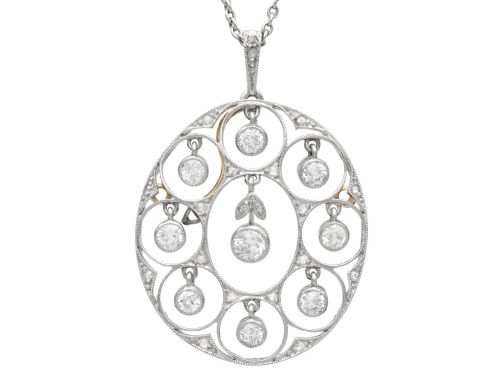
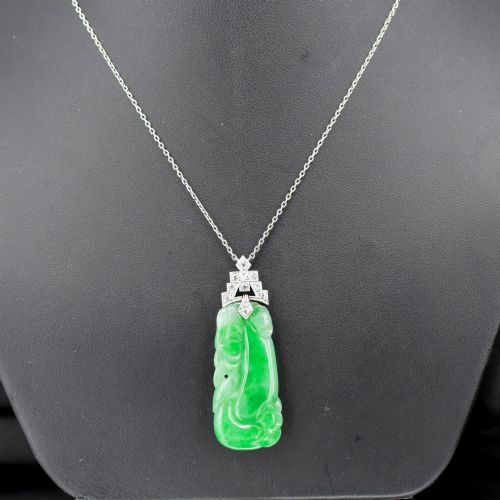
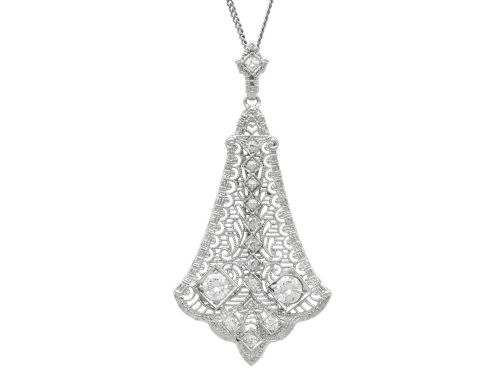

Vintage 1920s Necklace
A vintage 1920s necklace brings geometric symmetry and fine period craftsmanship to the collarbone.
Vintage 1920s Necklace
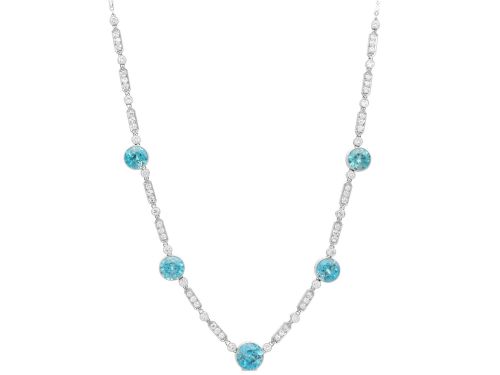
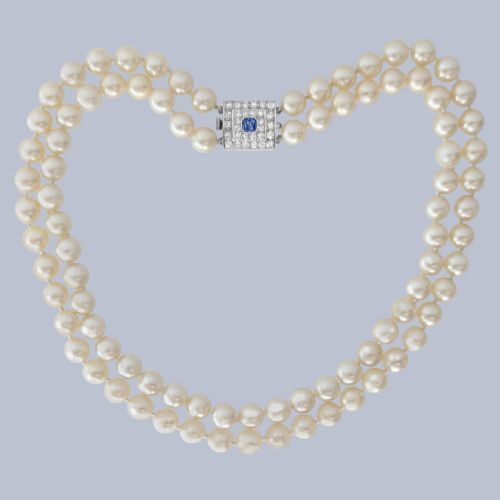
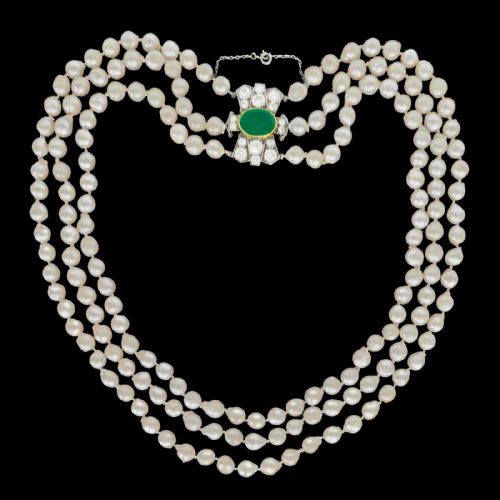
A vintage 1920s necklace encompasses pieces created during the Art Deco era alongside occasional survivals from the preceding Art Nouveau and Arts and Crafts movements. The form ranges from delicate diamond and platinum pendants to multi-strand cultured pearl necklaces secured with gem-set clasps.
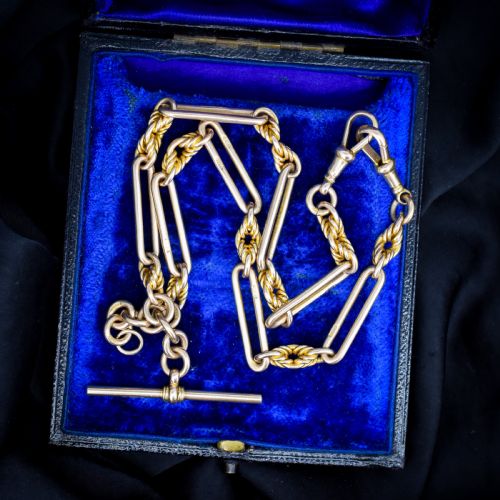
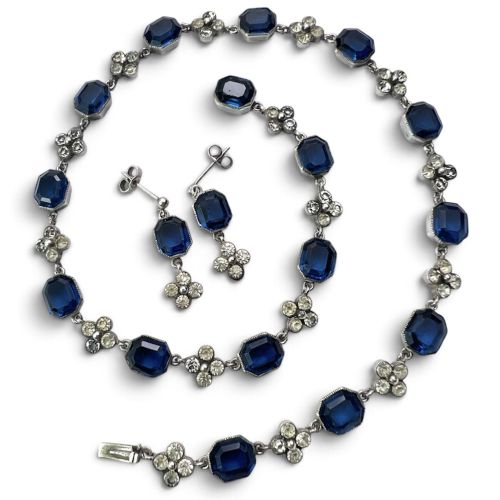
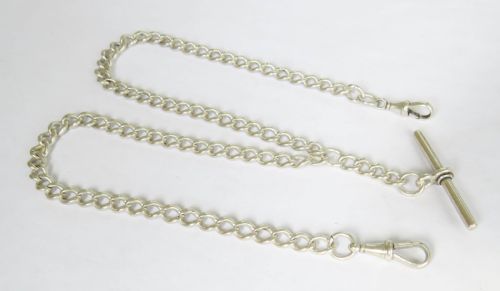
Buyers will most frequently encounter geometric Art Deco designs incorporating white metals like platinum and white gold alongside coloured gems such as jade, aquamarine, and zircon. Chain-based pieces like silver Albert chains also appear, reflecting the period's diverse metalwork.
Origin points span domestic British assay offices and French workshops, encompassing both mass-produced commercial pieces and individual creations by notable glassmakers. This variety ensures that a vintage 1920s necklace can serve either as a subtle daytime accent or an elaborate evening centrepiece.
Materials and Construction
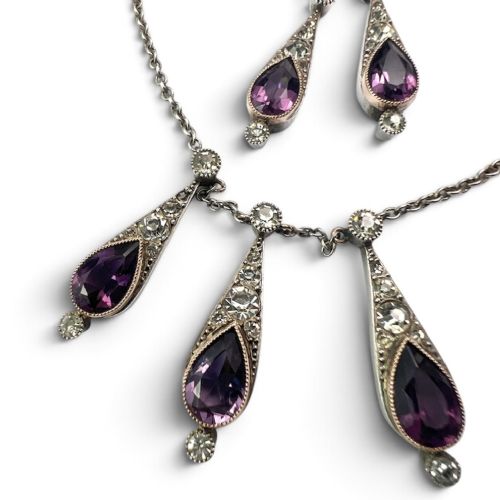
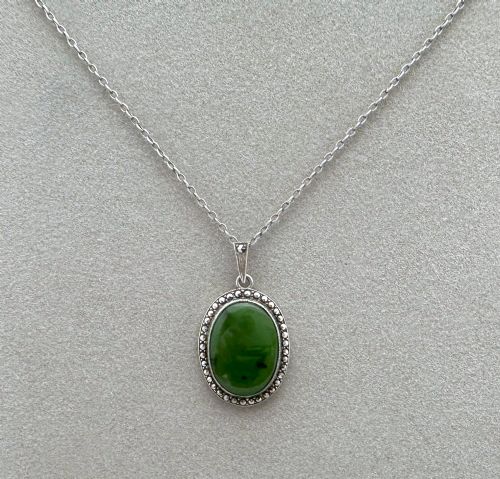
Metalworking in these pieces relies heavily on the pairing of platinum and white gold to create bright, durable settings that complement old-cut diamonds without distracting from them. Silver is also common, particularly in combination with paste stones, crystal, and imported jade.
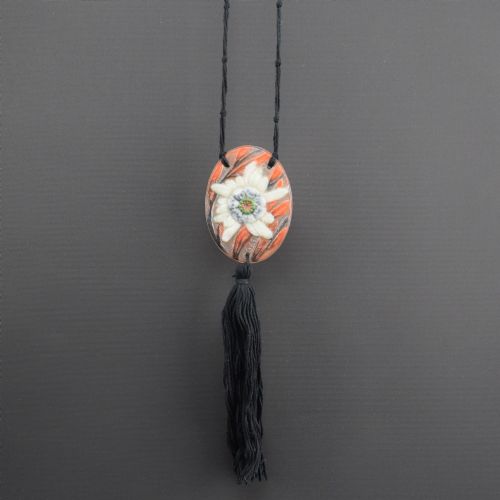
Glass production reached distinct artistic heights through specialised methods like pate de verre and moulded glass, yielding pendants shaped as wasps, cicadas, and figural scenes. These glass elements are typically suspended from simple cords or integrated directly into metal chains.
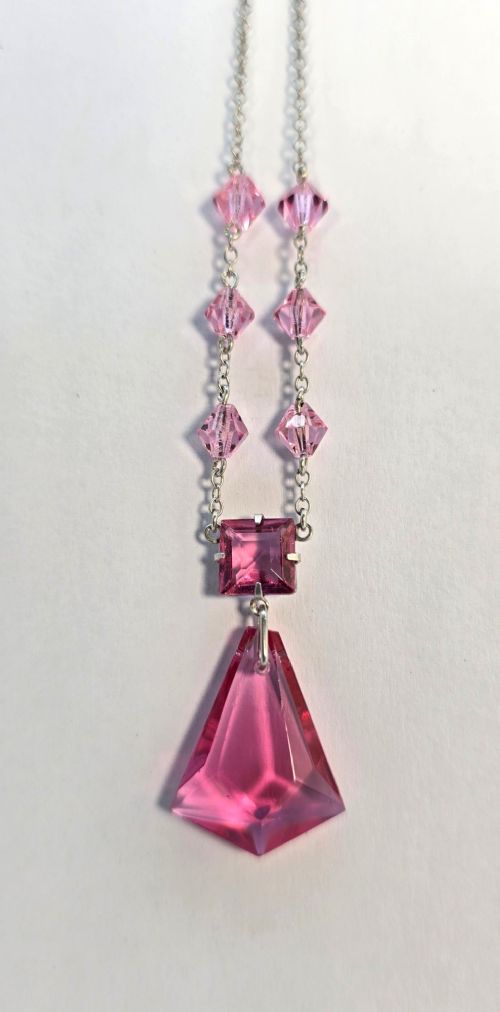
Gemstone setting during this period prioritises precise cuts such as baguette and rose-cut diamonds, alongside hand-carved hardstones like green jadeite and carnelian. Pearl necklaces utilise durable silk threads, often reinforced with specialised clasps featuring sapphires and diamonds.
Vintage 1920s Necklace Retail Price Guide 2026
Typical asking prices for vintage 1920s necklace among the pieces listed under this phrase on Sellingantiques today, from the lower quarter to the upper quarter. They describe what is for sale here now, not the wider market.
The listings show a strong concentration of Art Deco design, combining platinum and white gold with diamonds, pearls, and green jade.
Distinctions in Quality
The standard of a vintage 1920s necklace rests heavily on the integration of its components, where superior examples exhibit seamless mounts and secure gem settings that protect fragile stones. Metalwork quality shows in the crispness of die-stamped geometric patterns or the precision of hand-pierced platinum galleries.
Material selection divides the range significantly, separating pieces set with certified natural diamonds, high-carat zircons, and jadeite from those utilising paste stones or butterfly wing panels. The presence of maker signatures, particularly from renowned glass ateliers or specific assay offices, elevates the distinctiveness of the piece.
Condition and originality dictate the standing of pearls and strung items, where restrung strands with verified certificates retain integrity better than unaltered degraded silk. The preservation of original clasps, integrated safety chains, and undamaged moulded glass elements ensures the sustained character of the jewellery.
Gabriel Argy Rousseau·Rene Lalique·Thomas L Mott
The Vintage 1920s Necklace Glossary
- Art Deco
- A design style dominant in the 1920s and 1930s characterised by sleek geometric shapes, stylised motifs, and linear symmetry. It represented a deliberate shift away from the flowing organic curves of earlier periods.
- Pate de verre
- A glass-making technique where finely crushed glass is mixed with a binding agent, packed into a mould, and fused in a kiln. This process creates rich, textured, translucent objects often seen in pendant form.
- Albert chain
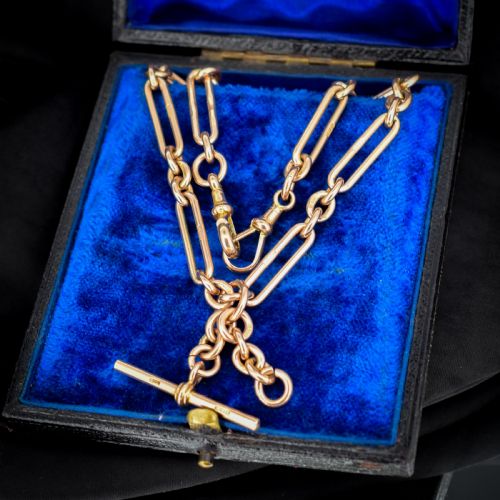
- A short watch chain traditionally worn attached to a waistcoat pocket, frequently repurposed as a necklace in vintage collections. These typically feature robust trombone or love knot links.
- Paste
- Hand-cut and polished lead glass used to imitate gemstones in period jewellery. It offers high brilliance and colour depth without the cost of natural stones.
- Old-cut diamond
- A diamond cut by hand before modern machinery standardised facets, typically featuring a smaller table, higher crown, and open culet. These stones catch candlelight and lower light sources with a distinct softer sparkle.
Vintage 1920s Necklace: Frequently Asked Questions
How do I wear a vintage 1920s necklace?
These pieces suit both formal evening wear and tailored daytime outfits, depending on the length and weight of the metal or pearls. Shorter pendant necklaces sit close to the collarbone, while longer multi-strand pearl styles can be worn as a single sweeping length.
Pairing a geometric Art Deco design with simple necklines allows the pendant or clasp to remain the focal point. Heavier chain styles work well layered or worn alone against solid fabrics.
Are these necklaces fragile?
Durability varies significantly depending on the materials used in construction, with platinum and gold settings offering robust daily wear. Glass pendants and delicate pearl strands require much greater care to prevent chipping or thread wear.
Checking the security of stone settings and the condition of silk stringing helps ensure the piece remains stable during normal use. Many pearl strands are professionally restrung to maintain their structural integrity.
How do I tell Art Deco from Art Nouveau?
Art Deco pieces focus on straight lines, sharp angles, symmetry, and rigid geometric patterns derived from machinery and architecture. This style defines the majority of 1920s jewellery design.
Art Nouveau pieces, by contrast, feature flowing organic curves, asymmetrical plant forms, and insect or female motifs. These earlier styles appeared less frequently in 1920s production but retained influence.
Can I replace missing stones on a vintage necklace?
Sourcing period-appropriate replacement stones like old-cut diamonds or coloured pastes is possible through specialist antique jewellers. A skilled bench jeweller can then match the setting style to preserve the piece's historical integrity.
Major alterations can affect the character of the item, so matching the cut and age of the original materials is essential. Consulting a specialist before undertaking repairs is recommended.