


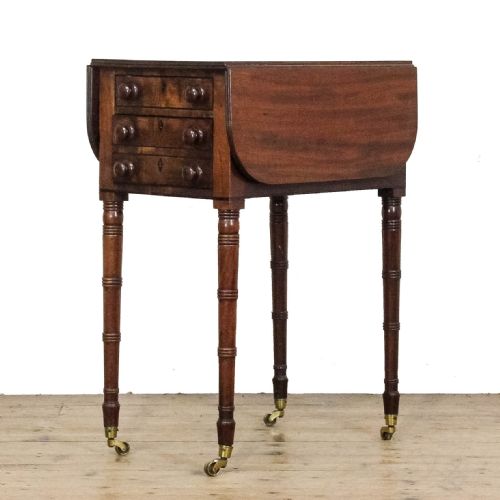

Victorian Writing Table on Castors
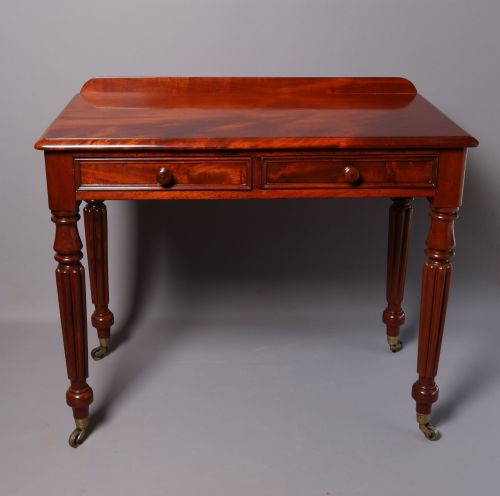
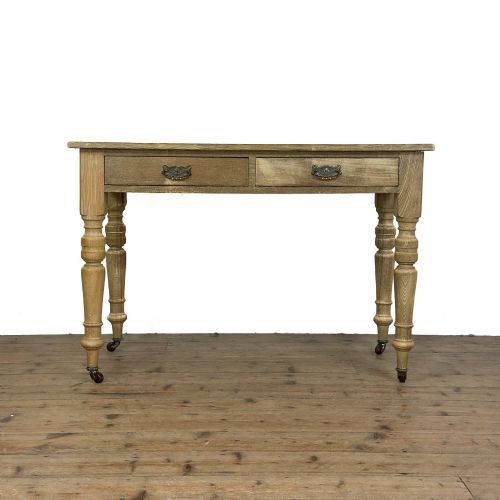
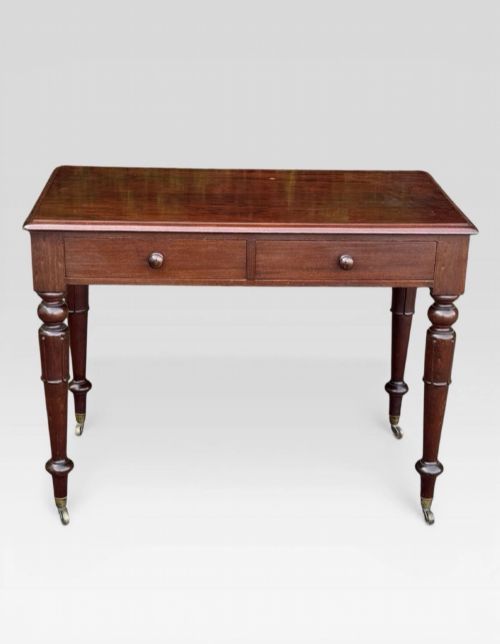
A victorian writing table on castors brings practical nineteenth-century craftsmanship into a modern study, offering a sturdy surface mounted on wheels for easy movement.
Victorian Writing Table on Castors
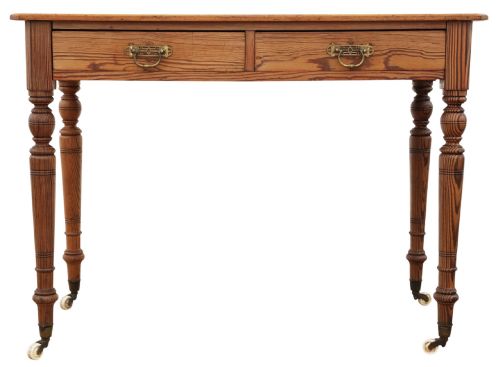
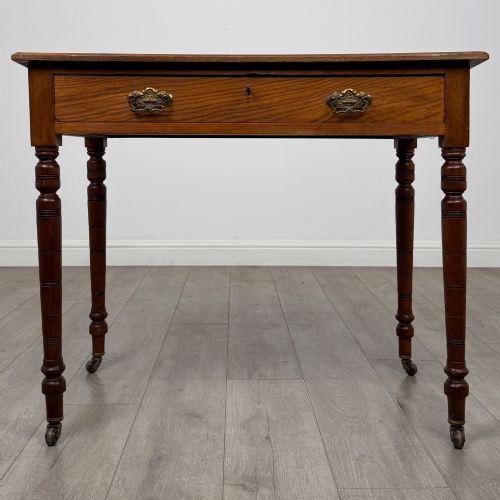
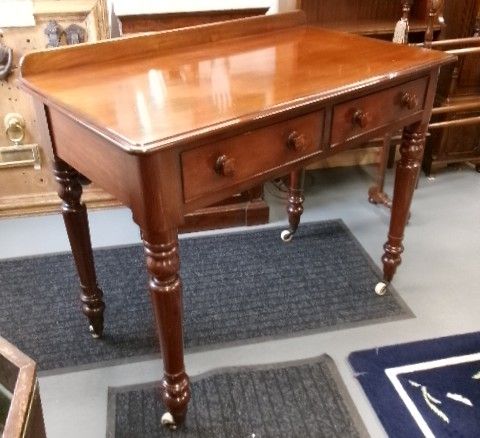
A victorian writing table on castors is a functional nineteenth-century desk designed for correspondence and study, typically fitted with working drawers beneath the top. These pieces appear frequently in mahogany, oak, and walnut, shaped by the practical needs of Victorian domestic and library spaces.
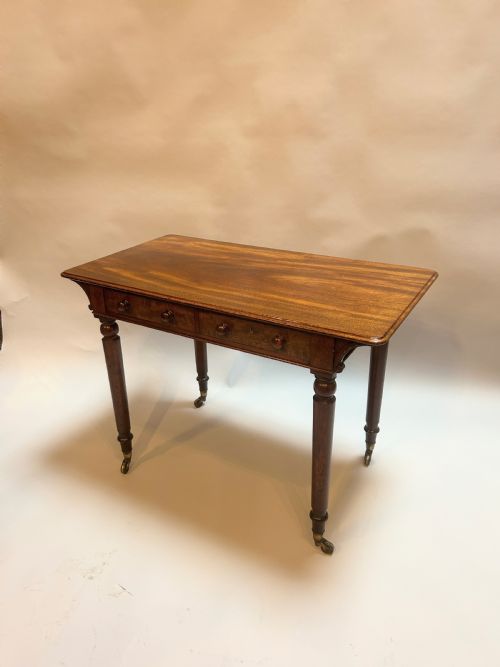
Most examples found on this page date from the nineteenth century, ranging from compact two-drawer versions to larger library tables. They stand upon small wheels that allow the heavy timber frames to glide across floorboards without marking the surface.
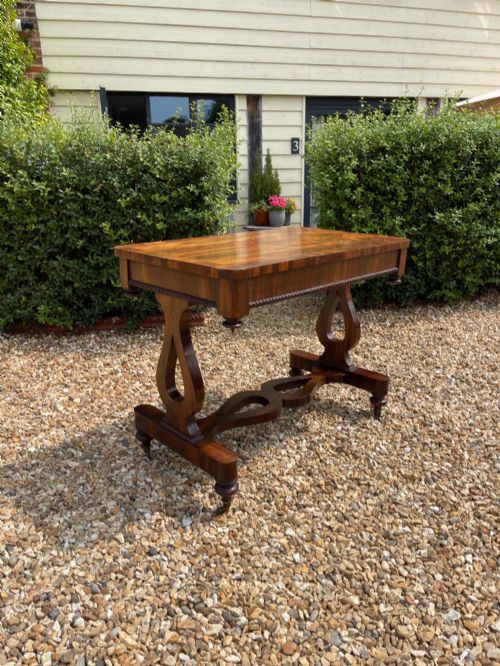
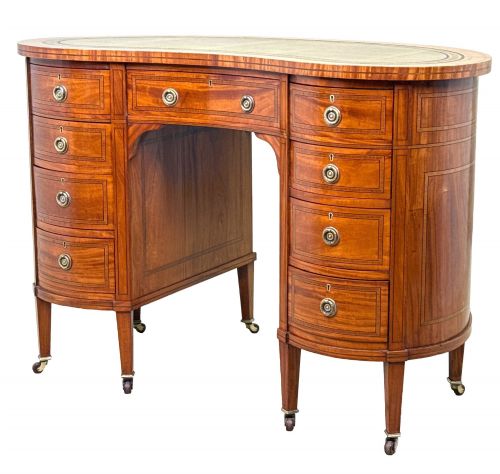
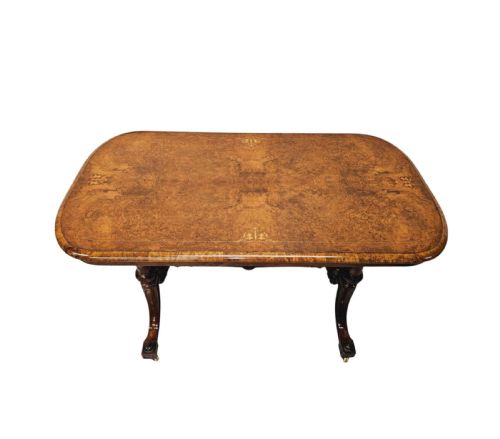
Makers adapted these desks into kidney shapes, partners formats, and simpler side table configurations while keeping the mobility of brass-capped castors intact. Buyers seek them for genuine period utility combined with traditional timber patination.
How they were made
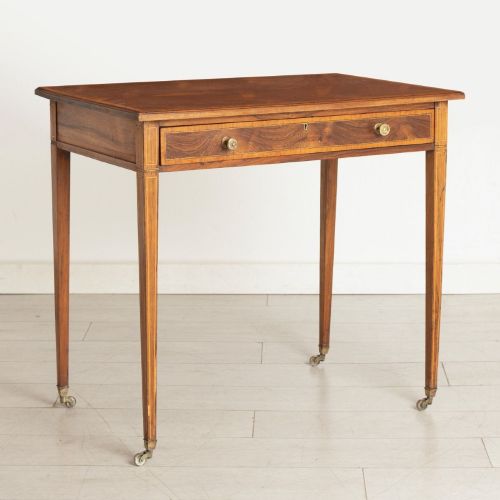
Cabinet makers constructed these tables from dense hardwoods such as mahogany, oak, walnut, and rosewood, often pairing solid frames with fine veneers like burr walnut and satinwood. Drawers were joined with traditional dovetailing and fitted with turned wooden handles or brass pulls.
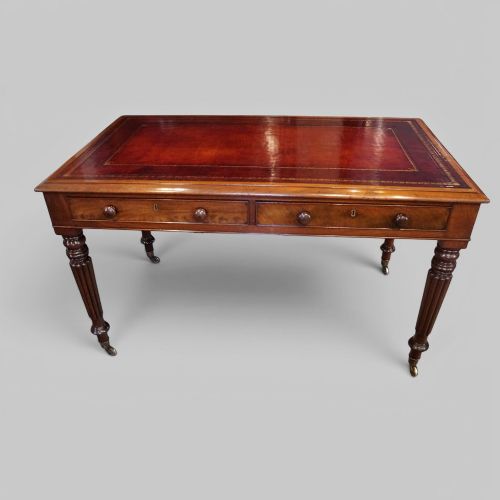
Insets of tooled leather frequently formed the writing surface, providing a smooth texture for pen and paper. Turned or reeded wooden legs terminated in brass castors, allowing the heavy timber furniture to move smoothly across rooms.
Many a Victorian letter writer relied on these rolling desks to chase the afternoon sun across the library floor.
What varies in quality
The distinction between standard utility pieces and finer examples rests on timber selection, such as figured mahogany or burr walnut, and the crispness of the turning on the legs. Superior pieces often bear makers' stamps or brass tags from established cabinet shops.
Construction details like hand-cut dovetails, original leather writing surfaces, and intact brass castors elevate a desk's standing. Finer tables maintain harmonious proportions and careful inlay work that reflects the high standards of nineteenth-century workshops.
Gillows·J A Mein Edinburgh Cabinet Maker·W Williamson And Sons Of Guildford·Howard And Son's·Heal And Son
The Victorian Writing Table on Castors Glossary
- Castor
- A small wheel attached to the base of a leg to allow smooth movement across the floor. These are frequently capped in brass on nineteenth-century tables.
- Partners desk
- A large table or desk designed with drawers on both opposing sides, allowing two people to work opposite one another.
- Dovetail
- An interlocking wood joint used in drawer construction for strength and durability. Hand-cut versions help identify period cabinet work.
- Reeded
- Decorated with parallel convex mouldings carved into the wood. This technique often appears on the legs of library and writing tables.
- Leather top
- An inset writing surface tooled with gold leaf decoration. This provided a durable and smooth area for correspondence.
Victorian Writing Table on Castors: Frequently Asked Questions
What is a victorian writing table on castors used for?
These pieces served as practical desks for letter writing, study, and administrative tasks in nineteenth-century homes. The integrated drawers held paper, ink, and correspondence.
Today, they function well as compact home office desks or console tables. Their mobile frames allow them to be repositioned easily within a room.
How do I tell different periods apart?
Earlier nineteenth-century pieces often feature simpler classical proportions and Cuban mahogany, while later Victorian and Aesthetic Movement examples incorporate lighter satinwood or distinct inlay.
Checking construction methods like drawer dovetailing and wood species helps narrow down the decade of manufacture. Maker stamps and brass tags also provide clear dating evidence.
Are the castors on these tables original?
Many tables retain their original brass-capped castors and turned wooden supports, which show natural wear consistent with age. Replacements do occur due to centuries of movement across floor surfaces.
Examining the fixings and timber around the base helps determine whether the wheels belong to the original period of construction.
How do I care for the leather top?
The leather writing surface benefits from occasional cleaning with a slightly damp cloth followed by a neutral leather cream to keep it supple. Avoid harsh chemical cleaners that can strip the original tooling.
Keeping the desk away from direct sunlight prevents the leather and underlying timber from drying out or fading over time.