

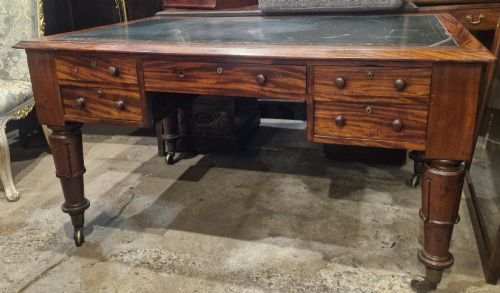
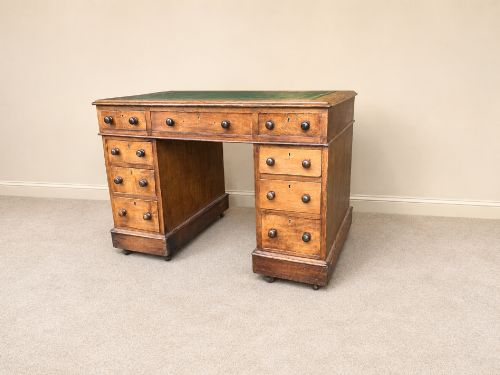
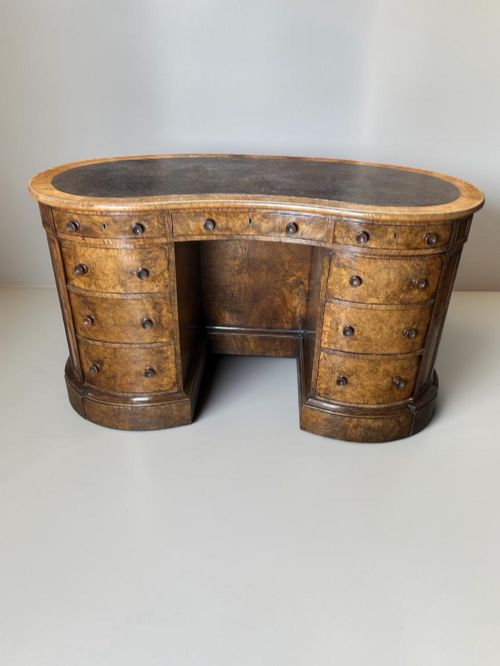
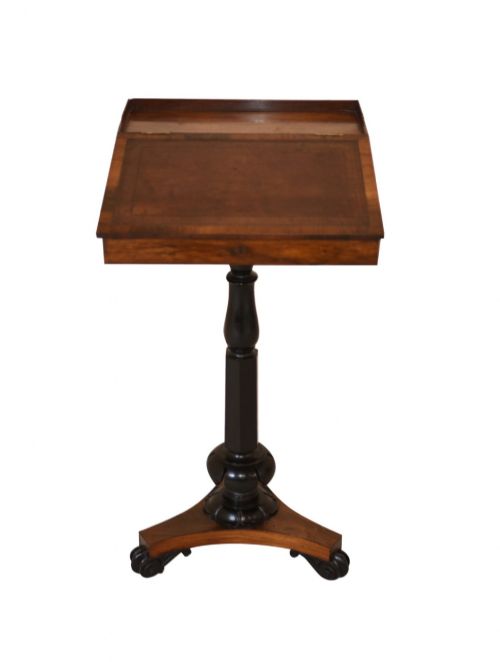

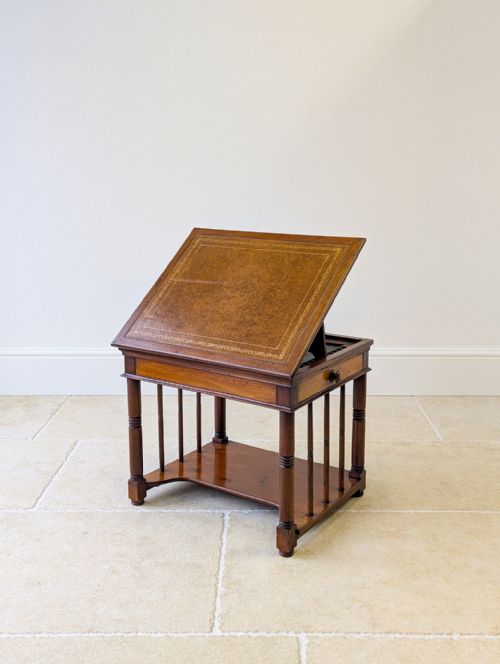
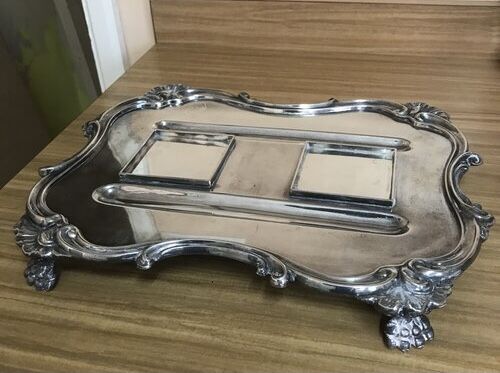

Victorian Writing Stand
A victorian writing stand organises the desk with fitted inkwells and pen rests, bringing nineteenth-century order to any study.
Victorian Writing Stand
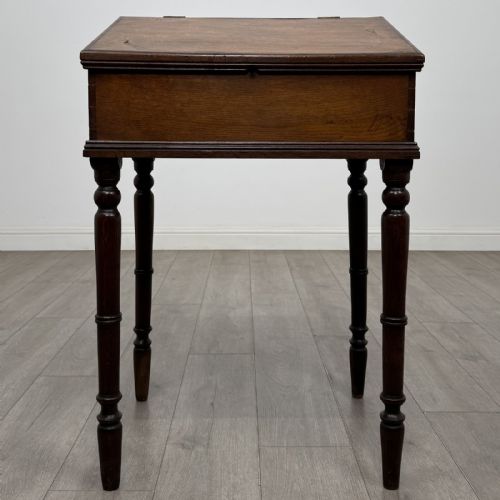
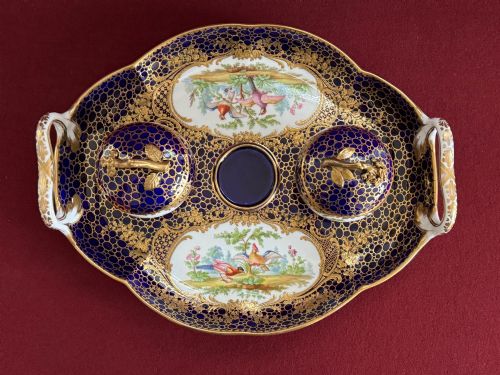
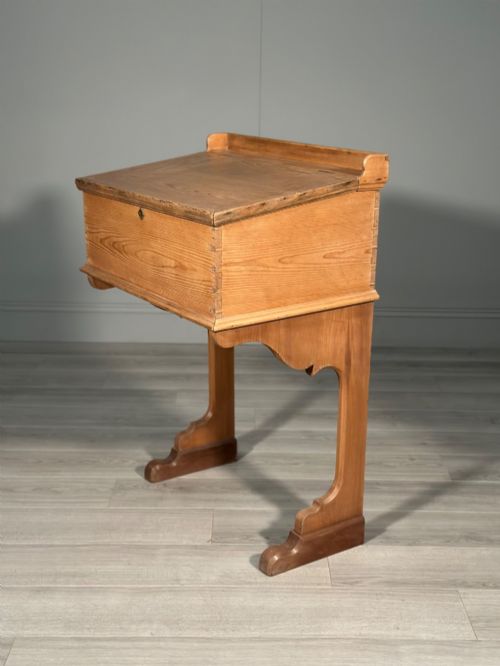
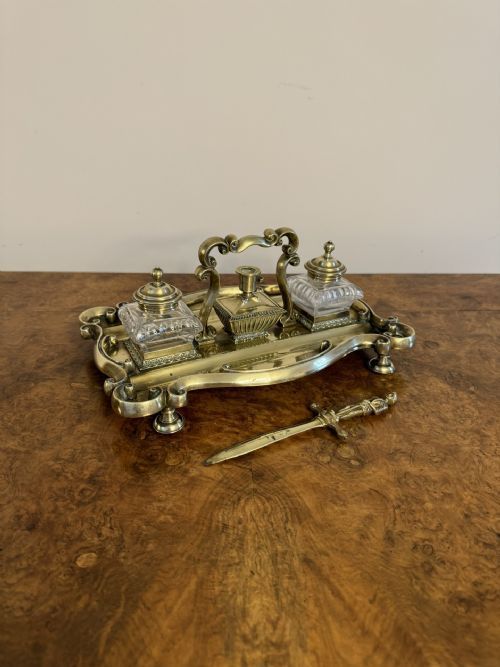
A victorian writing stand encompasses desktop inkstands, desk tidies, and larger lecterns or clerk's desks designed to hold writing instruments. These pieces appear across the nineteenth century, often combining fitted inkwells with pen trays and occasionally chambersticks.
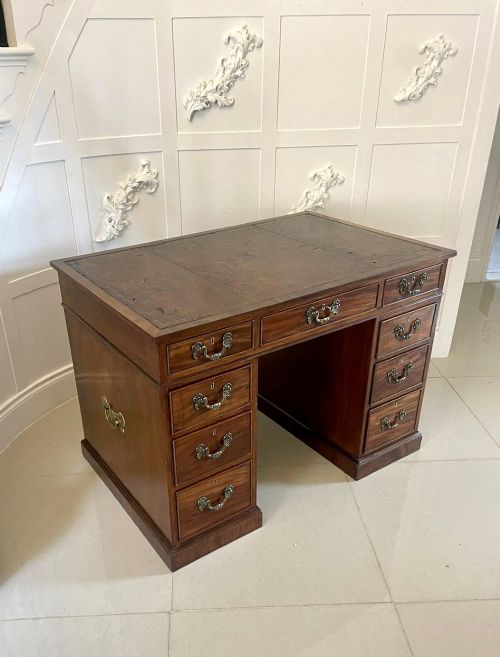
The materials and decoration range from plain oak and mahogany clerk's desks to highly decorative brass, ormolu, and tortoiseshell desk sets created in the Napoleon III style. Buyers encounter smaller portable stands alongside substantial freestanding library tables.
Origins span English workshops, continental porcelain centres, and Scottish makers utilising local horn and silver. The selection balances practical desk accessories with elaborate decorative pieces meant for prominent display.
Materials and Construction
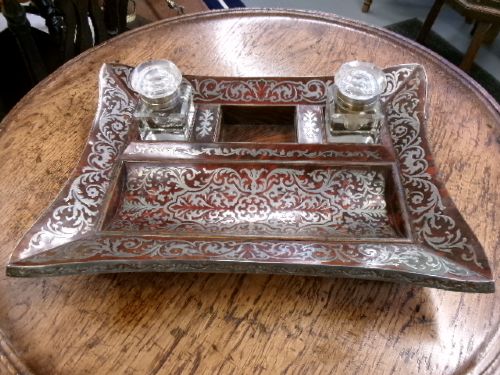
Cabinetmakers utilised hardwoods such as mahogany, walnut, oak, and coromandel for the structural stands and boxes, frequently incorporating inlaid brass, mother of pearl, or boulle work. Smaller desktop trays rely on cast brass, ormolu, bronze, and papier-mâché decorated with hand painting.
Fitted inkwells combine cut glass or ceramic bodies with sterling silver, silver-plated, or brass lids. Stone elements such as Ashford marble and decorative ceramics from Minton, Sèvres, and Dutch Delft appear integrated into the metal bases.
Joinery techniques range from simple pegged pine construction in school and clerk's desks to intricate marquetry and tortoiseshell inlay on luxury nineteenth-century desk tidies.
Victorian Writing Stand Retail Price Guide 2026
Typical asking prices for victorian writing stand among the pieces listed under this phrase on Sellingantiques today, from the lower quarter to the upper quarter. They describe what is for sale here now, not the wider market.
Object forms include clerk's desks, desktop inkstands, reading tables, and compartmentalised desk tidies.
Craftsmanship and Materials
The distinction between ordinary and superior pieces rests on the choice of ground material and the refinement of metal mountings. Solid exotic hardwoods and heavy cast brass or ormolu separate high-status desk sets from simpler pine or plated alternatives.
The integrity of fitted elements dictates value, specifically matching inkwell inserts in cut glass or porcelain paired with fully intact lids. Hand-painted detail on papier-mâché and ceramic components distinguishes workshop output.
The cohesion of design styles, such as French Napoleon III boulle work or Art Nouveau bronze casting, determines the visual success of the stand.
Walker And Hall·Robert Garrard·Simpsons of Kendall
The Victorian Writing Stand Glossary
- Inkstand
- A portable or stationary stand fitted with one or more inkwells and a pen rest. These accessories sat on nineteenth-century desks to keep writing materials orderly.
- Desk tidy
- A compartmentalised tray for holding stationery, wax, seals, and pens. It serves a similar function to an inkstand but often places greater emphasis on general desk organisation.
- Ormolu
- Gilt bronze mounted onto decorative objects and furniture. French makers utilised this technique extensively during the nineteenth century.
- Boulle work
- Marquetry of tortoiseshell and brass inlaid in intricate floral or geometric patterns. This decorative technique appears on luxury Napoleon III desk stands.
- Chamberstick
- A small handheld candlestick fitted with a saucer base. Several larger silver and brass inkstands incorporate these directly into the design.
Victorian Writing Stand: Frequently Asked Questions
What is a victorian writing stand?
A victorian writing stand is a desktop accessory or small table designed to hold inkwells, pens, and writing materials. These pieces range from simple wooden desk tidies to ornate brass and porcelain sets.
Craftsmen produced them in various materials including mahogany, walnut, brass, and papier-mâché to serve the correspondence needs of nineteenth-century households and offices.
How were inkwells secured?
Inkwells sat within dedicated fitted recesses or compartments carved into the wooden base or mounted directly into metal frames. This prevented the glass or ceramic vessels from sliding about during use.
Many stands include hinged metal lids attached to the inkwells themselves to keep the ink from drying out.
Where should I place a desk stand?
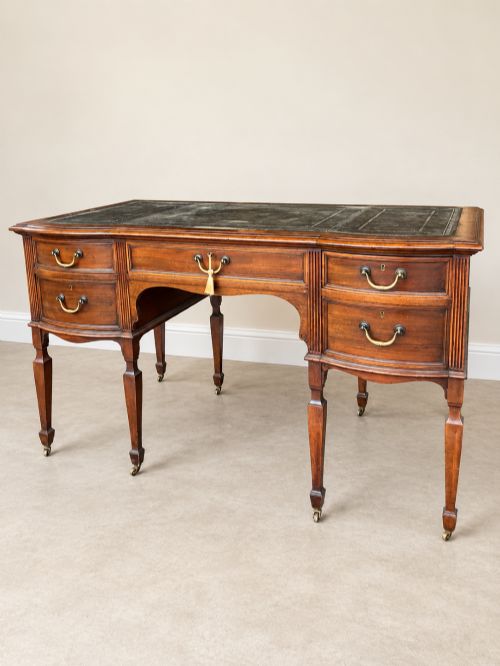
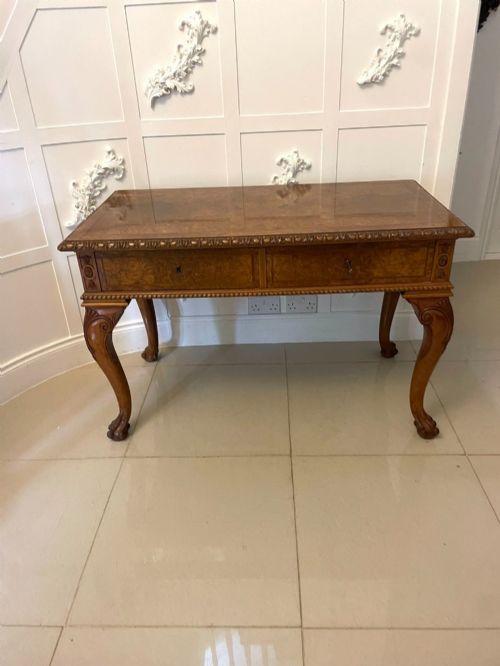
These stands suit placement on top of library tables, partner desks, and writing desks where they can function as intended. They also sit effectively on console tables or shelves as decorative objects.
Keeping them away from direct heat sources protects sensitive materials like tortoiseshell, leather, and wood veneers.
How do I date these pieces?
Dating relies on stylistic clues, manufacturing materials, and any accompanying hallmarks on silver components. Pieces reflecting the Art Nouveau style point towards the late nineteenth century, while heavy ormolu and boulle work often indicate mid-nineteenth-century French influence.
Wood choice and construction methods also help distinguish earlier Regency and Victorian examples from later Edwardian productions.