



Victorian Writing Slope Cabinet
These Victorian writing slope cabinet pieces offer compact, fitted workspaces in rosewood, burr walnut, and mahogany.

Victorian Writing Slope Cabinet
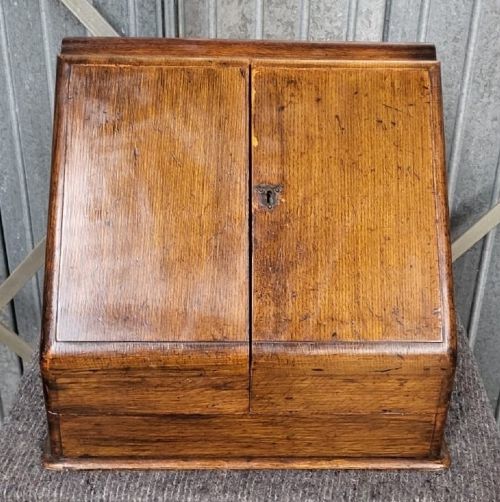
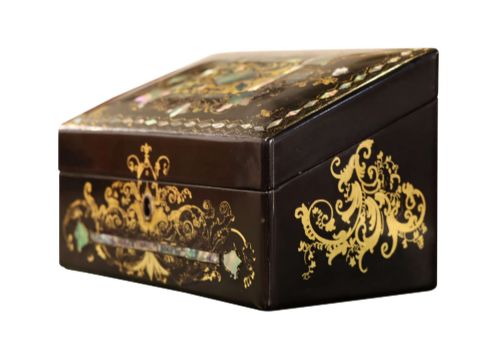
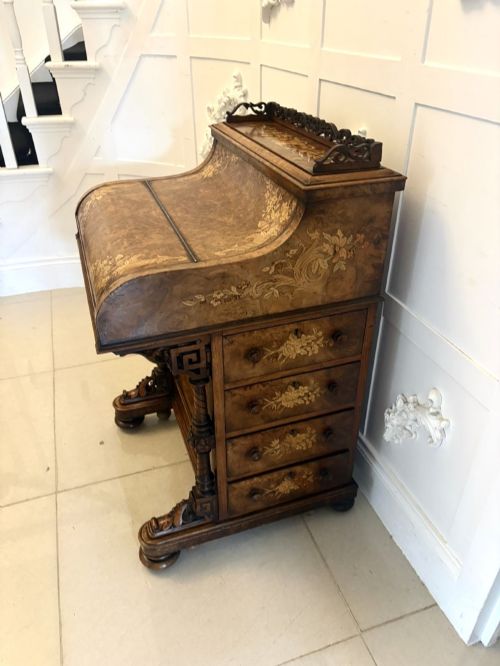
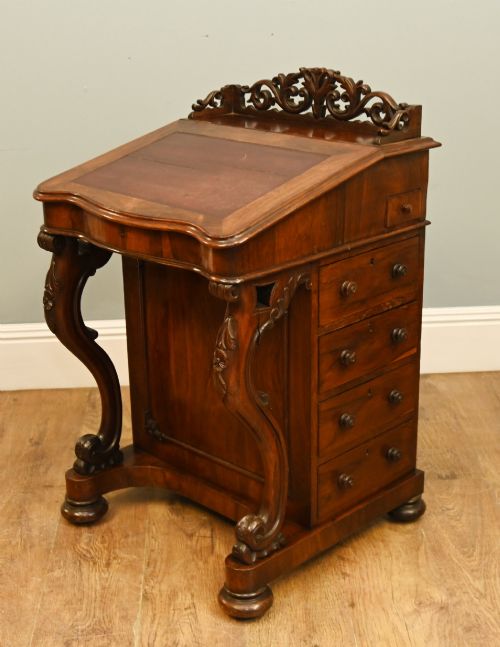
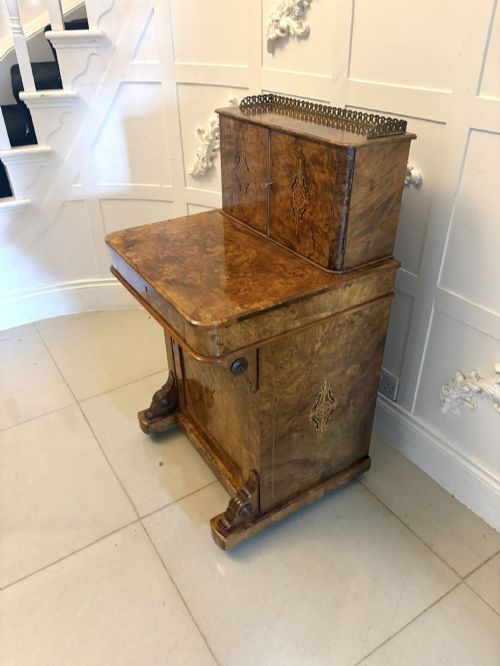
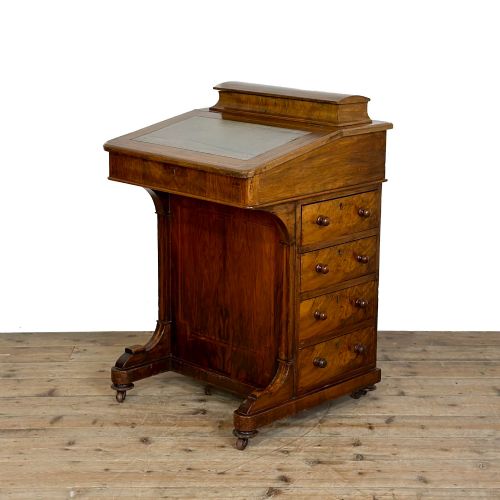
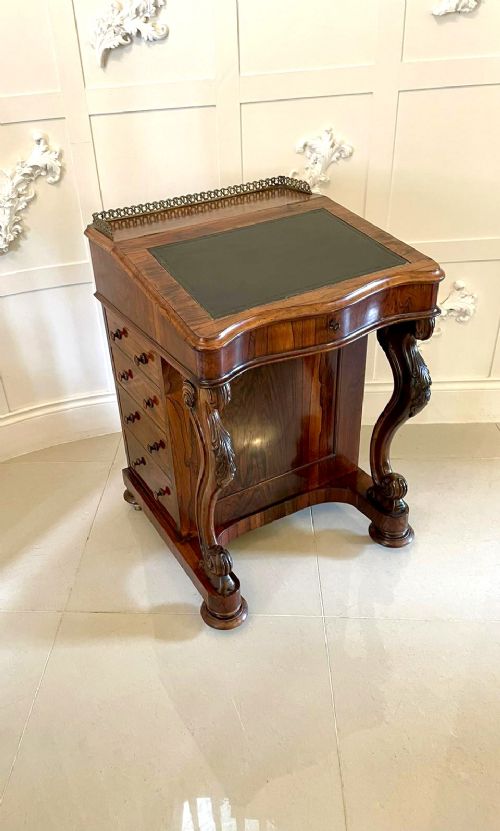
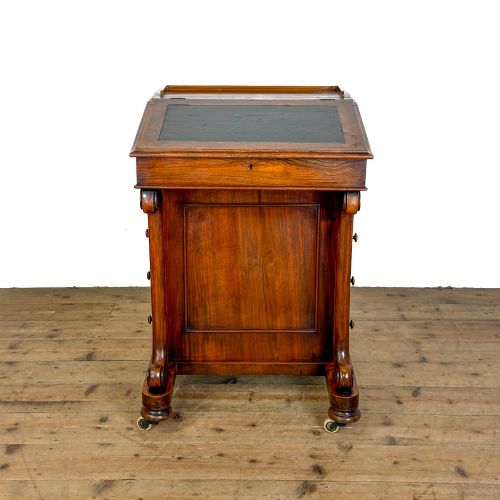
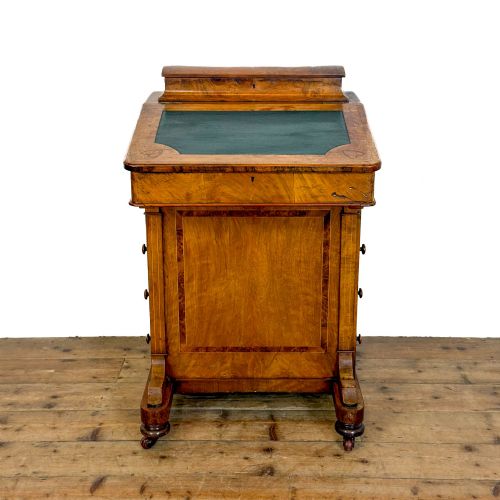
A victorian writing slope cabinet encompasses compact stationery boxes, pop-up davenports, and bureau desks produced across the nineteenth century. These forms combine a slanted writing surface with internal compartments for paper, ink, and pens, designed for domestic correspondence.
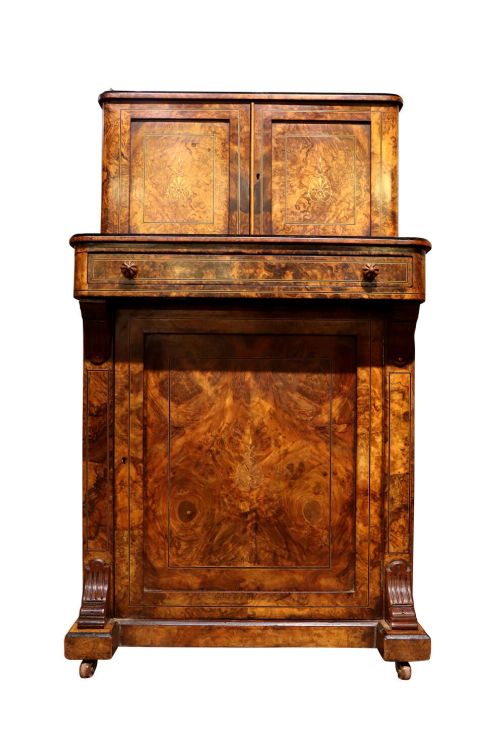
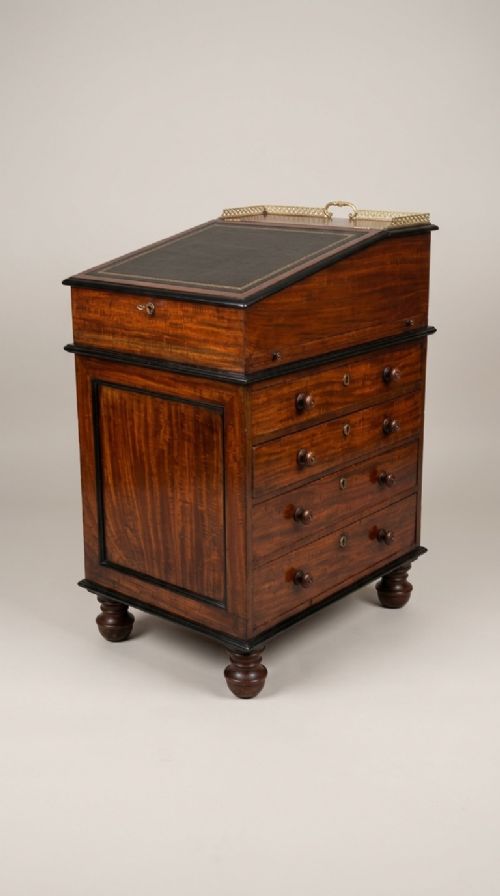
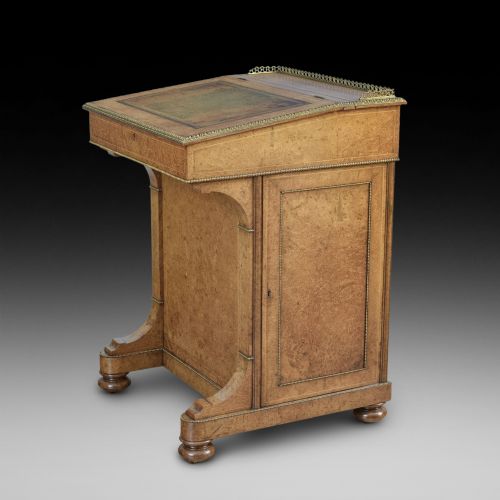
The versions most commonly met on this page are burr walnut and mahogany davenports alongside tabletop stationery boxes and freestanding writing desks. They reflect both formal Victorian drawing-room utility and earlier Regency influences.
Materials and construction methods
Cabinetmakers utilised dense timbers such as rosewood, pollard oak, and burr walnut, often applied as veneers over secondary woods. Solid mahogany and oak appear frequently in heavier clerks desks and carved bureau forms.
Brass mounts, leather writing inserts, and inlaid stringing in satinwood or ebonised wood provide structural accent and surface contrast. Joinery relies on traditional dovetailed drawer construction and fitted interior pigeonholes.
Victorian Writing Slope Cabinet Retail Price Guide 2026
Typical asking prices for victorian writing slope cabinet among the pieces listed under this phrase on Sellingantiques today, from the lower quarter to the upper quarter. They describe what is for sale here now, not the wider market.
Listings feature woods including rosewood, burr walnut, pollard oak, amboyna, and mahogany across nineteenth-century forms.
Distinctions in construction and refinement
Quality separates through the selection of timber veneers and the precision of brass inlay and internal mechanisms, such as pop-up stationery compartments. Superior examples maintain original leather writing surfaces and integrated locking systems.
Carved detailing, seen in Green Man oak pieces, and secondary woods like amboyna indicate higher ambition from makers such as Gillows. Less complex pieces offer straightforward utility with simpler wood grains and fewer mechanical refinements.
Gillows of Lancaster·Gillow and Co
The Victorian Writing Slope Cabinet Glossary
- Davenport
- A compact form of small desk featuring a sloped, hinged writing surface above a pedestal of drawers. Originating in the early nineteenth century, it became a staple of Victorian writing furniture.
- Stationery box
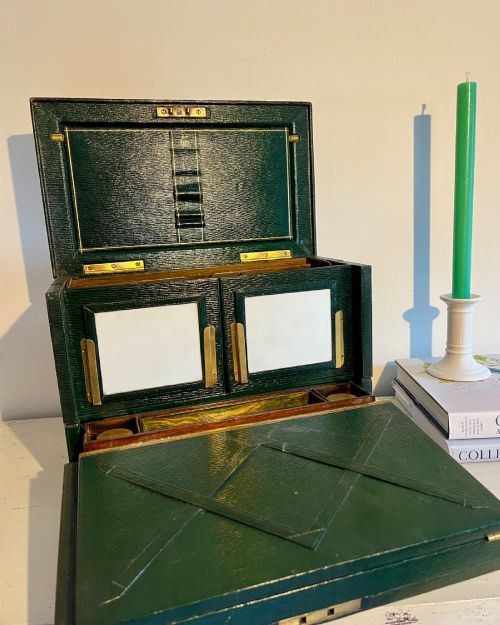
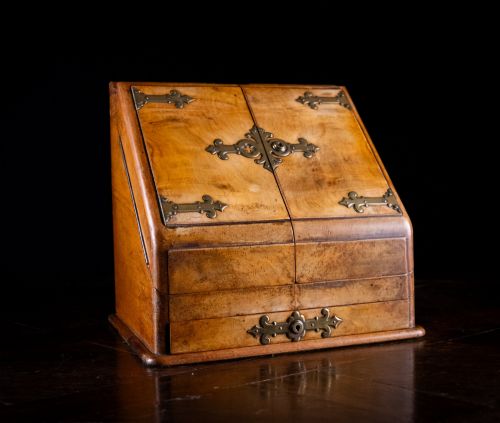
- A tabletop cabinet designed to hold envelopes, paper, and writing accessories, often featuring sloping lids or multi-tier pigeonhole interiors. These boxes sit upon desks or tables for easy access.
- Crossbanding
- A decorative border technique where veneer strips are laid perpendicularly to the grain of the main surface. This frames drawer fronts and desk lids on finer Victorian cabinets.
- Pop-up
- A mechanism found in certain davenport desks where opening the writing lid triggers an interior stationery compartment to rise automatically. It demonstrates advanced nineteenth-century cabinetmaking ingenuity.
Victorian Writing Slope Cabinet: Frequently Asked Questions
What is a davenport desk?
A davenport is a compact nineteenth-century writing desk featuring a sloping top and a pedestal of drawers to one side. They were designed for domestic correspondence in parlours and bedrooms.
Most examples include internal compartments for stationery and small drawers accessed beneath the sliding or hinged writing slope.
How do stationery boxes work?
Stationery boxes are tabletop cabinets built with sloping lids or folding doors that open to reveal tiered slots for paper and envelopes. They kept writing materials organised and tidy on a desk.
Finer examples incorporate brass mounts and hidden compartments for stamps and inkwells.
What woods were commonly used?
Cabinetmakers relied heavily on rich timbers like burr walnut, rosewood, and mahogany for their striking grain patterns. Oak, amboyna, and pollard oak also appear frequently across the period.
Inlays in satinwood and ebonised wood frequently decorate the primary surfaces of these pieces.
How should I care for the leather?
The leather writing inserts benefit from gentle dusting and protection from direct sunlight and dry heat. Conditioning balms designed for antique leather help maintain suppleness over time.
Avoid using modern chemical cleaners which can strip the original finish from the surrounding wood and leather.